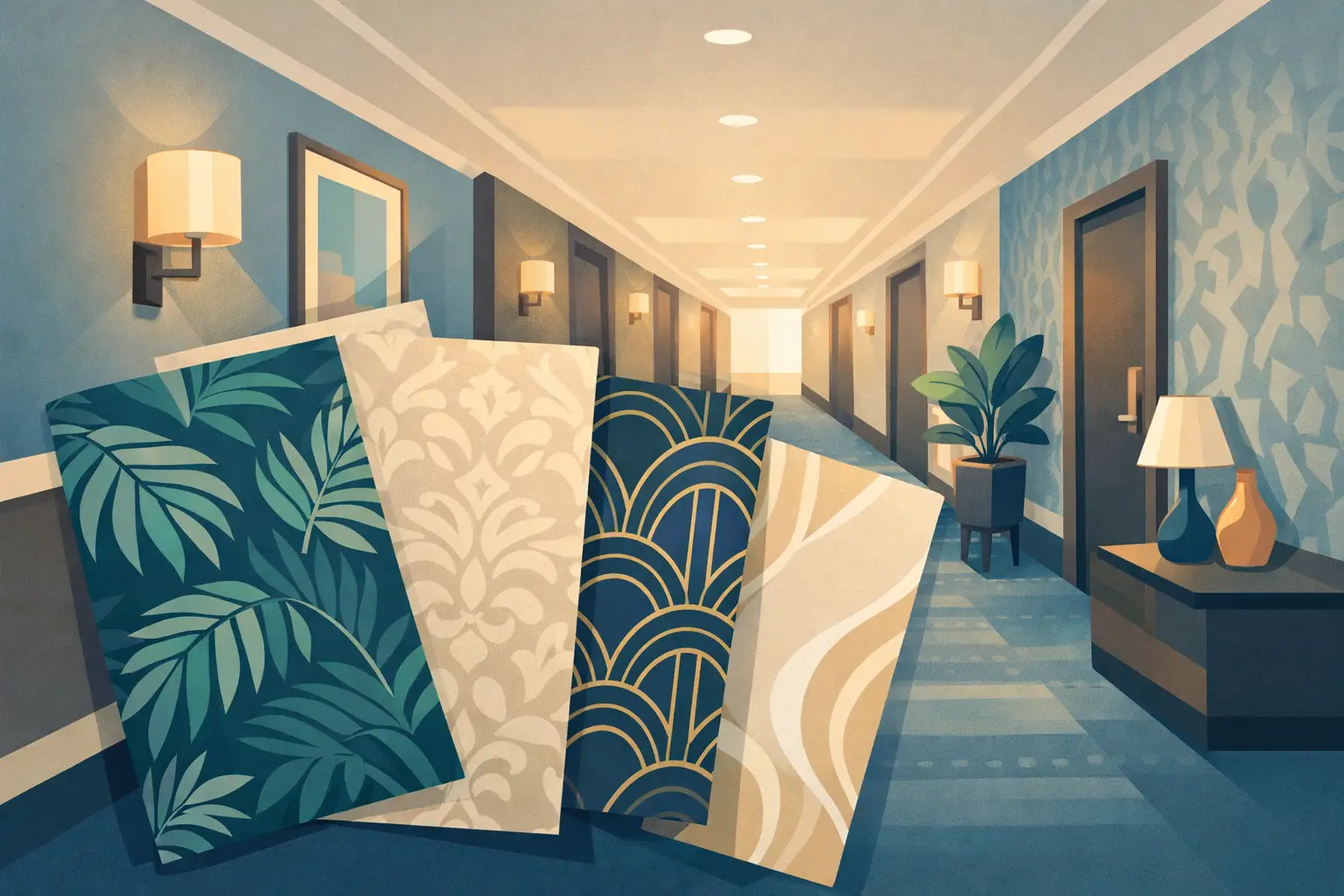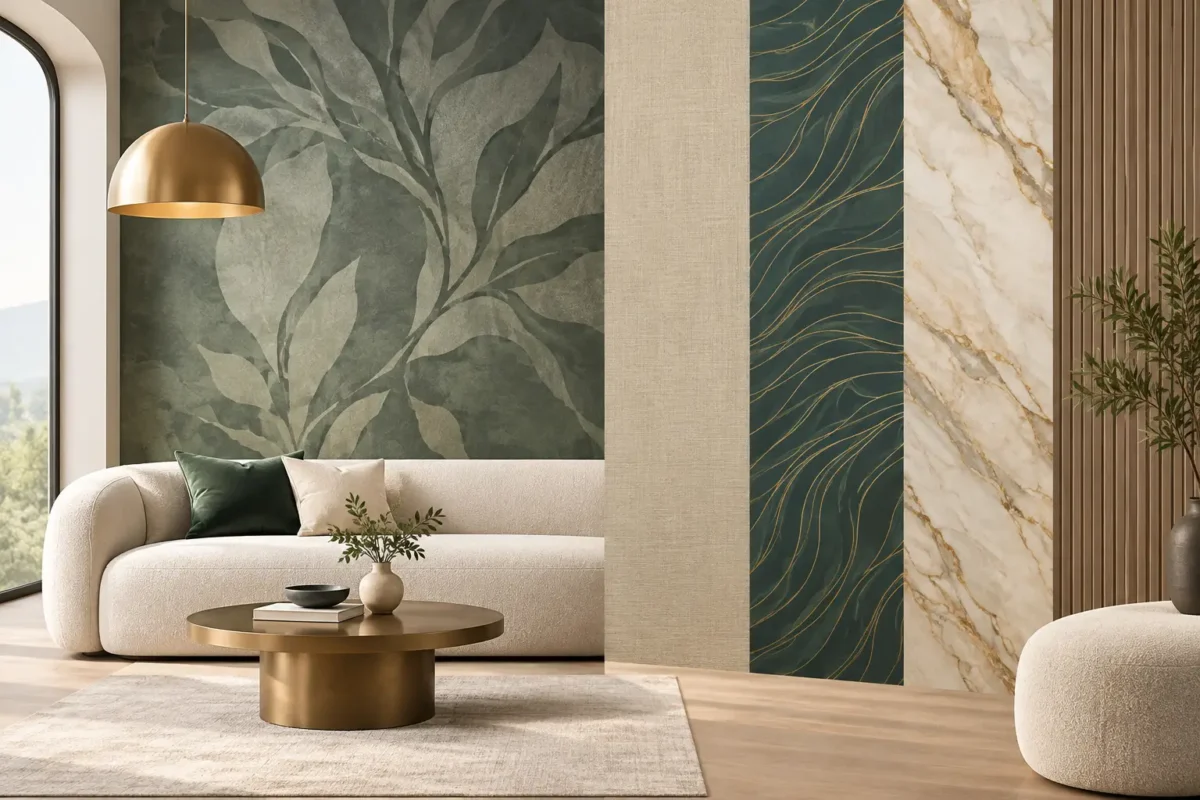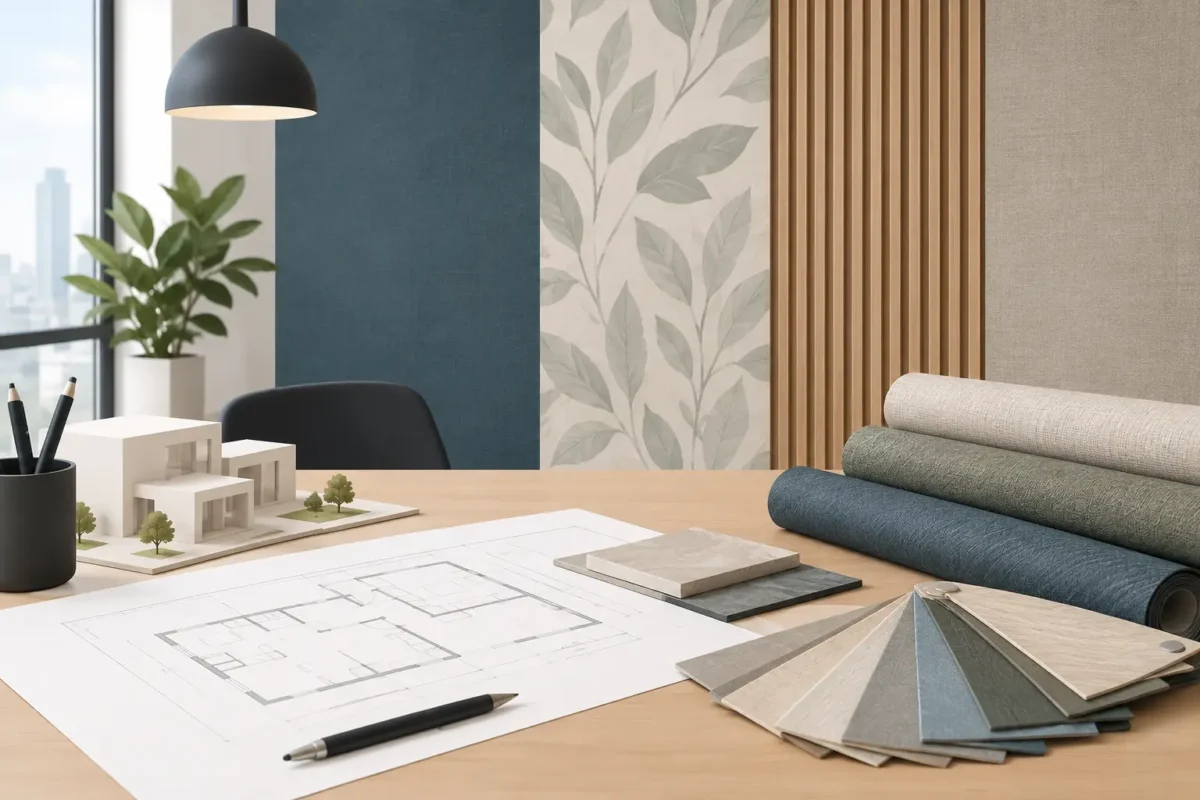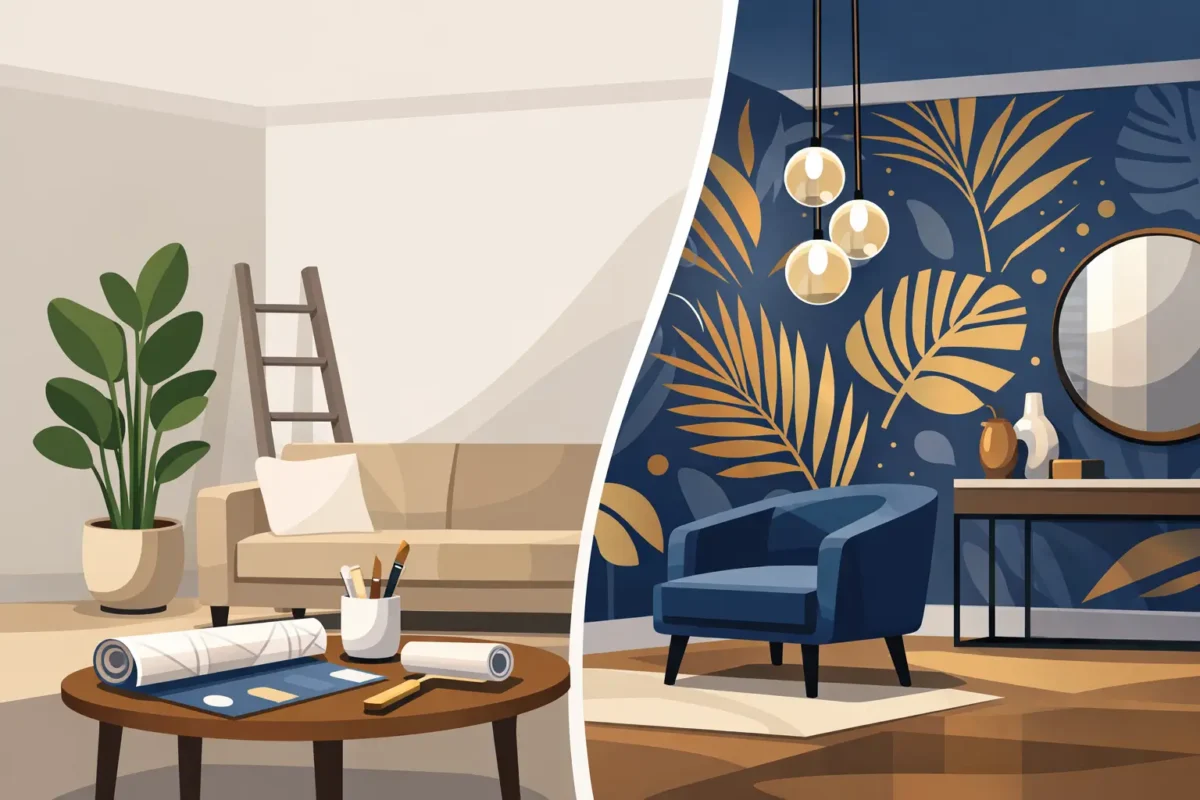
A hotel corridor is more than a route from elevator to room. It is the first private moment a guest has with the property, and it shapes expectations before the door even opens. So, what wallpaper suits hotel corridors? The best choice combines a considered visual identity with commercial-grade durability, easy maintenance, and performance suited to a high-traffic environment.
Corridor walls endure rolling luggage, housekeeping carts, frequent cleaning, moving furniture, and the occasional impact. A beautiful residential paper may look impressive on installation day but quickly lose its finish in this setting. Hotel wallcovering must be specified as a working surface – one that supports the guest experience while meeting the operational realities behind it.
For most hospitality projects, fabric-backed vinyl wallcovering is the strongest starting point. It offers the weight, stability, and scrub resistance needed for busy corridors, while providing a broad range of refined textures, patterns, and custom-print possibilities. Unlike standard paper wallpaper, commercial vinyl is designed to handle regular cleaning and resist scuffs, moisture, and everyday wear.
The right design depends on the hotel’s positioning. A boutique property may favor a bespoke mural or a layered botanical pattern with a distinctive point of view. A business hotel may call for a quieter woven texture that feels polished and professional. A luxury resort can use warmer tones, organic motifs, and tactile finishes to create a sense of escape before guests reach their rooms.
The key is balance. Corridors should feel memorable, but they should not compete with wayfinding, lighting, room numbers, or the calm a guest expects outside their room.
A wallcovering’s visual appeal is only half of the specification. Before approving a colorway or sample, assess how the corridor will be used and maintained. Guestroom hallways require more resilient finishes than low-traffic executive floors, while service corridors may prioritize extreme durability over decorative detail.
Fabric-backed vinyl provides a dependable surface for many hotel applications. The backing gives the material greater dimensional stability, helping it perform across large wall areas and accommodate minor wall imperfections more effectively than lighter papers. Its vinyl face also supports routine cleaning, a practical advantage where fingerprints, suitcase marks, and spills are unavoidable.
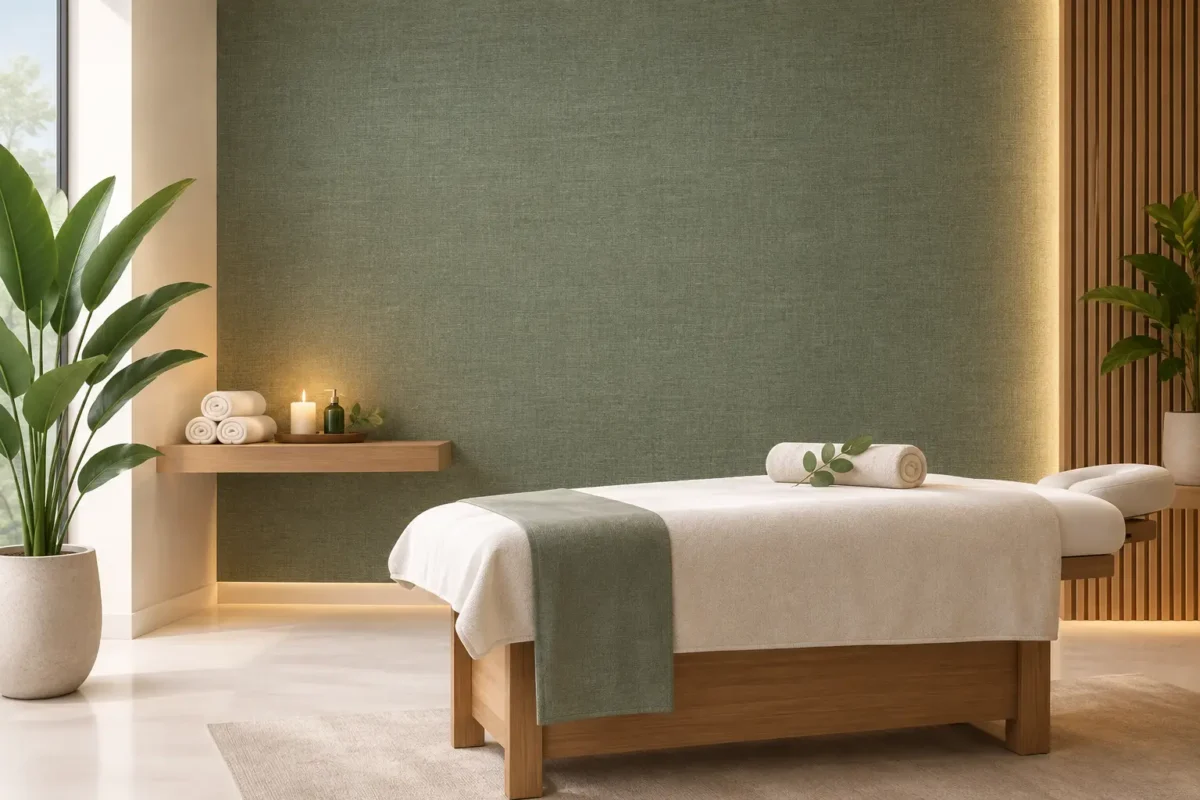
For properties pursuing a more elevated finish, textured commercial wallcoverings can replicate linen, silk, grasscloth, plaster, timber grain, or woven fibers without introducing the maintenance demands of natural materials. This is particularly valuable in corridors, where authentic grasscloth may stain unevenly or show seam variations more readily than a performance-led alternative.
Hotel projects must align with applicable building codes, local fire requirements, and the property’s safety standards. Fire-rated wallcovering should be considered early, not treated as an afterthought once a design has been approved. A suitable supplier can provide relevant product documentation and guide the selection toward materials appropriate for the project specification.
Fire performance, adhesive selection, and professional installation work together. A wallcovering is a system, not simply a decorative layer. Using the correct material with the right preparation and installation process protects both the finished appearance and the project’s long-term performance.
A corridor finish should be selected with the operations team in mind. Mid-tone colors, low-sheen textures, and irregular patterns are generally more forgiving than pale solid finishes. They conceal minor marks between cleaning cycles without making the space feel dark or dated.
It is also wise to retain extra material from the original production run. If a section later needs repair, matching from the same batch helps preserve color consistency. For custom murals, keep approved artwork files and final scale specifications on record so replacement panels can be reproduced accurately.
Lighting changes everything in a hotel corridor. A shade that appears soft and warm in a showroom can look flat under cool downlights, while a dark dramatic pattern may become oppressive in a narrow hallway with no natural light. Always review full-scale samples under conditions close to the final installation.
Warm neutrals such as taupe, stone, sand, mushroom, and soft gray create a calm, enduring backdrop for many hotel concepts. They pair naturally with timber doors, brass hardware, stone flooring, and layered lighting. These colors are especially effective for upscale business hotels and contemporary urban properties that need to feel refined without appearing overly formal.
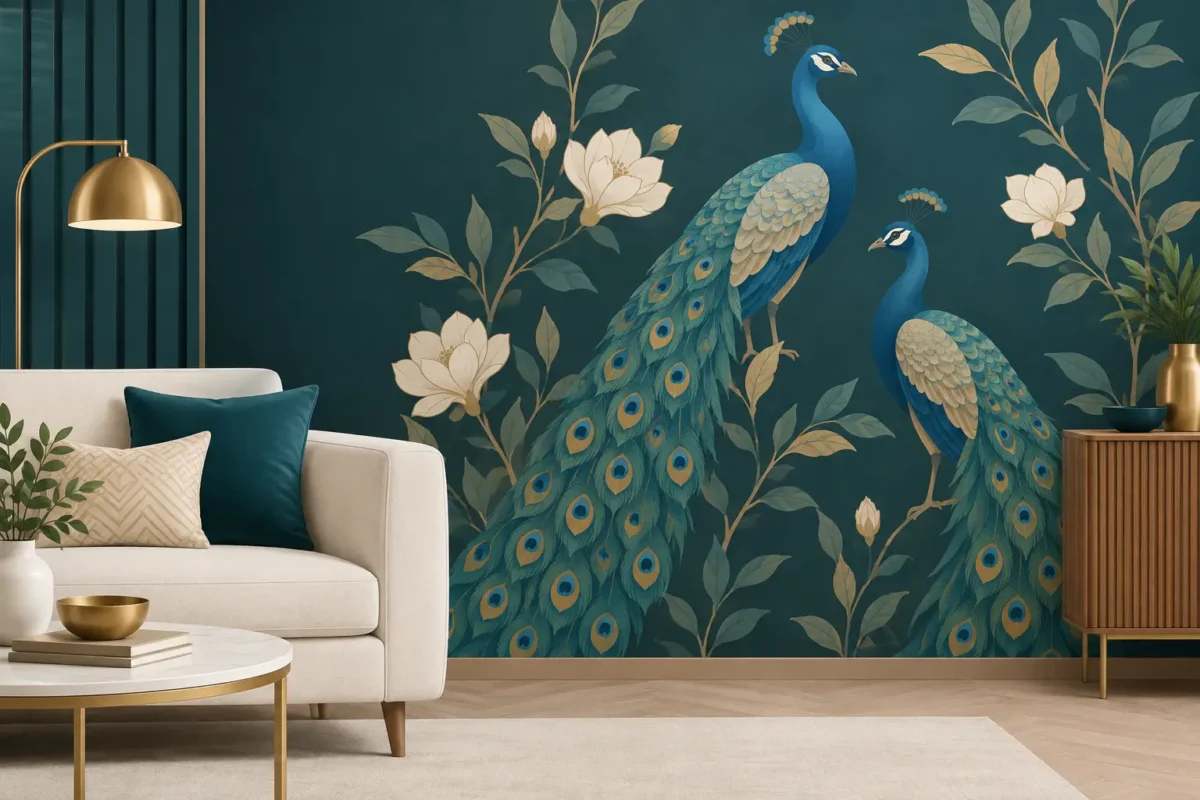
Deeper colors can create a more immersive result when the corridor has sufficient lighting and ceiling height. Forest green, midnight blue, espresso, charcoal, and muted burgundy lend intimacy and drama, particularly in boutique hotels and premium residential-style properties. In these schemes, contrast matters. Light door frames, brighter artwork, illuminated room numbers, or warm wall sconces prevent the passage from feeling enclosed.
Avoid relying on bright white as the default solution. Although it can make a space feel larger, it reveals marks quickly and often creates a clinical impression. A pale textured wallcovering delivers much of the same visual openness while offering better day-to-day practicality.
Pattern gives a corridor personality, but scale and repetition must be managed carefully. Guests walk these spaces multiple times a day, often when tired or carrying luggage. A design that feels energizing in a lobby can become tiring when repeated along a long, narrow guest floor.
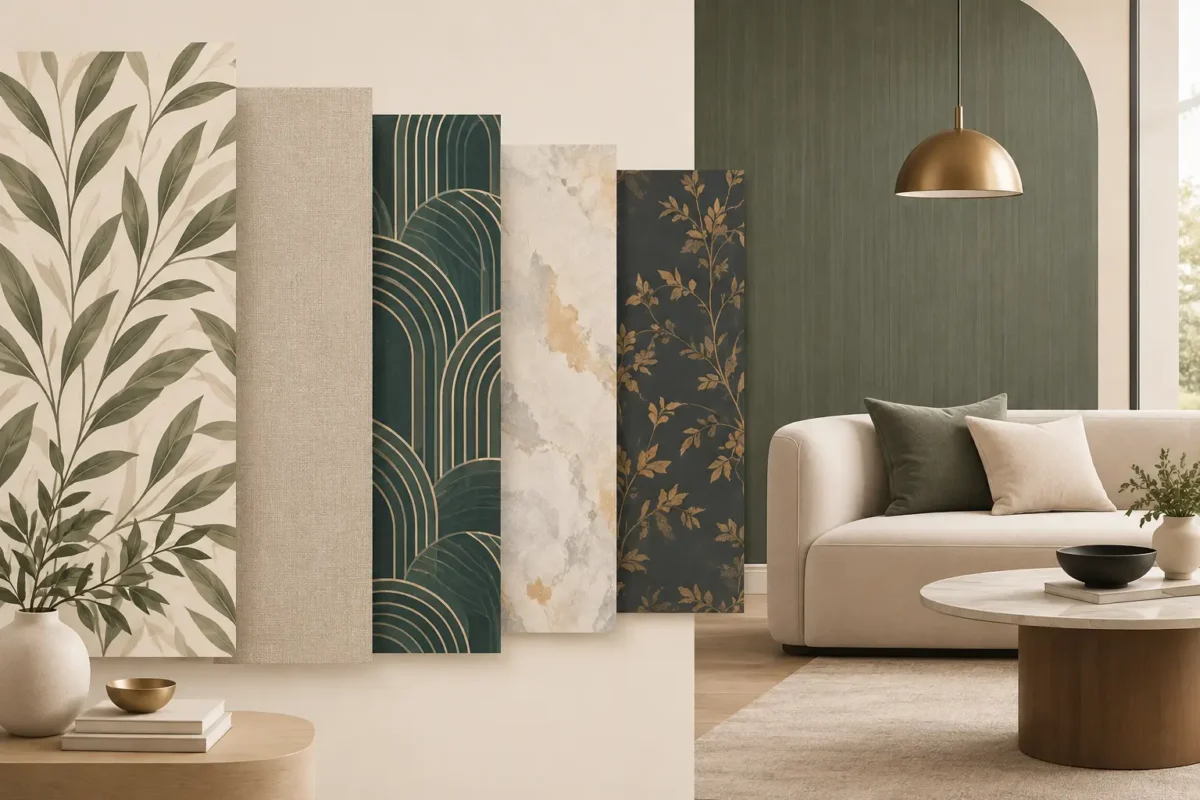
Small-scale geometrics, tonal botanicals, soft linear patterns, and understated woven effects are reliable choices because they provide depth without demanding constant attention. Patterns with a gentle vertical movement can also visually lift a lower ceiling, while horizontal elements can make a short corridor feel wider. The effect depends on the building proportions, so sample panels should be viewed from a realistic distance rather than only at arm’s length.
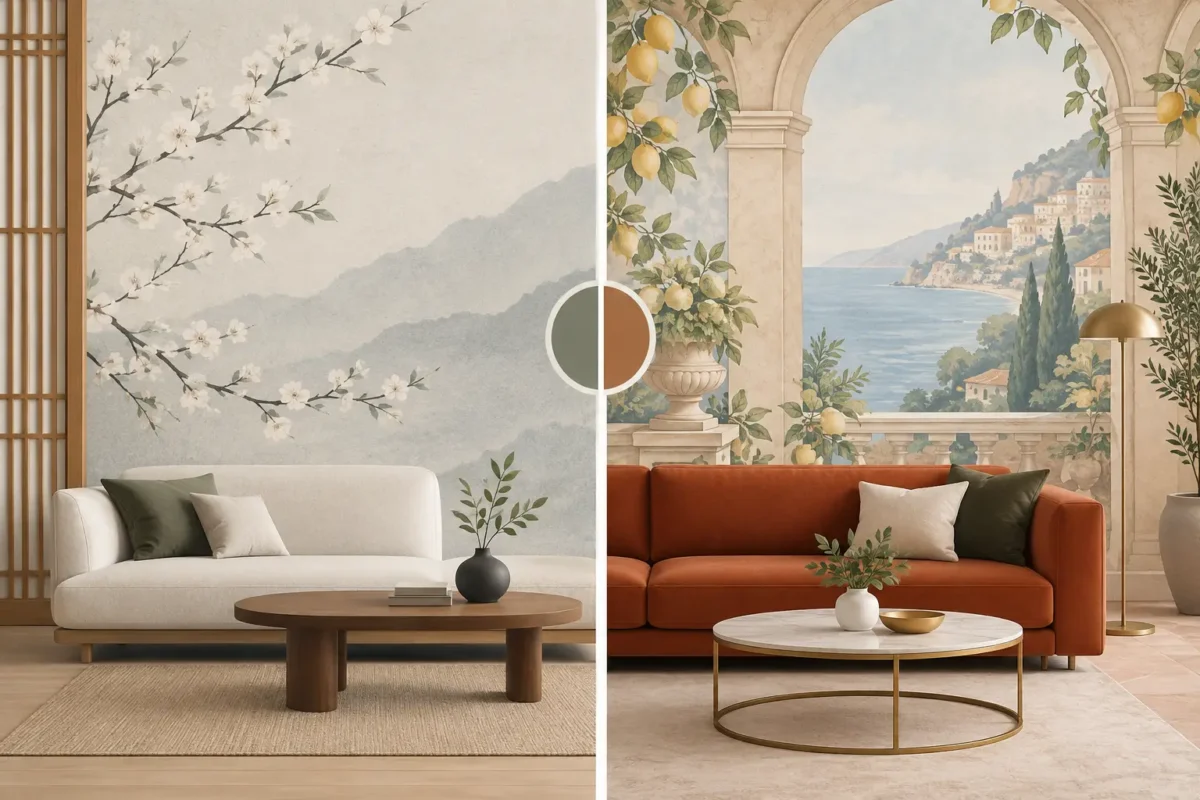
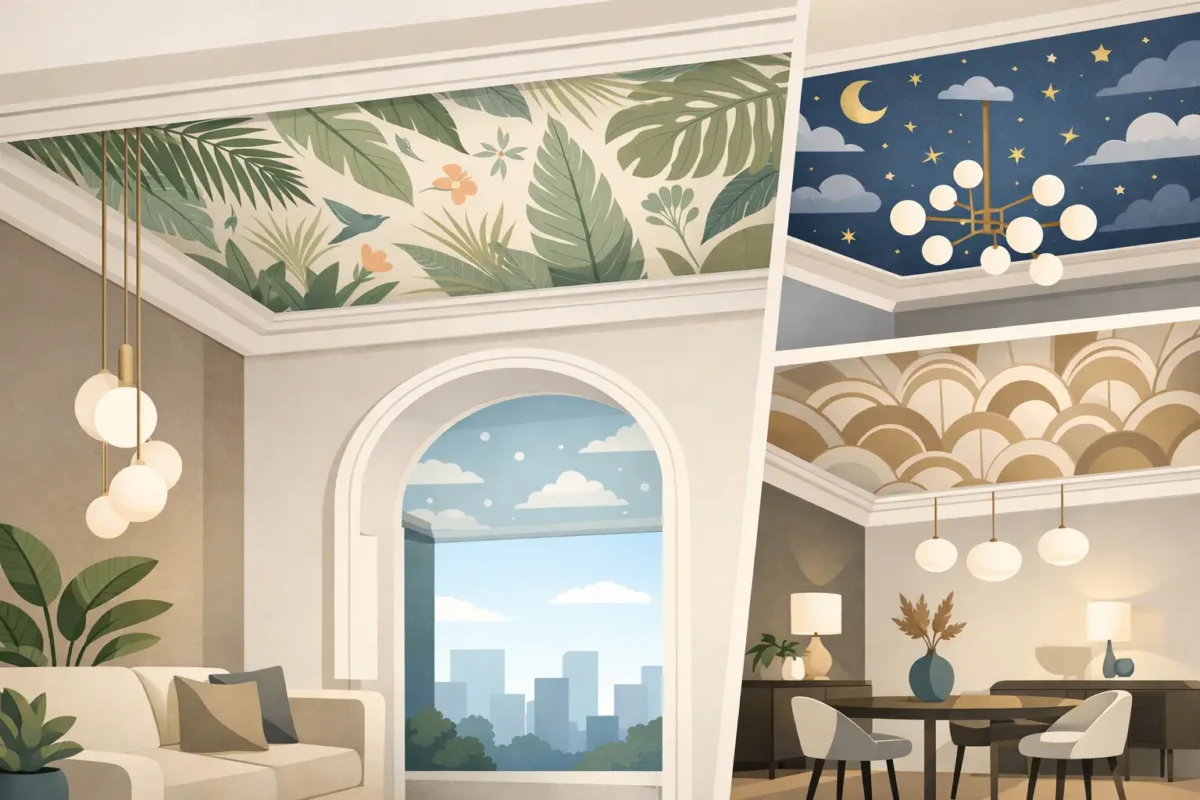
For a signature hotel concept, custom print wallpaper offers greater freedom. A property can incorporate local landscape references, archival maps, abstract interpretations of regional craft, or brand-inspired artwork in a controlled, project-specific palette. This approach is especially effective at lift lobbies, corridor ends, suite levels, and transition zones where a mural can create a strong sense of arrival.
Custom work needs disciplined design development. Artwork must be scaled for the wall, aligned around doors and service panels, and checked for repeat placement before production. A striking image can lose its impact if a focal detail lands behind a fire extinguisher cabinet or splits awkwardly at a corner.
There is no universal answer because each hotel asks its corridors to do different work. The wallcovering should reinforce the level of service, price point, architecture, and guest profile.
A luxury hotel benefits from tactile, layered finishes that reward close viewing. Think refined textile effects, subtle metallic accents, tonal botanicals, or custom artwork with a restrained palette. The aim is not excess, but a finish that feels intentional and substantial.
A boutique hotel can be more expressive. It may use rich color, art-led murals, contemporary graphics, or a distinct pattern story on each level. Consistency still matters, but the corridor can become part of the property’s personality rather than a purely functional space.
Business hotels usually perform best with clean, low-maintenance designs that communicate confidence and calm. Textured neutrals, architectural lines, and muted geometric patterns work well because they are timeless, easy to coordinate with future renovations, and suitable for a wide range of guests.
Resort corridors often benefit from softer, more organic direction. Botanical references, mineral textures, watery tones, and natural fiber looks help carry the relaxed atmosphere beyond the public areas. Here, humidity and cleaning conditions should guide the final material choice, especially in open-air or coastal environments.
Even the best wallcovering can look disappointing if seams are visible, corners lift, or patterns do not align. Hotel corridor installation demands precise wall preparation, accurate setting-out, and professional handling around door frames, lighting controls, signage, and access panels.
Before installation, confirm wall moisture conditions, surface smoothness, substrate compatibility, and the placement of all fixtures. Patterned wallcoverings require a clear layout plan so repeats remain balanced along the length of the corridor. This attention to detail is what turns a material sample into a polished hospitality interior.
For projects that require custom sizing, coordinated printing, material advice, and experienced installation, Decorating Depot brings these elements together as one project-focused wall décor solution.
Choose the wallcovering after walking the corridor as a guest would: from the elevator, past the doors, under the actual lighting, and at the pace of arrival. The right finish will not merely fill the walls. It will make every journey to the room feel considered, comfortable, and distinctly part of the hotel.