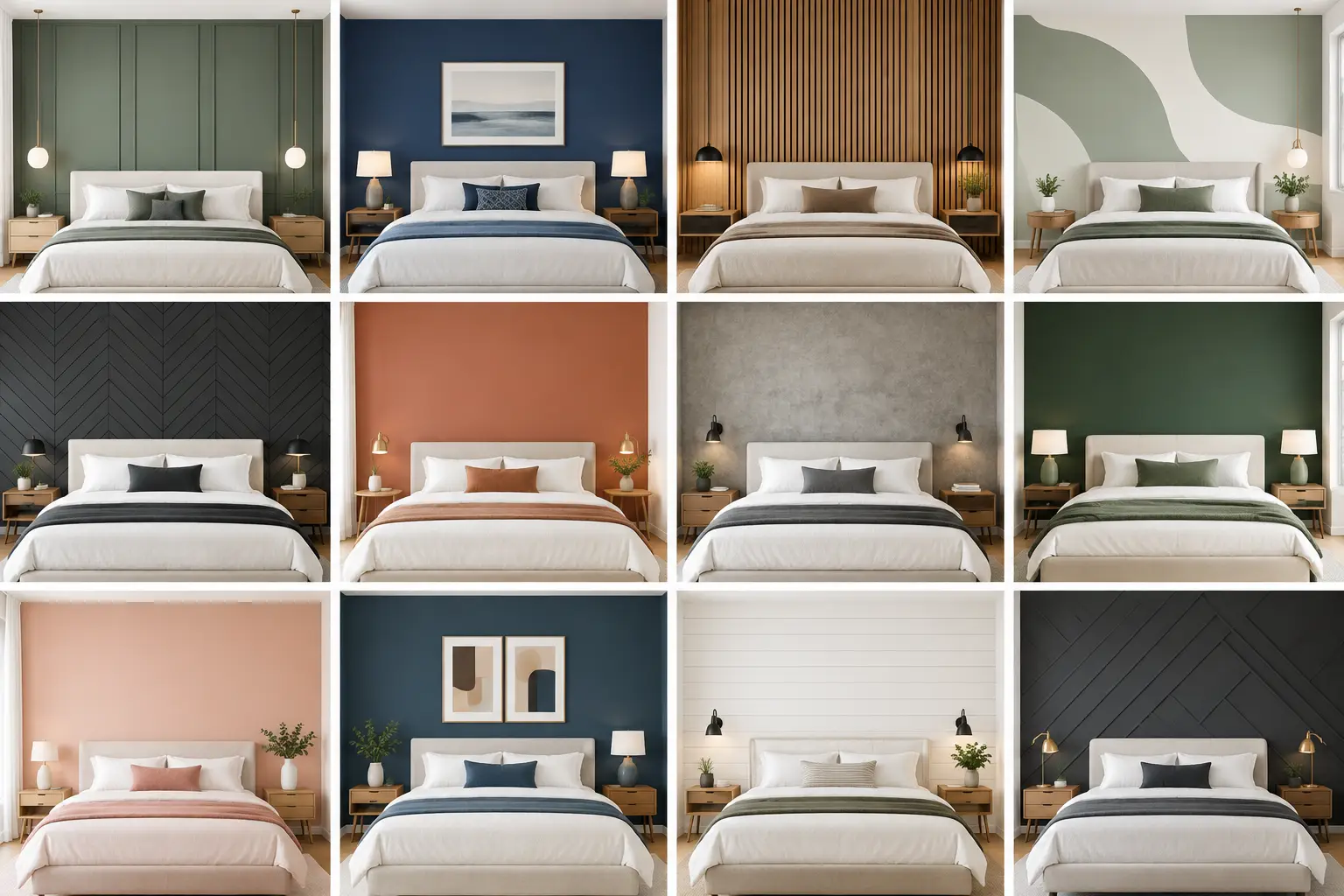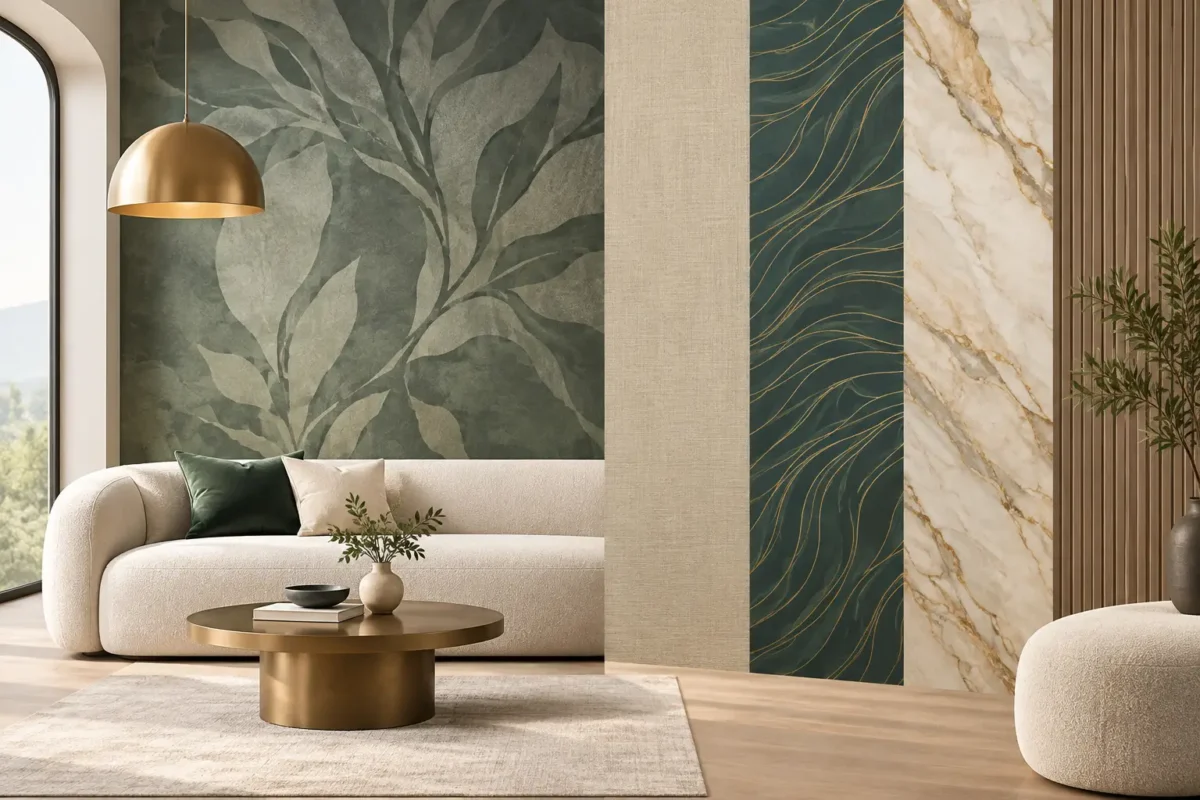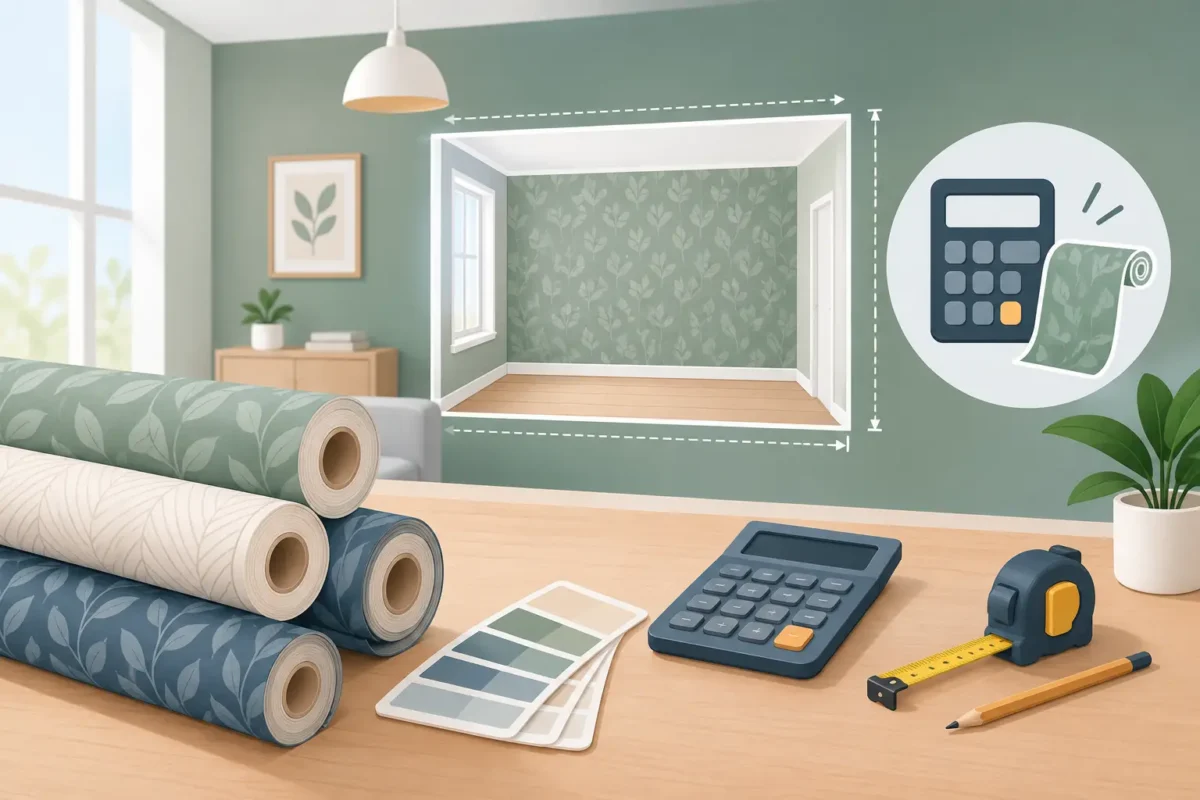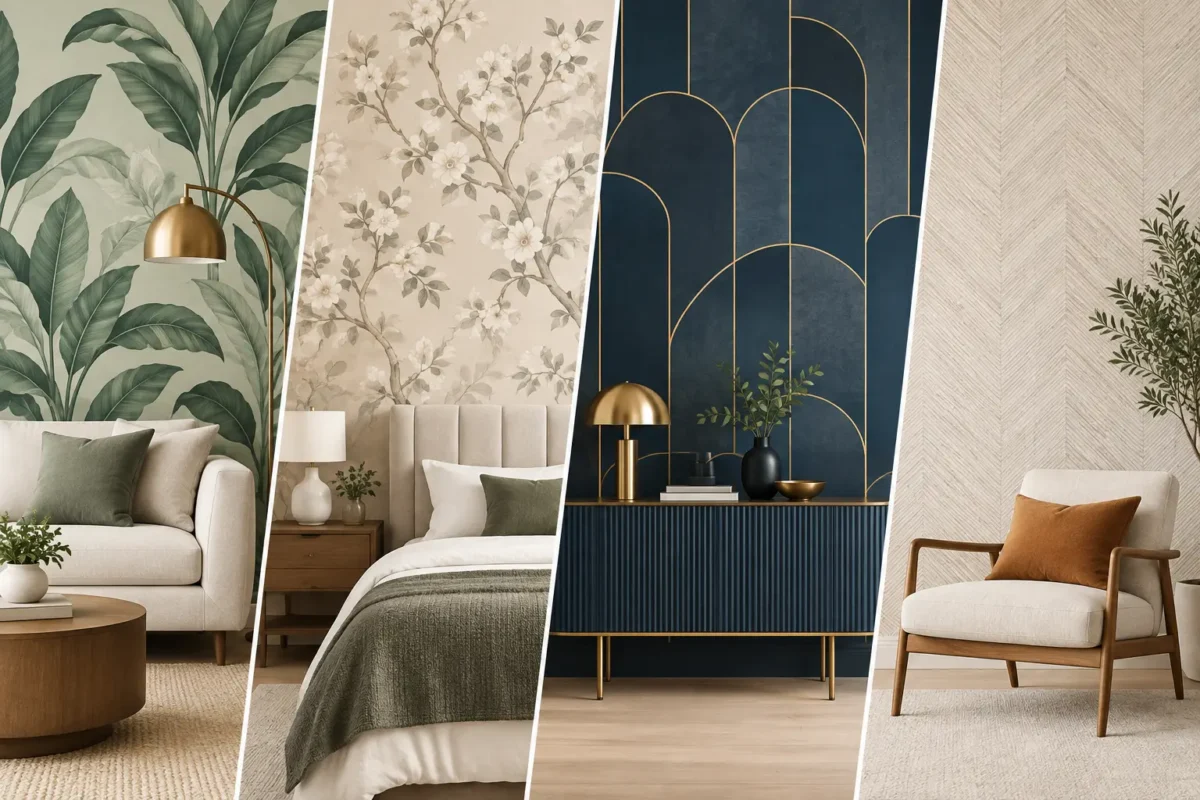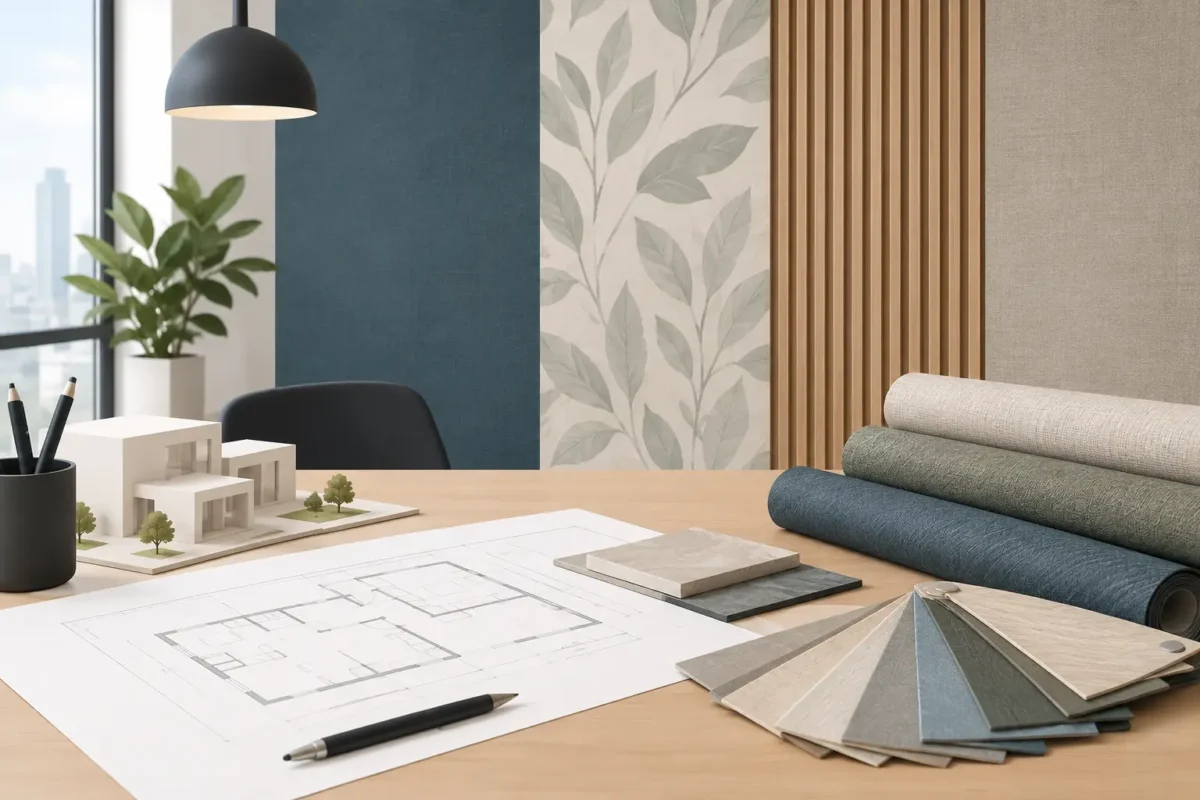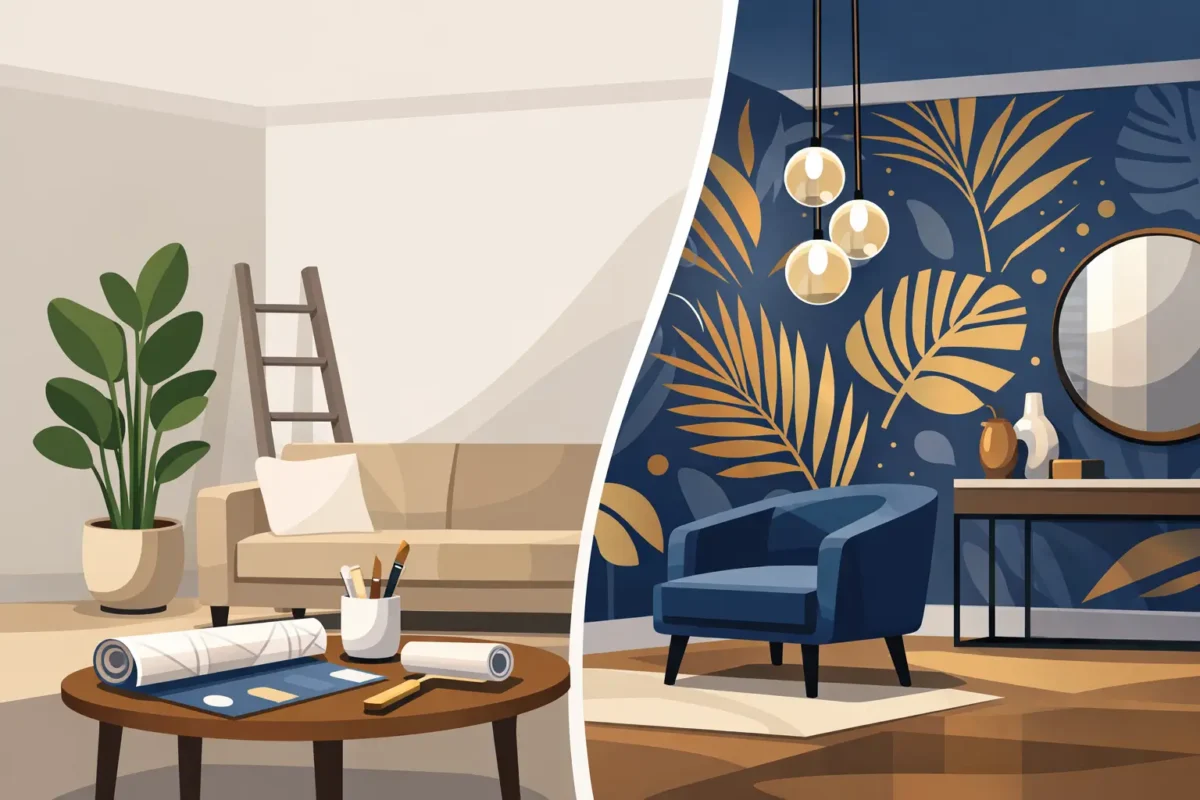
A bedroom accent wall should do more than fill an empty surface. It should give the room a focal point, strengthen its mood, and make everyday living feel more considered. The best accent walls for bedrooms pair a clear design intention with a finish that performs beautifully over time, whether that means a tactile wallcovering behind the bed or a custom mural scaled precisely to the room.
For most bedrooms, the wall behind the headboard is the natural choice. It frames the bed, remains visible from the entry, and allows the rest of the room to stay calm. Yet a successful statement wall is not only about choosing a striking pattern. Scale, lighting, ceiling height, furniture placement, and material quality all shape the final effect.
Start with the atmosphere you want to create. A quiet, restorative primary bedroom benefits from softened patterns, natural textures, and layered neutrals. A guest room can carry more personality through botanical prints, rich color, or artwork-inspired murals. In a smaller bedroom, the right design can create depth, but an oversized motif in a dark finish may make the room feel enclosed.
Think about what the accent wall needs to work with. Upholstered headboards, wood nightstands, bedding, window treatments, and flooring should feel connected rather than matched exactly. If the room already has strong materials, such as veined stone or dramatic timber, choose a wallcovering with restraint. If the furnishings are minimal, the wall can take a more expressive role.
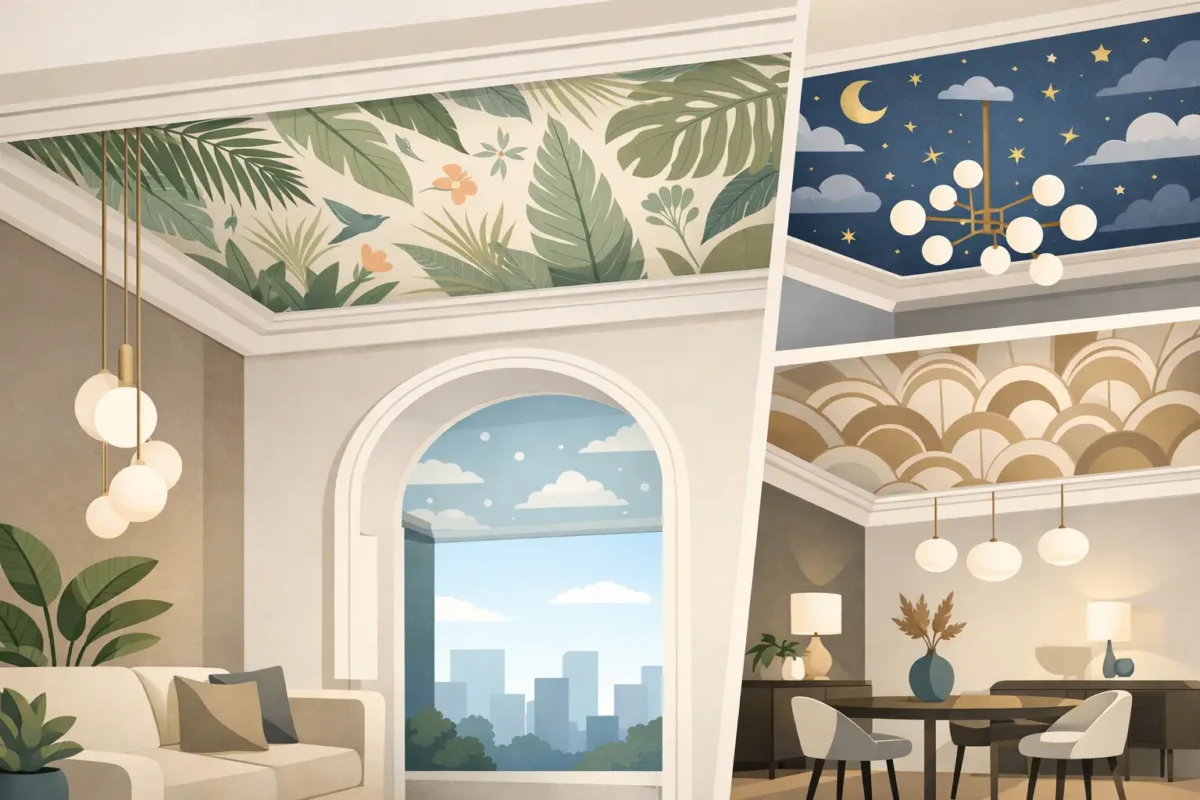
Material matters as much as design. Premium wallpaper offers depth and detail that paint rarely achieves, while commercial-grade and fabric-backed options bring added durability for hospitality suites, rental properties, and high-use spaces. Custom-printed wallcoverings also allow a mural to be sized around the bed, windows, wall lights, and ceiling line rather than forced into a standard repeat.
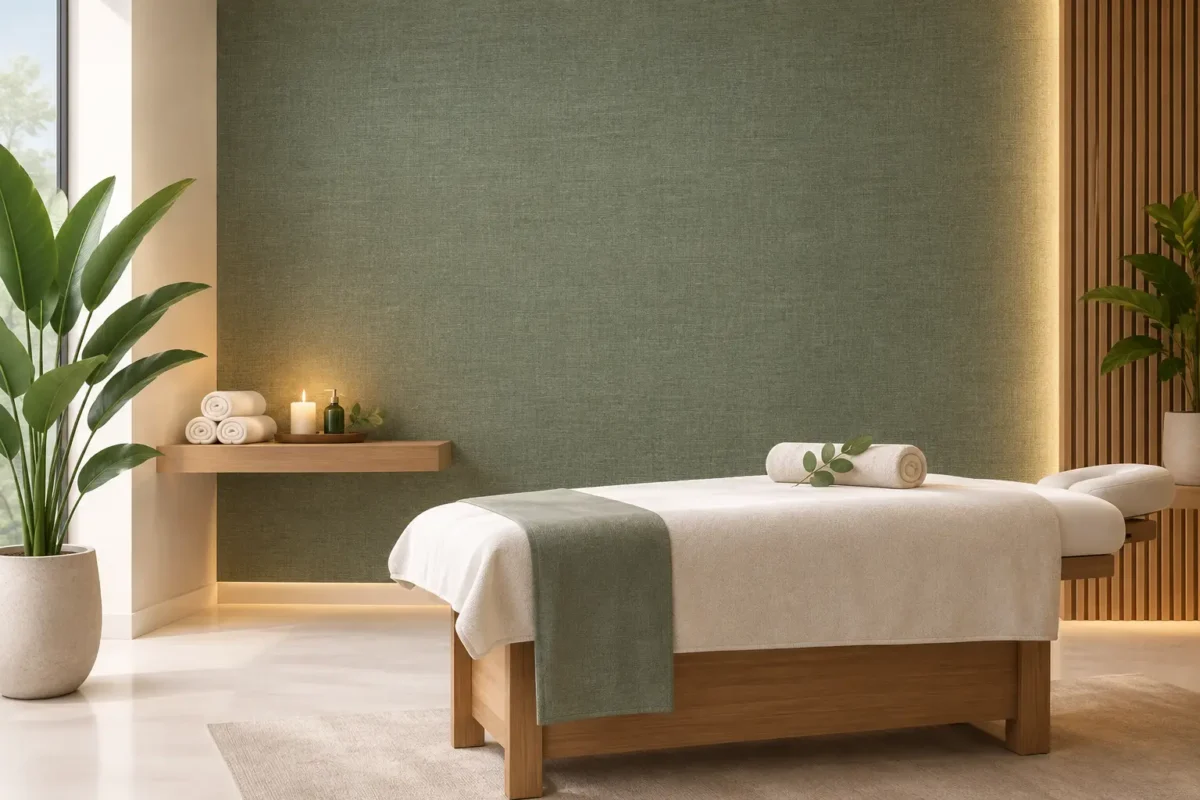
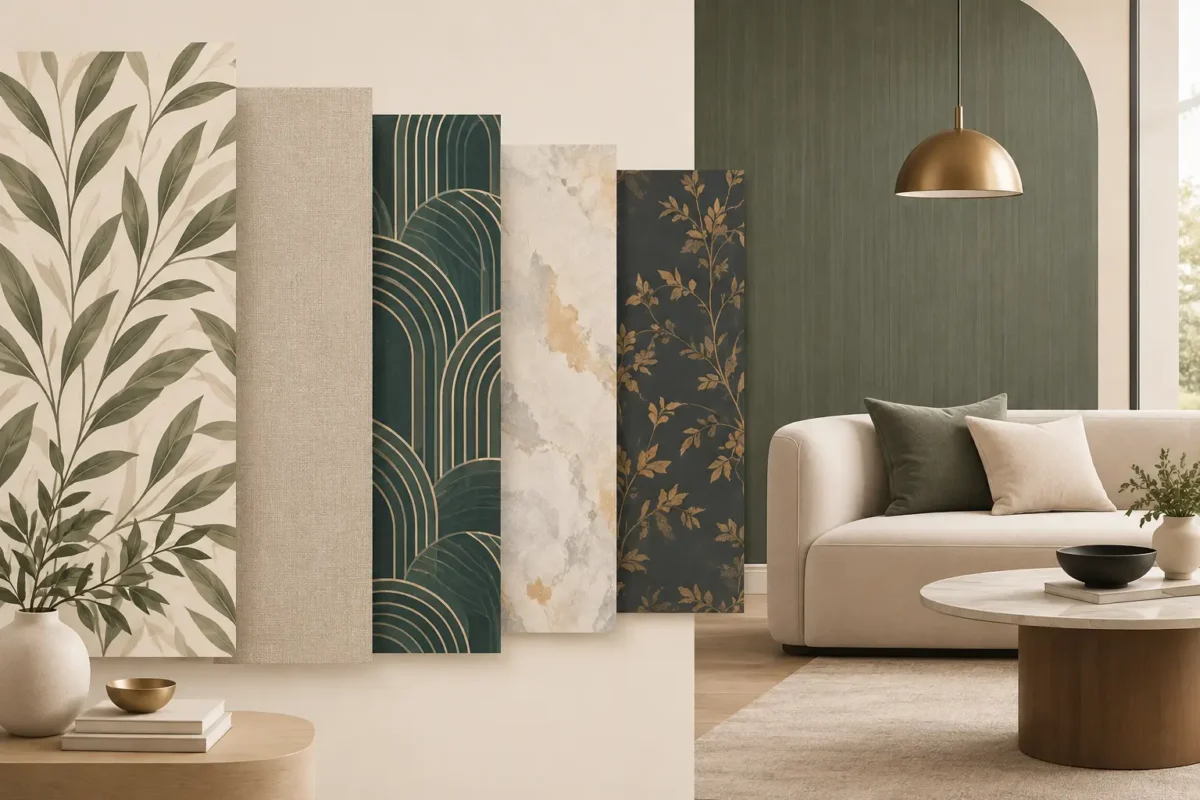
A linen-effect wallcovering brings visual softness without overwhelming a restful room. It is particularly effective in warm white, taupe, mushroom, and stone tones, where its woven appearance catches natural and bedside lighting gently. Choose this finish when you want architectural polish with a low-contrast palette.
Large-scale leaves, branches, and florals turn the headboard wall into a composed feature. The key is proportion. In a bedroom with standard ceilings, a botanical with open space between motifs feels more refined than a dense all-over jungle print. Deep green, muted blue, clay, and warm ivory create a grounded look that works across contemporary and classic interiors.
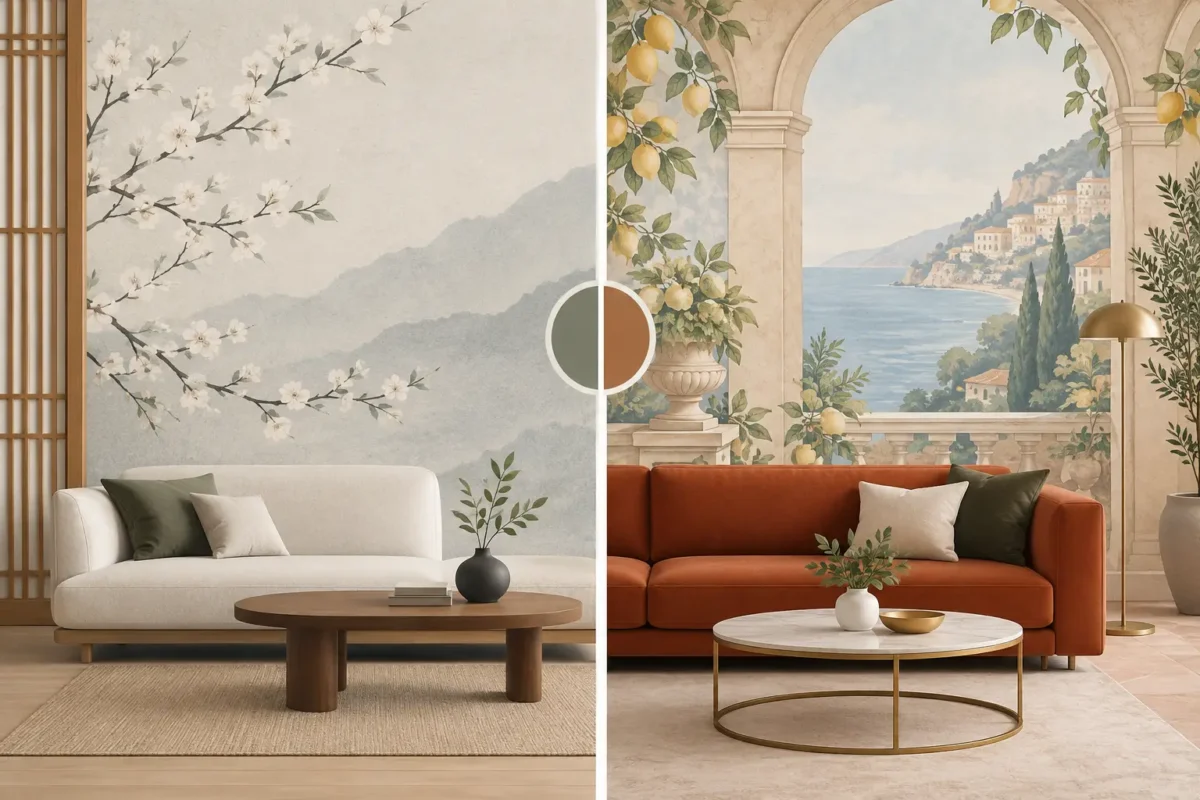
A landscape mural can extend the perceived depth of a bedroom, especially when the artwork has a distant horizon, misty mountains, or a soft coastal scene. Custom sizing is essential here. The image should be placed so its focal point is not blocked by a headboard, and the composition should relate to the full wall rather than simply sit behind the bed.
Geometric wallcoverings give bedrooms structure and a tailored edge. Charcoal, ink, espresso, and muted navy are especially effective in larger rooms with good daylight. The trade-off is that high-contrast geometry can feel busy in a compact space, so use a tonal pattern when the goal is depth rather than drama.
For a high-end, architectural finish, consider wallpaper that recreates limewash, plaster, concrete, or brushed mineral surfaces. These designs offer movement without a formal repeat, making them ideal behind a bed with sculptural lighting or a statement upholstered headboard. They also provide a sophisticated answer for clients who want texture but prefer a more understated result than a mural.
A vertical stripe can make a low-ceiling bedroom appear taller and more composed. Fine stripes feel classic and restrained, while wider bands create a bolder, boutique-hotel effect. Keep the color difference between stripes modest for a serene bedroom. Strong contrast works best when the furniture is clean-lined and the room has enough visual breathing room.
Watercolor-inspired florals add romance without the formality of traditional floral wallpaper. Look for blurred edges, washed pigment, and a limited palette that echoes the room’s textiles. This style suits guest bedrooms, feminine interiors, and transitional spaces where the aim is expressive but not overly sweet.
Wood-look wallcovering can introduce warmth where real paneling is impractical, expensive, or difficult to maintain. Linear grain patterns work well in modern bedrooms, while weathered oak and smoked timber effects suit more relaxed interiors. To avoid a flat result, pair the wall with matte black, bronze, or natural wood accessories that reinforce its material character.
A deep solid wall is one of the most effective ways to create intimacy, but wallpaper adds more nuance than standard paint. Subtle fibers, mica, embossing, or woven texture prevent black, burgundy, forest green, and midnight blue from appearing flat. This approach is particularly strong in bedrooms with pale bedding and light-colored flooring, where contrast can be controlled.
Curved lines, fan shapes, metallic accents, and symmetrical motifs deliver a polished, hotel-inspired bedroom. Use Art Deco wallpaper when you want glamour with order. A restrained gold on warm gray, or bronze on deep teal, feels elevated without becoming theatrical. For the best result, coordinate metals across sconces, drawer pulls, and picture frames.
Monochrome murals in charcoal, sepia, soft gray, or ink blue bring an editorial quality to the bedroom. Architectural sketches, forest scenes, and abstract linework are especially versatile because they complement many bedding colors. They are also a smart option for property developers and hospitality projects seeking a signature visual without limiting future furnishing choices.
A bespoke mural transforms an accent wall into something genuinely individual. Commissioned artwork, an abstract composition, or a high-resolution personal image can be produced to suit the exact wall dimensions and desired color palette. The image quality, ink technology, substrate, and installation all matter. A beautiful photograph will not feel premium if it is enlarged beyond its resolution or installed with visible panel alignment issues.
The strongest bedroom accent walls are planned with the bed, not added after it. Center the main motif to the headboard where possible, and consider the height of wall lights, artwork, and bedside tables before finalizing the layout. If a patterned wallpaper will be partly concealed by furniture, request a visual layout that shows where the repeat or mural focal point will fall.
Lighting deserves equal attention. Warm bedside lamps emphasize texture and create a more inviting evening mood, while daylight reveals true color and pattern scale. If the bedroom receives limited natural light, avoid selecting a dark sample solely under bright showroom lighting. View samples in the room at different times of day before committing.
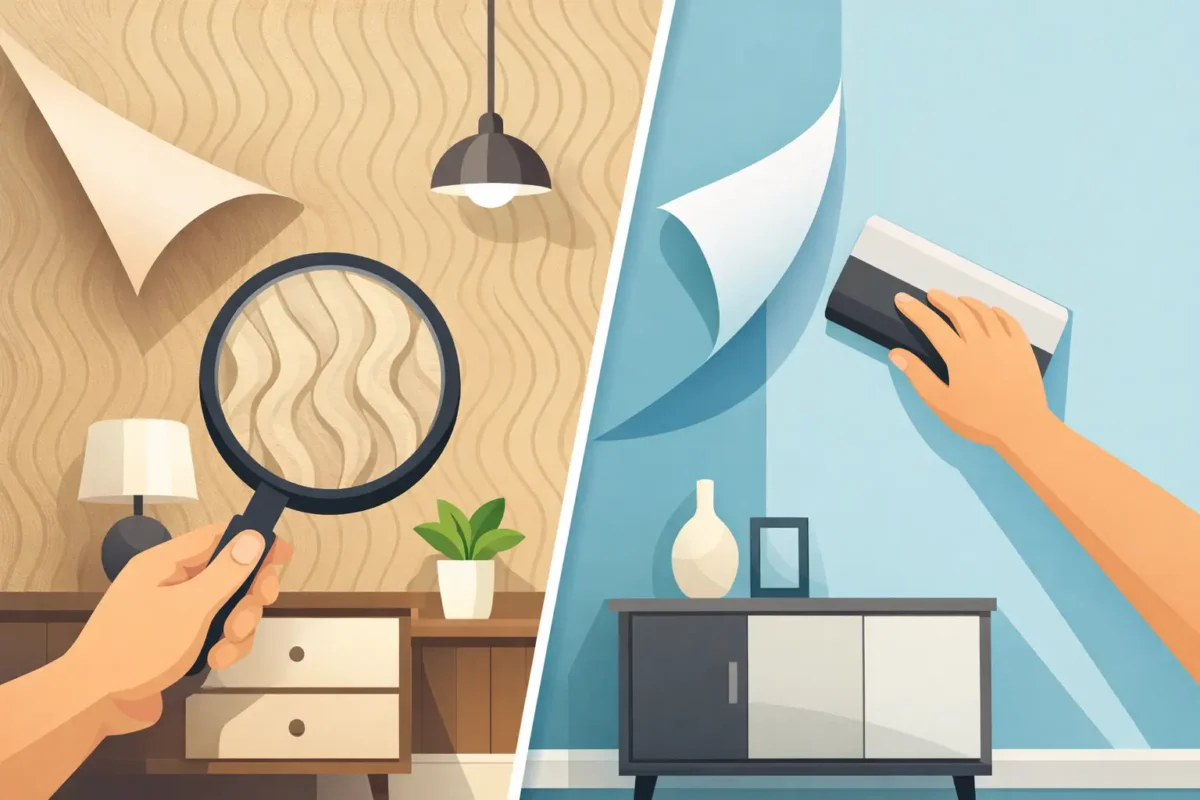
Professional installation is the final difference between a wall that looks merely decorated and one that feels designed. Pattern matching, corner transitions, wall preparation, and clean detailing around switches or sconces all affect the result. In high-value residential, hospitality, and commercial interiors, project-grade materials and experienced installation protect the visual investment.
An accent wall is not always necessary. If a bedroom already has a strong architectural feature, such as richly grained paneling, a fireplace, or a dramatic view, another focal point can compete with what is already working. In those cases, a quiet all-over wallcovering or a carefully selected paint color may create a more balanced room.
Likewise, a single feature wall can look disconnected when the remaining walls, ceiling, and furnishings have no relationship to it. Pull one or two colors from the wallcovering into pillows, a bench, drapery trim, or artwork. The room does not need to be coordinated perfectly, but it should feel intentional.
A bedroom is personal by nature. Choose an accent wall that still feels right in low morning light, during a quiet evening, and after the novelty of the first reveal has passed. The best choice is the one that gives the room its own identity while making rest feel more inviting.