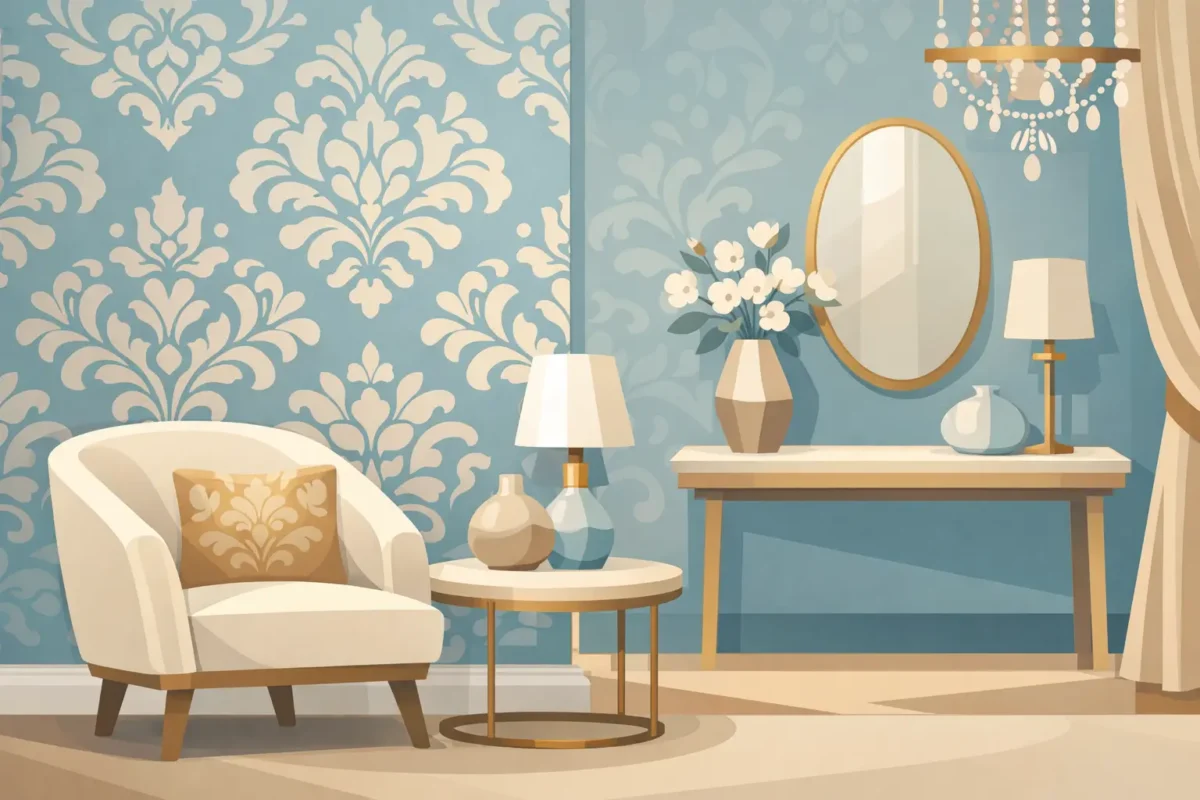
A wall can either disappear into the background or define the entire room. That is why a custom wall mural guide matters before you choose artwork, scale, and material. In a residence, office, boutique, or hotel, the right mural does more than decorate – it sets mood, strengthens identity, and gives the space a finished, intentional point of view.
Custom murals are often treated as a purely visual decision. In reality, the strongest results come from balancing design ambition with technical performance. Image resolution, wall measurements, substrate selection, print method, surface condition, and installation quality all shape the final effect. If one part is overlooked, even a beautiful design can feel underwhelming once it is on the wall.
A successful mural needs to do two jobs at once. First, it has to create impact. That could mean a soft landscape in a bedroom, a bold branded feature in a corporate lobby, or an immersive pattern in a hospitality setting. Second, it has to suit the practical demands of the site, including traffic, cleaning needs, lighting conditions, and wall type.
This is where many projects split into two very different outcomes. A mural selected only for appearance may look strong in a mockup but fail in a commercial environment that needs stain resistance or fire-rated performance. On the other hand, a mural chosen only for specification can feel flat if the artwork has no sense of scale or connection to the space. The best specification is always design-led and performance-backed.
The most common mistake is falling in love with an image before understanding the wall itself. A mural is never viewed in isolation. Doors, switch plates, windows, bulkheads, built-in cabinetry, and furniture placement all interrupt the composition. If the wall has multiple obstacles, a highly detailed focal image may lose its effect. A more atmospheric design often works better in those cases.
Scale matters just as much as the artwork. A mural intended for a narrow powder room wall will behave very differently on a double-height lobby feature. Large walls need visual structure. Smaller walls often benefit from restraint. Before selecting any image, confirm full wall dimensions, note ceiling height, and identify whether the mural should cover edge to edge or sit within a framed visual zone.
Viewing distance also changes the right design choice. In a corridor or reception area, people may experience the wall from several yards away, so strong composition and contrast matter more than tiny detail. In a bedroom behind a bedhead, viewers are closer, which allows for softer texture, layered imagery, or more intricate artwork.
Not every attractive image is suitable for mural printing. Resolution is one of the biggest factors. An image that looks sharp on a phone or laptop may break down when enlarged to full wall size. Pixelation, banding, and weak detail are especially obvious on large, uninterrupted surfaces.
Professional artwork preparation is worth the investment because it protects the finish quality. Color balancing, scaling, cropping, and test review can change the result significantly. This is especially true for branded spaces, where logo integrity, color consistency, and visual alignment need to be precise.
There is also a design question that matters just as much as technical quality: should the mural lead the room or support it? If the rest of the interior already includes strong furniture forms, patterned upholstery, or dramatic flooring, a quieter mural can create sophistication. If the room is intentionally minimal, a high-impact mural can carry the entire concept. Neither approach is better by default. It depends on what role the wall needs to play.
The substrate behind the print is not a minor detail. It determines texture, durability, maintenance, and installation behavior. In residential settings, the decision may lean more heavily toward finish and feel. In offices, retail, healthcare-adjacent spaces, or hospitality projects, durability and compliance often move to the front.
Smooth finishes tend to deliver crisp image reproduction and a clean contemporary appearance. Textured wallcoverings can add depth and richness, especially in premium interiors, but they may soften fine photographic detail slightly. Fabric-backed commercial wallcoverings are often preferred for high-traffic areas because they offer strength, dimensional stability, and long-term performance.
Maintenance is another practical filter. In a family home, wipeability may be enough. In a restaurant, hotel corridor, or customer-facing business, the mural may need stronger resistance to scuffs, abrasion, and repeated cleaning. If the wall sits in an area with moisture or fluctuating temperature, that has to be considered early as well.
A custom mural can have excellent design and still feel average if the print quality is weak. Sharpness, color depth, tonal smoothness, and ink consistency are what separate a decorative wall from a premium interior finish. Advanced printing technology helps preserve detail, produce richer gradients, and deliver a cleaner overall surface appearance.
Ink choice matters too. Eco-friendly inks are increasingly expected in both residential and commercial projects, particularly where indoor air quality is a concern. For designers and developers, this is not just a technical note. It supports a more responsible specification without compromising visual impact.
Lighting should be reviewed before final approval. Natural daylight, warm ambient lamps, cool office lighting, and accent spots can all shift how the mural reads. Dark murals can feel elegant in a controlled setting but may appear too heavy in rooms with limited light. Pale murals can open up a room beautifully, though they may need stronger contrast if the goal is dramatic presence.
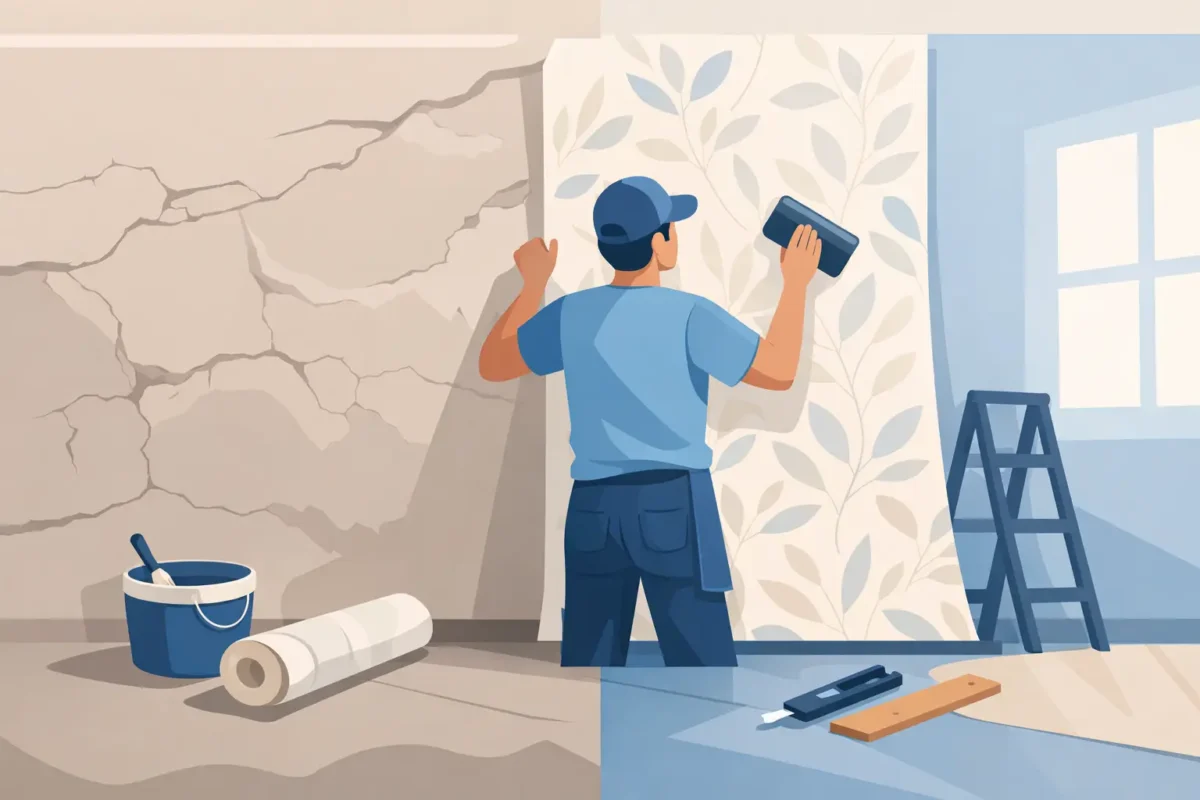
Even the highest-grade mural can fail visually if installation is rushed. Alignment, panel matching, surface preparation, trimming accuracy, and adhesive selection all affect the finished wall. Seams that drift, edges that lift, or misaligned graphics immediately reduce the premium effect.
Wall condition is often the hidden issue. Uneven surfaces, old paint instability, moisture damage, or hairline cracks can all interfere with adhesion and finish quality. A proper site assessment saves time and avoids expensive corrections later. For project environments, it also helps prevent disruption once fit-out timelines tighten.
Professional installation becomes even more critical when the mural includes architectural alignment, such as skyline scenes, geometric layouts, or branded graphics that need to sit exactly within the room’s lines. Precision is part of the design. It is not an afterthought.
In homes, custom murals often focus on personality, softness, and a tailored sense of atmosphere. Bedrooms, living rooms, nurseries, home offices, and feature stair walls all invite different levels of visual energy. Comfort matters, but so does longevity. A mural should still feel right after trends shift.
In commercial spaces, the mural usually carries a strategic role. It may reinforce brand identity, shape customer perception, or improve how the environment feels for staff and visitors. Offices often benefit from murals that bring character without visual clutter, while retail spaces can handle stronger theatrical impact if it supports the brand experience.
Hospitality projects require perhaps the most careful balance of all. The wall needs to impress, but it also has to withstand use. Guest rooms, corridors, lounges, and reception areas all have different wear patterns and viewing conditions. Here, a beautiful mural must also be engineered for performance.
The smoothest mural projects usually begin with a few clear decisions. Define the wall size accurately, the visual objective, the expected wear level, and the mood you want the space to communicate. Once those are established, artwork, material, and print method become much easier to evaluate.
It also helps to review samples and scaled previews instead of relying on imagination alone. A design can feel perfect on screen and oversized in reality, or seem subtle digitally and become exactly right once shown in proportion. Premium results come from testing, not guesswork.
For clients who want both design range and execution confidence, working with a specialist matters. A company such as Decorating Depot brings value not only through mural production, but through material knowledge, showroom consultation, and installation discipline that protect the final result from concept to completion.
A custom mural should never feel like a decorative extra. When chosen well, it becomes part of the architecture of the room – expressive, durable, and specific to the space it was made for. Start with the wall, choose with purpose, and let the finish do more than fill space. Let it define it.