A designer wallpaper showroom is where a wall finish stops being a small decorating decision and becomes part of the architecture of a room. A screen can suggest a pattern, but it cannot show the scale of a botanical print across a lobby wall, the texture of fabric-backed vinyl, or the way metallic details change under warm lighting. For homeowners and project professionals alike, the showroom is where visual ambition meets material confidence.
The strongest showroom experience does more than present beautiful collections. It helps visitors compare surfaces, understand technical specifications, refine a color direction, and select a finish that will remain impressive long after installation day.
Wallpaper is highly visual, but it is also tactile and technical. A sample that appears subtle online may have a pronounced weave in person. A dark ground may feel dramatic in a large hotel corridor yet make a compact powder room feel enclosed. The right choice depends on room dimensions, light direction, furnishings, traffic levels, and the atmosphere the space needs to create.
A well-curated showroom gives these decisions proper context. Large displays reveal repeat patterns at a realistic scale, while coordinated sample books make it easier to compare tones, finishes, and collections. This is particularly valuable when choosing statement walls, where proportion is everything. A mural designed for a 12-foot feature wall should be assessed differently from a small-scale pattern intended to frame a reading nook.
For architects, designers, developers, and hospitality operators, the showroom also reduces project risk. It is easier to confirm whether a wallcovering meets performance requirements when the material, backing, and finish can be reviewed before specification. The result is a more considered selection process and fewer surprises when the project moves from concept to site.
A premium showroom should not treat every wallcovering as interchangeable. Residential bedrooms, retail stores, executive offices, restaurants, and hotel guest rooms place very different demands on their surfaces. Design matters in every setting, but durability, maintenance, and safety requirements can determine which product is genuinely suitable.
Italian and European wallpapers often bring refined pattern, layered color, and distinctive surface character to private homes, boutiques, and hospitality spaces. Korean wallpaper can offer an extensive range of contemporary designs, from clean textured neutrals to expressive floral and geometric finishes. These collections give designers room to create interiors that feel personal rather than formulaic.
For high-traffic commercial settings, fabric-backed wallcovering is often the more practical choice. Its construction is engineered for durability and can be selected for properties where frequent cleaning, impact resistance, and long-term presentation are priorities. Depending on the project specification, fire-retardant performance may also be essential. A capable showroom team should explain these distinctions clearly, without pushing a decorative residential product into a demanding commercial application.
Maintenance deserves the same attention. A restaurant wall, clinic reception area, or active family hallway needs a finish that can handle regular care. The ideal wallcovering is not simply the one that looks best on day one. It is the one that preserves its character under the actual conditions of the space.
The quality of a showroom is visible in its selection, but it is equally clear in the questions its consultants ask. Before recommending a pattern, they should want to know where it will be installed, how the room is used, whether there is moisture exposure, what lighting is present, and what surrounding finishes must be considered.
Look for a destination that provides variety without creating confusion. Thousands of designs are valuable only when visitors can narrow them down with expert direction. A thoughtful consultation can move from broad preferences – modern, classic, organic, bold, understated – to the specific materials and color families that fit the project.
Scale is another mark of a serious showroom. Viewing full-width samples, room-set displays, and large mural visuals helps clients make decisions with more certainty than a small swatch can provide. It also makes repeat patterns easier to understand. Some designs read as calm from a distance but become busy when repeated across multiple walls. Others need generous wall area to reveal their intended impact.
A complete showroom should also show how wallpaper works alongside other interior surfaces. Flooring, cabinetry, upholstery, stone, paint, and lighting all affect the final result. A warm ivory wallcovering may be the perfect complement to walnut cabinetry but look too yellow beside cool gray stone. Seeing and discussing these relationships early protects the overall design direction.
When standard rolls cannot deliver the right scale or identity, custom print wallpaper and bespoke murals offer a more tailored solution. They can transform a blank wall into a branded arrival experience, a calming landscape, a heritage-inspired composition, or a piece of large-format art designed specifically for the room.
Customization is especially effective in hospitality, corporate, retail, and residential feature spaces. A hotel may require artwork that reflects its location and guest experience. A workplace may need a visual statement aligned with the company’s culture. A homeowner may want a mural sized precisely around architectural features, furniture, or a focal point such as a bed or dining table.
The difference between a successful mural and a disappointing one is usually preparation. Image resolution, wall measurements, cropping, color calibration, panel layout, and substrate selection all affect the finished result. Advanced Canon printing technology and eco-friendly ink can support crisp, expressive output, but the design file must still be prepared with care. A showroom that offers custom production should be able to guide the process from concept through proofing and final dimensions.
Custom does not automatically mean maximal. A soft tonal landscape, abstract texture, or enlarged architectural detail can create a more sophisticated effect than a highly literal image. The right approach depends on whether the wall should lead the room or quietly support the furnishings within it.
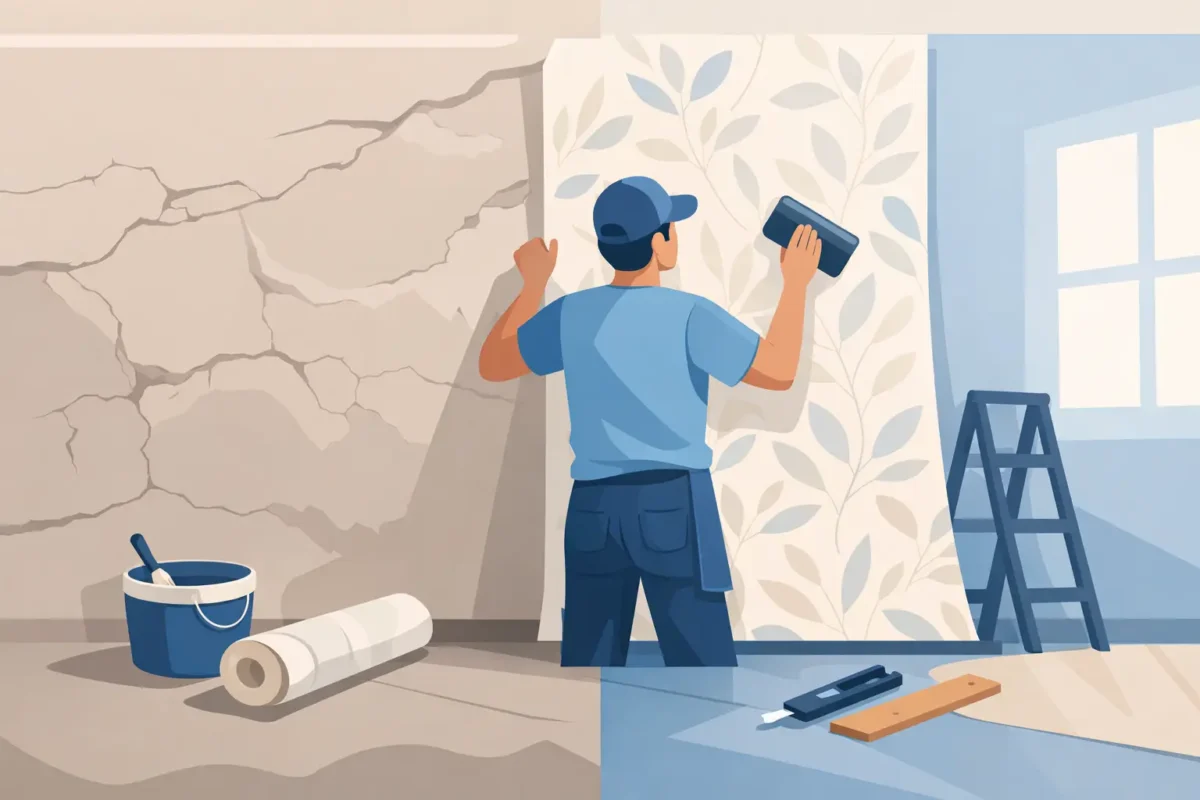
Even exceptional wallcovering can lose its impact through poor installation. Misaligned seams, uneven cuts, incorrect pattern matching, visible adhesive marks, or rushed finishing around outlets and corners can undermine an otherwise premium interior. Installation is not an afterthought. It is the final stage of the product’s performance.
Professional installers understand how different materials behave, including the handling needs of textured papers, vinyl surfaces, fabric-backed commercial products, and custom mural panels. They assess wall condition, prepare the substrate, plan the layout, and account for pattern placement before adhesive is applied. This is particularly important when a design has a strong horizontal line, oversized motif, or metallic surface that can expose small errors.
For large projects, coordinated execution matters just as much as craftsmanship. Site schedules, wall readiness, material sequencing, and quality checks need to be managed with the same discipline applied to the design specification. Decorating Depot brings more than 40 years of wallcovering experience to this process, pairing wide design choice with professional installation confidence.
Bring room dimensions, photographs, paint references, flooring samples, and any furniture or finish selections already confirmed. If the project is commercial, bring the performance brief as well. This gives the consultant a stronger starting point and helps prevent selections that look appealing in isolation but conflict with the wider scheme.
It also helps to define the wall’s job before selecting the pattern. Is it meant to add warmth, create a focal point, reinforce a brand, improve perceived luxury, or make a large room feel more intimate? A clear purpose makes editing easier. The best design is rarely the pattern with the most detail. It is the finish that delivers the intended feeling while working with the practical conditions of the space.
A showroom visit should leave you with more than a favorite sample. It should give you a material choice, a scale strategy, an installation plan, and the confidence that the finished wall will perform as beautifully as it looks.