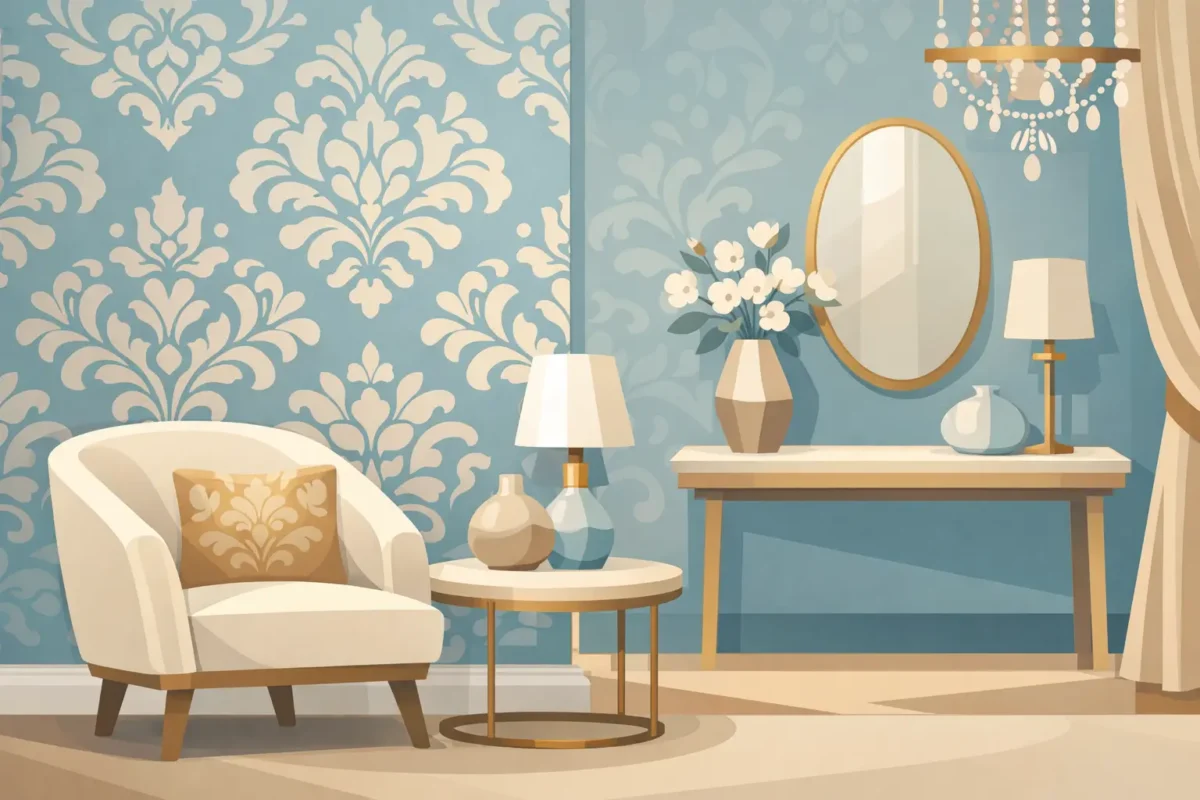
A wall can carry far more than a color. It can establish the mood of a hotel lobby before the first greeting, make a retail concept instantly recognizable, or give a living room the sense of finish that furniture alone cannot create. Custom wallpaper gives designers and property owners the freedom to make that impact at the exact scale, palette, and level of performance a space requires.
Unlike an off-the-shelf pattern that must be adapted to the room, a custom wallcovering begins with the room itself. Its dimensions, lighting, use, architectural features, and design intent all shape the final result. That distinction matters when the goal is not simply to cover a wall, but to create a surface that feels purposeful, polished, and built to last.
Standard wallpaper offers convenience and an impressive variety of patterns, but it works within fixed repeat sizes, colorways, and panel dimensions. Custom wallpaper removes many of those limitations. A designer can enlarge a botanical motif for a double-height reception area, soften a brand color for a workplace lounge, or position a mural focal point precisely behind a bed, sofa, or reception desk.
This flexibility is particularly valuable in spaces where proportions are unusual. A narrow hallway, curved feature wall, large stairwell, or room with multiple openings can make a ready-made pattern feel interrupted or poorly scaled. With a custom design, key visual elements can be placed around doors, windows, built-ins, and architectural details rather than cut through them.
For commercial interiors, customization also turns walls into an extension of the brand. A hospitality property may use local landscape imagery to create a sense of place. A restaurant can build atmosphere with a tailored texture, illustrated motif, or oversized art wall. An office can introduce subtle visual identity without relying on oversized logos. The result is more considered than generic decoration and more enduring than a temporary graphic application.
A beautiful image is not automatically a beautiful wallcovering. The artwork must be evaluated at the intended printed size. Fine lines, photographic detail, color gradients, and repeating patterns all behave differently when expanded across a full wall.
A small digital image may look sharp on a phone screen yet appear soft or pixelated when printed several feet wide. Conversely, a pattern designed at too small a scale can feel busy once installed in a compact room. Professional production considers resolution, viewing distance, panel joins, pattern repeat, and the relationship between the artwork and surrounding finishes.
Scale should respond to the room’s purpose. Large, expressive forms can give a lobby, retail floor, or open-plan living area a strong focal point. Bedrooms and private dining spaces often benefit from quieter textures or more controlled compositions. There is no universal rule that a mural must be dramatic. In some interiors, the most successful custom wallpaper is the one that reads as depth, texture, and atmosphere rather than an obvious picture.
Color requires the same discipline. Daylight, warm decorative lighting, reflective stone, timber tones, and neighboring upholstery can shift the way a printed color is perceived. Reviewing a proof or sample before full production helps align expectations, especially for brand-sensitive colors and sophisticated neutral palettes.
Before finalizing a custom wallcovering, establish the wall measurements and identify where each panel will begin and end. Confirm whether the design should continue behind furniture, wrap around corners, or stop at a defined architectural line. It is also wise to decide early how the wall will relate to ceilings, flooring, drapery, and lighting.
For a mural, the focal point should never accidentally sit behind a headboard, shelving unit, or television. For a repeating design, the pattern should be scaled to suit the wall width and ceiling height. These decisions are simple on paper, but they are what separate an intentional feature wall from a surface that feels visually compromised.
The right substrate is as important as the right image. Residential spaces may prioritize softness, visual refinement, and easy maintenance. Commercial, hospitality, healthcare, and high-traffic environments often require higher resistance to scuffs, cleaning, humidity, and daily wear.
Fabric-backed commercial wallpaper is a strong option for demanding interiors because it combines a refined decorative finish with substantial durability. It is well suited to corridors, guest rooms, offices, meeting spaces, retail environments, and public-facing areas where walls receive regular contact. Depending on the project specification, performance requirements may also include fire retardancy, washable surfaces, and compliance with relevant building standards.
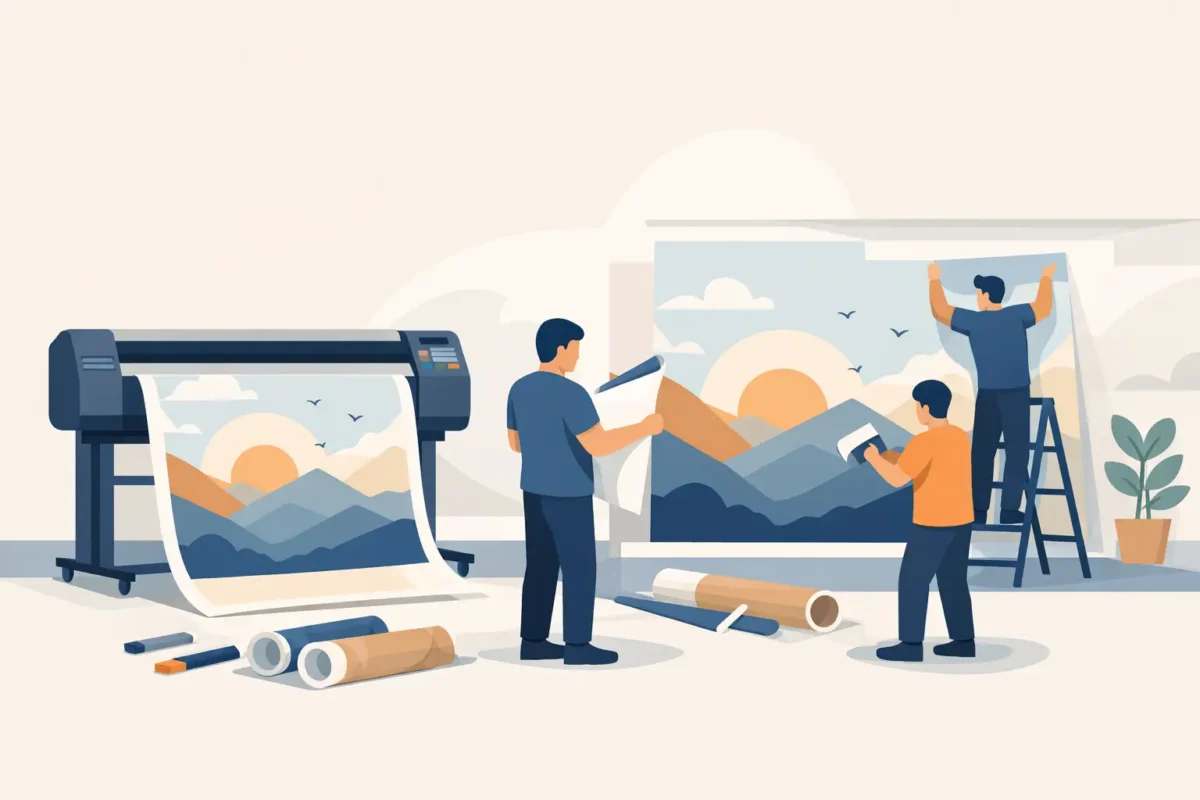
For custom printed wallpaper, advanced digital printing makes it possible to reproduce detailed artwork, original photography, branded graphics, and bespoke patterns with controlled color and crisp definition. Canon printing technology and eco-friendly inks can support high-impact visuals while maintaining a more responsible production approach.
Material selection should account for more than appearance. Consider these practical factors before approving a finish:
A delicate finish may be ideal for a low-traffic residential feature wall, while a busy hotel corridor needs a more resilient specification. Choosing the material after choosing the artwork can lead to unnecessary compromises. The best projects develop both together.
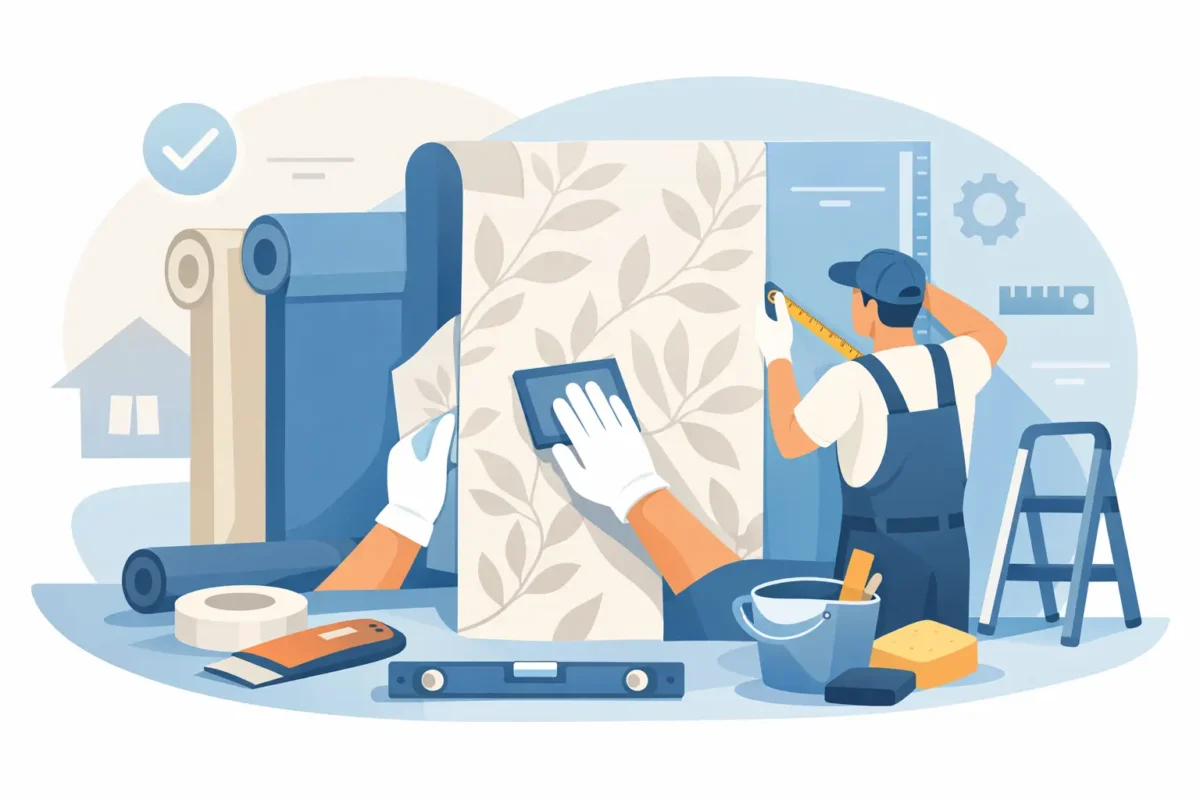
Custom work rewards a disciplined process. Accurate site measurement comes first, including wall width, height, ceiling variations, corners, openings, and any fixed elements that affect the layout. In older properties and large commercial sites, walls are rarely as square or level as drawings suggest. Measuring on site protects the design from unwelcome surprises.
The next stage is artwork preparation and approval. This is where colors, scale, cropping, panel alignment, and material are confirmed. A professional supplier can advise whether an image has sufficient resolution, how a design should be divided into panels, and where joins can be positioned discreetly.
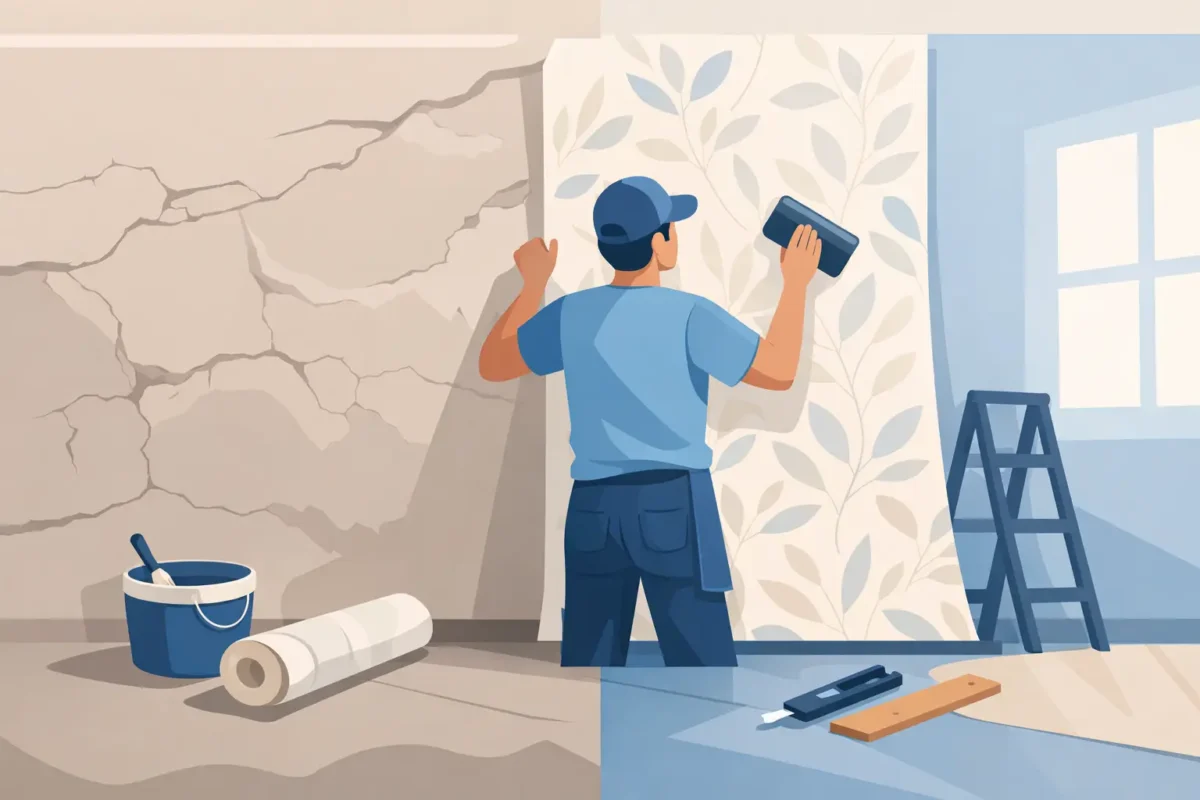
Installation is not an afterthought. Even premium material and exceptional printing can look poor if seams are misaligned, adhesive is incorrectly applied, or the substrate has not been prepared. Walls should be clean, dry, smooth, and properly primed where needed. Professional installers understand how different substrates react, how to align large-format graphics, and how to maintain the continuous flow of a pattern across panels.
This is especially important for murals, geometric designs, and wallcoverings with obvious directional elements. A few millimeters of drift can become noticeable across a full wall. Experienced installation protects the investment and gives the finished surface the precision it deserves.
Custom wallpaper is often associated with a single statement wall, but its value extends much further. In homes, it can turn a master bedroom into a retreat, bring personality to a nursery, or add depth to a dining room without introducing clutter. In offices, it can distinguish client-facing zones from work areas while reinforcing a considered company culture.
Hotels and serviced residences can use tailored murals to create memorable arrival moments and more distinctive guest rooms. Retailers can use custom surfaces to frame merchandise and make a compact footprint feel more branded. Developers can elevate show units, sales galleries, and common areas with visuals that support the character of the property.
The strongest applications balance expression with longevity. Trend-led graphics can be exciting, but public spaces and long-term residences often benefit from designs that remain relevant after the initial reveal. Natural textures, abstract compositions, architectural linework, and location-inspired art tend to offer more staying power than highly literal, short-lived motifs.
A statement wall should perform as confidently as it photographs. That means defining the visual objective, the technical demands, and the installation conditions before production begins. It also means working with a partner that can provide design guidance, material knowledge, print capability, and professional execution under one roof.
With more than four decades of wallcovering experience, Decorating Depot approaches custom wallpaper as a complete interior surface solution, from concept and material selection through print production and installation. For a private residence or a large-scale commercial project, that level of coordination helps preserve the design intent from the first sample to the final panel.
The most memorable walls are rarely the loudest. They are the ones that fit the space so precisely that every color, detail, and finish feels as though it was always meant to be there.