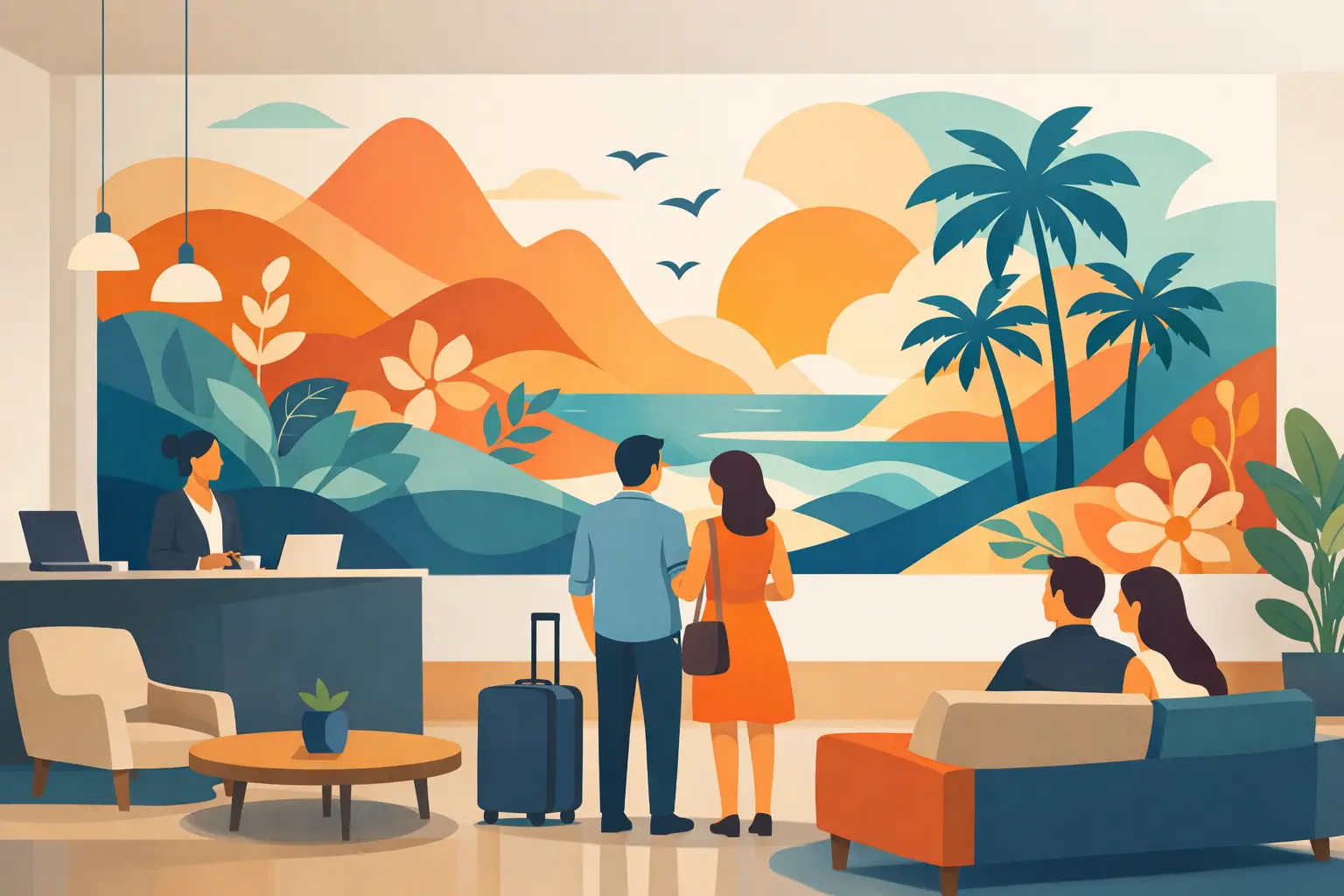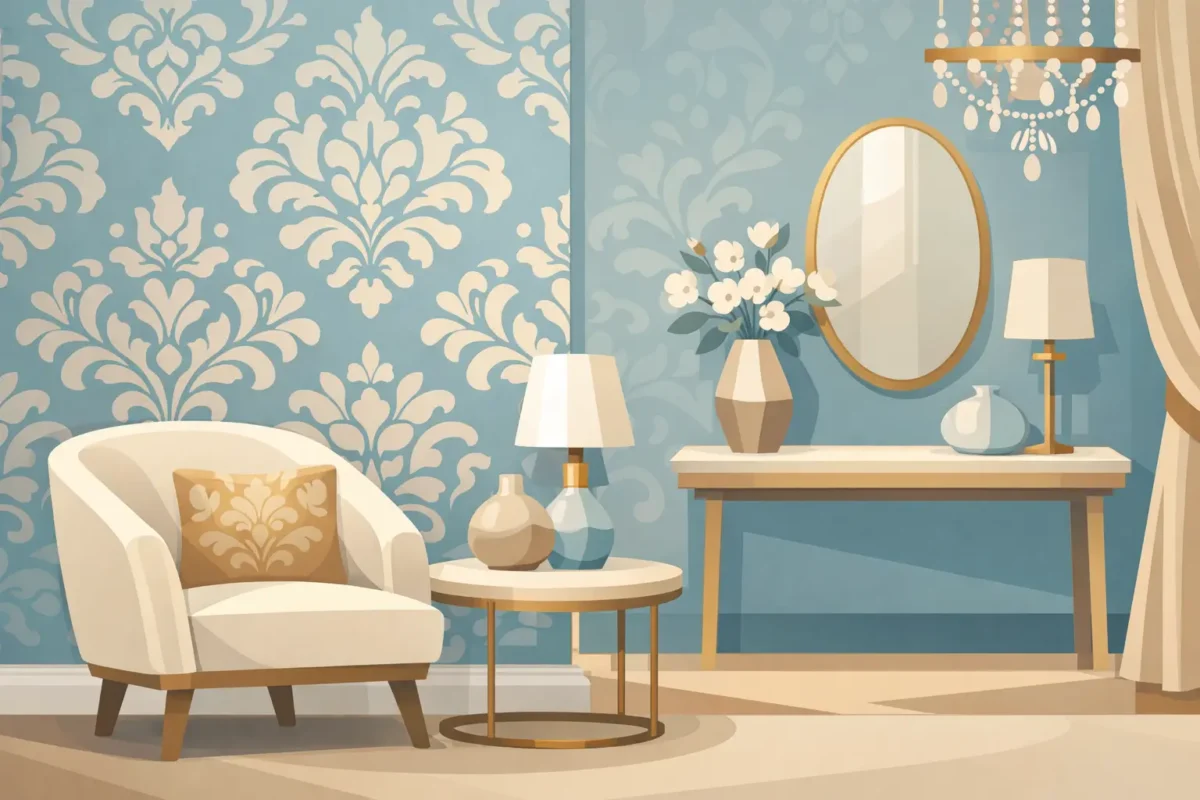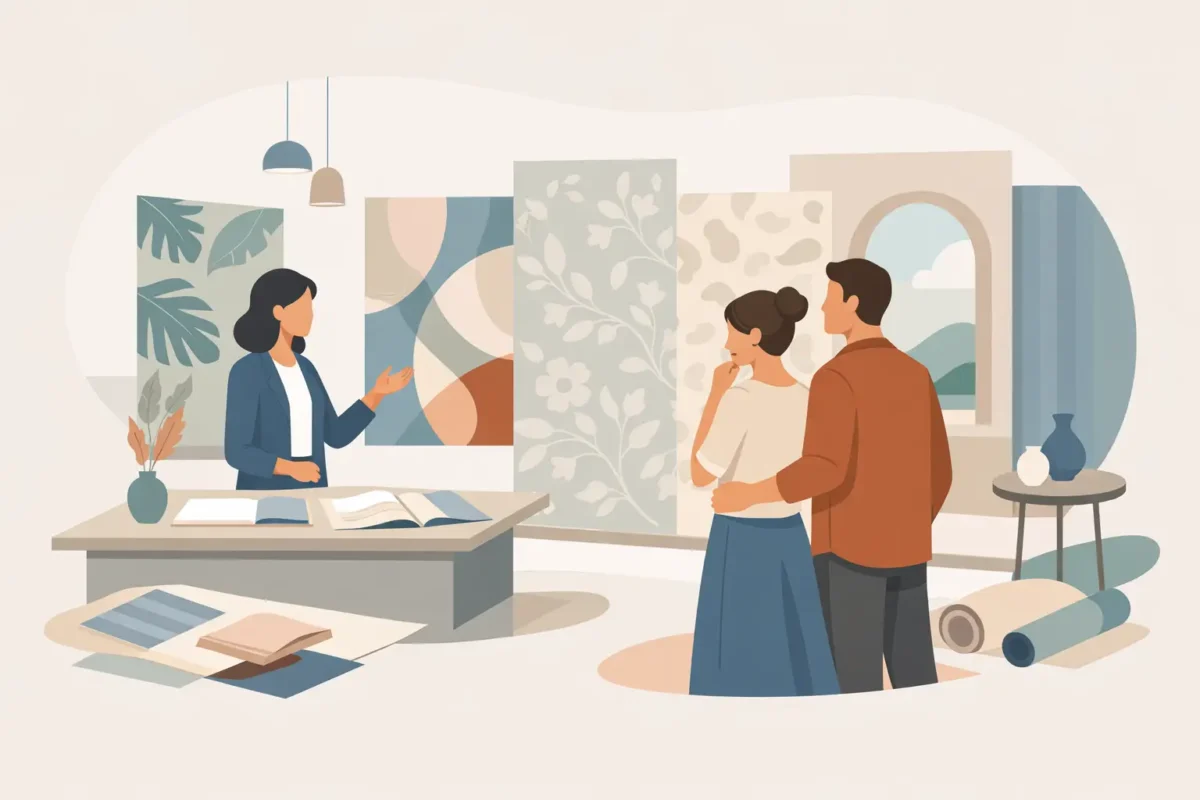
A guest may forget the exact shade of a lobby sofa, but they will remember the wall behind reception that made them stop, look up, and take a photograph. Hospitality mural trends 2026 are moving beyond decorative backdrop status. Hotels, restaurants, resorts, and serviced residences are using murals to establish a sense of place, guide movement, shape atmosphere, and make every square foot work harder for the brand.
For operators and designers, the opportunity is not simply to choose a striking image. The most successful mural programs balance visual impact with the realities of hospitality: constant traffic, cleaning routines, lighting changes, fire-safety requirements, and the need for a finish that still looks exceptional after thousands of guest interactions.
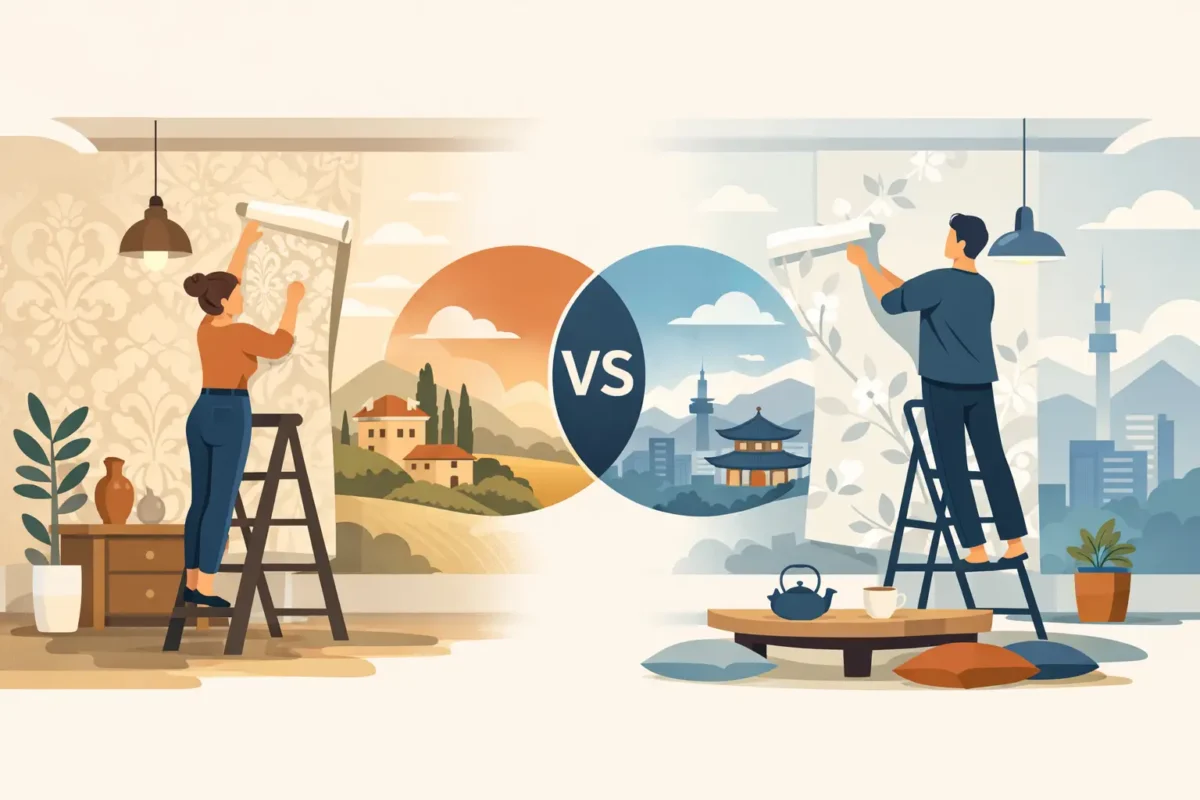
Generic tropical leaves and anonymous city skylines are giving way to artwork with a more specific point of view. Guests increasingly expect a property to feel connected to its location, whether that means the local landscape, neighborhood architecture, regional craft, or a fresh interpretation of cultural heritage.
This does not require a literal postcard mural. A coastal resort might use abstract tidal lines, enlarged coral textures, or a subdued study of native foliage. An urban hotel can translate the geometry of nearby streets, transit maps, or historic building facades into a graphic composition. The result feels more considered than a stock image while giving the property a visual signature that cannot be easily duplicated elsewhere.
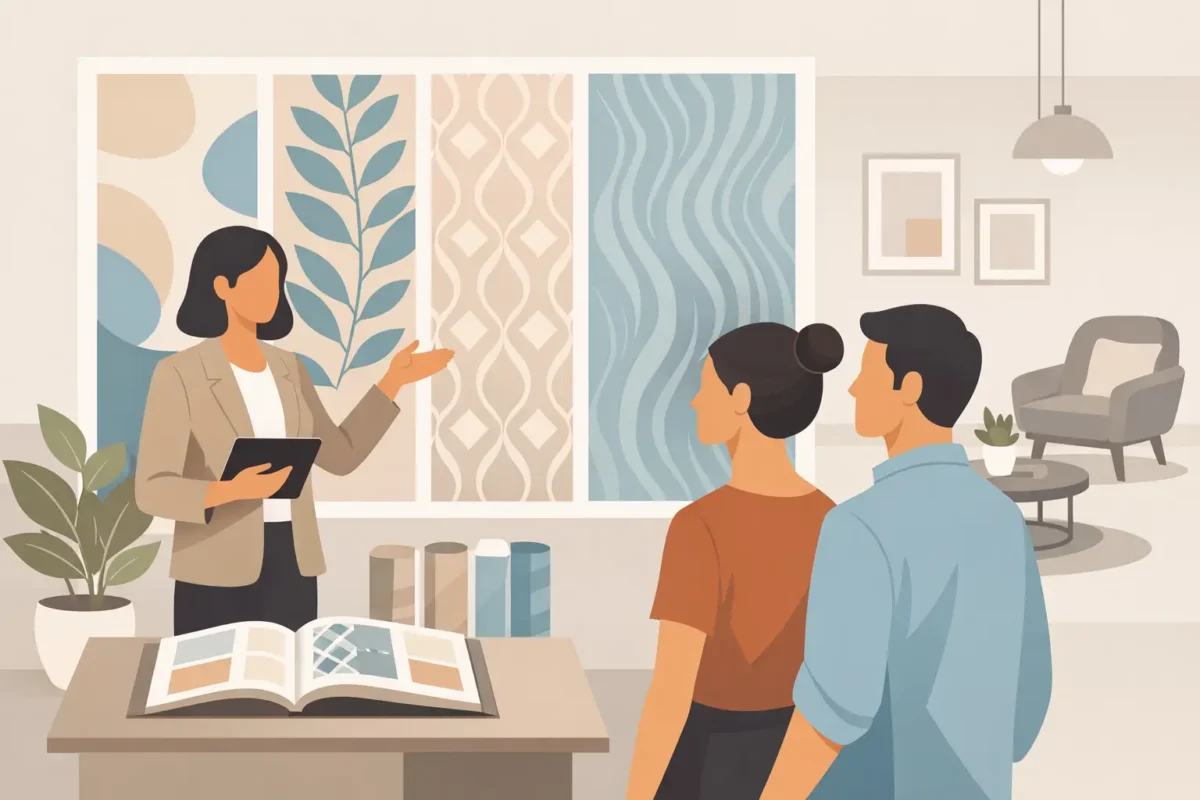
Custom murals are especially valuable here because scale, palette, and subject matter can be tailored to the architecture. A scene that works in a compact elevator lobby may need a completely different crop, color balance, and level of detail for a double-height arrival space. Bespoke design ensures the wall supports the room rather than competing with it.
Statement walls remain central to hospitality design, but 2026 favors atmosphere over excess. Rather than filling every surface with high-contrast graphics, designers are creating focal moments and allowing surrounding finishes to provide calm.
Expect more tonal landscapes, layered watercolor effects, misty botanical studies, washed mineral forms, and hand-drawn linework. These murals can feel luxurious without becoming overly formal. They are particularly effective in guest room corridors, lounge areas, spa reception zones, and private dining rooms, where guests should feel immersed rather than overwhelmed.
Color direction is becoming richer and more grounded. Deep olive, tobacco, clay, indigo, softened black, muted plum, warm sand, and sun-faded blue offer depth without the glare of highly saturated color. The right palette depends on daylight, artificial lighting, furniture finishes, and brand personality. A dramatic dark mural can create an intimate bar experience, for example, but may make a narrow corridor feel compressed if it lacks sufficient lighting and visual breathing room.
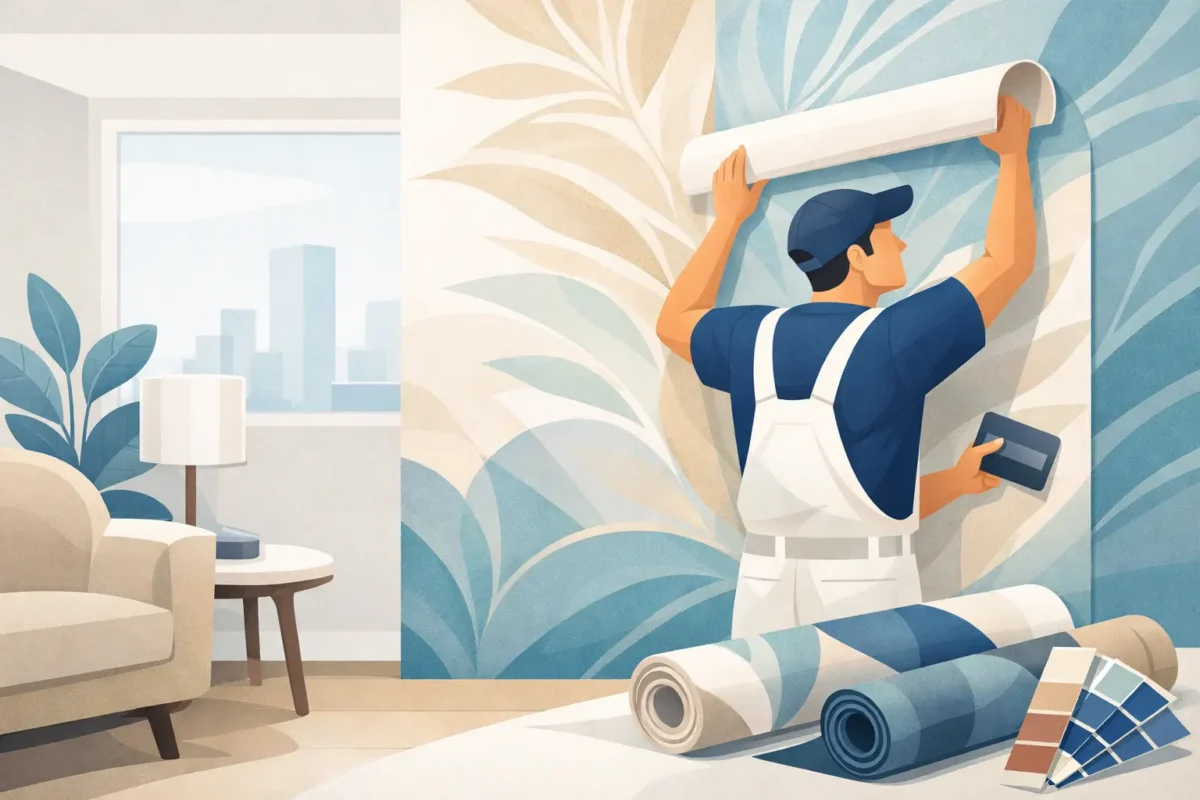
Flat printed walls are no longer the only option. One of the strongest directions is the pairing of mural artwork with tactile surface character. Linen-like grounds, plaster-inspired visuals, woven effects, brushstroke detail, and subtle metallic accents add dimension that guests can perceive even from a distance.
This layered look is ideal for premium spaces because it feels considered under both daylight and warm evening lighting. Yet texture should be selected with maintenance in mind. A finish that appears beautifully delicate must still withstand cleaning and contact in high-traffic environments. Commercial-grade wallcoverings provide a more practical route than fragile decorative treatments where durability is essential.
A well-planned hospitality mural does more than create a photo moment. It can organize a property and improve the guest journey.
In large hotels, murals can distinguish lift lobbies by floor, mark the transition between public and private zones, or give meeting room corridors a clearer identity. In restaurants, a feature wall can establish the visual boundary of a dining area without adding partitions that reduce openness. In wellness settings, flowing mural compositions can slow the visual pace and encourage a sense of calm before a treatment even begins.
Wayfinding is most effective when it is integrated subtly. A mural can carry an abstract directional rhythm, incorporate small identifiers, or use a consistent visual language across different zones. The goal is not to turn art into signage. It is to make orientation feel intuitive and aligned with the overall interior concept.
For hospitality brands with multiple locations, this approach also supports consistency. A shared motif, color family, or illustration style can become a recognizable brand asset, while each property adapts the mural content to its own location. That balance prevents standardization from feeling generic.
There is still room for bold pattern, oversized flora, surreal scenes, and expressive color. The difference in 2026 is restraint in placement. Maximalist murals are being used where they can deliver a concentrated emotional impact: behind a cocktail bar, inside a restaurant entry, at a social-media-ready stairwell, or along a dramatic event-space approach.
The strongest installations often frame the guest experience rather than dominate it. Consider viewing angles, furniture placement, and how the image appears in photographs. A mural behind seating needs a composition that is attractive when partially obscured. A wall facing an entrance should have a clear visual read from a distance. Fine details may be beautiful up close, but they can disappear in a large lobby.
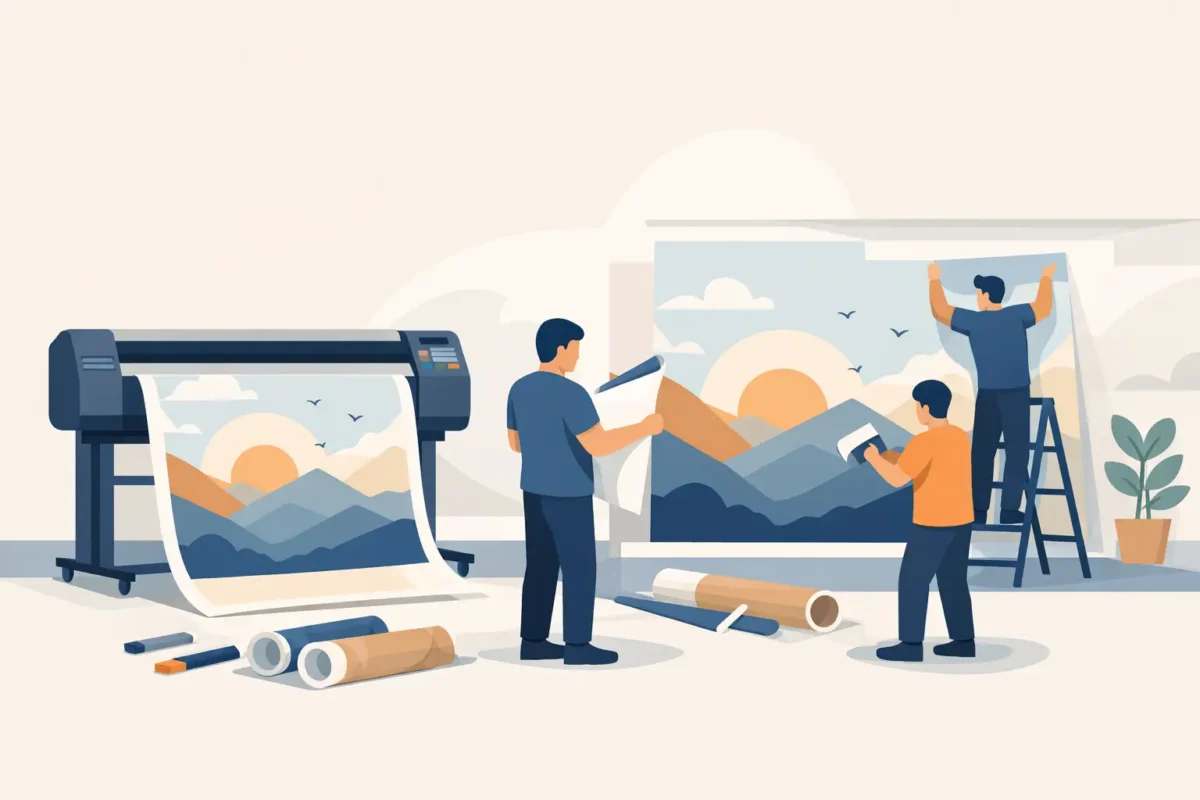
Scale must be resolved before printing. Enlarging a low-resolution image can compromise clarity, while a highly detailed composition may look busy when expanded across a long wall. Professional custom print production makes it possible to assess artwork, adjust proportions, and select the right material before installation begins.
Guests may not ask what ink was used on a mural, but developers, designers, and operators increasingly consider environmental impact alongside aesthetics and lifecycle performance. This is influencing material selection, print technology, and the preference for durable finishes that do not need frequent replacement.
Eco-friendly ink systems and made-to-measure printing can help reduce unnecessary production. Printing to the correct dimensions also supports a cleaner installation strategy, particularly in projects with unusual wall heights, curves, niches, or integrated architectural details.
Durability itself is a practical sustainability consideration. A mural that resists scuffs, cleans easily, and maintains its color can remain in service longer than a decorative finish that deteriorates quickly. For public spaces, a commercial solution should be evaluated for washability, scratch resistance, fire-retardant performance where required, and suitability for the specific operating environment.
A beautiful design can fail when paired with the wrong substrate. Guest rooms, corridors, restaurants, lounges, and spa areas each place different demands on wall finishes.
Fabric-backed commercial wallcovering is often suited to busy hospitality interiors because it offers strength, dimensional stability, and a refined finish. Custom print wallpaper can provide greater creative freedom for bespoke imagery and branded artwork. In lower-contact areas, a more delicate paper may be appropriate, but it is rarely the best choice for a high-traffic circulation zone.
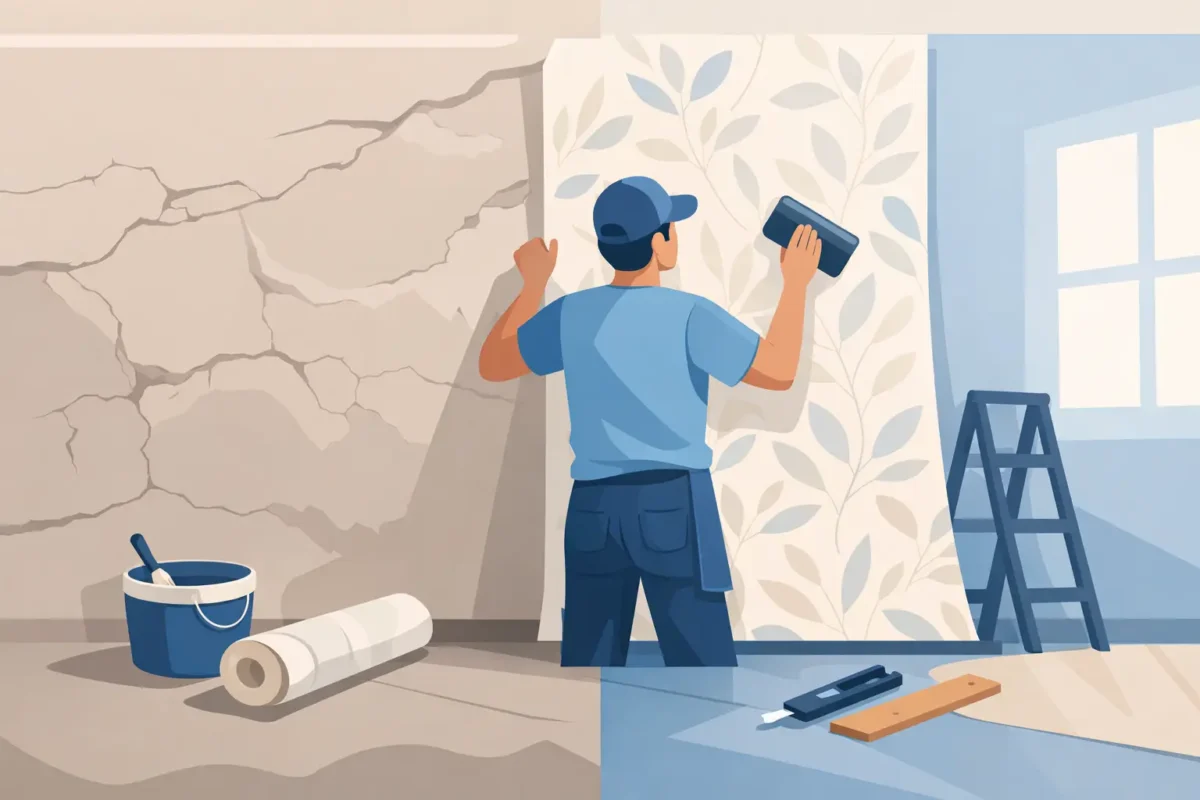
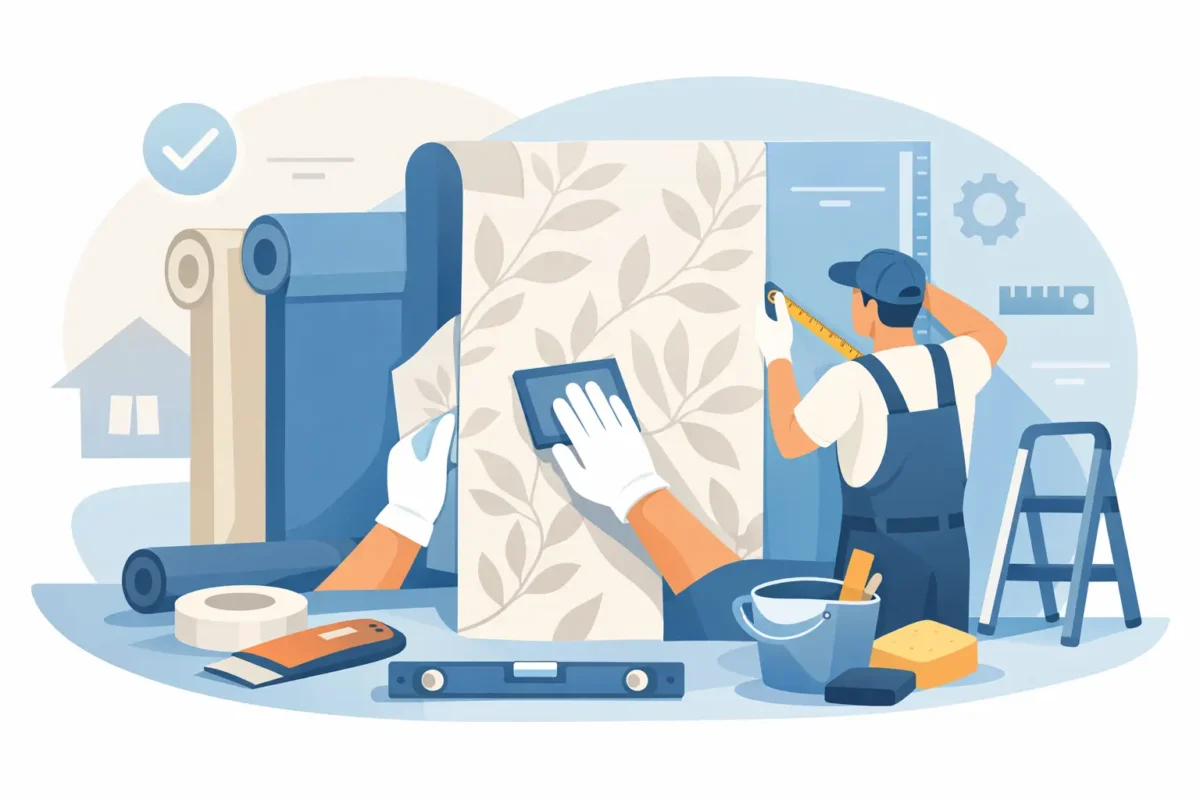
Installation quality matters just as much. Pattern matching, panel alignment, corner finishing, wall preparation, and lighting all affect the final appearance. A premium mural should read as one continuous artwork, not as a series of printed panels. Experienced installation is what turns a strong concept into a flawless wall.
The best hospitality murals in 2026 will not look like a trend applied at the end of a project. They will feel inseparable from the architecture, furnishings, lighting, and service experience. They may be quiet and textural or bold and theatrical, but they will have a reason for being there.
Before selecting imagery, consider what the property wants guests to feel in that exact space: energized at arrival, connected to the destination, relaxed before dinner, or intrigued enough to explore further. Then match the creative direction with the right commercial-grade material, print quality, and installation standard. That is how a mural becomes more than a wall finish. It becomes part of the stay guests remember.