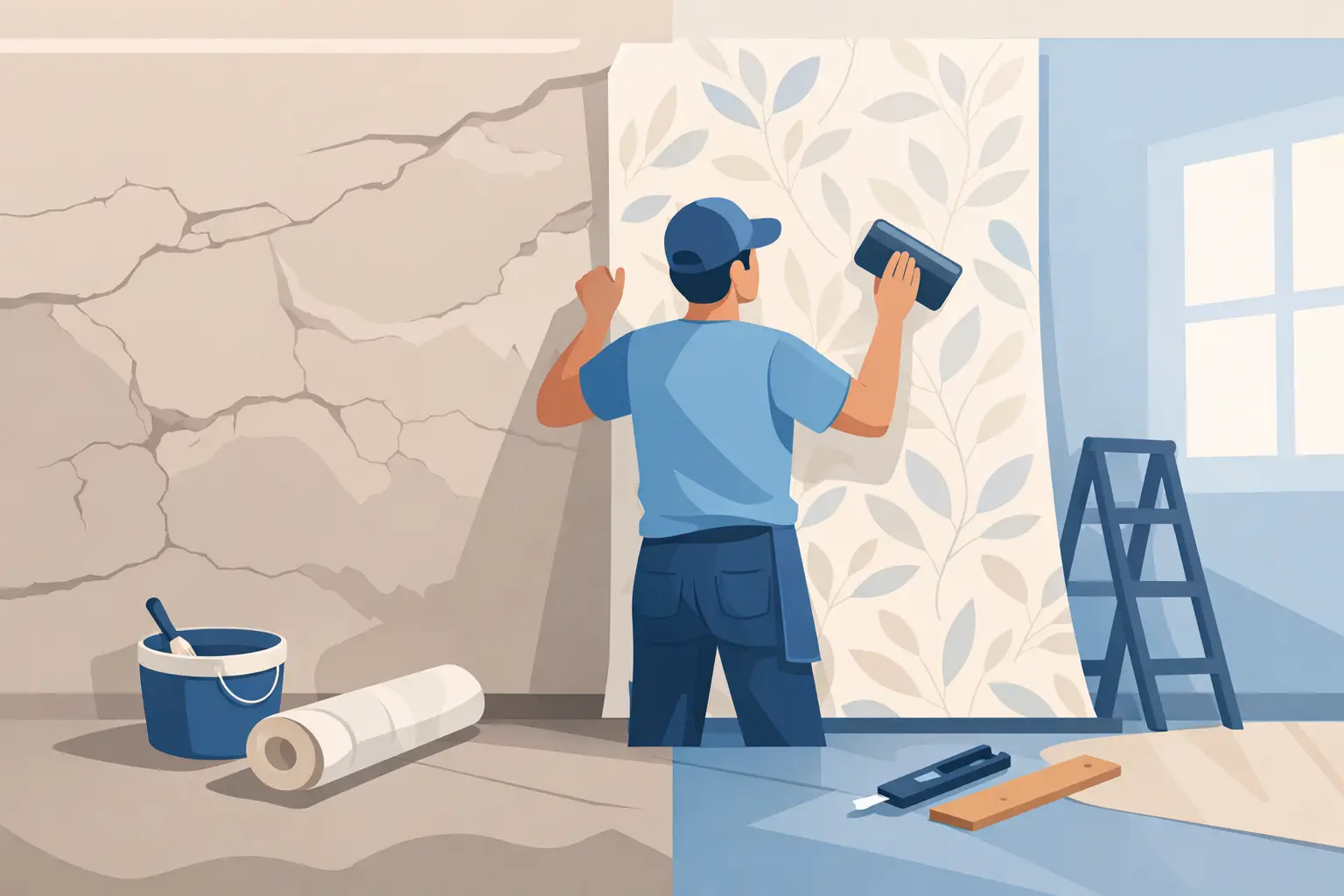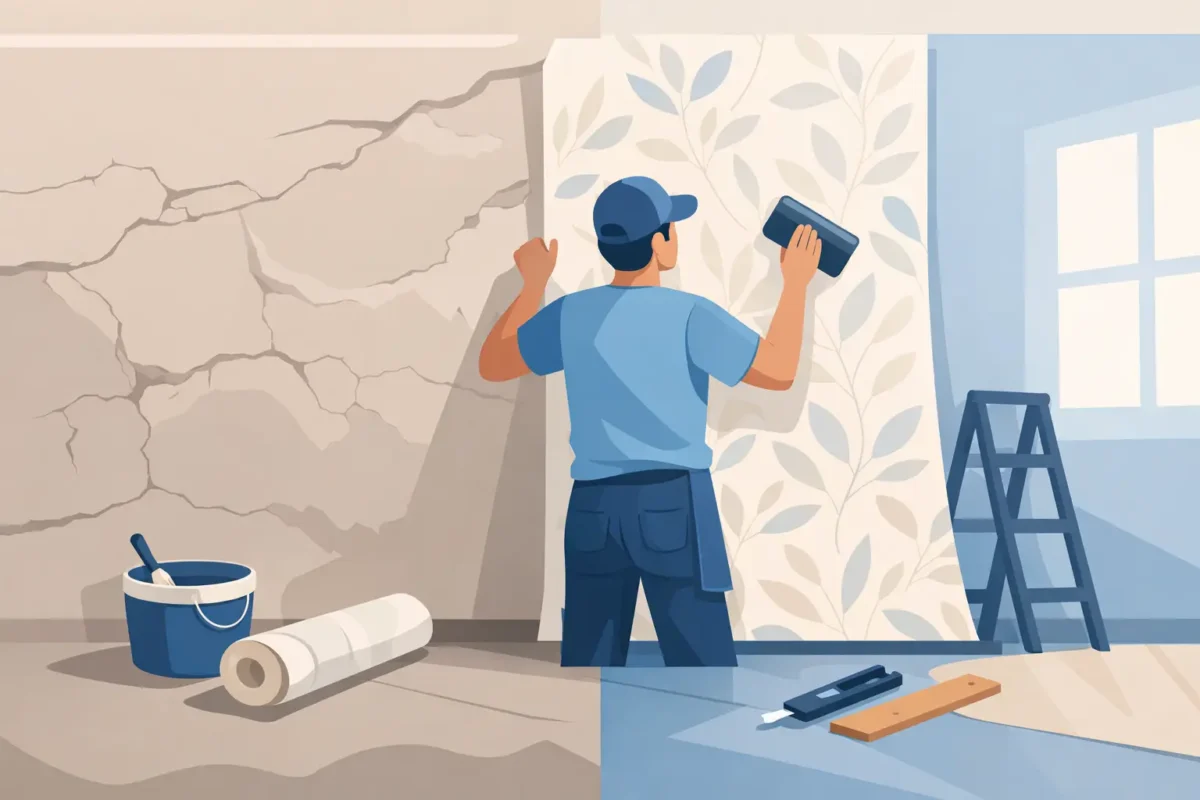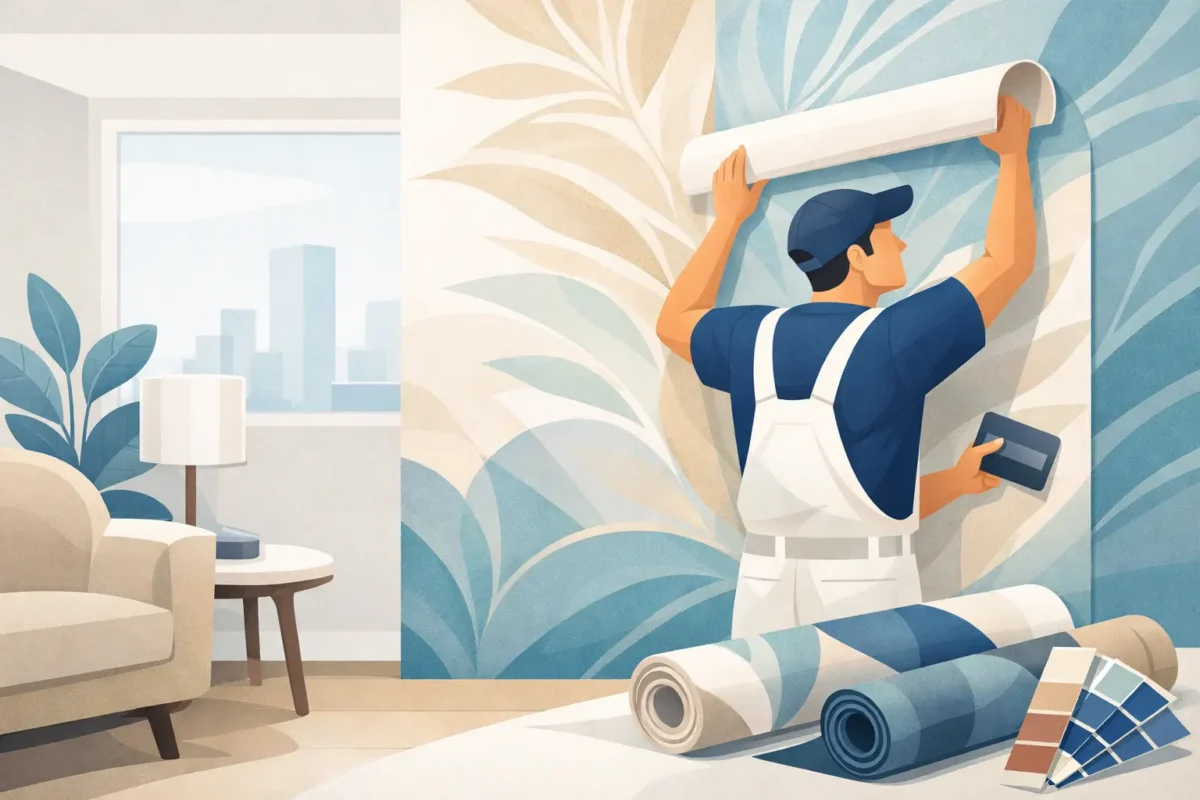
A statement wall should feel intentional, not like a clever disguise. So, can wallpaper cover uneven walls? Yes, but only when the wall’s imperfections are minor and the chosen material, preparation, and installation method are right for the space. Wallpaper can soften the appearance of light texture, hairline marks, and small visual inconsistencies. It cannot correct structural movement, deep dents, moisture damage, or a surface that is actively crumbling.
For homes, hospitality interiors, retail settings, and offices, the goal is not simply to make a wall look acceptable. It is to create a finished surface that remains polished under daylight, downlights, close inspection, and everyday use. That calls for an honest assessment before the first panel is hung.
Wallpaper is a finish, not a leveling compound. Thin wallpaper follows the contour beneath it, which means a bump, hollow, seam, or rough patch may remain visible after installation. In some cases, a patterned design can distract from subtle unevenness. In others, especially with plain, metallic, or high-gloss finishes, wallpaper can make the same flaw more noticeable.
The practical answer depends on three factors: the severity of the unevenness, the material selected, and the amount of preparation completed before installation. A lightly textured wall may be an excellent candidate for a durable, textured wallcovering. A wall with pronounced ripples or loose plaster needs repair first, regardless of how beautiful the wallpaper design may be.
Not all wall flaws behave the same way beneath a wallcovering. Looking at a wall from straight on is not enough. Shine a work light across the surface from the side, then run a straightedge over the most visible areas. This reveals shadows, raised joint lines, and shallow depressions that ordinary room lighting can hide.
Fine orange-peel texture, faint roller marks, light scuffs, and tiny filled nail holes are often manageable. A heavier embossed wallpaper, fabric-backed commercial wallcovering, or design with a layered print can reduce their visual impact. The surface must still be clean, dry, stable, and properly primed.
A busy botanical, linen effect, grasscloth-inspired texture, or mural with organic movement is generally more forgiving than a flat solid color. This does not mean every patterned wallpaper hides every defect. Large open areas of pale color can still reveal a wall that catches light unevenly.
Drywall seams that sit proud of the wall, chipped areas, dents, and visible patch edges should be skimmed, sanded, and feathered before installation. Wallpaper will bridge only the slightest change in level. If the defect can be easily felt with a hand, it may be seen through a thin wallcovering.
Preparation at this stage is usually faster and more cost-effective than removing newly installed wallpaper later. A professional installer can identify where localized filling is sufficient and where a wider skim coat will produce a better plane.
These are not wallpaper problems. They are wall problems that must be resolved at the source. Cracks may indicate movement, while bubbling paint, staining, soft plaster, or mold can point to moisture behind the surface. Covering them traps the issue behind a decorative finish and risks adhesive failure, staining, or repeated damage.
In bathrooms, kitchens, entry areas, and high-traffic commercial spaces, also consider humidity, cleaning requirements, and impact resistance. A project-grade wallcovering offers valuable durability, but it still requires a sound substrate.
Material selection can make the difference between a wallcovering that looks tailored and one that exposes every imperfection. The best option is not always the thickest one. It is the material that suits the wall condition, room use, lighting, and desired design effect.
Textured vinyl and fabric-backed commercial wallpaper are strong choices for many imperfect but stable walls. Their body and surface texture can visually soften minor irregularities while delivering excellent washability and durability for corridors, guest rooms, offices, retail environments, and family spaces. They are also well suited to areas where a refined finish must stand up to regular maintenance.
Non-woven wallpaper provides a beautiful, stable option for residential and boutique commercial interiors. Many designs offer enough visual depth to be forgiving, although a very smooth non-woven finish will still reflect the wall beneath. Italian and European collections with tactile surfaces, subtle relief, or layered print effects can offer an elevated solution without relying on a heavy pattern.
Custom murals require more planning. Their scale creates impact, but a large mural can make wall unevenness easier to spot if the artwork includes broad skies, clean gradients, architectural lines, or pale backgrounds. A mural with foliage, painterly brushwork, stone, textile, or abstract movement is typically more forgiving. Proper panel alignment is equally critical, because an uneven wall can affect how mural joins read across the room.
Avoid relying on delicate foil, high-gloss, metallic, or ultra-smooth plain wallpaper to hide flaws. These finishes reflect light and often emphasize every ridge and hollow. They can look exceptional on a fully prepared wall, but they demand precision from the surface and the installation team.
The best wallpaper installations begin before wallpaper arrives on site. Surface preparation creates the clean, even foundation that allows the design, texture, and color to perform as intended.
First, remove loose paint, old paper, adhesive residue, and any unstable filler. Then repair dents, cracks, and seams with a suitable compound, feathering edges well beyond the damaged area. Once dry, sand the repaired sections smooth and check them again under side lighting. A wall may feel smooth but still show a visible transition once light grazes across it.
Next, clean away sanding dust and surface contaminants. Prime the wall with the correct wallpaper primer or sealer. This step improves adhesion, creates a more uniform surface, and supports cleaner future removal. It is especially valuable over porous plaster, repaired areas, color changes, or new drywall.
For walls with widespread but moderate unevenness, a full skim coat may be the most reliable solution. It adds time to the project, but it gives premium wallcoverings the even base they deserve. In a hotel lobby, reception area, branded retail space, or feature wall viewed at close range, this investment protects the final impression.
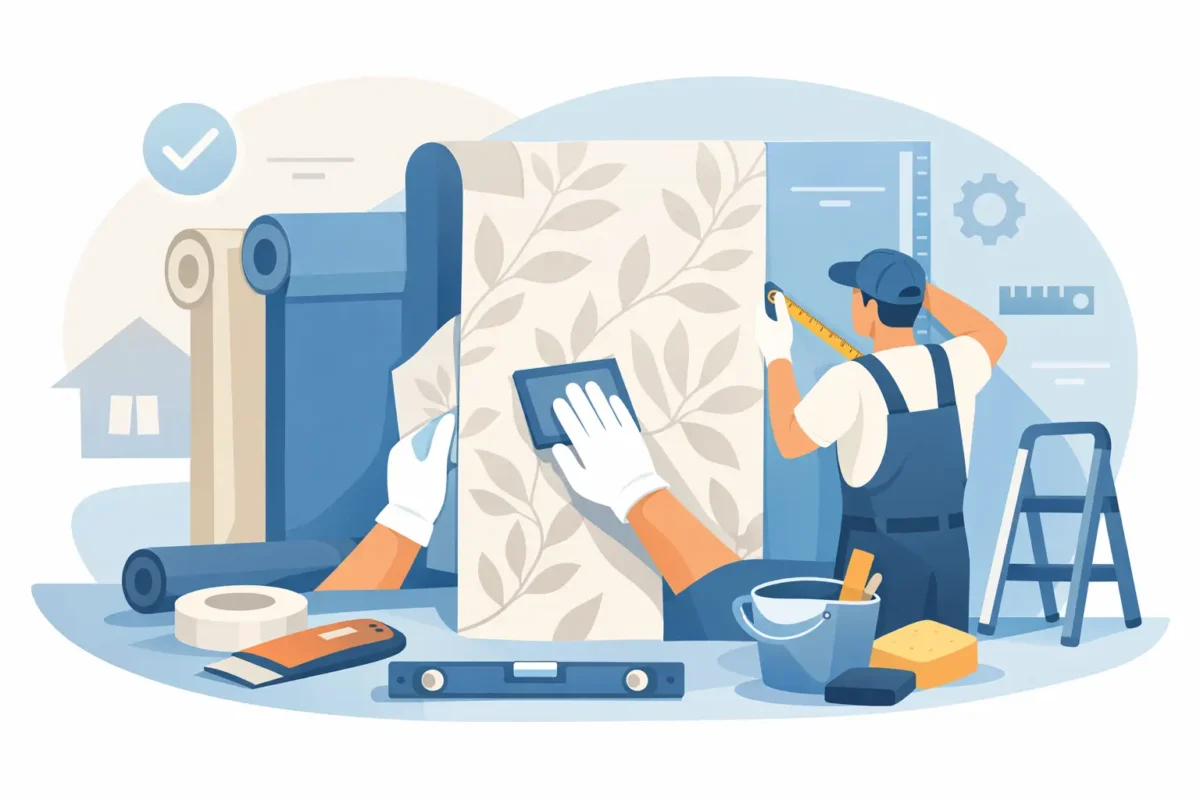
Even a well-prepared wall can look poor if the installation is rushed. Professional installers assess the wall’s plumb line, determine the best starting point, and plan seam positions around windows, doors, lighting, and focal points. This matters even more on uneven walls, where a straight pattern or mural panel can appear to drift if the layout is not carefully managed.
Adhesive selection must match the wallpaper type and wall condition. Heavy commercial materials, delicate papers, and custom prints each have different handling requirements. The installer should also manage paste time, panel booking where required, trimming, seam pressure, and drying conditions to prevent lifting or seam opening.
Lighting deserves attention as well. A wall that looks even under soft ambient light may reveal shadows under directional spotlights. Before selecting a smooth or reflective finish, review the wall in the lighting conditions it will have every day. This small step can prevent an expensive mismatch between sample-board expectations and the completed room.
If the wall has major waviness, active cracks, moisture intrusion, or unstable finishes, wallpaper should wait. Repairing the substrate is the right decision for long-term appearance and performance. In some projects, wall paneling, a tensioned textile system, or a purpose-built cladding solution may be more appropriate than wallpaper when substantial unevenness cannot be economically corrected.
There is also a design decision to make. If the goal is a calm, gallery-like backdrop, the wall should be prepared to a higher standard. If the space calls for expressive texture, layered pattern, or a richly detailed mural, the design can work with minor natural variation while still looking deliberate.
A beautiful wallcovering should never be asked to carry the burden of a failing wall. Let the surface be properly repaired, choose a material with the right visual depth and engineered performance, and use skilled installation to bring the design into focus. The result is not a cover-up. It is a wall that feels finished from every angle.