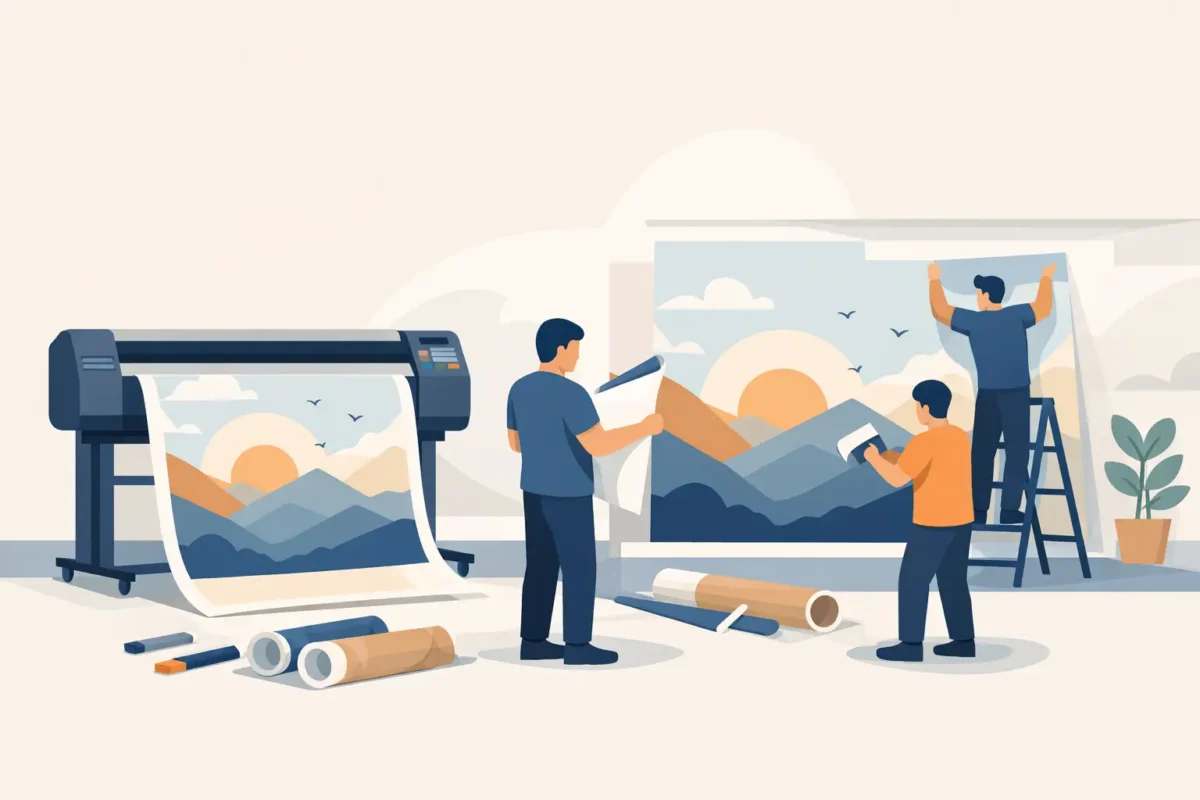
A mural should fit the wall, not force the wall to fit the mural. So, can murals be printed to size? Absolutely. Custom mural printing allows artwork, photography, branding, and decorative patterns to be produced to the exact dimensions of your surface, creating a considered finish rather than a cropped compromise.
For a bedroom feature wall, that may mean a soft landscape aligned perfectly behind a bed. For a hotel lobby, it could mean a large-format botanical design that continues across multiple panels. In an office or retail setting, it may involve a brand-led mural scaled precisely around doors, glazing, reception desks, and architectural details. The result depends on more than entering a width and height. It depends on accurate measurement, suitable artwork, the right wallcovering material, and professional installation.
Custom murals can be printed for most wall sizes and shapes, from compact residential walls to expansive commercial interiors. The practical limit is rarely the size of the printer. Large murals are produced in carefully matched panels, then installed in sequence to create one continuous image across the wall.
What changes from project to project is the level of preparation required. A simple rectangular wall is straightforward. A wall with windows, soffits, power outlets, air-conditioning units, built-in cabinetry, or multiple returns needs a more detailed site measurement and layout plan. This ensures key elements in the design do not disappear behind furniture or get interrupted by a cutout.
For this reason, the finished print size is normally not identical to the visible wall measurement. Installers allow for trimming tolerance at the edges, while design teams account for panel joins and the direction of the image. This extra planning protects the visual balance of the mural once it is on the wall.
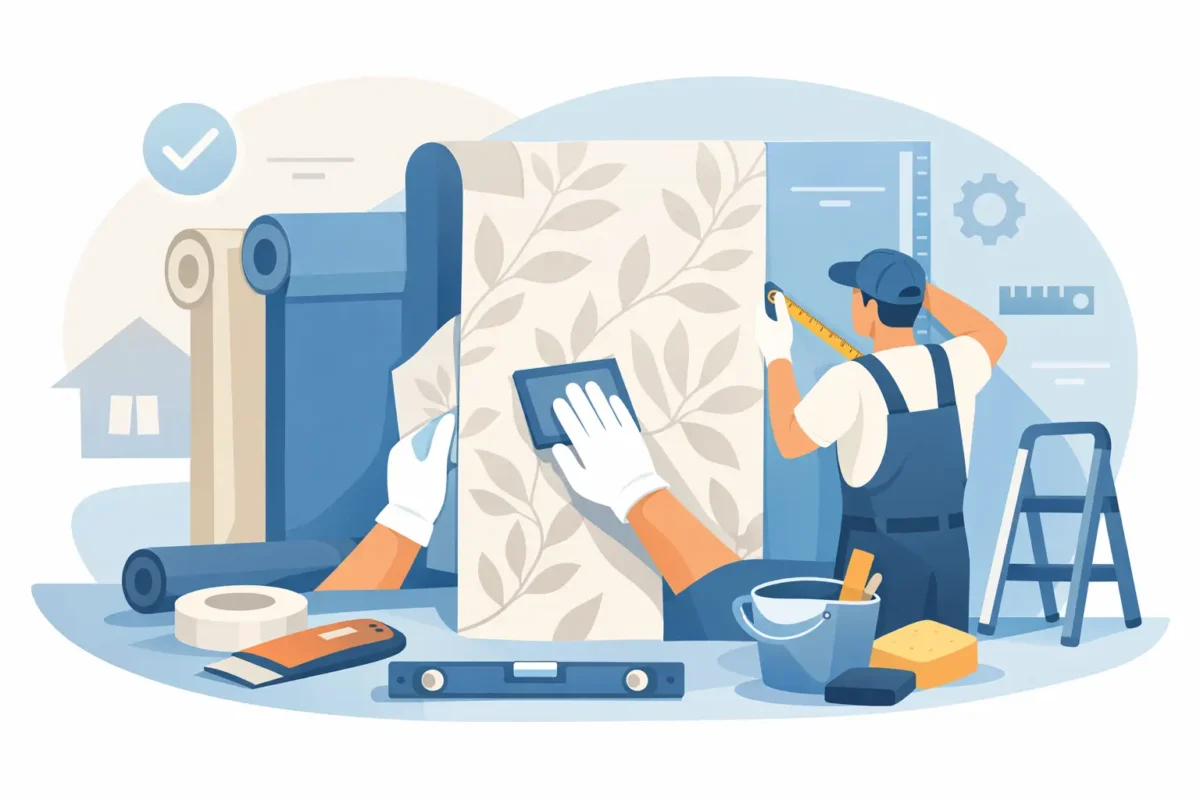
A premium mural begins with a measured surface, not an estimate taken from a floor plan. Measure the wall width and height in several places, especially in older properties or large commercial spaces where walls may not be perfectly square. Record the widest width and tallest height, then identify every obstruction that affects the mural layout.
A professional site check is especially valuable for hospitality, retail, office, and developer projects. It identifies substrate issues, access constraints, and architectural details before production begins. It also allows the design to be positioned with intention. A focal point can sit at eye level, a skyline can align above a headboard, or a logo can remain centered behind a reception counter.
Furniture matters too. If a sofa, display unit, or bed will cover the lower third of the wall, there is little value in placing the mural’s defining detail in that area. Custom sizing gives you the freedom to compose the image around how the room is actually used.
Not every image can be enlarged to every wall size. A small image pulled from a website or social media post may look acceptable on a phone but reveal softness, pixelation, or unwanted artifacts when printed as a wall mural. This is one of the most common reasons a custom mural falls short of expectations.
High-resolution original artwork, professional photography, vector graphics, and purpose-built mural files generally produce the strongest results. Vector artwork is particularly useful for logos, line art, geometric graphics, and branded environments because it can scale cleanly without losing definition. Photographic murals require more careful assessment, as their print quality depends on the original file size, sharpness, lighting, and viewing distance.
Viewing distance changes the decision. A mural behind a dining table may be seen from several feet away, while a corridor wall or retail graphic may be viewed close up. A design professional can assess whether an image will hold its detail at the intended scale, recommend a more suitable crop, or source a higher-quality alternative before printing.
Cropping is equally important. A landscape image may need to be extended or repositioned so the horizon does not fall awkwardly behind a cabinet. A portrait may need added background space to work on a wide wall. Rather than stretching an image until it distorts, the design should be adapted intelligently to the wall proportions.
Custom size is only one part of a mural specification. The wallcovering material determines how the mural looks, performs, and ages in its environment.
For private homes, a quality wallpaper mural can bring depth and personality to bedrooms, living rooms, dining spaces, nurseries, and entertainment areas. Depending on the desired finish, the surface can support richly colored artwork, subtle textures, or refined matte imagery that reduces glare.
Commercial, hospitality, and high-traffic interiors often call for fabric-backed wallcovering or project-grade materials. These options are selected for greater durability, easier maintenance, and dependable performance in spaces such as hotels, offices, corridors, retail stores, restaurants, and public-facing reception areas. Where project requirements apply, specifications may also include fire-retardant performance and low-odor, eco-friendly ink systems.
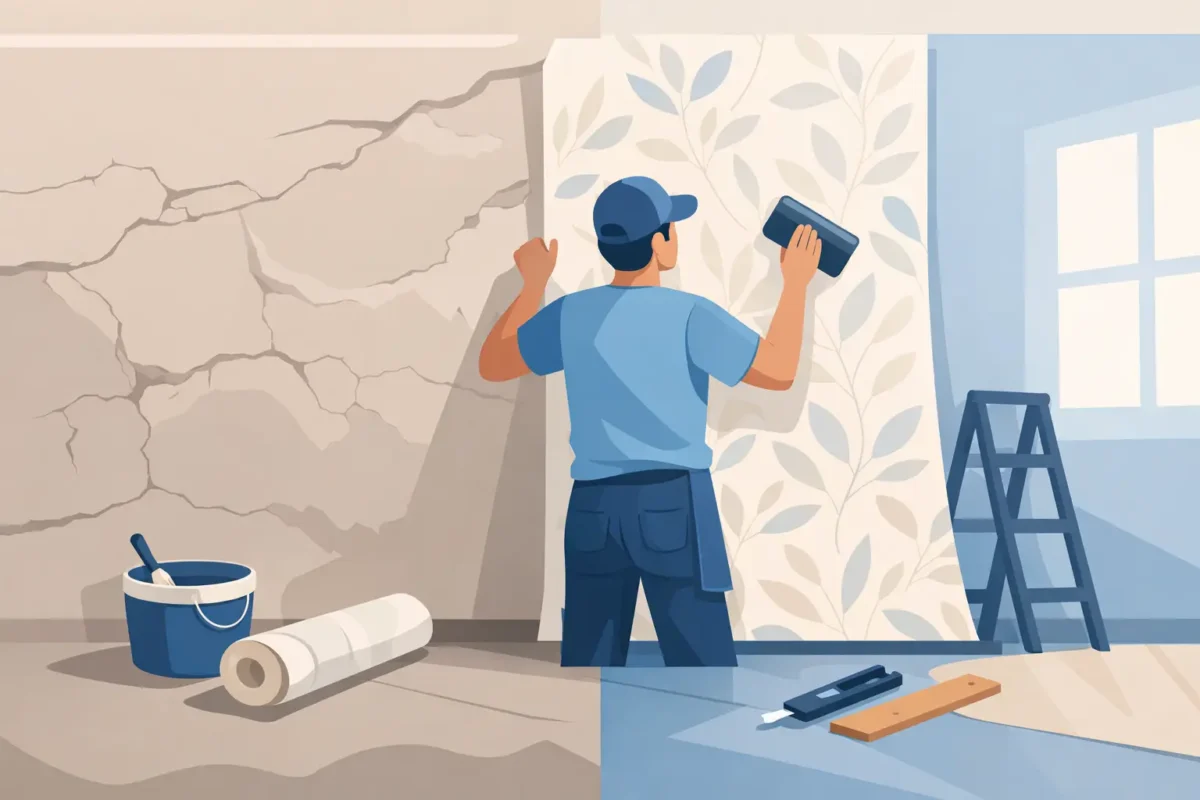
The wall condition should guide the material choice as well. A smooth, properly prepared wall gives the cleanest result, particularly with detailed imagery and fine lines. Textured, uneven, damp, or damaged walls require assessment before installation. A mural cannot conceal every surface defect, and installing over unresolved moisture can compromise even the finest material.
Large murals are typically divided into vertical panels for printing, transport, and installation. This is normal and does not mean the image will look fragmented. With accurate production and skilled installation, the panels align to form a continuous scene.
Panel planning matters most with designs containing straight architectural lines, repeated patterns, typography, or prominent faces. A join should not run through a person’s eye, the center of a logo, or a critical visual element when it can be avoided. The panel layout is planned before printing so that the mural looks intentional from every angle.
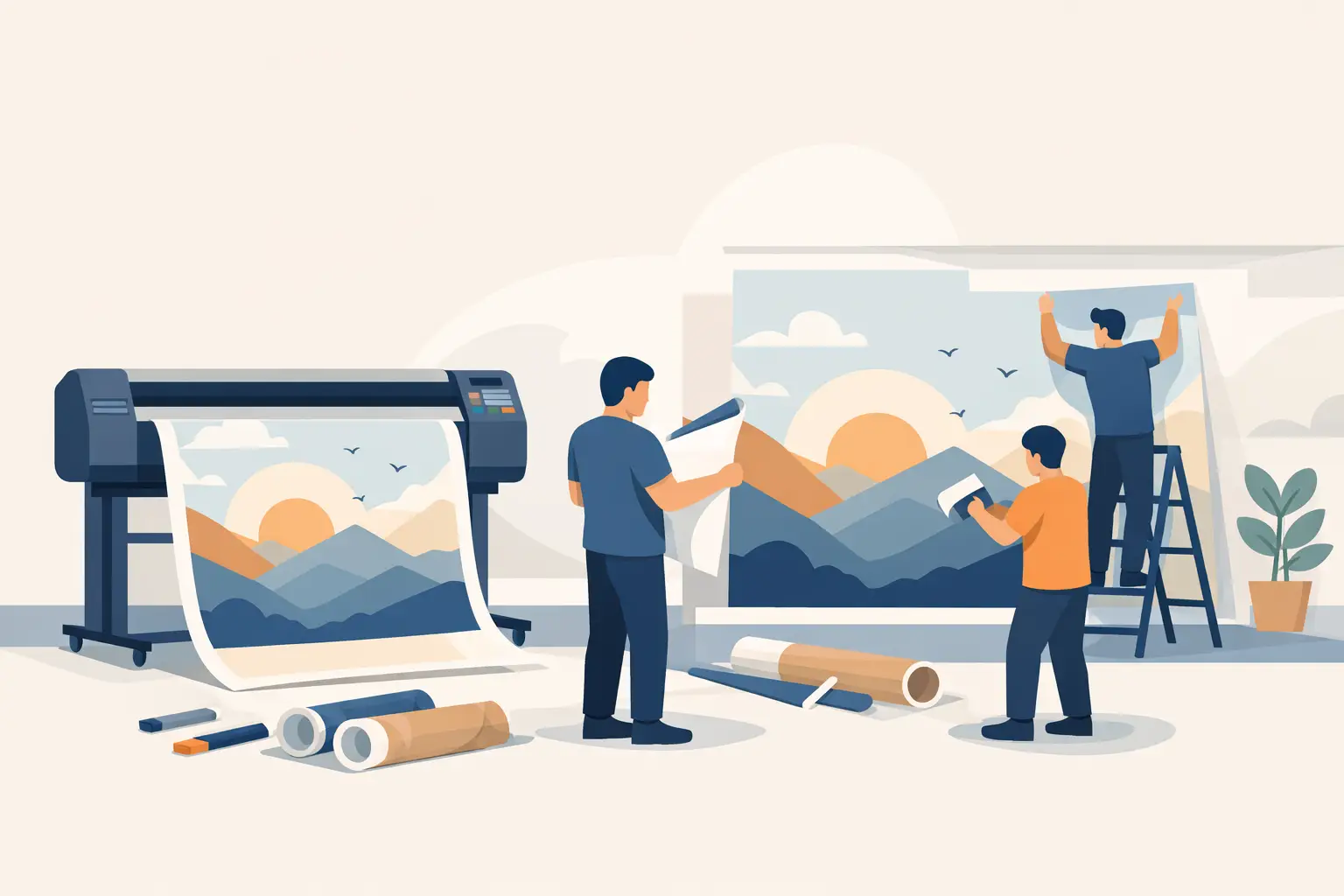
Advanced large-format printing technology supports consistent color, crisp detail, and reliable panel registration across the full wall. At Decorating Depot, custom mural production is supported by Canon printing technology, paired with material recommendations and installation expertise suited to both residential and project environments.
Custom printing is particularly valuable where standard wallpaper rolls would create unnecessary waste, awkward pattern placement, or too many visible repeats. It gives designers and property owners control over scale, composition, and finish.
A single oversized floral can become a statement wall rather than a repeating motif. A cityscape can span an entire boardroom without losing its perspective. A child’s room can feature a name, favorite color palette, or illustration created for the exact dimensions of the space. For branded interiors, custom murals can carry campaign imagery, visual storytelling, or company identity while remaining aligned with the architecture.
There are trade-offs. Bespoke murals require a longer approval process than selecting an off-the-shelf wallpaper, because measurements, artwork, layout, and material must be confirmed before production. They also demand more care at the specification stage. Yet that preparation is what makes the finished wall feel integrated, polished, and made for the space.
Before production, review a scaled proof that shows the crop, panel divisions, dimensions, and placement of key design elements. Confirm the orientation of the artwork and check that any text, logos, or directional imagery read correctly. For commercial projects, this is also the time to verify material specifications, maintenance expectations, and site readiness.
Installation should take place after wet works, major dust-producing trades, and painting are complete. The wall must be dry, clean, stable, and properly primed where required. Good installation is not simply about applying wallpaper straight. It is about managing panel alignment, edge finishing, pattern continuity, and clean detailing around corners and fixtures.
The best custom mural is one that appears inevitable in the room: perfectly scaled, beautifully printed, and engineered to perform. Bring accurate wall dimensions, a clear design direction, and an honest picture of how the space will be used, and the mural can be made to feel like it was always meant to be there.