A wall finish in a hotel corridor, reception area, or busy family home has to do more than look beautiful on opening day. It must resist scuffs, conceal minor wall imperfections, and retain its finish through years of cleaning and daily contact. Knowing how to select fabric backed wallpaper means balancing the visual character of a design with the performance requirements of the space.
Fabric-backed wallpaper is a premium commercial wallcovering built for interiors where ordinary paper wallpaper may not be enough. Its textile or fabric backing gives the material greater stability, strength, and installation reliability, while the decorative face delivers the color, texture, pattern, or custom design that defines the room. The right specification can make a statement wall feel considered and enduring rather than merely decorative.
Selection should begin with the room, not the pattern book. A private bedroom, a boutique retail fitting room, a lift lobby, and a hotel guest corridor all place different demands on a wallcovering. The more frequent the contact, traffic, cleaning, and humidity exposure, the more carefully performance needs should be assessed.
In commercial settings, fabric-backed wallpaper is often chosen for its dimensional stability and resistance to everyday wear. It is particularly suitable for offices, hospitality interiors, retail environments, meeting rooms, reception spaces, and corridors. In residential projects, it is an elevated option for entryways, dining rooms, stair halls, media rooms, and other areas where a refined finish deserves more durability than standard decorative wallpaper can provide.
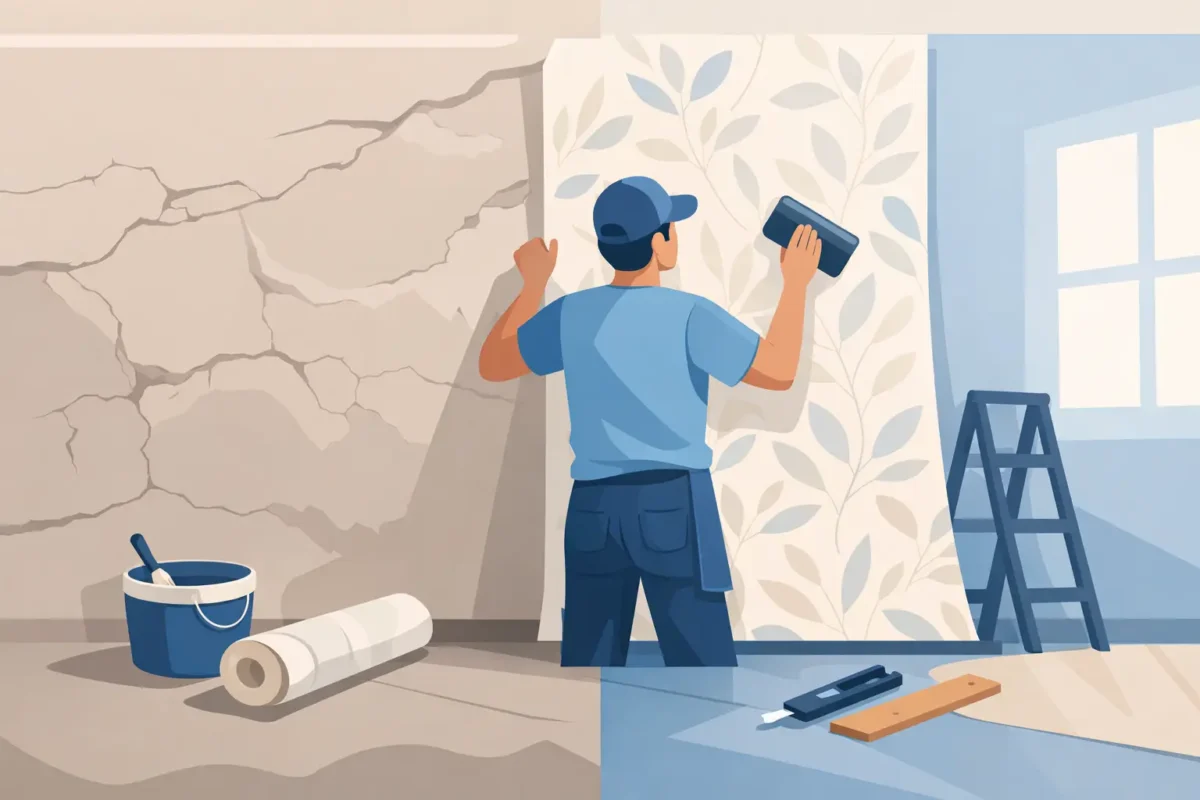
Consider the wall itself as well. New drywall, older plaster, concrete, and previously painted surfaces all require different preparation. Fabric-backed wallcovering can help create a more polished result over minor substrate irregularities, but it does not replace proper wall repair. A smooth, dry, clean, and well-primed surface remains essential for a flawless installation.
The term fabric-backed wallpaper refers to construction, but not every product has identical surface performance. Review the technical specification before committing to a design, especially for project-scale interiors. The most relevant criteria are usually durability, cleanability, fire performance, lightfastness, and moisture resistance.
For corridors, waiting areas, retail spaces, and hospitality projects, choose a wallcovering designed to tolerate regular cleaning. A washable or scrubbable surface helps maintenance teams remove everyday marks without damaging the decorative layer. Textured finishes can be especially effective at disguising minor scuffs, although deeply embossed patterns may collect dust more readily than smoother surfaces.
Fire requirements deserve early attention, not a last-minute check. Commercial, hospitality, healthcare, and multifamily projects may require wallcoverings that meet specific fire standards based on local code, occupancy type, and project documentation. Confirm the required test rating with the architect, contractor, or authority having jurisdiction, then request product documentation for the selected material. A visually perfect design that does not satisfy the project specification can create costly delays.
Light exposure is another practical consideration. In a sun-filled lobby or room with expansive windows, select colors and inks with suitable lightfastness. Dark, saturated, or delicate tones can be striking, but their long-term appearance depends on the product quality and the level of direct sun. Window treatments, UV-filtering glass, and thoughtful placement can protect the finish where daylight is intense.
Fabric-backed wallpaper offers far more than a practical layer of protection. It can introduce tactile depth, architectural warmth, and a sense of permanence that painted walls often lack. The surface finish should reinforce the intended atmosphere of the room.
A linen-look texture brings quiet sophistication to executive offices, lounges, and bedrooms. Fine woven effects add warmth without overwhelming furniture, artwork, or signage. Grasscloth-inspired patterns can create organic visual movement, while metallic accents bring controlled luminosity to a reception desk backdrop, dining area, or feature wall. For contemporary commercial interiors, concrete, plaster, stone, and textile-inspired designs provide material richness without the weight or cost of natural cladding.
Scale matters as much as style. Large patterns can make a broad lobby wall feel dramatic and intentional, but they may feel crowded in a narrow powder room or small office. Subtle textures often work best across multiple walls because they create depth without visual fatigue. If the goal is a signature moment, reserve a bolder pattern for a focal wall and coordinate it with quieter surrounding finishes.
Order or view a full-size sample whenever possible. A small swatch cannot reveal how a repeat pattern, sheen level, or texture will behave across an entire wall. Evaluate samples under the room’s actual lighting, alongside flooring, joinery, upholstery, and paint. This is where a design-led showroom consultation can save time and prevent expensive mismatches.
The most successful wallcovering selections remain attractive under real conditions, not just in a presentation board. Pale finishes can make a compact room feel larger and brighter, yet they may show marks more readily in busy public areas. Darker tones are more forgiving, but they absorb light and can make an already narrow space feel enclosed.
Mid-tone neutrals, layered textures, and small-scale irregular patterns often offer the best balance for high-use interiors. They conceal minor wear while maintaining a refined appearance. In hospitality and branded commercial spaces, color can also support wayfinding and identity. A deep green may create calm in a wellness setting; a warm terracotta can bring energy to a restaurant; a tailored charcoal textile effect can lend authority to a boardroom.
Custom print wallpaper expands the creative options further. It can translate brand colors, bespoke artwork, landscape imagery, or a site-specific mural into a project-ready wall finish. For these applications, confirm the image resolution, panel layout, color proofing process, and intended viewing distance. A striking custom wall should be engineered with the same care as any other commercial surface.
Fabric-backed wallpaper is engineered for professional results, but it still depends on precise installation. Its weight, panel alignment, pattern matching, trimming, adhesive selection, and corner detailing require experienced handling. Poor installation can undermine even the finest material through visible seams, misaligned repeats, lifting edges, or adhesive marks.
Ask early whether the design has a straight match, drop match, or random match. Pattern matching affects the amount of material required and can influence both budget and lead time. Large repeats and custom mural layouts typically need additional planning to ensure panels land correctly around doors, windows, electrical outlets, and built-in cabinetry.
Wall preparation is equally important. Moisture issues, loose paint, uneven patches, or unsealed surfaces should be corrected before installation begins. In wet areas, fabric-backed wallpaper may be appropriate only where ventilation, substrate condition, and product specifications support its use. It is not a universal replacement for tile or other waterproof wall systems in direct-splash zones.
A professional installer will also advise on primers, adhesives, seam treatment, and acclimatization. These details are rarely visible after completion, yet they are what allow the wallcovering to perform as intended over time.
Fabric-backed wallpaper generally represents a higher initial investment than basic residential wallpaper or paint. That difference reflects its construction, performance potential, installation requirements, and design finish. For a high-traffic project, the better comparison is not purchase price alone but the cost of maintaining the wall over several years.
A durable, cleanable wallcovering can reduce the need for frequent repainting and touch-ups, particularly in corridors, lobbies, and customer-facing spaces. It also provides a more consistent finish across large areas, where painted walls may show patching or abrasion over time. That said, a premium material should be used strategically. In low-contact areas or short-term installations, a lighter-duty option may be entirely appropriate.
Factor in waste allowances, pattern repeat, wall preparation, accessories, and professional installation from the outset. A clear project scope makes it easier to compare options accurately and protects the final result from compromises made late in the process.
The final selection should satisfy both the eye and the project brief. Compare shortlisted designs side by side, then review their technical data with the same attention given to color and texture. Confirm roll dimensions, repeat size, maintenance instructions, fire documentation, lead times, and installation recommendations before approving the order.
For larger projects, create a sample wall or mockup in the actual environment. This reveals how the wallpaper responds to lighting, adjacent finishes, furniture scale, and daily use. It also gives stakeholders a clear reference point for workmanship expectations.
At Decorating Depot, material selection is treated as part of the wider interior solution, bringing design choice, project-grade performance, custom capability, and installation insight into one considered process. The right fabric-backed wallpaper does not simply cover a wall. It gives the space a finish that feels intentional, performs with confidence, and continues to represent the standard of the project long after installation day.