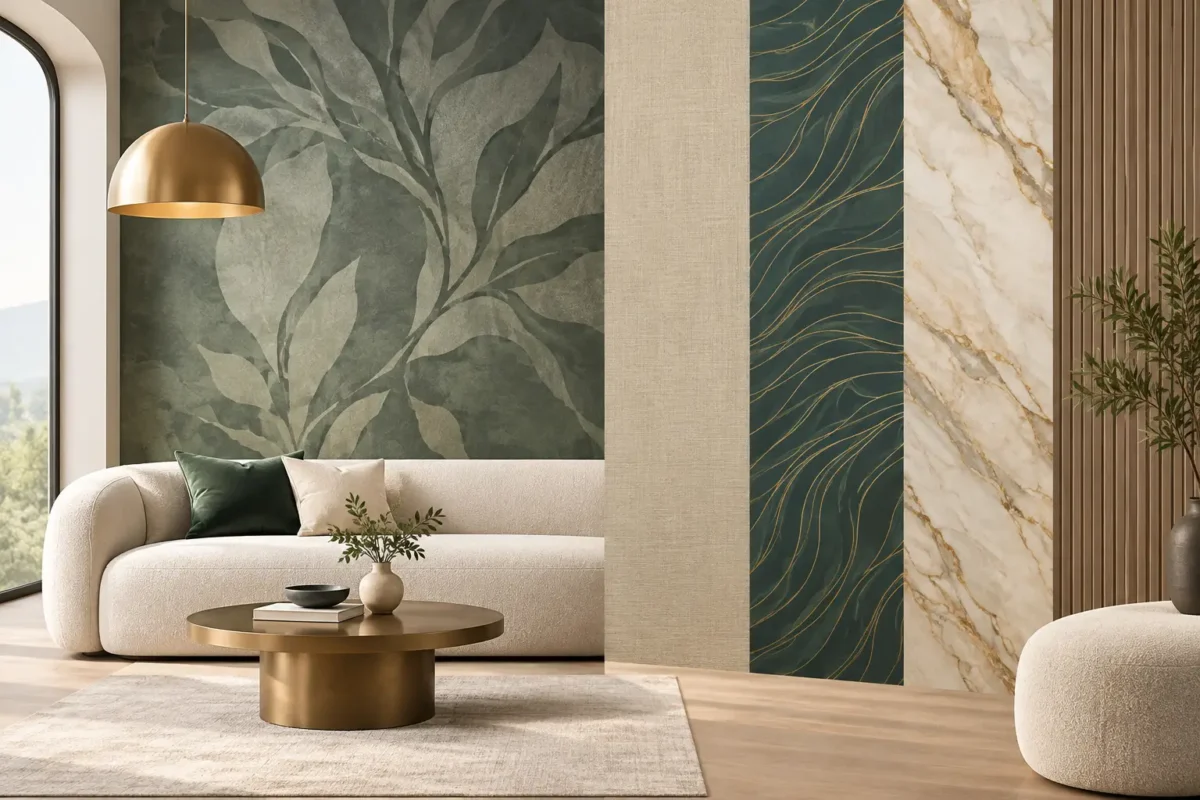
A blank feature wall is rarely just a blank feature wall. In a hotel lobby, it can set the guest experience before reception says a word. In a home, it can turn an ordinary dining area into the room everyone remembers. When comparing murals vs wallpaper panels, the real decision is not simply pattern versus picture. It is about scale, visual intention, material performance, and how the wall needs to work over time.
Both options can deliver a highly finished interior. The better choice depends on whether you want an immersive, one-of-a-kind focal point or a flexible decorative finish that can extend across multiple walls with ease.
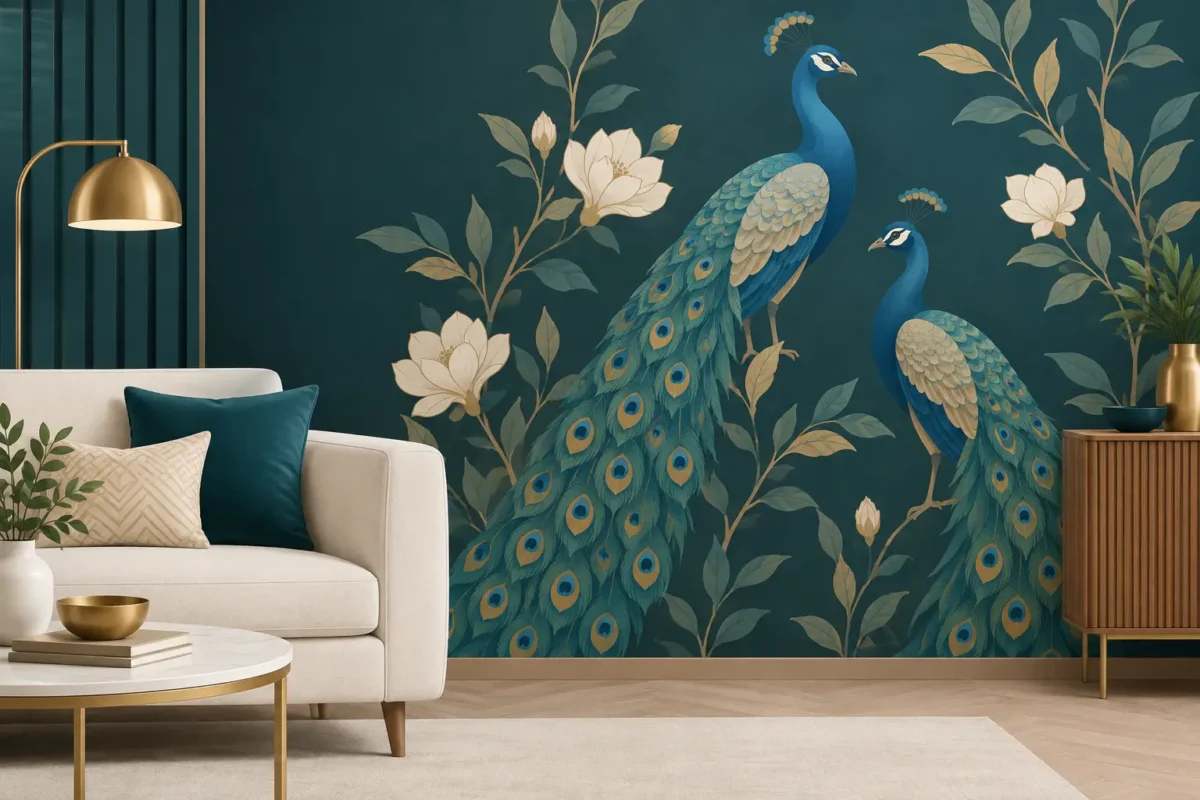
A mural is a single, composed visual created for a specific wall size or proportion. It may feature a landscape, botanical scene, city view, abstract artwork, brand story, or custom illustration. The full image is divided into installation drops, but those drops work together to create one continuous composition.
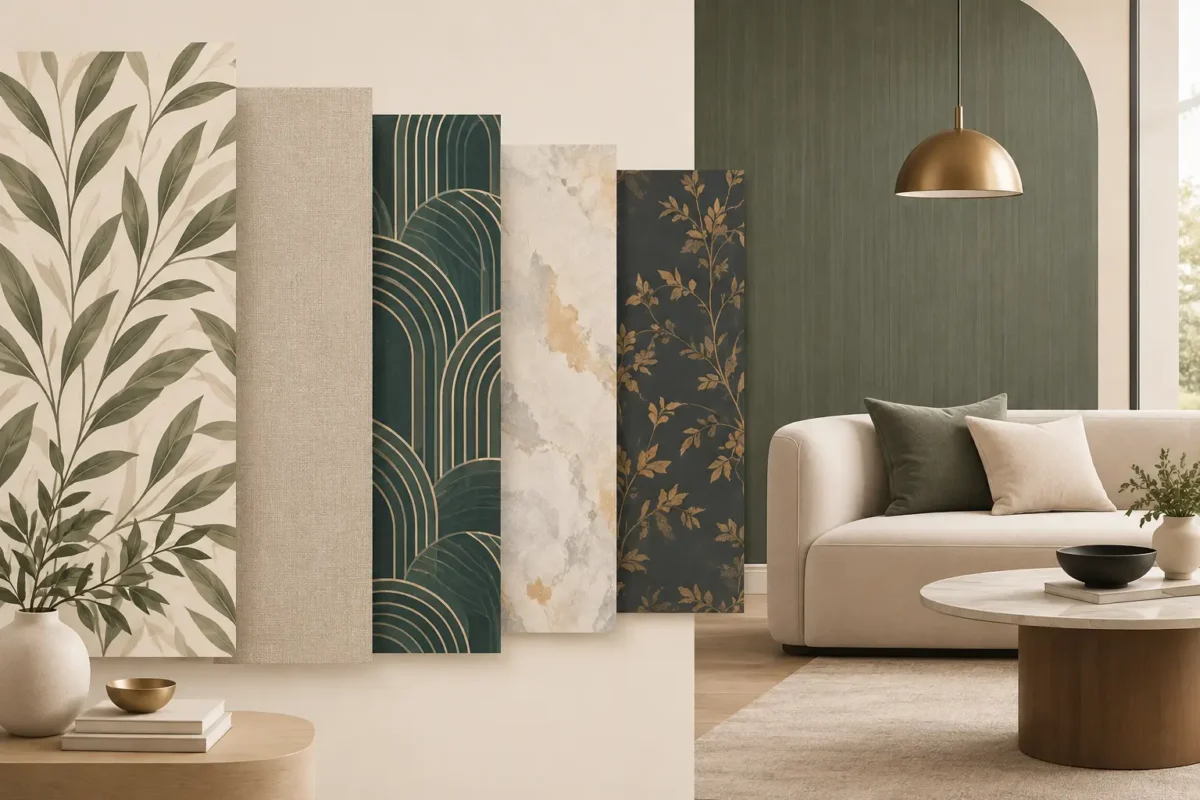
Wallpaper panels are designed as repeated or coordinated sections. Depending on the collection, a panel may form part of a larger scene, create a framed decorative moment, or repeat across a wall. They can offer more structure than a conventional all-over wallpaper pattern while remaining more adaptable than a fully custom mural.
This distinction matters most at the edges. A mural has a defined composition, so the wall dimensions, doors, windows, furniture, and ceiling height should be considered before production. Wallpaper panels are usually more forgiving when a room has interruptions or when the design needs to continue beyond one feature wall.
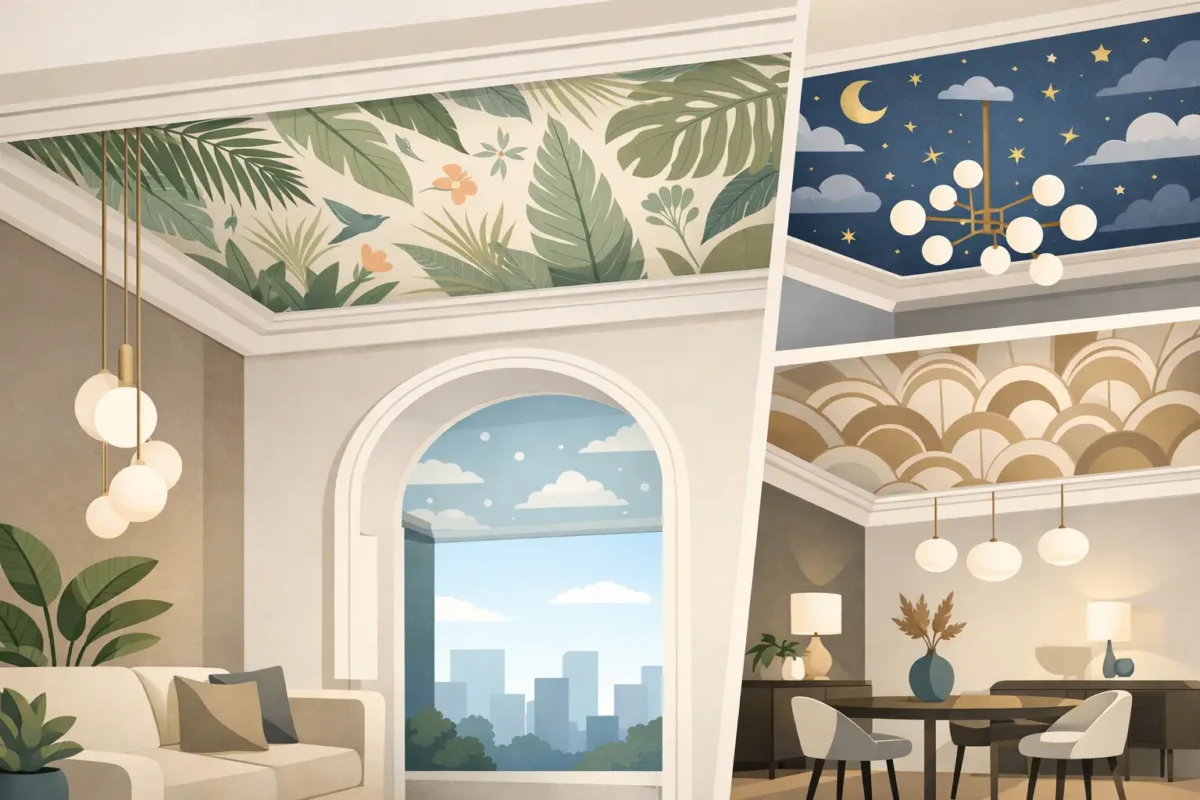
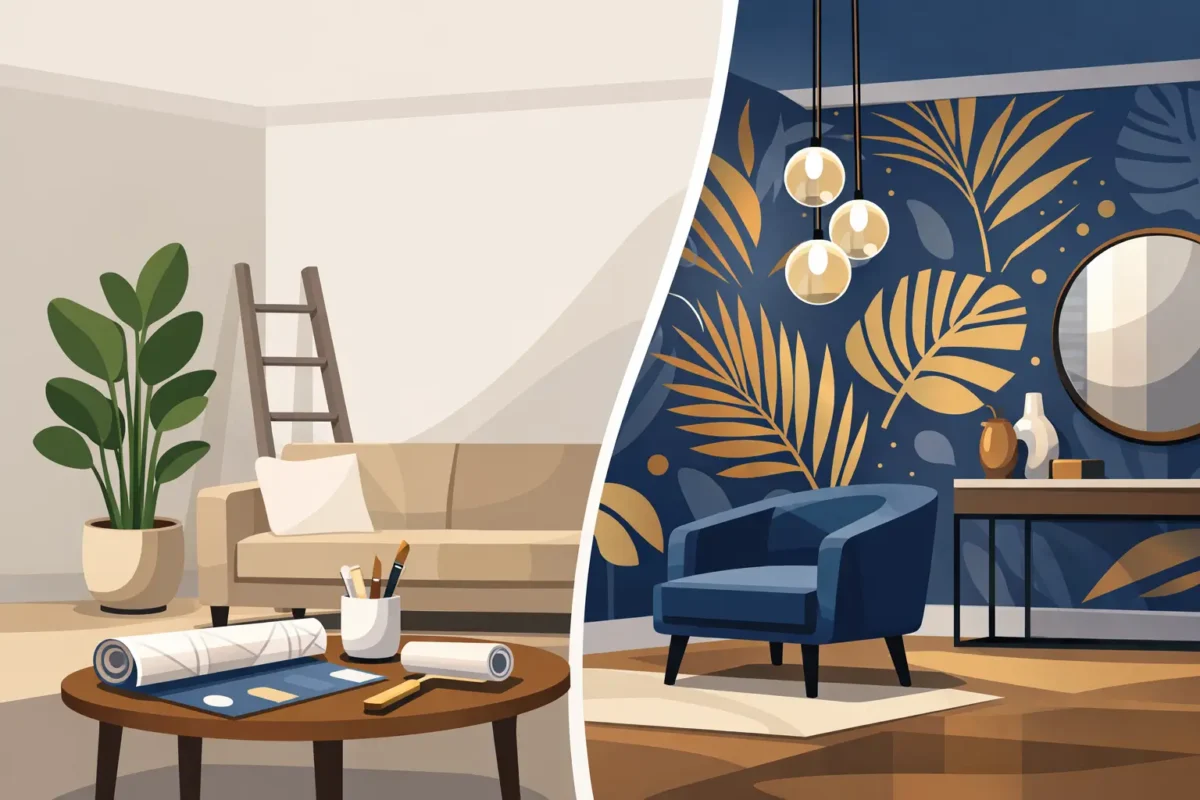
A mural is the right choice when the wall deserves to become a destination. Large living-room walls, double-height entrances, bedroom headboard walls, restaurant dining rooms, retail backdrops, and hospitality corridors can all benefit from the scale and emotional impact of a mural.
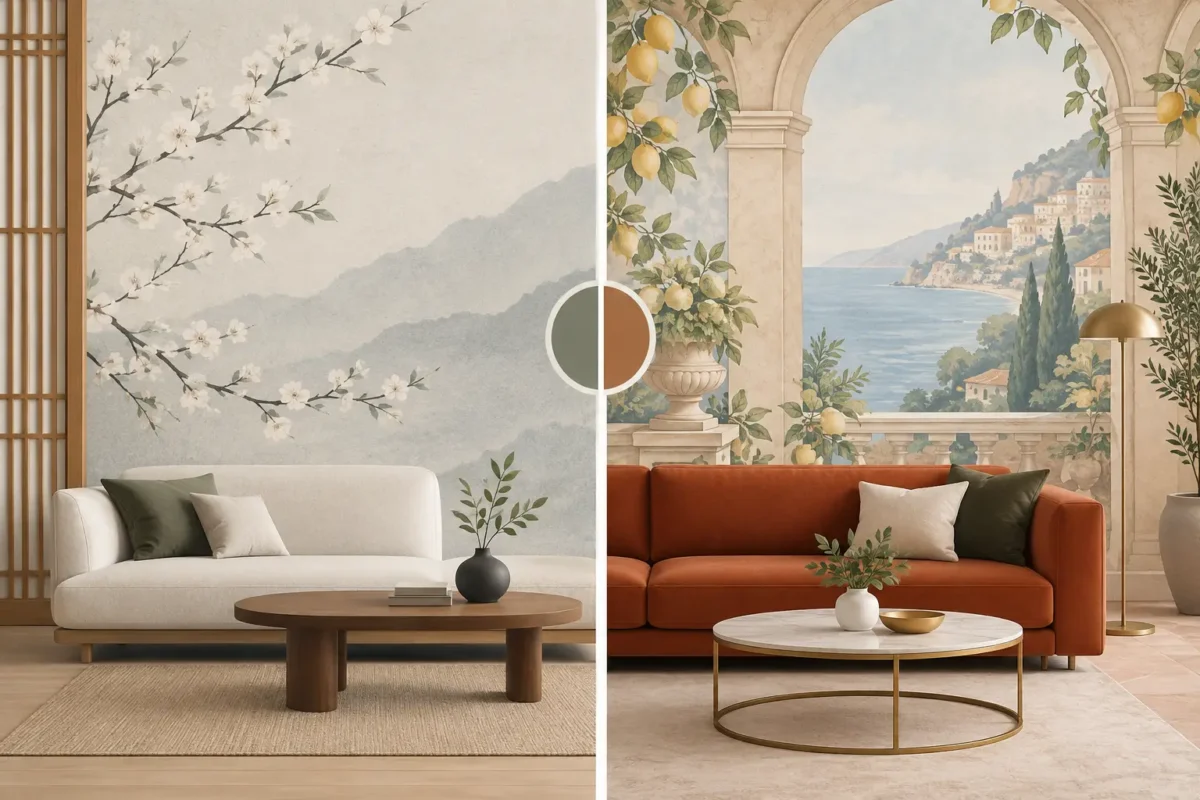
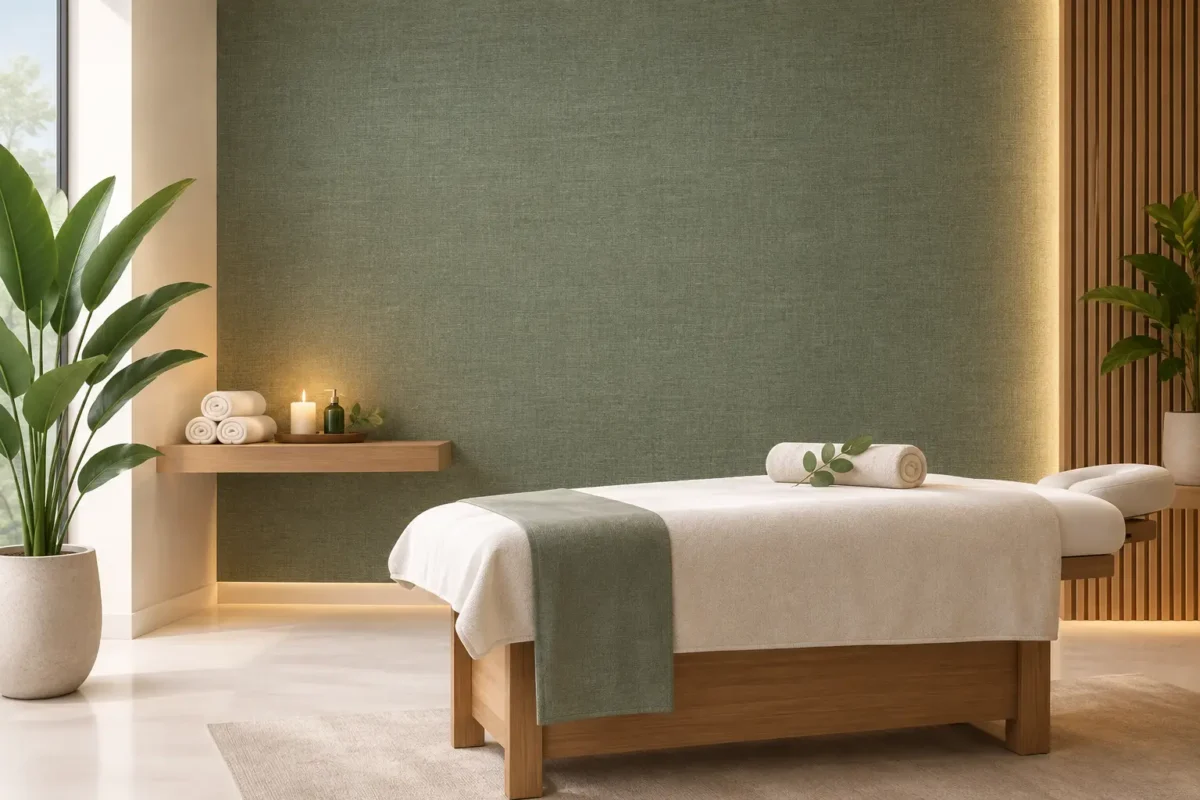
The strongest murals are intentional. A misty forest can introduce calm to a wellness space. A richly layered tropical botanical can give a restaurant or lounge a stronger sense of place. An abstract painted design can add movement to a contemporary office without becoming overly literal. For branded environments, a custom mural can incorporate an organization’s palette, story, or visual identity in a way standard wallcoverings cannot.
Customization is the defining advantage. With professional digital printing, artwork can be scaled to suit the exact wall rather than cropped into an awkward proportion. Colors can be refined to complement flooring, upholstery, timber finishes, and lighting. For projects requiring a distinctive result, this level of control is often worth the additional planning.
There are practical considerations, however. A mural is not always the best answer for a room that changes frequently. If furnishings are likely to move, a carefully placed focal element can become partially hidden. A mural with recognizable architecture, faces, horizons, or strong directional lines also demands accurate measurement and professional alignment. Even a small mismatch can disrupt the intended composition.
Wallpaper panels are especially effective when you want an elevated decorative finish without committing every decision to one large image. They bring scale, texture, and visual interest to a room while offering more flexibility around wall conditions.
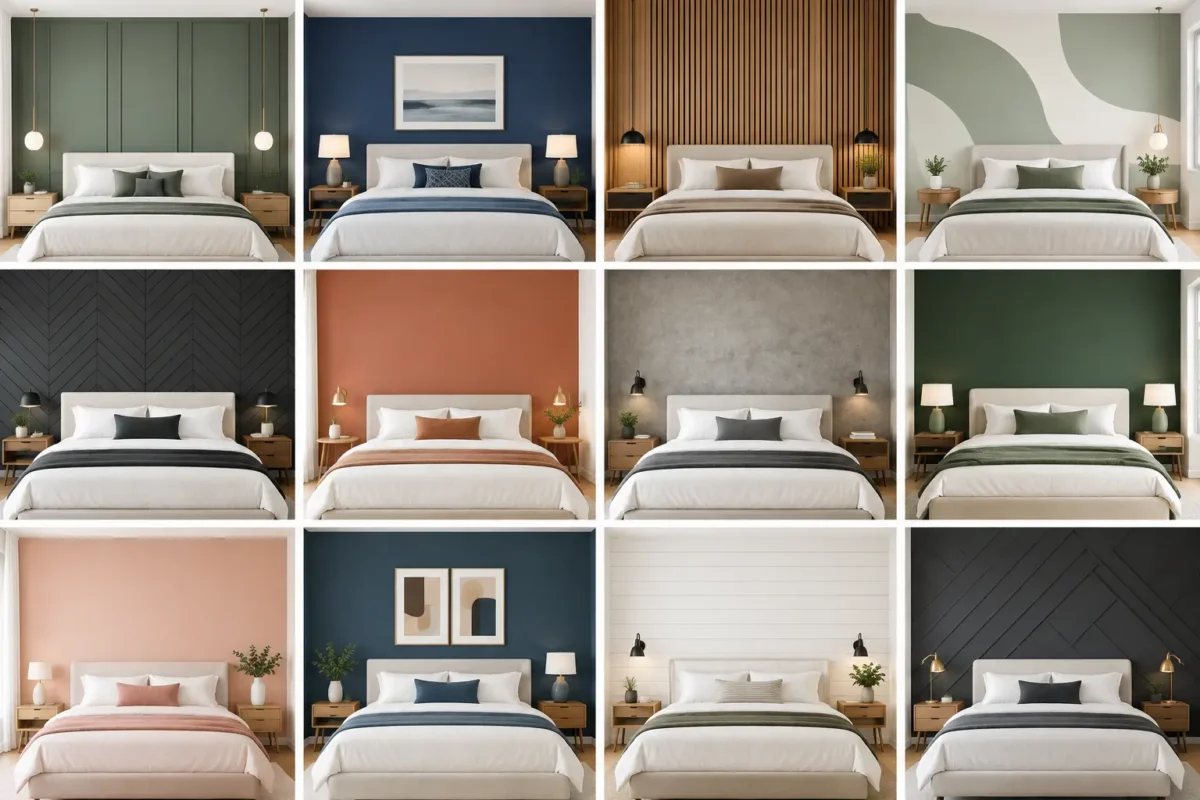
In residential settings, panels can frame a bed, define a reading corner, elevate a powder room, or create symmetry behind a console table. In commercial settings, they are well suited to offices, boutique retail spaces, meeting rooms, corridors, and guest rooms where visual continuity matters as much as impact.
A panel-based design can also be easier to extend across a wide or irregular wall. If a wall includes columns, doors, niches, or multiple openings, a repeating or coordinated panel layout often accommodates those interruptions more naturally than a mural scene. This makes it a practical choice for renovation projects, where existing architectural conditions may limit a single-image composition.
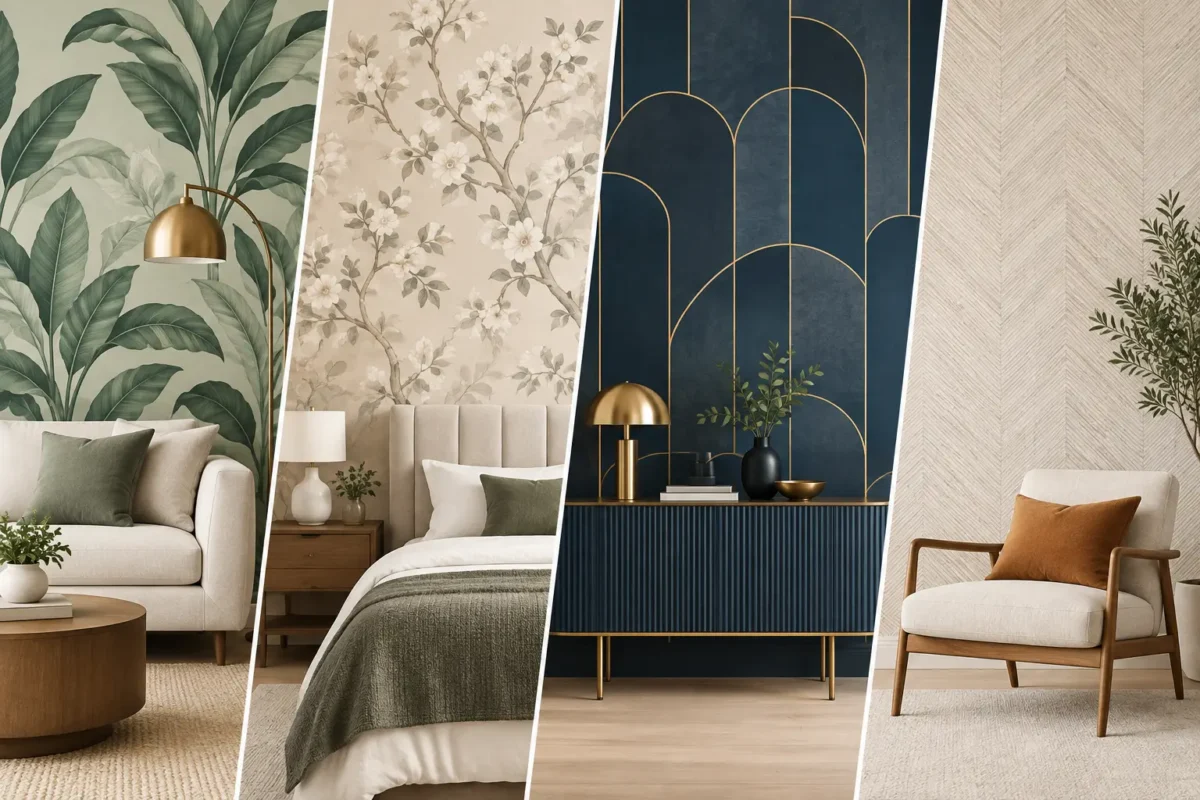
Panels are not necessarily less dramatic. A series of oversized florals, scenic chinoiserie, textured geometric forms, or architectural motifs can feel just as luxurious as a mural. The difference is in the visual behavior: panels create rhythm and repetition, while murals create a single uninterrupted point of view.
A design can look impressive in a sample book and still feel wrong once it reaches full wall height. Scale is one of the most overlooked factors in selecting a wall finish.
Murals tend to suit broad, uninterrupted surfaces where the eye can take in the full composition from a comfortable viewing distance. A sweeping landscape may be lost on a narrow wall, while a close-up botanical image can feel beautifully immersive in a smaller room. The artwork should be selected for the room’s actual proportions, not just its perceived size.
Wallpaper panels often perform well in compact spaces because their structure gives the eye a clear order. A vertically oriented panel can emphasize ceiling height. A pair of decorative panels can make a modest wall appear more deliberate and architectural. In a larger room, repeated panels can add depth without creating the visual intensity of a wall-to-wall scene.
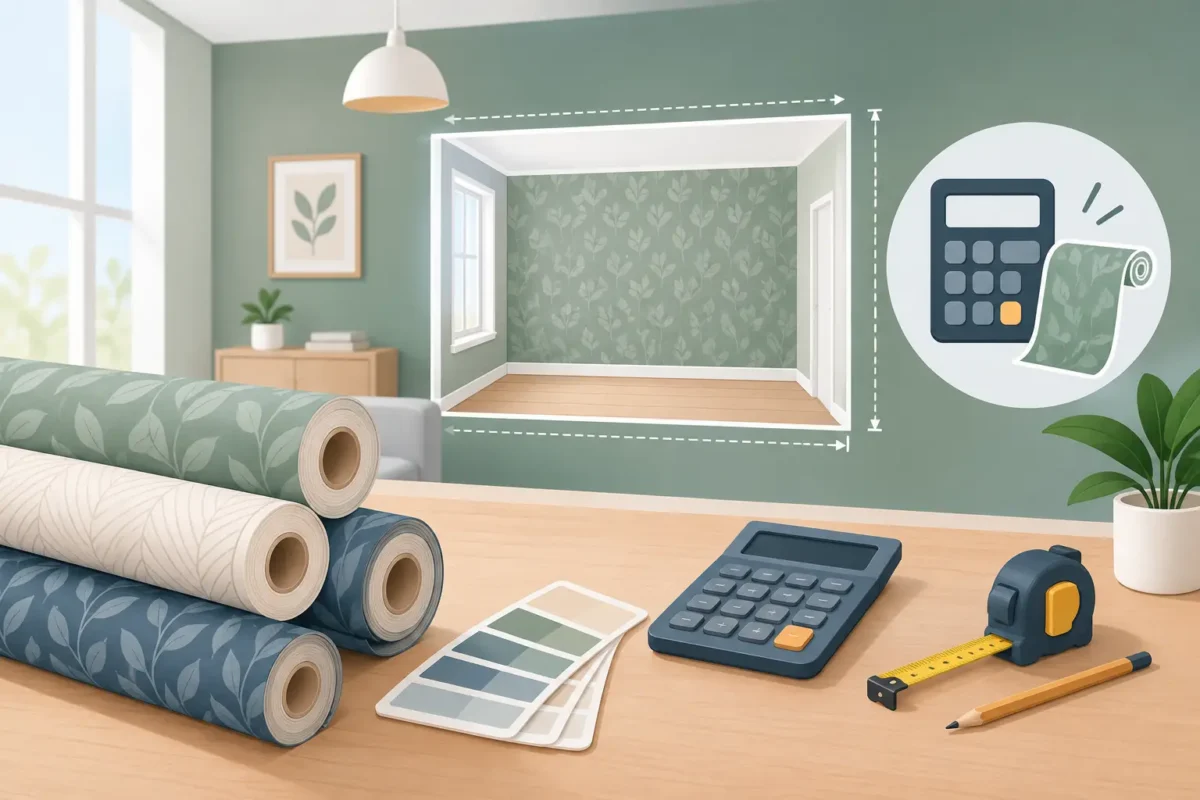
Before selecting either option, evaluate where people will stand, sit, and enter the room. A mural that is viewed from across a lobby requires a different scale than a bedroom feature wall viewed from a few feet away. This is where showroom consultation and wall measurement make a meaningful difference.
For a family home, easy maintenance may be the priority. For a hotel, office, clinic, retail store, or restaurant, the wallcovering must also meet the demands of heavy traffic, cleaning routines, and long-term appearance.
Murals and wallpaper panels can both be produced on materials suited to different project conditions. Non-woven wallcoverings offer a refined finish and straightforward installation for many residential applications. Vinyl and fabric-backed commercial wallcoverings provide greater durability where walls are exposed to frequent contact, moisture, cleaning, or high guest turnover.
For commercial specifications, look beyond the artwork. Confirm fire-retardant requirements, cleanability, substrate condition, adhesive compatibility, and the expected use of the space. A beautiful feature wall that scuffs easily or fails to perform under maintenance protocols is not a premium result.
High-quality custom printing also affects the final visual. Sharp detail, stable color, eco-friendly ink systems, and appropriate material selection help a mural retain its intended depth and character. The same standard applies to wallpaper panels, particularly with fine metallic effects, subtle textures, and large-scale motifs.
The design choice and installation method are closely connected. Murals require precise planning because each drop must be placed in sequence. The installer must account for pattern alignment, wall irregularities, electrical outlets, skirting boards, cornices, and openings without compromising the composition.
Wallpaper panels need the same care, but their repeated or modular nature can provide more flexibility during layout. Even so, poor alignment will show immediately in designs with borders, architectural lines, or symmetrical motifs. Professional installation protects the visual investment and helps the wallcovering perform as intended.
Preparation is equally important. Walls should be smooth, dry, clean, and properly primed. Existing cracks, uneven paint, moisture issues, or surface contamination can affect adhesion and create visible imperfections. For project-grade interiors, wall assessment should happen before the material is ordered, especially when custom sizing is involved.
Start with the role of the wall. If the goal is a memorable statement, a custom mural gives you the greatest freedom. If the goal is a refined finish that can wrap through a room or adapt around architectural interruptions, wallpaper panels may be the more practical choice.
Then consider permanence. A mural works best when the room layout and design direction are established. Wallpaper panels are often easier to incorporate into spaces that may evolve, expand, or require a more repeatable treatment. Finally, match the material to the environment. A serene bedroom and a busy hotel corridor should not be specified in the same way simply because they share a design style.
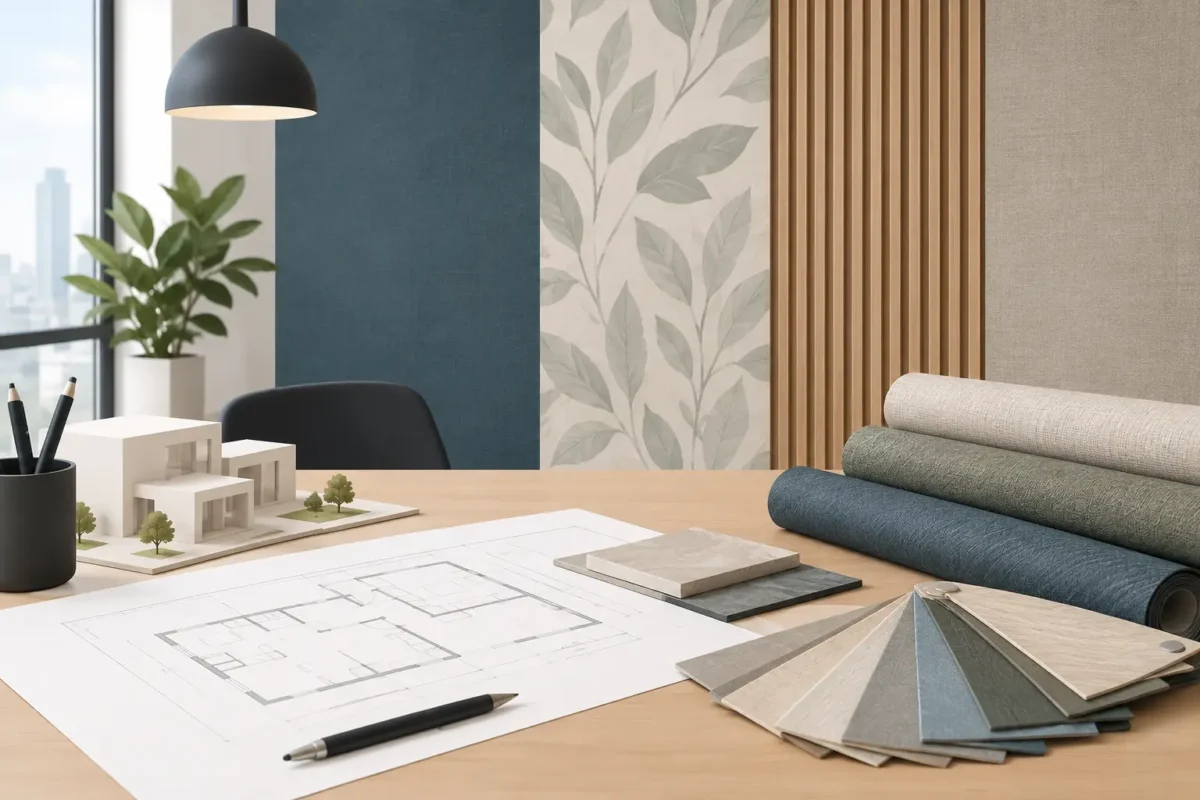
At Decorating Depot, this decision begins with the wall itself: its measurements, light, function, and the experience it needs to create. Bring a floor plan, reference images, and a clear sense of how the space will be used. The right wallcovering does more than fill a surface – it gives the room a reason to be remembered.