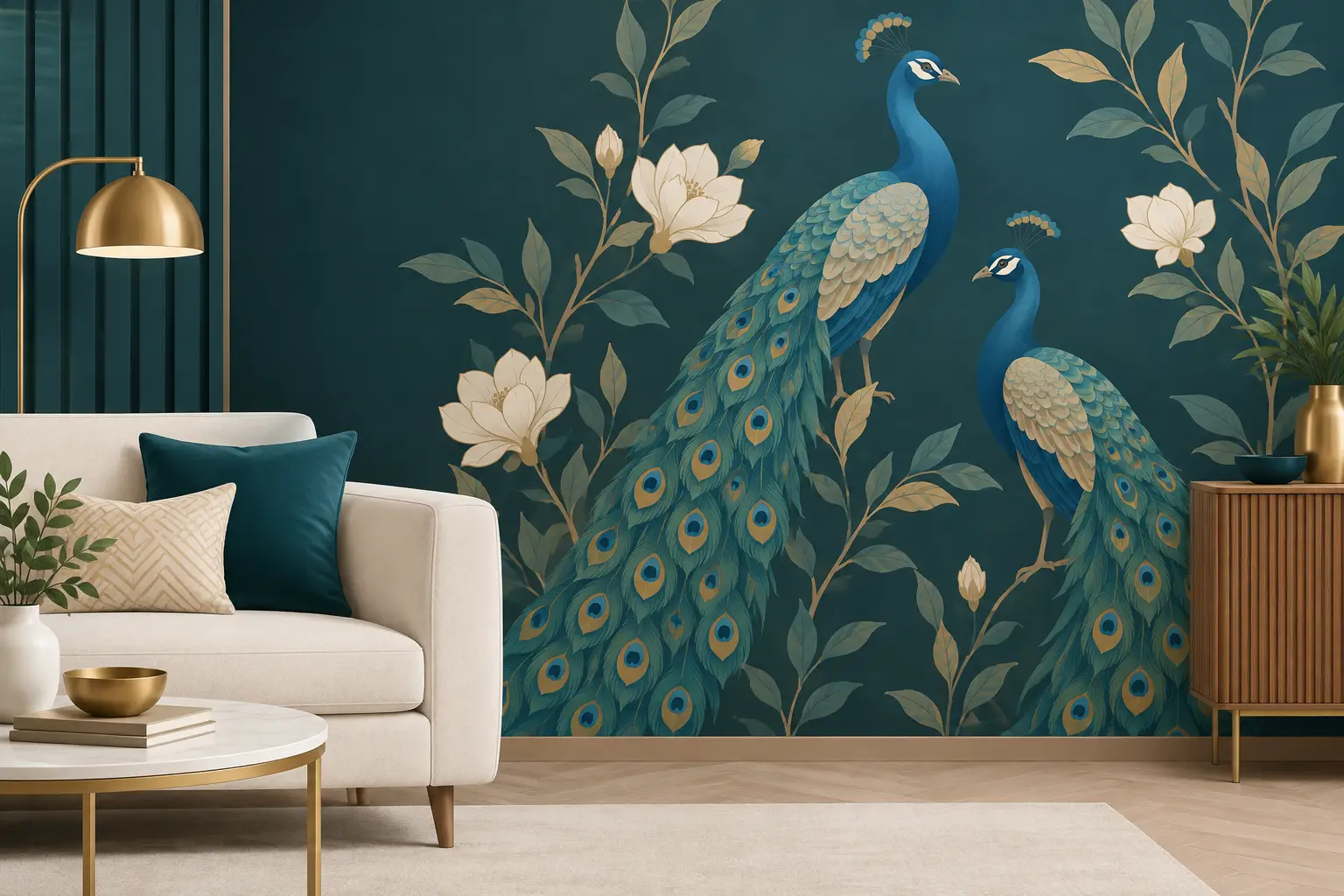
A peacock motif can make a room feel considered before a single piece of furniture is added. Peacock wallpaper pairs the bird’s iconic silhouette with jewel-toned color, intricate plumage, and a sense of quiet grandeur. Used well, it does not overwhelm a space. It gives the room a focal point, a mood, and a more finished identity.
For homeowners, designers, and commercial project teams, the appeal goes beyond decoration. The right wallcovering can create visual depth, define a guest experience, reinforce a luxury brand position, or turn an ordinary backdrop into a destination within the room. The key is selecting the right scale, colorway, material, and installation approach for the space.
Peacocks have long appeared in decorative arts because their form is naturally architectural. The fan of feathers creates rhythm, the eye motifs add detail, and the bird’s profile introduces movement without making a wall feel busy. Depending on the design, the effect can be traditional and opulent, modern and graphic, or soft and botanical.
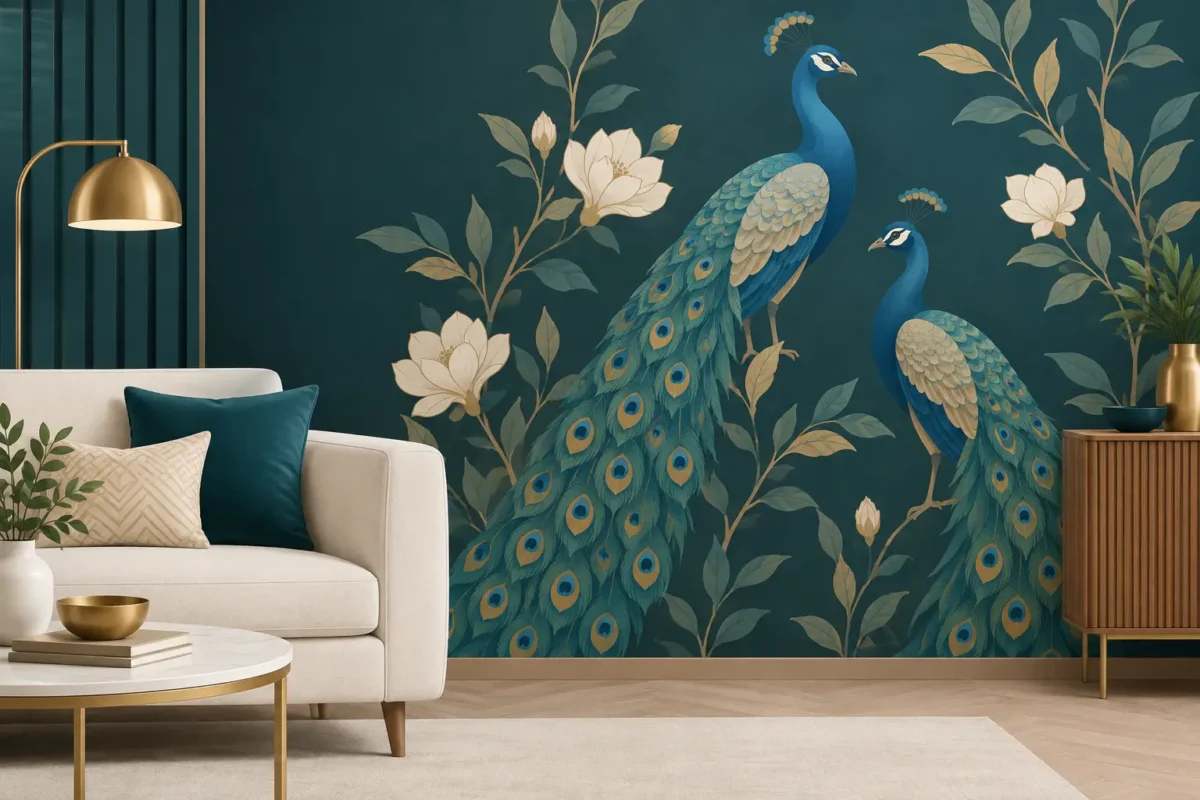
Color is central to the impact. Deep teal, emerald, sapphire, and midnight blue give peacock designs their signature richness, while gold, bronze, or silver accents add a more formal finish. A muted ivory, taupe, or smoky gray ground can make the motif feel lighter and easier to integrate into contemporary interiors. This range makes peacock-inspired wallcoverings more versatile than their dramatic reputation suggests.
The strongest designs balance ornament with negative space. A dense, full-wall feather pattern may suit a hotel lounge, private dining room, or grand entrance. A more open layout with individual birds and trailing foliage can bring character to a bedroom, powder room, boutique, or reception area without dominating every surface.
The best selection begins with the atmosphere the room needs to create. Peacock imagery can be interpreted in several distinct design directions, and each calls for a different interior approach.
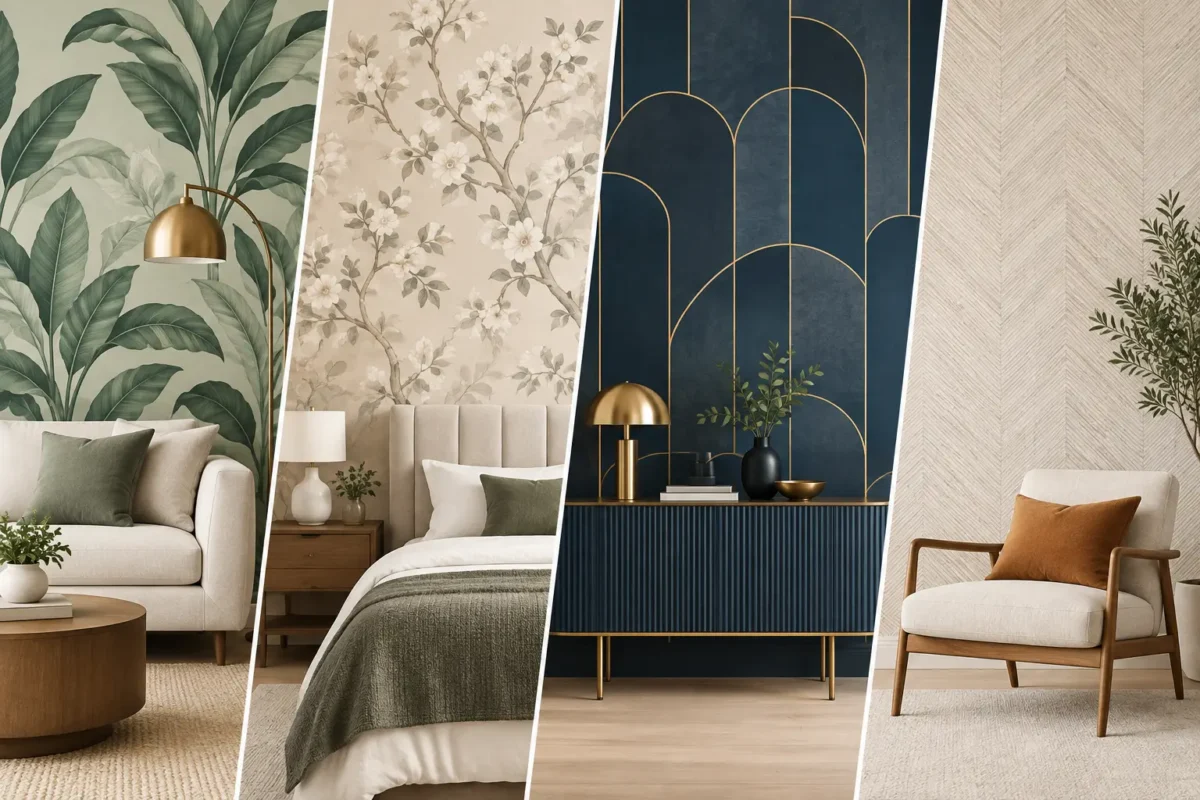
Classic designs often feature hand-painted-style peacocks among flowering branches, palms, vines, or garden scenes. These wallcoverings work particularly well with timber furniture, antique brass, velvet upholstery, stone surfaces, and layered lighting. They bring a collected, residential feel to formal living rooms, dining spaces, boutique hotels, and heritage-inspired retail environments.
Because these patterns contain fine detail, they benefit from thoughtful viewing distance. In a narrow hallway, choose a smaller repeat or a lighter background. In a larger room, a mural-scale composition can create a more immersive effect.
For a more tailored look, Art Deco-inspired designs use geometric fans, stylized feathers, metallic linework, and symmetrical composition. The result feels polished rather than pastoral. This direction suits hospitality interiors, beauty salons, executive lounges, premium retail, and homes with black, walnut, marble, or brass finishes.
A dark navy or charcoal background can be highly effective in spaces with controlled lighting. However, it needs adequate illumination to preserve the detail of the pattern. Layered ambient lighting, wall lights, or focused artwork lighting will prevent the wall from reading as a flat dark surface.
Not every peacock design needs vivid jewel tones. Contemporary interpretations may use line art, tonal feather forms, watercolor washes, or restrained neutral palettes. These options are ideal when a project calls for personality without a traditional decorative look.
A tonal design can work behind a bed, at a reception desk, or along a feature corridor where the architecture should remain the primary focus. It also offers a practical route for clients who love the symbolism of the peacock but prefer a calmer, more modern palette.
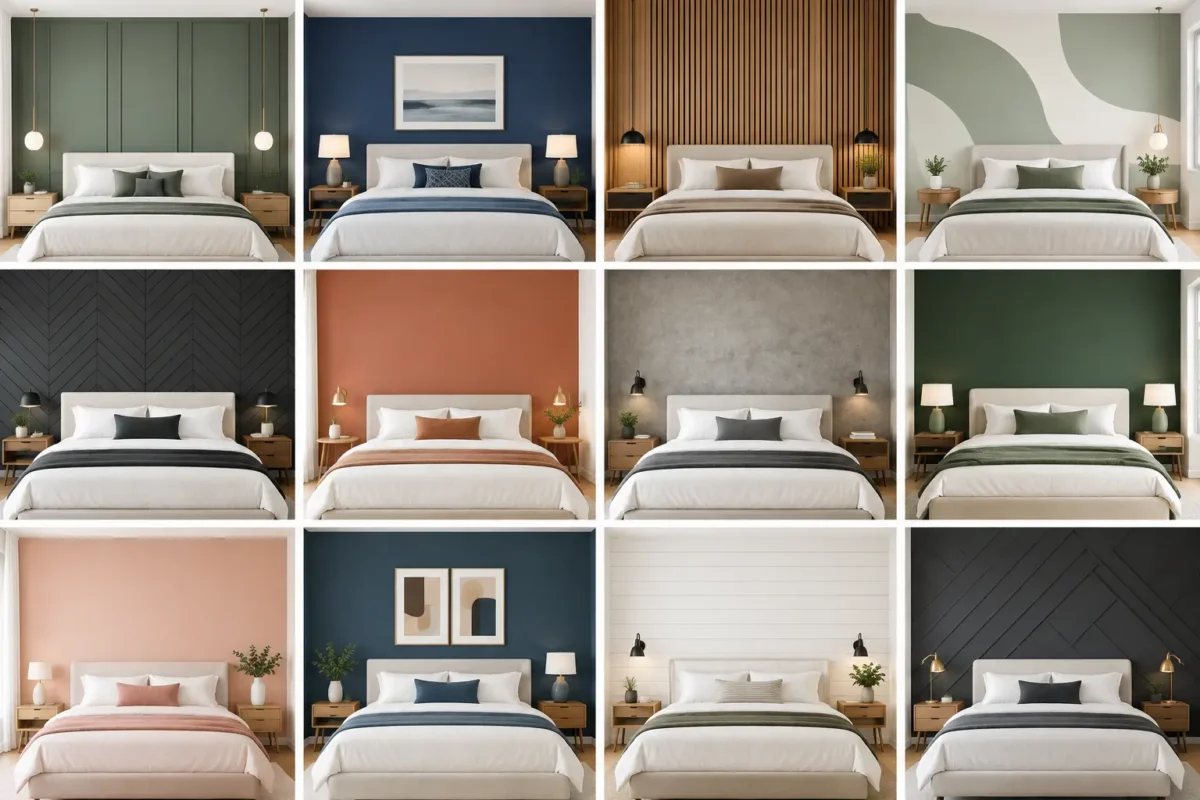
Peacock wallpaper earns its place where a room benefits from a defined focal wall or a strong visual narrative. In a residence, the wall behind a headboard is a natural setting. It frames the bed, adds scale, and allows the remaining walls to stay quiet. A dining room is another excellent choice, particularly when the pattern is paired with warm lighting and simple window treatments.
Powder rooms offer a chance to be bolder. Since the space is small and used briefly, a richly patterned wallcovering can deliver immediate impact without requiring the restraint needed in larger rooms. Full-wall application, including above a vanity or around a mirror, often creates a more intentional result than limiting the pattern to one wall.
In commercial environments, placement should serve the customer journey. A peacock mural behind a reception counter gives a memorable first impression. In a restaurant, it can distinguish a private dining zone from the main seating area. In hotels, it can add character to lift lobbies, guest corridors, lounges, and selected suites. For retail, the design can become an effective backdrop for premium merchandise when the color palette supports the brand.
Scale matters in every setting. Large birds and oversized feathers are powerful in double-volume spaces, broad lobbies, and expansive feature walls. Smaller motifs are often more comfortable in bedrooms, corridors, and compact hospitality rooms. Before production or ordering, assess the wall width, ceiling height, door openings, furniture placement, and principal viewing angles.
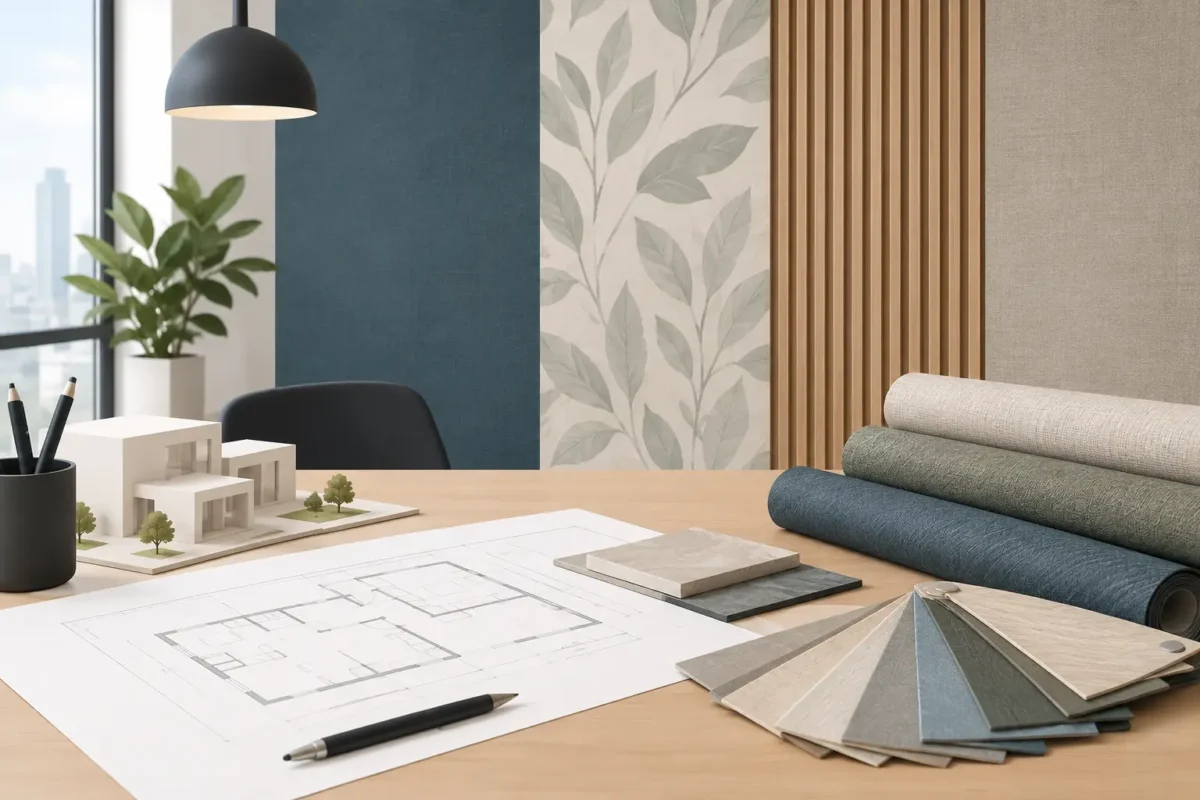
A beautiful print must be suitable for its environment. Residential areas may prioritize texture, color depth, and easy cleaning, while a busy commercial project may require more demanding performance standards. High-traffic corridors, hospitality spaces, clinics, offices, and retail stores typically benefit from commercial-grade wallcoverings designed for durability and maintenance.
Fabric-backed wallcoverings provide a refined finish with stronger dimensional stability, making them a considered option for project-scale installations. Depending on the specification, commercial materials can offer washable surfaces, improved resistance to scuffs, and fire-retardant performance suited to applicable project requirements. Always confirm the required technical documentation for the site, especially where building codes, hospitality standards, or developer specifications apply.
For a custom peacock feature wall, digital printing opens further possibilities. A bespoke mural can be sized precisely to the wall, adjusted around architectural elements, or recolored to coordinate with a project’s furniture, flooring, and branding. Advanced printing with eco-friendly ink supports rich color reproduction while allowing designers to control the composition rather than forcing a standard repeat into an awkward space.
The trade-off is that customization requires careful planning. Final wall measurements, panel layout, bleed areas, and the position of switches, outlets, and join lines should be confirmed before printing. A custom mural has the greatest impact when it is engineered for the actual wall, not simply adapted after the fact.
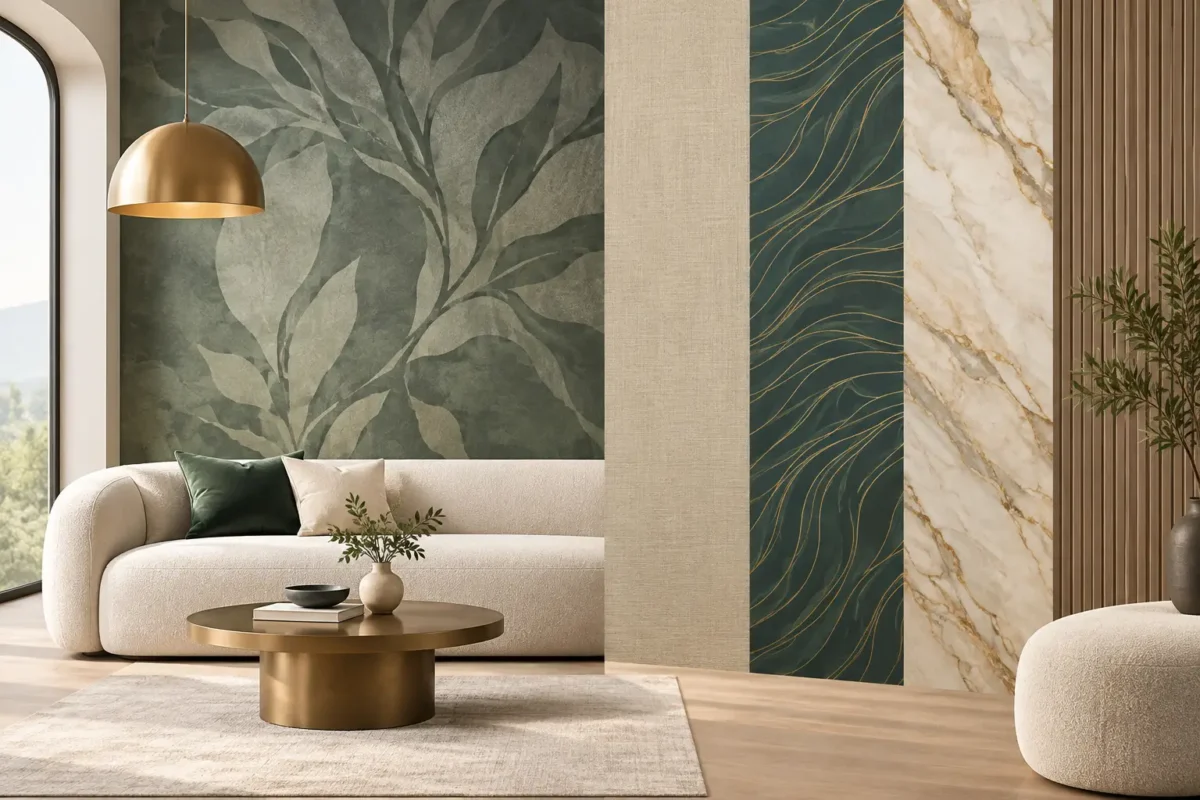
A peacock wallcovering already carries visual presence, so the surrounding finishes should support it rather than compete for attention. Deep blue and emerald designs pair naturally with warm walnut, smoked oak, aged brass, cream upholstery, and dark stone. Gold-accented patterns can be echoed through mirror frames, lighting details, or hardware, but repeating metallic finishes too aggressively can make a room feel overstyled.
If the wallpaper is highly detailed, choose upholstery with simple texture instead of another prominent pattern. Bouclé, linen-look fabrics, velvet in a single color, or tailored leather can provide contrast without visual conflict. For floors, timber, natural stone, large-format porcelain, or restrained carpet designs keep the composition grounded.
In a more contemporary scheme, use a neutral peacock pattern with matte black, brushed nickel, pale oak, and clean-lined furniture. This approach lets the wallcovering add softness and artistry while preserving a crisp architectural language.
Even the finest wallcovering can lose its effect when seams are misaligned, corners are poorly finished, or the substrate is not properly prepared. Peacock patterns are especially unforgiving because feather details, branches, and geometric forms make inaccurate joins easy to notice.
Professional installation begins with wall preparation. Surfaces should be dry, smooth, clean, and properly primed as required by the wallcovering system. Installers also need to plan the pattern placement so a peacock’s head, feather fan, or key motif does not disappear behind a door, cabinet, or electrical point. On murals, panel sequencing is equally critical.
For projects with multiple rooms or substantial wall areas, a showroom consultation and site review can reduce costly surprises. Decorating Depot brings together decorative selection, custom-print capability, project-suitable materials, and professional installation support, helping clients move from a visual concept to a finished wall with greater confidence.
A well-chosen peacock wallcovering should feel more than decorative. It should make the room feel unmistakably its own, with color, scale, and performance selected to remain impressive long after the first reveal.