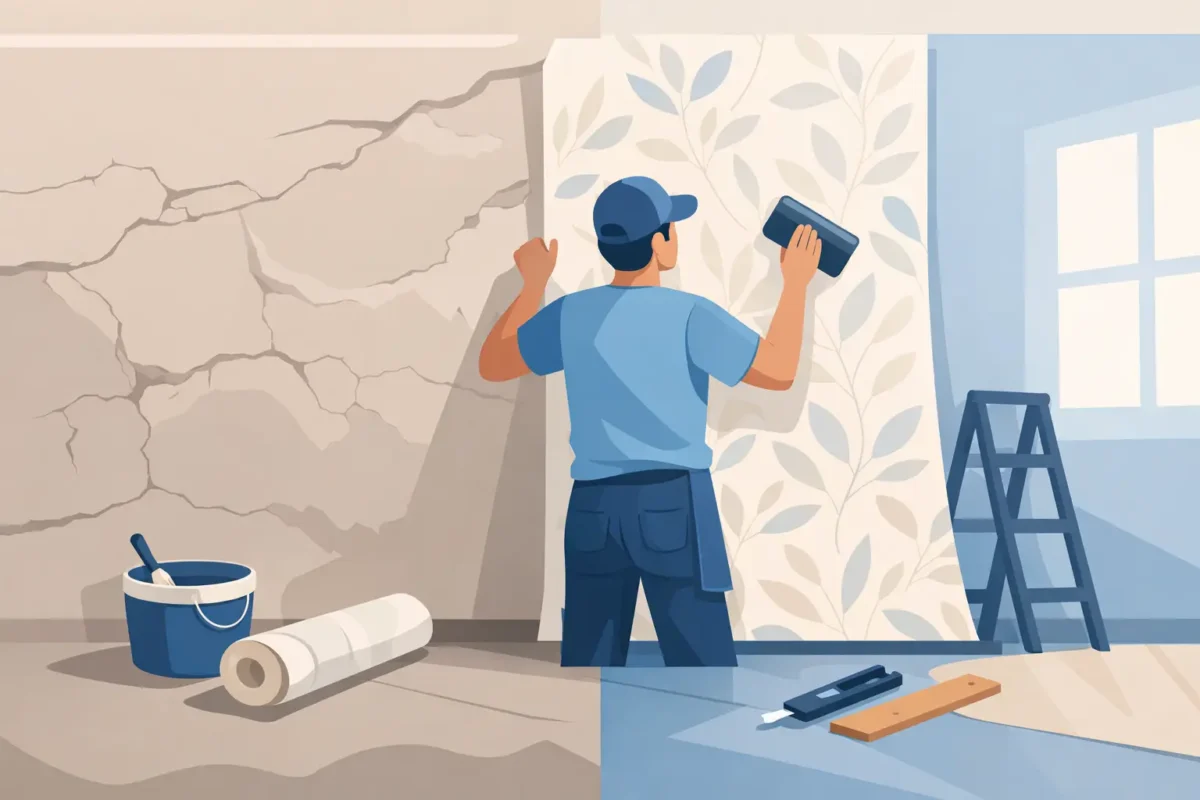
A wall finish can make a lobby feel forgettable or fully considered in seconds. That is why commercial wallcovering solutions are not just a decorative choice. They shape first impressions, support brand identity, and influence how a space holds up under daily wear.
For designers, developers, and business owners, the real question is not whether wallcovering looks good on day one. It is whether the material, print quality, and installation method will still look sharp after months of traffic, cleaning, and operational pressure. In commercial settings, performance matters as much as appearance.
A strong commercial wallcovering has to do more than cover a surface. It needs to withstand scuffs in corridors, maintain color in bright interiors, and support a polished visual language across the space. In hospitality, that may mean creating warmth without sacrificing cleanability. In retail, it may mean delivering a bold branded statement that can handle constant customer movement. In offices, it often means balancing sophistication with long-term maintenance.
This is where material specification becomes critical. Residential wallpaper may offer visual appeal, but commercial projects usually demand higher technical standards. Fabric-backed wallcoverings, project-grade vinyls, and custom printed surfaces are selected not only for design flexibility, but also for durability, fire performance, and easier upkeep.
There is no one-size-fits-all answer. A boutique hotel corridor, a corporate boardroom, and a restaurant feature wall each ask for something different. The best result comes from matching the wallcovering to the space, the traffic level, and the design intent from the start.
The right specification usually begins with function. If the wall is in a high-contact area, impact resistance and washability move up the priority list. If the wall is a focal point behind a reception desk, visual depth, texture, and branding may take the lead.
Fabric-backed commercial wallpaper remains a preferred option for many project environments because it combines refined texture with engineered strength. It is especially suitable where walls need a more elevated finish without looking overly glossy or flat. In corporate, hospitality, and upscale retail interiors, this balance can make the space feel more intentional and more premium.
Custom print wallpaper and murals offer a different advantage. They give designers and brands the freedom to create site-specific graphics, signature imagery, and tailored scale. That flexibility is valuable in branded environments where generic patterns are not enough. A custom mural in a hotel lounge, sales gallery, or flagship retail space can define the entire room.
European and Korean wallpaper collections are often chosen for their design range. They can bring distinctive pattern, texture, and tonal sophistication that standard painted finishes simply cannot achieve. For lower-traffic commercial zones or carefully curated feature walls, these collections open up far more visual possibilities.
The trade-off is straightforward. More decorative surfaces may require more careful placement, while more heavy-duty materials can sometimes look more utilitarian if the selection is too narrow. The goal is to avoid that compromise by sourcing from a partner with both design breadth and technical options.
Some spaces expose wall surfaces to constant stress. Hallways, elevator lobbies, reception areas, meeting rooms, restaurants, and guest room corridors all experience repeated contact. Bags brush corners, chairs touch walls, housekeeping teams clean regularly, and lighting can amplify every flaw.
In these environments, the quality of the substrate and installation is just as important as the product itself. Even a premium wallcovering can fail if the wall is not prepared correctly or if seams are misaligned. Bubbling, lifting edges, and visible joins undermine the finish quickly and can make an otherwise expensive project look poorly executed.
This is why professional installation should be part of the specification conversation, not an afterthought. Precise measuring, proper surface preparation, and experienced handling are what turn a good material into a flawless wall finish. For larger commercial projects, consistency across multiple rooms or floors is especially important.
The strongest commercial interiors rarely choose between beauty and function. They expect both. A statement wall in a reception area should create immediate visual impact, but it also needs to maintain that effect over time. A restaurant interior should feel atmospheric, yet remain practical for regular cleaning. A guest room should express comfort and style, while still meeting project requirements.
That balance is where well-planned wallcovering excels. Texture can add warmth without clutter. Pattern can create movement in long corridors. Large-scale murals can give identity to otherwise generic architecture. Subtle tone-on-tone designs can elevate office interiors without distracting from the brand environment.
Custom production adds another layer of value. Instead of adjusting the concept to fit standard sizes or generic repeats, designers can tailor scale, color, and layout to suit the architecture. This matters in spaces with double-height walls, unusual dimensions, or a strong branded narrative. Precision changes the outcome.
Advanced printing technology also plays a major role. Sharp image reproduction, stable color, and eco-friendly inks help ensure that custom graphics look refined rather than improvised. In premium commercial interiors, image quality is visible immediately. Poor printing flattens the design. High-definition output gives it presence.
Before selecting a finish, it helps to look beyond the sample book. Ask how the material performs in high-traffic areas, how it should be cleaned, and whether it meets project requirements for safety and durability. Fire retardancy, maintenance, and long-term appearance are not secondary concerns in commercial work. They are part of the design decision.
It is also worth asking whether the supplier can handle custom sizing, coordinated production, and installation under one roof. When sourcing is fragmented, delays and inconsistencies become more likely. A full-service approach simplifies execution and reduces the risk of mismatch between design intent and installed result.
Showroom consultation still matters here. Seeing texture, scale, and finish in person often changes the decision. A pattern that feels perfect on paper can read too busy on a full wall, while a subtle texture can come alive under actual lighting. For commercial projects, where specification affects budgets and timelines, that clarity is valuable.
Commercial projects do not move in a straight line. Concepts evolve, budgets shift, site conditions change, and approvals take time. That is why range matters. A supplier with thousands of options, custom capabilities, and project-grade materials can adapt without forcing the design to start over.
Experience matters just as much. Teams with a long track record in wallcovering understand how to translate design ambition into practical specification. They know when a custom mural will outperform a painted graphic, when a textured vinyl is the smarter choice for a corridor, and when a luxury look needs a more durable base to work in real life.
This combination of design variety and technical confidence is what separates a decorative supplier from a true project partner. Decorating Depot is positioned in that space, offering commercial-grade wallcoverings, bespoke murals, advanced printing, showroom support, and professional installation with the depth that serious interior projects require.
Well-chosen commercial wallcovering solutions do more than finish a room. They strengthen the identity of a space, help protect wall surfaces, and create a more considered experience for the people who use it every day. When selected with care, they can reduce the need for frequent repainting, improve visual consistency, and give a project a more elevated result from the outset.
The best commercial interiors are remembered because every surface feels intentional. Walls should not be the weak point in that experience. They should carry the same level of design thinking and engineered performance as the rest of the space.
If a project needs to feel distinctive, durable, and professionally resolved, wallcovering is not a finishing touch. It is one of the smartest design decisions you can make.