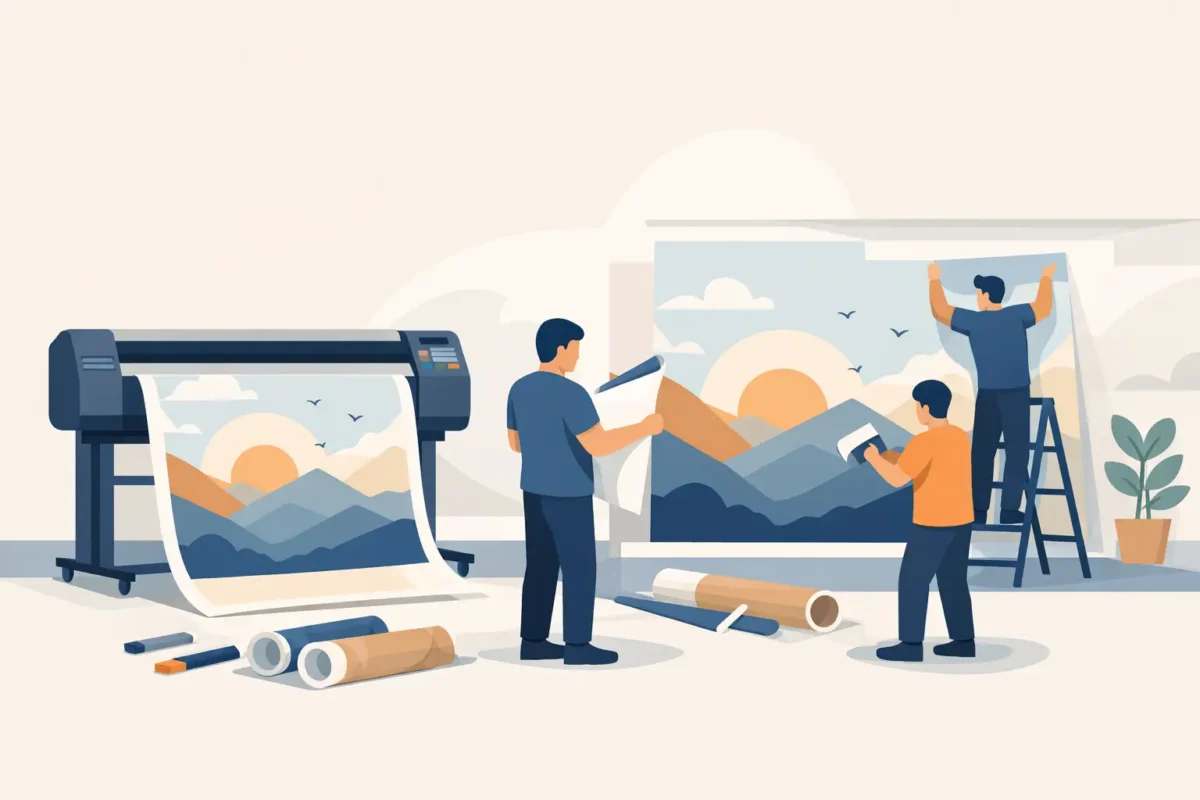
A wall can now carry far more than a color or a repeating pattern. It can reflect a homeowner’s travels, translate a hotel’s local story, reinforce a retailer’s identity, or give a workplace a stronger sense of place. The future of personalized wallcovering design is not simply about placing a photograph on a wall. It is about producing a finish that feels intentional, scale-aware, technically suitable, and built for the way a space will be used.
For residential and commercial projects alike, the shift is clear: generic feature walls are giving way to surfaces designed around a specific room, audience, and purpose. Better printing, more refined materials, and professional installation are making that level of expression practical at project scale.
The earliest idea of personalization was straightforward: choose an image, enlarge it, and print it. That approach still has a place, particularly for personal photographs, destination imagery, and highly branded environments. But a compelling wallcovering must do more than reproduce an image clearly.
The most successful personalized designs are composed for the architecture. They consider ceiling height, sightlines, furniture placement, windows, doors, lighting, and the points where wallpaper panels meet. A botanical mural may need a quieter lower section behind lounge seating. A reception wall may require a clear area for a logo. In a guest room, the focal point may sit behind the bed rather than at the center of the wall.
This is where custom design becomes more valuable than simple image enlargement. The artwork can be cropped, recolored, extended, layered, or redrawn to suit the dimensions and function of the space. A family home may call for a soft, one-of-a-kind landscape with subtle personal references. A hospitality project may need a series of related murals that feel distinctive from room to room while remaining part of one visual language.
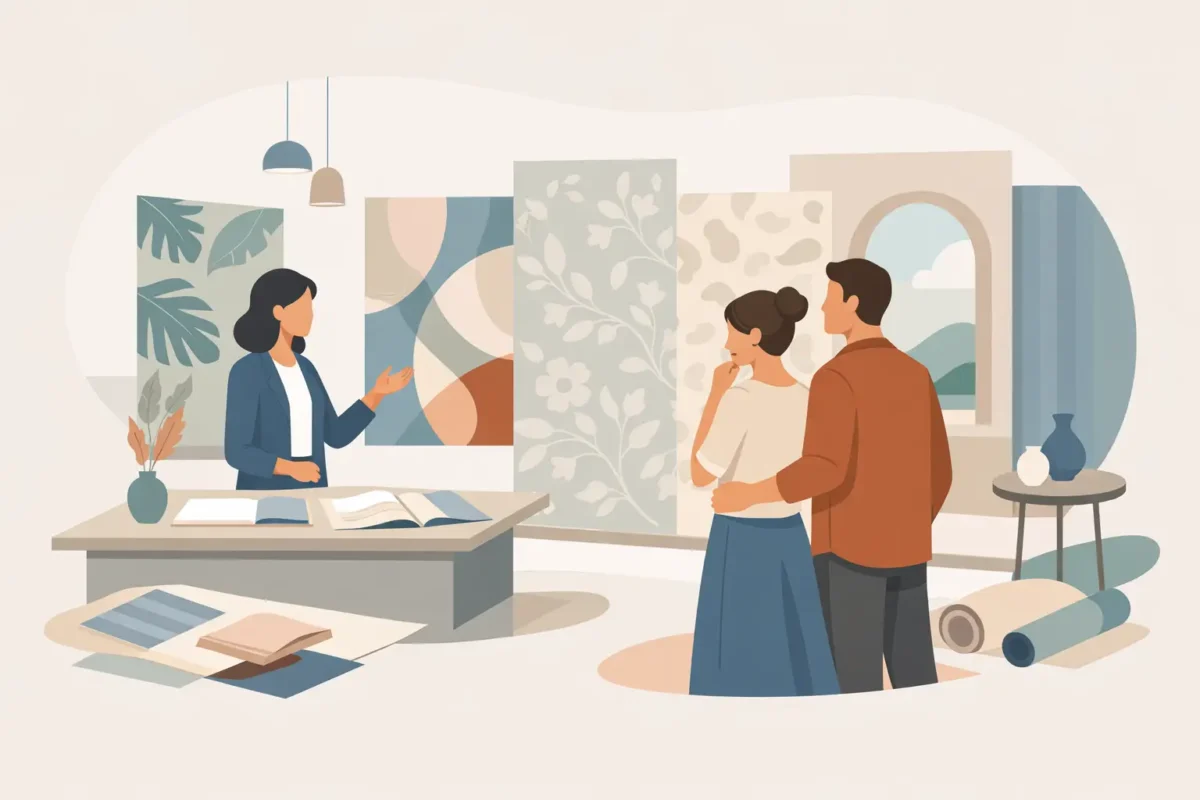
Digital tools are making personalized wallcovering easier to visualize before production. Designers can build room mockups, test color directions, and assess the relationship between artwork and architectural features early in the process. This reduces costly surprises and helps clients make decisions with greater confidence.
Artificial intelligence may also support the creative process by producing initial pattern directions, generating variations, or helping teams explore motifs faster. Yet it cannot determine whether an image has enough resolution for a large-format wall, whether a pattern will feel too busy in a low-lit corridor, or whether a finish will withstand daily use in a restaurant. Those decisions still require material knowledge and a trained eye.
The future will belong to a more considered balance: technology for speed and visualization, human expertise for composition, color control, specification, and installation. A beautiful concept is only the starting point. The finished wall must look as refined up close as it does in a presentation.
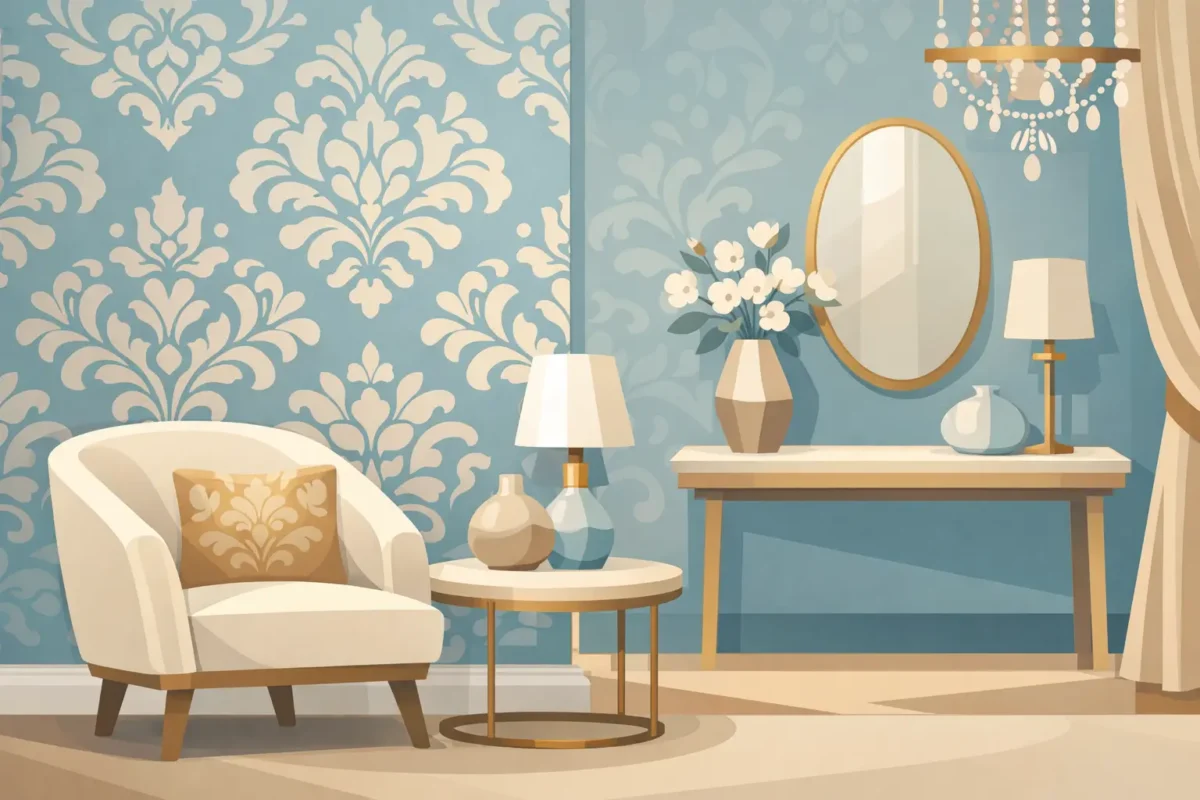
Personalized does not always mean loud. Often, the strongest custom wallcoverings are quiet, tonal, and closely connected to the rest of the interior. A mural can borrow the warm mineral shades of a stone floor, the deep green of a velvet banquette, or the pale timber notes of custom joinery.
Advanced printing makes nuanced gradients, layered textures, and fine details more achievable. However, screen colors are not final print colors. Lighting conditions, substrate texture, and surrounding finishes can all affect perception. For projects where color is central to the scheme, sample review and professional color management remain essential.
The future of personalized wallcovering design is also a future of better specification. The same image can have very different visual and practical results depending on the material selected.
For a private bedroom or low-traffic feature wall, a smooth decorative wallpaper may offer the refined finish needed for delicate illustration or soft watercolor effects. In offices, retail interiors, hotels, clinics, and high-traffic corridors, fabric-backed commercial wallcovering can provide greater durability, dimensional stability, and resistance to everyday wear. Depending on the project, easy-clean surfaces, fire-rated options, and low-odor, eco-friendly ink systems may be as important as the design itself.
Texture deserves equal attention. A linen-like surface can lend warmth to a muted mural, while a fine woven finish can give an abstract pattern added depth. A very textured substrate may not be the best choice for typography, intricate maps, or photographic detail. The right pairing depends on what the artwork needs to communicate and what the room demands over time.
In premium interiors, a surface should not have to choose between visual impact and dependable performance. A restaurant wallcovering must hold its character through regular cleaning. A hotel corridor must look composed after luggage, carts, and constant movement. A family living room should remain practical without feeling overly commercial.
This is why specification should happen before final artwork approval, not after. When designers understand the maintenance, safety, and wear requirements at the beginning, they can choose the appropriate base material and adapt the design accordingly. The result is a wall finish that looks deliberate on opening day and continues to serve the space well.
For commercial and hospitality environments, personalized wallcovering has become a powerful way to create recognition without relying on obvious signage. It can communicate brand character through palette, pattern, illustration, local references, or carefully placed graphic elements.
A boutique hotel might commission a mural inspired by the neighborhood’s architecture. A wellness studio may use large-scale botanical forms in a calming, reduced palette. A corporate office can translate its values into an abstract wall that feels sophisticated rather than promotional. In each case, the wall becomes part of the guest or customer experience.
The trade-off is that branded wallcovering should be designed for longevity. A campaign graphic may feel current for a season, but a permanent installation needs a broader visual idea that can outlast short-term messaging. The most effective custom designs leave room for a brand’s personality without turning every wall into an advertisement.
Custom wallcovering once implied long lead times and a process reserved for landmark projects. Digital production is changing that. Designers can now adapt artwork to exact wall dimensions, produce smaller runs, and create coordinated variations without the limitations of traditional repeat printing.
That does not mean every room should be completely bespoke. Curated wallpaper collections remain an excellent choice when a project needs speed, proven design, or a repeat pattern that can carry across several spaces. A hybrid approach is often the most effective: use a custom mural for a focal wall, then select complementary commercial wallcovering or patterned wallpaper for surrounding areas.
This approach gives projects both distinction and discipline. It also supports better budget allocation, placing custom investment where it will create the greatest visual return.
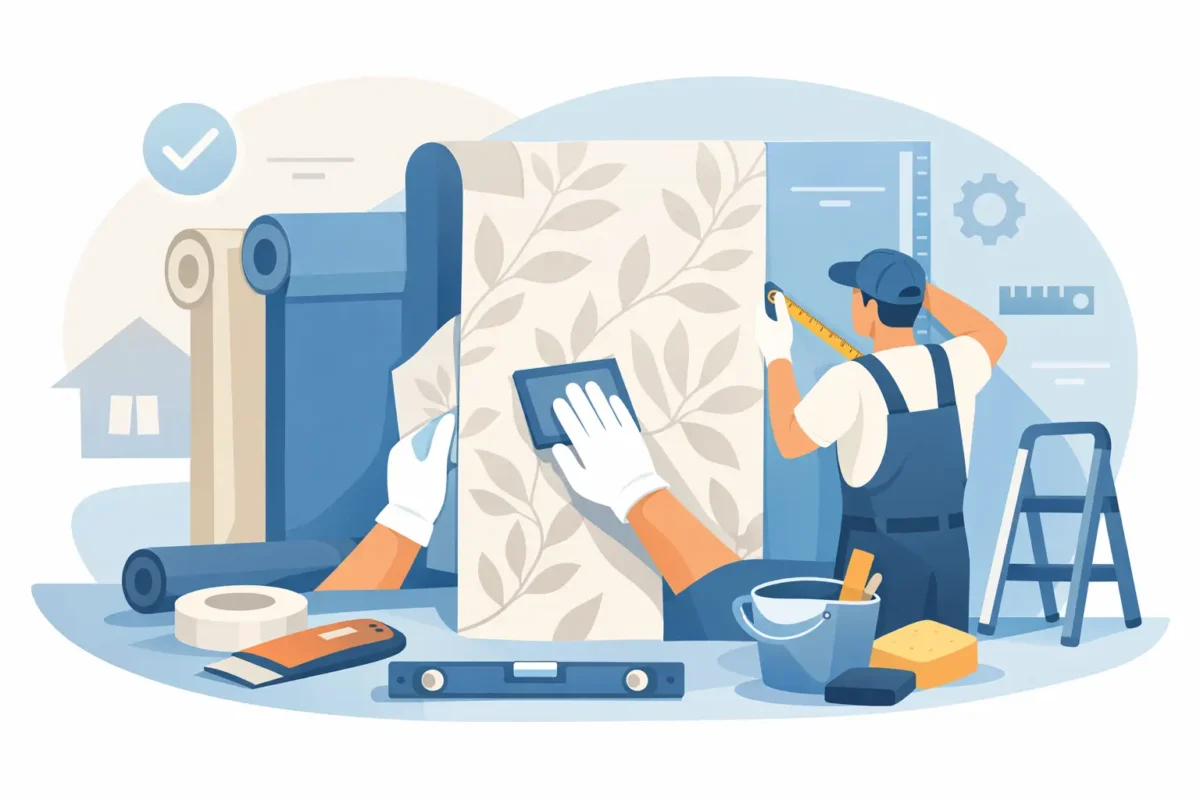
As design becomes more precise, installation becomes even more visible. A mural with a horizon line, architectural drawing, or large botanical stem leaves little room for misalignment. Panel numbering, wall preparation, accurate trimming, adhesive selection, and careful handling all influence the final result.
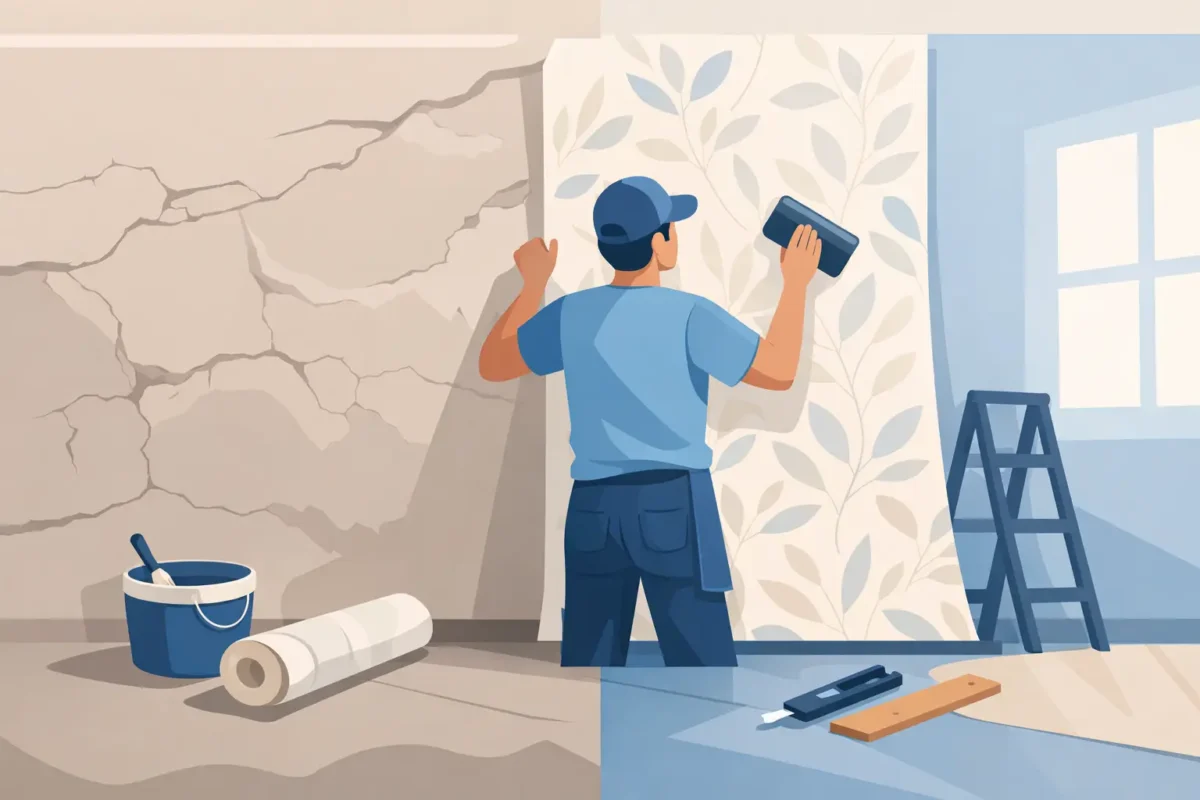
A professional installation team also recognizes challenges before they become defects. Uneven walls, moisture concerns, difficult corners, and existing surface conditions must be addressed before the wallcovering is applied. The finest print cannot compensate for poor preparation.
At Decorating Depot, this full-project perspective matters: design selection, custom production, material suitability, and installation should work together rather than as separate decisions. It is how a statement wall becomes a finished surface with real staying power.
The most exciting direction is not personalization for its own sake. It is personalization with a reason. A custom wallcovering should make a room feel more connected to the people who live there, the brand that operates there, or the experience the space is meant to create.
Start with the wall’s role before choosing the image. Ask what people should notice, how long the finish needs to perform, and which material will best support both. When those answers guide the design, the wall becomes more than decoration. It becomes a lasting part of the interior’s identity.