When a wall finish has to do more than look beautiful, material choice stops being a styling decision and becomes a performance decision. That is exactly where a fabric backed wallpaper comparison matters – especially for hotels, offices, retail spaces, feature walls, and high-traffic residential interiors where durability, finish quality, and long-term maintenance all need to align.
Fabric-backed wallpaper sits in a different category from standard residential paper or peel-and-stick products. It is engineered for demanding environments, with a woven or non-woven fabric layer bonded to a vinyl surface. The result is a wallcovering that delivers richer texture, stronger dimensional stability, and better resistance to wear than lighter decorative alternatives. For designers and property owners, that means fewer compromises between visual impact and practical use.
At a glance, fabric-backed wallpaper may look similar to other premium wallcoverings. The difference becomes clear during installation and over time. The fabric backing reinforces the material, helping it handle larger wall spans, minor substrate irregularities, and the day-to-day stress of commercial traffic. It is one reason this category is widely specified in hospitality, corporate, healthcare, and upscale residential projects.
The vinyl face is equally important. It gives the surface its cleanability, pattern definition, and resistance to scuffs and moisture. Depending on the grade, the finish can range from understated linen effects to bold embossing, metallic detailing, or textural patterns that create architectural depth. In design terms, it offers a more substantial, tailored look than many lighter wallpapers. In technical terms, it is built to perform.
Not all fabric-backed wallcoverings perform the same way. A proper fabric backed wallpaper comparison should start with the surface composition, because that affects appearance, maintenance, and suitability for different spaces.
These classifications are often used in commercial specifications. Type I is lighter duty and better suited to lower-traffic interiors. Type II is the most common for commercial and hospitality settings because it balances durability with design flexibility. Type III is heavier and used where walls face tougher wear, such as corridors, public areas, or institutional spaces.
For a private residence, Type I or selected Type II options may be more than enough, particularly in bedrooms, lounges, or feature walls. For a hotel lobby, office circulation area, retail environment, or serviced apartment corridor, Type II or Type III is usually the wiser choice. The finish may look equally refined across grades, but the wear resistance is not the same.
Some fabric-backed wallpaper is designed to mimic woven textiles, grasscloth-inspired patterns, or linen textures. These options add softness and visual layering to a room, making them popular for luxury homes, boutique hospitality spaces, and reception areas. They are excellent when the goal is warmth and depth.
Smooth or lightly embossed finishes tend to feel more contemporary and are often easier to maintain. They suit workspaces, healthcare-adjacent interiors, restaurants, and high-use environments where easy cleaning matters. The right choice depends on whether the wall is intended to feel atmospheric, architectural, or highly practical.
Patterned fabric-backed wallpaper can create a signature interior quickly. It is effective in branded commercial spaces, feature walls, and hospitality settings where visual identity matters. The trade-off is that large-scale patterns require careful planning across seams and room elevations.
Solid or semi-plain textures are more versatile and often more timeless. They work especially well in large projects where continuity across multiple rooms is important. They also tend to age more gracefully if the surrounding furniture or branding changes over time.
A fabric backed wallpaper comparison is only useful if it addresses real-world conditions. The best product on paper is not always the best product for the project.
This is one of the strongest reasons to choose fabric-backed wallcovering. The reinforced construction handles bumps, friction, and routine contact better than many decorative wallpapers. In commercial settings, that can translate into fewer visible dents, tears, and edge failures. In homes, it can be a smart upgrade for stairways, family rooms, hallways, or children’s spaces where walls see more use than expected.
That said, durability is relative. A highly textured luxury finish may still need more careful placement than a tougher institutional-grade vinyl. Performance should be matched to actual traffic, not just aesthetic preference.
If the project calls for easy upkeep, vinyl-faced fabric-backed wallpaper has a clear advantage. Many options can be wiped down, making them suitable for restaurants, offices, hotel rooms, and active households. This is especially valuable in climates where humidity, dust, or everyday marks can quickly affect wall appearance.
However, not every finish cleans the same way. Deep embossing can trap dust more easily than flatter surfaces, and metallic or specialty coatings may require gentler care. Specification should always account for maintenance expectations, not just the showroom sample.
One of the less glamorous but more important parts of any comparison is how the material behaves on the wall. Fabric-backed products generally install with more body and stability than thin wallpapers, which can help achieve a more polished finish on large surfaces. They are often preferred for project work because they feel more dependable during installation.
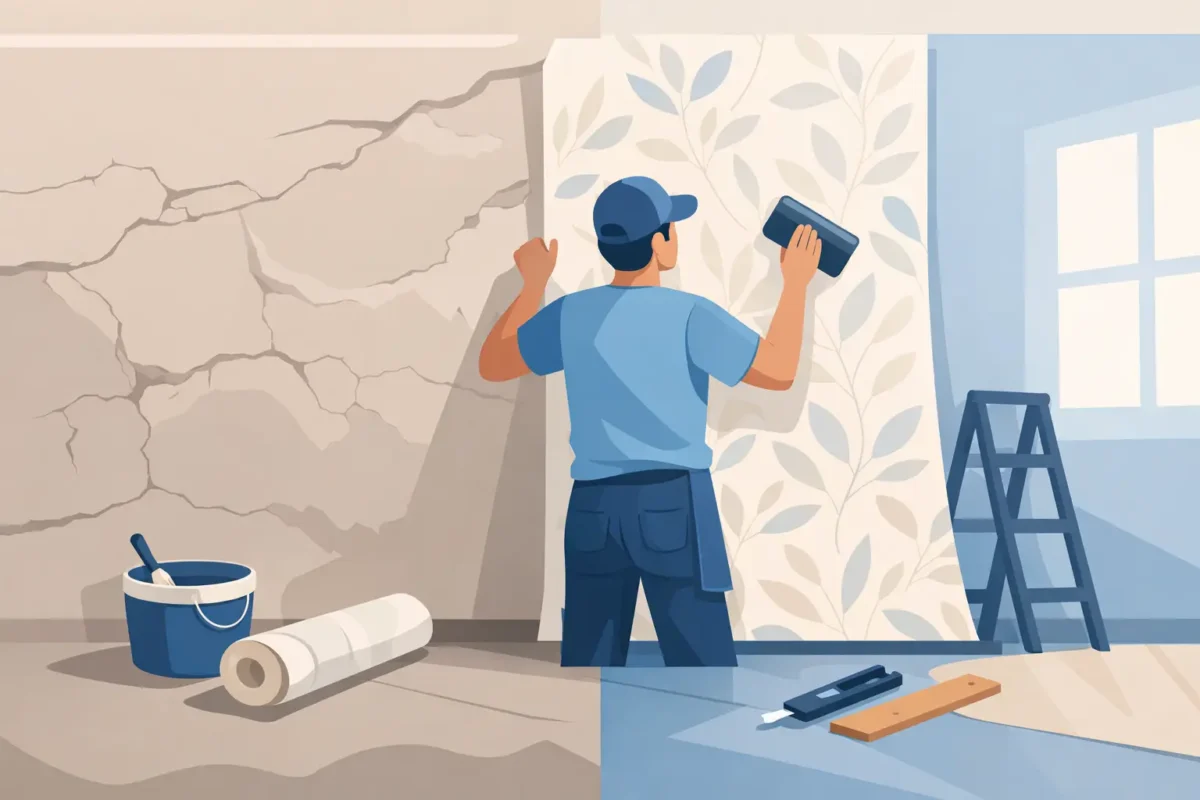
Still, no wallcovering can hide poor substrate preparation indefinitely. If walls are uneven, damp, or badly patched, even premium material will show it. The best result comes from pairing the right wallcovering with proper surface preparation and skilled installation.
For commercial, hospitality, and multi-unit developments, compliance matters as much as design. Many fabric-backed commercial wallcoverings are specified with fire-retardant properties and performance standards that make them suitable for regulated environments. This is one of the reasons they are favored in professional interiors.
For residential projects, this may be less of a deciding factor, but it still speaks to overall quality. Materials developed for project-grade use often bring a higher level of assurance across the board.
The right product changes with the space.
In a residence, fabric-backed wallpaper brings a more finished, architectural quality to walls. It works well in living rooms, dining spaces, bedrooms, and statement corridors where homeowners want depth and durability without sacrificing elegance. Softer textures and refined neutrals often perform best here because they elevate the room without overwhelming it.
For kitchens, bathrooms, or spaces with direct water exposure, selection should be more cautious. Humidity-resistant wallcoverings can perform well, but location, ventilation, and installation quality all matter.
In workplace settings, fabric-backed wallcovering helps create a polished environment that feels intentional rather than generic. Reception areas, meeting rooms, executive offices, and lift lobbies benefit from finishes that add subtle brand character while standing up to regular use.
This is often where understated Type II vinyls shine. They deliver clean lines, dependable maintenance, and enough texture to keep the space from feeling flat.
Hotels, restaurants, show suites, and boutiques need surfaces that photograph well, create atmosphere, and survive heavy traffic. Fabric-backed wallpaper is a strong fit because it supports both storytelling and durability. Rich textures, custom looks, and layered neutrals can make interiors feel more expensive without relying solely on hard finishes.
In these spaces, the decision usually comes down to balance. The most dramatic finish is not always the most practical behind a banquet chair, along a corridor, or near a luggage path.
The smartest fabric backed wallpaper comparison does not start with pattern books. It starts with three questions: How much traffic will the wall receive, what level of maintenance is realistic, and what visual role should the surface play in the room?
If the wall is mostly decorative, you can prioritize texture, scale, and visual presence. If it is in a high-contact area, durability and cleanability should lead. If the project spans multiple rooms or units, consistency and specification efficiency may matter more than a dramatic one-off design.
This is where working with a specialist showroom adds value. A strong supplier can compare grades, explain technical differences clearly, and match the finish to the environment instead of simply recommending what looks best on a sample board. For projects that demand both design range and project-grade performance, Decorating Depot approaches wallcovering as part of a complete interior solution, not a standalone product.
A well-chosen wallcovering should still look considered after the furniture is in, the lighting changes, and the space starts being used every day. That is the real test – and the reason the right material choice pays off long after installation.