A lobby wall that bubbles at the seams, a retail feature wall that scuffs within weeks, a corridor finish that cannot handle daily cleaning – these are not design problems alone. They are specification and execution problems. Commercial wallpaper installation sits at the point where visual impact meets technical performance, and that is exactly why it deserves more attention during planning.
In commercial settings, wallcoverings do more than decorate. They shape first impressions, reinforce brand identity, soften acoustics, protect substrates, and help high-traffic interiors stay polished longer. But the result depends on more than pattern and color. Material selection, wall condition, site timing, adhesive compatibility, and installer skill all influence how well a wallcovering performs once the space is occupied.
Paint can work for simple applications, but many commercial interiors ask more of their wall finishes. Hotels need warmth without sacrificing durability. Offices want a refined look that still feels practical to maintain. Retail spaces need statement surfaces that support the brand and hold up under constant activity. In these environments, commercial wallpaper installation offers a more complete solution because it combines design range with engineered performance.
The best project-grade wallcoverings are built for real use. Fabric-backed vinyl, textured commercial surfaces, and custom printed solutions can resist wear, support easier cleaning, and maintain their appearance in demanding spaces. That matters in reception areas, lift lobbies, meeting rooms, restaurants, clinics, show units, and public corridors where walls are touched, cleaned, and viewed every day.
There is also a financial argument. A cheaper finish that fails early creates disruption, rework, and an uneven brand presentation. A properly specified wallcovering, installed correctly, often gives a longer service life and a stronger return on the fit-out budget.
Not every wallpaper is suitable for a commercial project. Residential products may look appealing in a sample book, but they are not always designed for higher traffic, stricter maintenance routines, or compliance requirements. Commercial wallcoverings are selected with a different set of priorities.
Durability is the first difference. Project-grade materials are made to withstand friction, impact, and regular cleaning more effectively than lighter decorative papers. Fire performance can also be a deciding factor depending on the sector, local code requirements, and project brief. In hospitality, healthcare-adjacent spaces, offices, and multi-unit developments, those technical details are part of the decision, not an afterthought.
Maintenance is another major factor. Some finishes are ideal for dry, low-contact spaces. Others are better suited to busy public environments where housekeeping teams need surfaces that clean easily and retain their finish. Design flexibility matters too, especially when a project calls for brand colors, oversized graphics, bespoke murals, or custom sizing.
A premium finish starts long before the first panel goes on the wall. Good installation begins with site assessment. Installers need to understand the substrate, moisture conditions, existing wall quality, and the realities of the working environment. Newly plastered walls, painted surfaces, gypsum boards, and repaired partitions all behave differently, and each demands the right preparation.
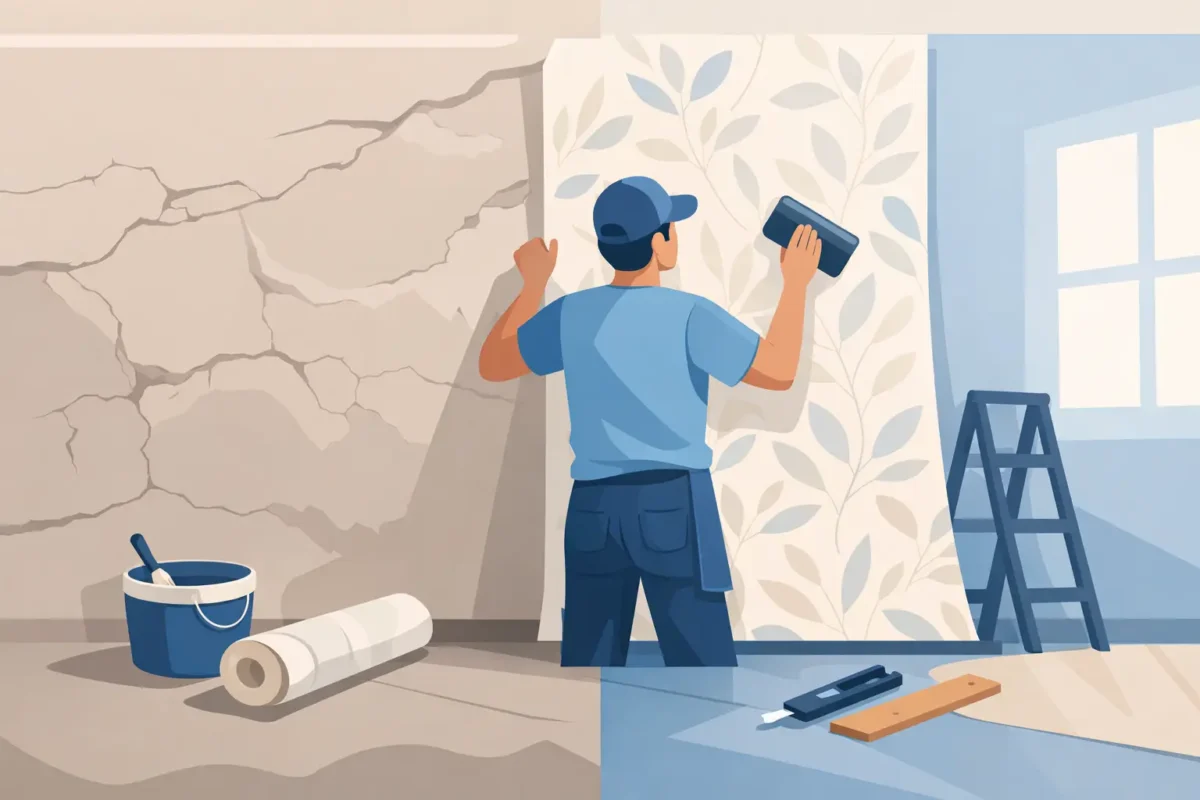
Wall preparation is where many problems begin or end. Uneven surfaces, dust, old adhesive residue, hairline cracks, and unstable paint can compromise bonding and show through even the most luxurious wallcovering. For commercial wallpaper installation, surface readiness is not a small detail. It is the foundation of the final appearance.
After preparation comes layout planning. Pattern alignment, panel sequencing, focal points, corners, door frames, and ceiling lines all need attention. In a corporate boardroom or hotel lobby, even slight misalignment can weaken the overall effect. On custom printed murals, precision becomes even more critical because the image has to read cleanly across multiple drops.
Adhesive selection matters just as much. Different materials require different bonding systems, and the wrong match can lead to edge lifting, bubbling, or difficult future maintenance. Experienced installers understand how humidity, air-conditioning, and wall porosity affect curing and long-term adhesion.
Finally, installation itself must be clean, controlled, and efficient. Commercial sites often involve tight handover dates, active coordination with other trades, and access limitations. Professional execution protects both the material investment and the project timeline.
Some spaces benefit from wallcoverings more immediately than others. Reception areas and lobbies are obvious examples because they establish tone within seconds. A textured European wallcovering, a refined fabric-backed finish, or a large-scale mural can give the space authority and identity without overcomplicating the design scheme.
Hospitality environments are another strong fit. Guest room corridors, suites, restaurants, and lounge areas all benefit from surfaces that feel rich and layered while remaining practical to maintain. In retail, wallpaper helps create zones, highlight key merchandise walls, and bring consistency across multiple outlets.
Corporate settings also gain from the right specification. Meeting rooms, executive spaces, breakout areas, and client-facing zones often need a more elevated finish than standard paint can deliver. The same is true for show galleries, branded developer suites, and specialty commercial interiors where visual distinction is part of the business strategy.
A beautiful pattern is only one part of a successful result. Texture, sheen level, scale, and substrate all affect how the wallcovering behaves in the space. Dark, dramatic finishes can be striking in hospitality and luxury retail, but they may reveal surface imperfections more easily if walls are not properly prepared. Deep textures add character, yet some are better suited to lower-contact areas than busy corridors.
Custom print solutions open even more possibilities. Branded graphics, oversized botanicals, architectural scenes, and abstract statement walls can transform commercial interiors into memorable environments. Still, custom does not mean casual. File quality, scale accuracy, color control, and print technology all influence the final result. That is why end-to-end coordination between design, production, and installation is so valuable.
This is where a full-service partner makes a clear difference. A company such as Decorating Depot can support product selection, customization, and professional installation under one roof, which reduces guesswork and helps maintain consistency from concept through completion.
One of the most frequent mistakes is choosing wallpaper based on appearance alone. A finish that looks perfect in a showroom sample may not be the right fit for a hotel corridor, a high-traffic office wall, or a food and beverage setting. Performance should always be assessed alongside aesthetics.
Another issue is poor site timing. If wallpaper is installed before wet trades are complete or before the environment is stable, the risk of damage rises quickly. Moisture, dust, and post-install construction activity can all undermine the finish.
Budget shortcuts can also be costly. Skipping wall preparation or using inexperienced labor may seem efficient at the start, but visible seams, lifting corners, and inconsistent pattern matching are expensive to fix and impossible to hide. In premium commercial interiors, installation quality is part of the design.
Before specifying a wallcovering, it helps to clarify how the space will be used, how often the walls will be cleaned, and whether there are fire or maintenance requirements to consider. It is also worth confirming whether the design calls for stock material, custom print, or bespoke mural work.
For larger projects, sample review should go beyond color. Touch the texture, assess reflectivity under project lighting, and consider how the finish will read across a full wall rather than a small swatch. If branding is involved, color consistency and scale control become especially important.
Most of all, ask who is handling installation and how they approach site preparation. A sophisticated wallcovering deserves more than product delivery. It needs technical knowledge, careful planning, and installers who understand that finish quality is measured in millimeters.
Commercial interiors ask for more than decoration. They need surfaces that present well, wear well, and support the way the space actually functions. When commercial wallpaper installation is planned with the right material, the right detailing, and the right execution, the wall stops being background and starts working for the business every day.