A lobby wall is touched by luggage, viewed under changing daylight, photographed by guests, and judged within seconds of arrival. That is why hospitality interior surface trends are moving beyond decoration alone. Hotels, restaurants, lounges, and serviced residences need finishes that create a memorable point of view while standing up to daily traffic, cleaning routines, and demanding project standards.
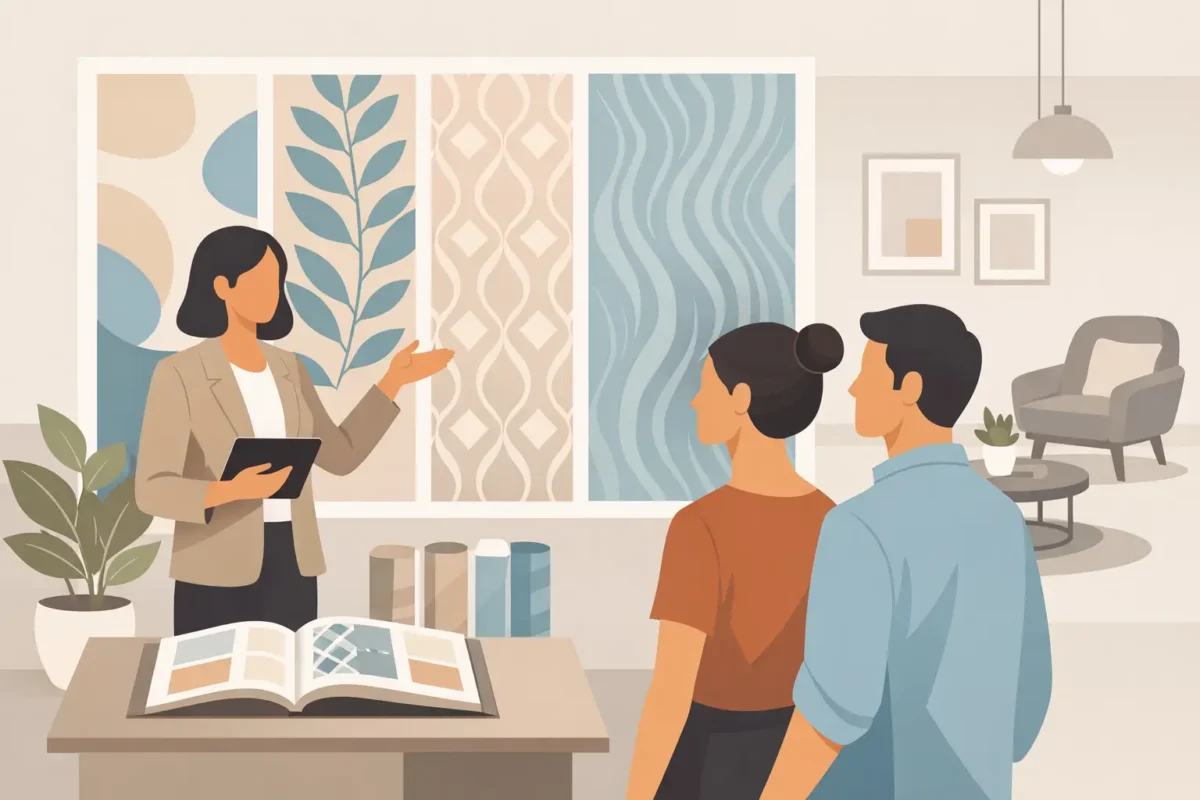
For designers and operators, the most successful surface schemes balance atmosphere with performance. A dramatic mural can define a boutique hotel identity. A textured commercial wallcovering can bring warmth to a corridor without sacrificing cleanability. The right choice depends on the space, the guest profile, the lighting, and how the surface will actually be used.
Plain painted walls still have a role in hospitality interiors, especially where budgets are tight or frequent color changes are expected. Yet flat finishes rarely create the depth guests now associate with premium spaces. Textured wallcoverings are increasingly specified to bring tactility, softness, and visual richness to guestrooms, reception areas, private dining rooms, and executive lounges.
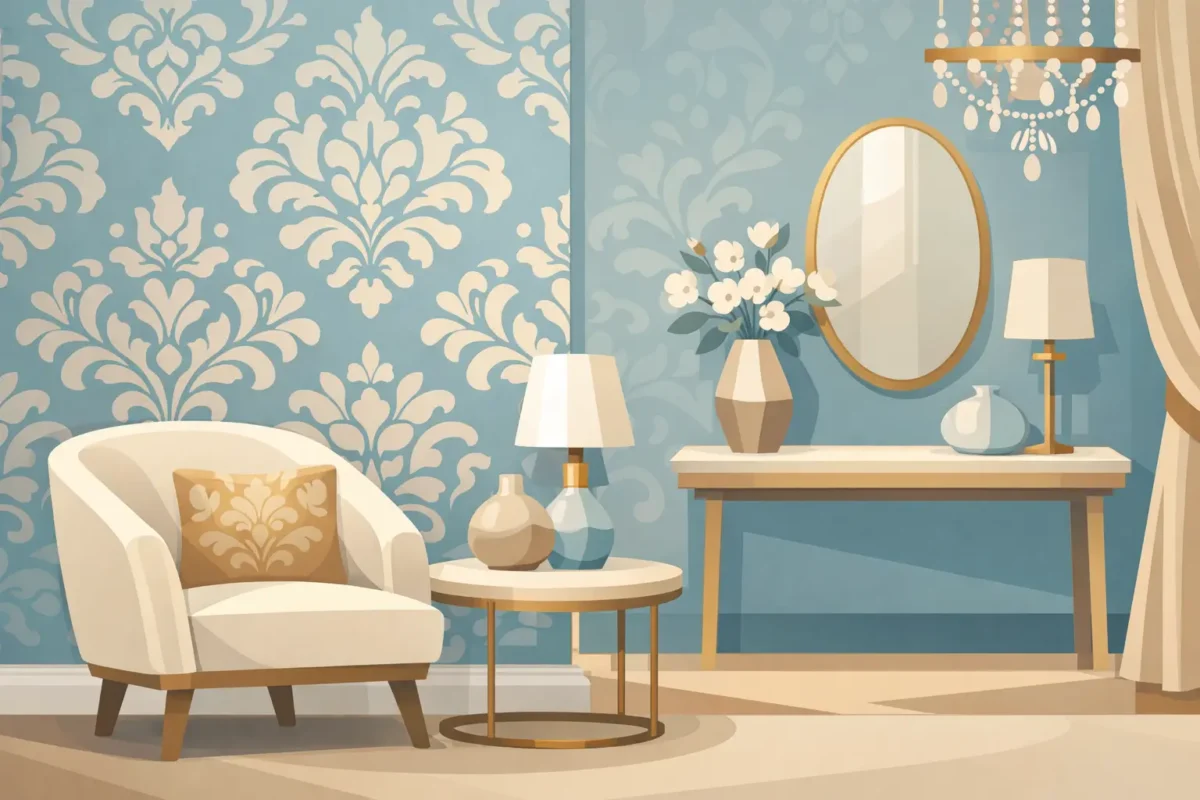
Linen effects, woven patterns, plaster-inspired surfaces, grasscloth looks, and fine metallic threads introduce character without overwhelming the furniture or architecture. The appeal is not only visual. Texture helps a large wall feel considered, particularly in spaces where acoustic treatments, layered lighting, and upholstered seating already contribute to a more residential atmosphere.
Material selection still matters. Natural-looking surfaces can be highly expressive, but hospitality projects often benefit from contract-grade alternatives that offer better stain resistance, dimensional stability, and maintenance practicality. The finish should deliver the desired look without creating an unnecessary operational burden.
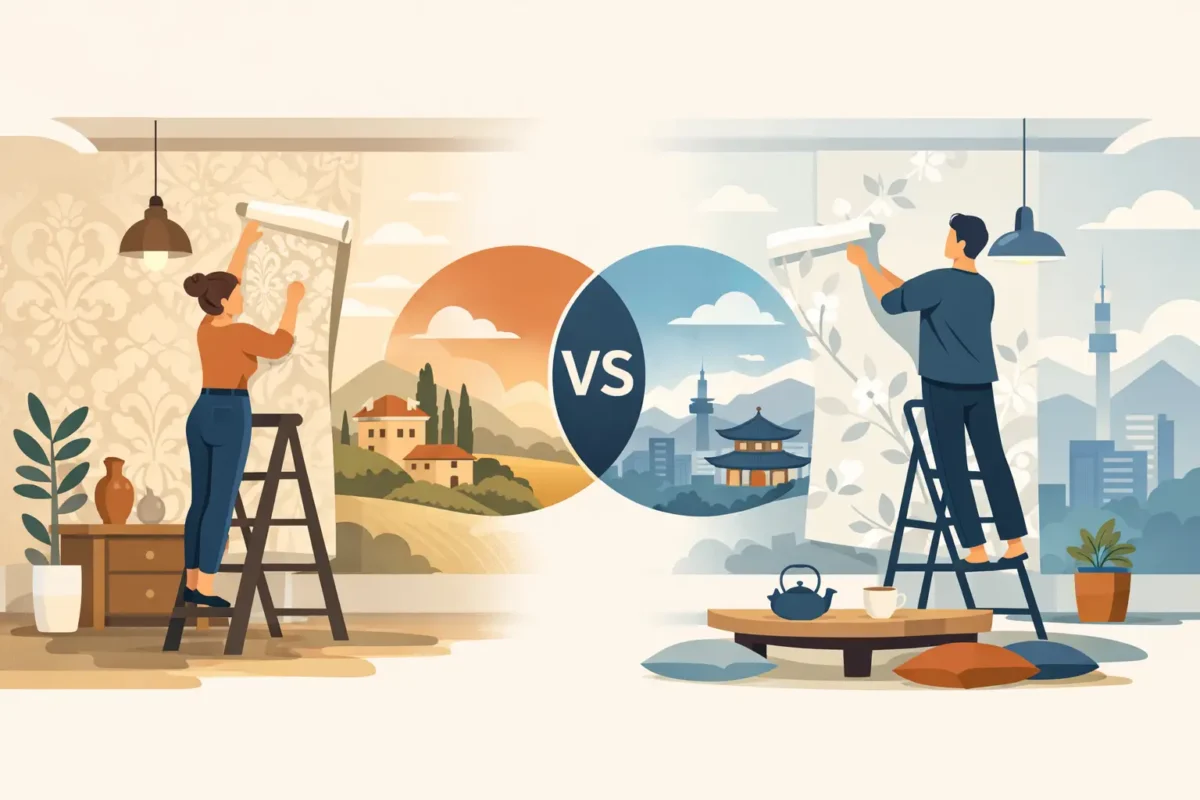
Hospitality brands are under pressure to feel local rather than interchangeable. Custom murals answer that need with a surface that can reflect neighborhood culture, a property’s architecture, regional landscapes, or a restaurant’s culinary identity.
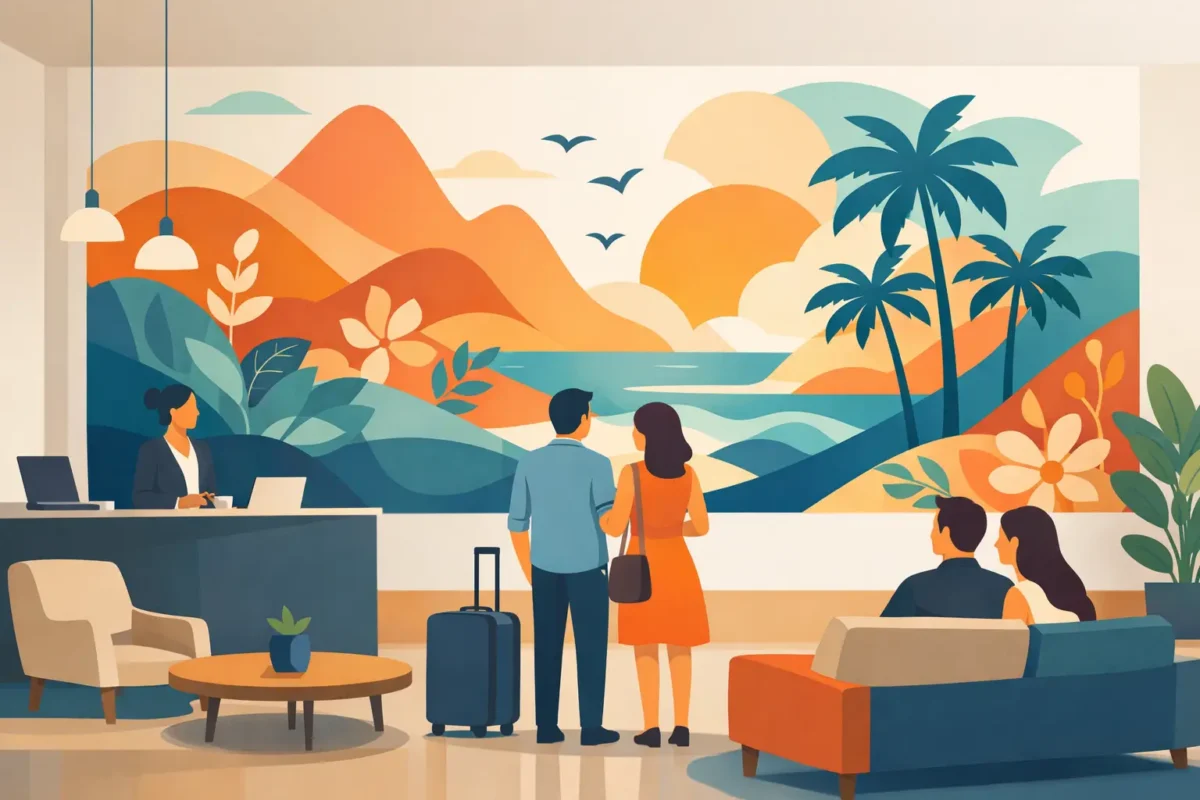
A mural does not need to be loud to be effective. In a guestroom, a quiet botanical illustration behind the bed can establish a restorative mood. In a lobby, an oversized abstract composition can become the visual signature that appears in guest photography and social content. In a restaurant, hand-drawn motifs, archival imagery, or custom graphic patterns can reinforce the story behind the menu.
The strongest murals are designed around the actual wall, not selected as an afterthought. Door openings, join lines, ceiling heights, lighting positions, furniture placement, and viewing distance all affect the final result. Advanced digital printing makes it possible to scale artwork precisely, adjust color for the project palette, and personalize a design without compromising production quality.
Hospitality palettes continue to favor warm stone, clay, tobacco, sand, olive, and muted mineral tones. These shades create calm and work well with wood, brass, natural stone, and darker metals. The trend is not toward bland beige. It is toward nuanced neutrals with movement, pattern, and material presence.
Subtle geometric repeats, tonal foliage, clouded watercolor effects, and hand-finished plaster visuals give a neutral wall more dimension. They are especially useful in guestrooms and corridors, where a highly saturated scheme may become tiring over time. A restrained pattern can remain elegant for years while making the space feel more elevated than a standard painted finish.
For public areas, deeper shades can add intimacy and perceived luxury. Charcoal, forest green, oxblood, midnight blue, and dark espresso work particularly well in cocktail lounges, private clubs, and destination restaurants. The trade-off is lighting. Dark surfaces absorb light, so they need a considered lighting plan and enough contrast in adjacent materials to keep the room from feeling enclosed.
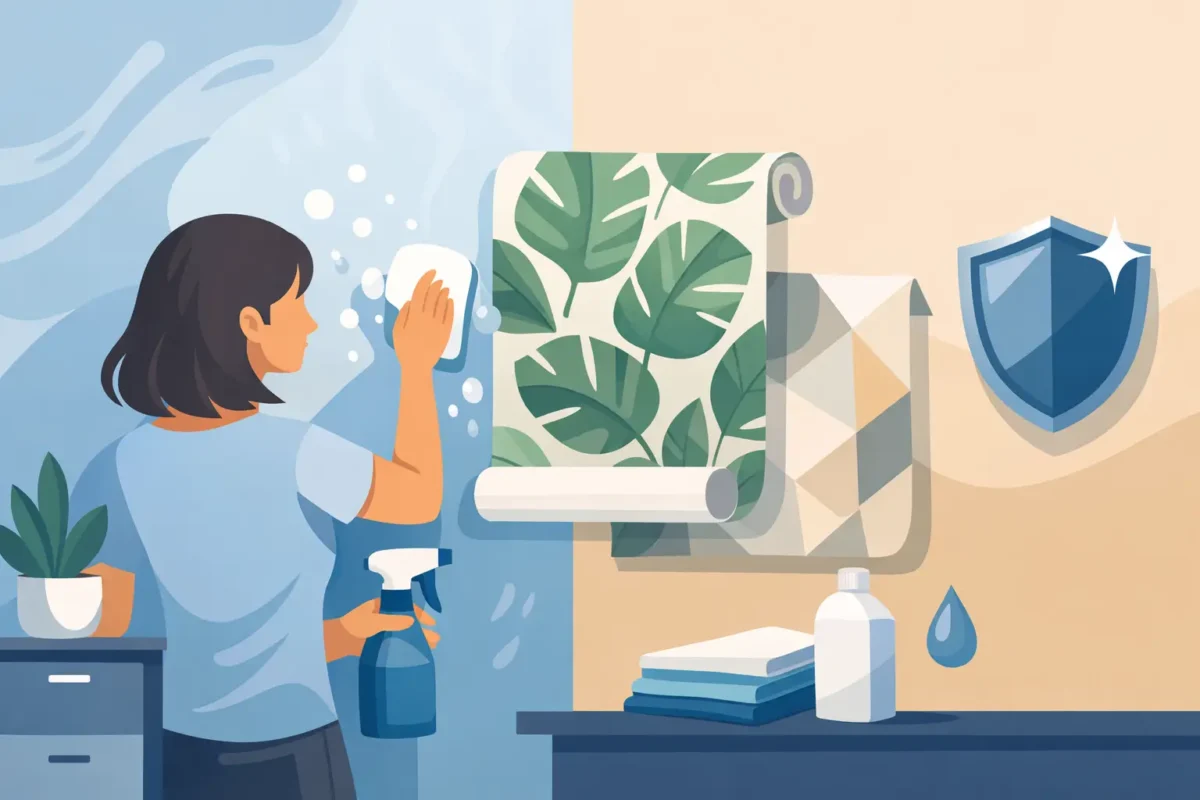
The practical side of hospitality design is becoming more visible in specification decisions. Operators need surfaces that can withstand bags, carts, frequent contact, cleaning products, and intensive turnover. Fabric-backed commercial wallcoverings are a strong solution for corridors, elevator lobbies, guestrooms, meeting rooms, and other high-use environments.
These materials can offer a refined decorative finish alongside project-grade durability. Depending on the specification, key considerations may include fire performance, scrub resistance, stain resistance, moisture suitability, and repairability. A beautiful wallcovering that fails prematurely is not a premium choice. Long-term value comes from selecting a finish designed for the space’s real conditions.
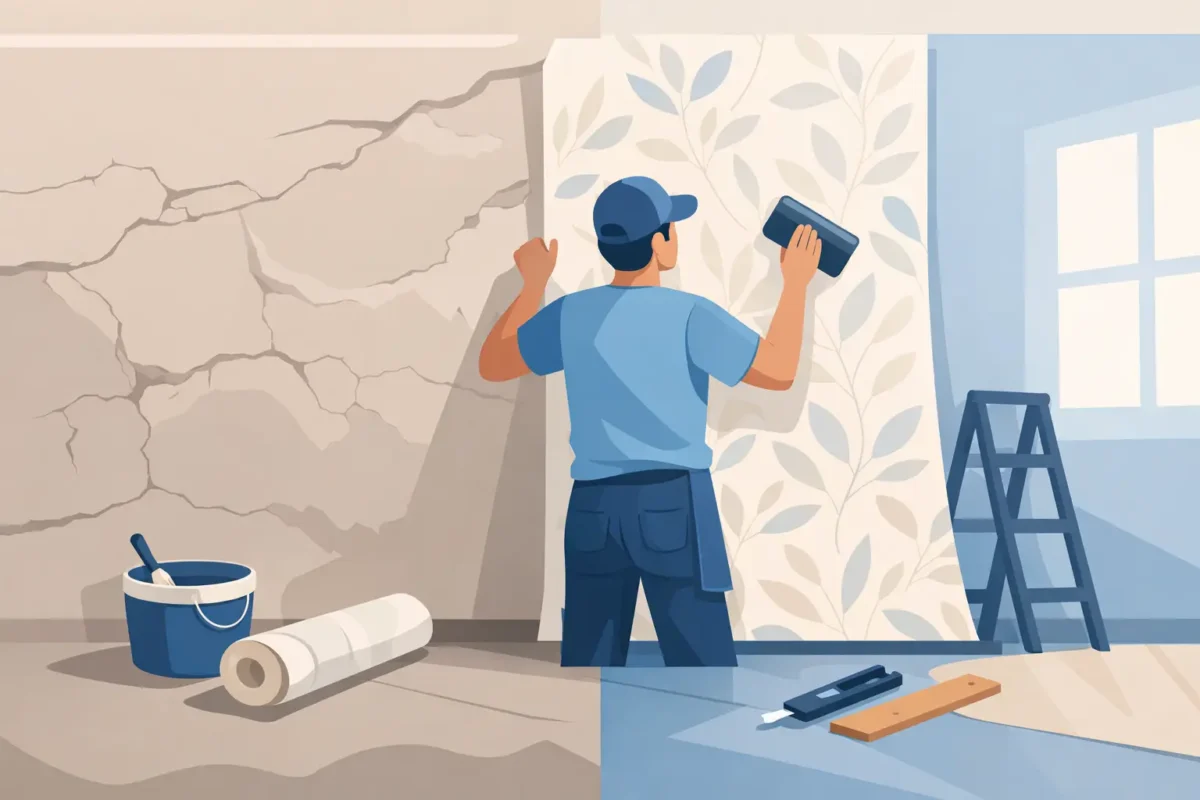
This is also where installation quality becomes essential. Poor wall preparation, misaligned patterns, visible seams, or incorrect adhesives can undermine even the best product. Hospitality projects benefit from experienced installers who understand substrate conditions, pattern matching, edge details, and the realities of working around active construction schedules.
A single finish rarely suits every room. The most effective projects use a coordinated surface strategy, giving each zone its own level of expression and performance.
The arrival experience can support a bolder design move. Statement murals, large-scale botanicals, architectural patterns, and textured metallics help establish the property’s personality immediately. These areas are highly visible and frequently photographed, so the design should feel distinctive from multiple angles rather than relying on a single focal point.
Because lobbies experience steady traffic, prioritize materials that can be maintained without delicate treatment. If a richly textured or specialty finish is selected, consider placing it above the highest-contact zone and using more resilient wall protection at lower levels where needed.
Guestroom surfaces should support rest while still giving the room an identity. Headboard walls are ideal for custom murals, soft abstract prints, or layered textural wallcoverings. A well-chosen feature wall can make a standard room footprint feel more individual and considered.
Avoid using visual drama everywhere. When all four walls compete for attention, the room can feel smaller and less restful. Pair a feature surface with complementary plain or lightly textured walls, then coordinate with bedding, upholstery, and artwork for a cohesive result.
These spaces are often treated as purely functional, but they shape the guest’s impression repeatedly throughout a stay. Durable commercial wallcoverings with controlled pattern and a forgiving color palette can conceal minor marks better than flat paint while adding rhythm to long corridors.
Pattern scale is critical. Small, busy motifs may read as visual noise across a long run, while oversized graphics can feel distorted when interrupted by room doors. Mid-scale texture, subtle geometry, or tonal pattern generally performs well here.
Food and beverage interiors can take more creative risks. The right wall finish can help define the energy of a room, from a relaxed all-day café to an intimate fine-dining venue. Rich colors, custom artwork, artistic murals, and dimensional textures offer a way to create atmosphere without relying only on furniture or decorative accessories.
Still, surfaces near food preparation areas, restrooms, and service routes need more practical consideration than a remote dining wall. Specify materials according to exposure, cleaning requirements, humidity, and the likelihood of contact. Beauty should be visible to guests, but durability should be built into the brief from the beginning.
A hospitality surface is successful when it still looks composed after hundreds of check-ins, events, and cleaning cycles. This is why maintenance discussions should happen early, alongside concept development. Ask who will clean the wall, which products they use, whether replacement sections can be sourced later, and how easily a damaged area can be repaired.
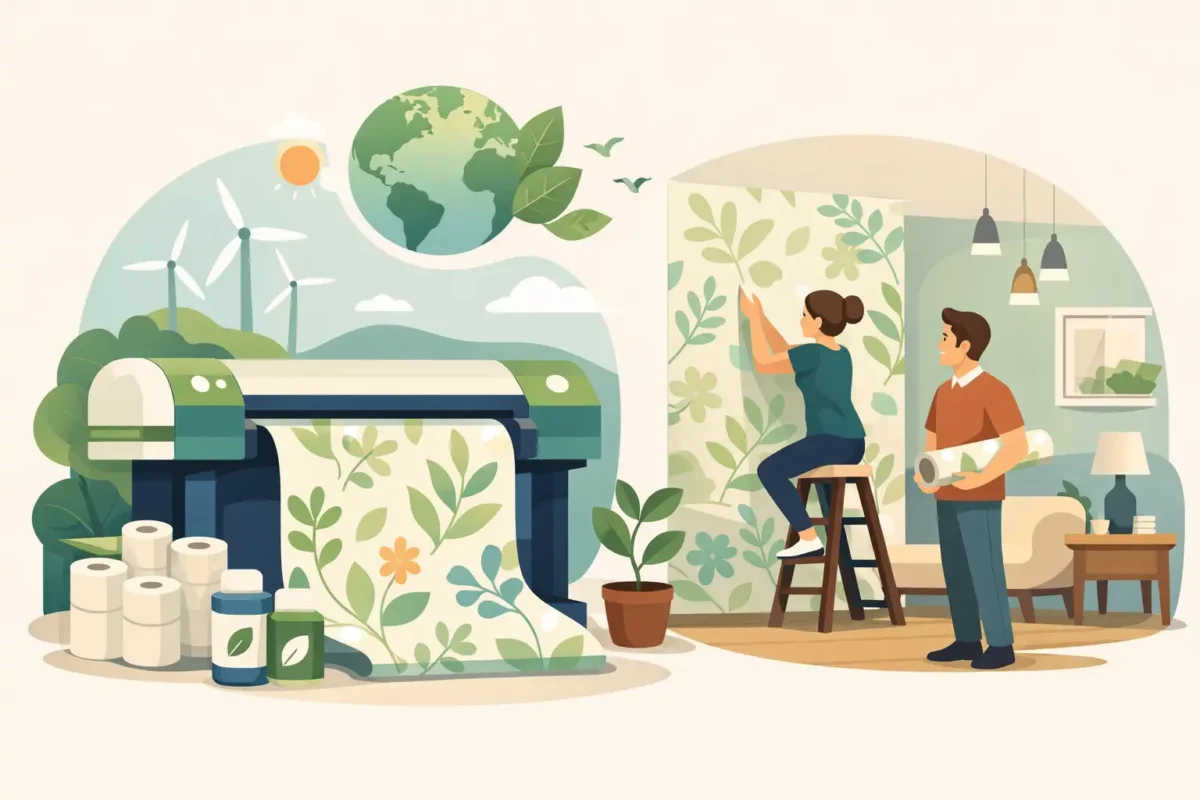
Sustainability also deserves a practical lens. Low-odor, eco-friendly inks and responsibly specified materials can support healthier interiors, but durability is part of responsible design too. A surface that remains attractive and functional for years reduces the need for premature replacement.
For projects that require a tailored visual identity, Decorating Depot combines custom print capability, curated wallcovering collections, commercial-grade options, and professional installation guidance. The goal is not simply to fill a wall. It is to create a finish that supports the guest experience and performs with confidence.
The best hospitality interiors give guests something to remember without giving operations something to worry about. Start with the story you want the space to tell, then choose surfaces engineered to carry that story through every arrival, every stay, and every busy service day.