A wall finish has to do more than look right under showroom lighting. It must handle touch, traffic, humidity, cleaning, and the character of the room for years to come. In the choice between vinyl vs fabric wallpaper, the best option is rarely about appearance alone. It comes down to the level of performance your space demands and the atmosphere you want people to feel.
Vinyl offers confident durability and easy care. Fabric brings depth, softness, and a tailored sense of luxury. Both can create exceptional interiors, from refined residences to high-traffic hospitality spaces, but they serve different priorities.
Vinyl wallpaper has a protective vinyl surface, usually applied over a paper or non-woven backing. It is engineered to resist stains, scuffs, and moisture more effectively than most decorative wall finishes. Available in smooth, embossed, textured, and woven-look designs, vinyl can achieve a polished visual effect while remaining highly practical.
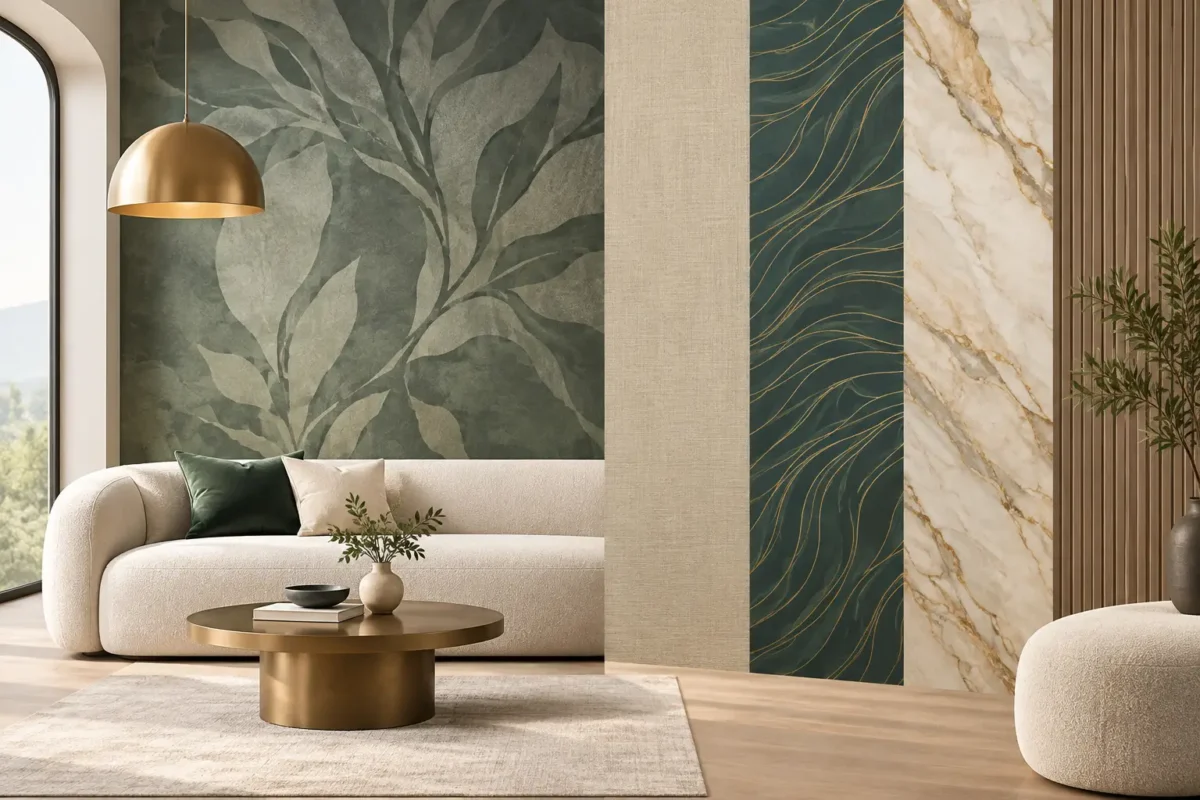
Fabric wallpaper uses real textile materials such as linen, silk, grasscloth, cotton, or blended fibers. Its beauty is tactile. Light catches the weave differently throughout the day, creating dimension that printed patterns alone cannot fully replicate. The result feels considered, warm, and distinctly premium.
The central trade-off is straightforward: vinyl is generally easier to maintain, while fabric delivers a more organic and elevated surface character. Yet the decision becomes more nuanced when installation conditions, wall preparation, room use, and project standards enter the picture.
Vinyl wallpaper is often the first choice for spaces where walls receive frequent contact. Corridors, reception areas, restaurants, retail environments, offices, children’s rooms, powder rooms, and hotel guest areas all benefit from its resilient surface.
A quality vinyl wallcovering can be wiped clean when marks appear, making it far more forgiving than delicate textiles. This matters in real environments, where luggage brushes against a hotel wall, chairs scrape near a dining banquette, or fingerprints appear around doorways and switches. For commercial projects, fabric-backed vinyl wallcovering is especially valued for its strength, dimensional stability, and long-term performance.
Vinyl is also a practical solution for interiors with occasional humidity. It is not a substitute for proper waterproofing or ventilation, and it should not be treated as a shower-wall material. However, in a well-ventilated bathroom, laundry area, kitchen, or powder room, it offers more confidence than natural fabric wallcoverings.
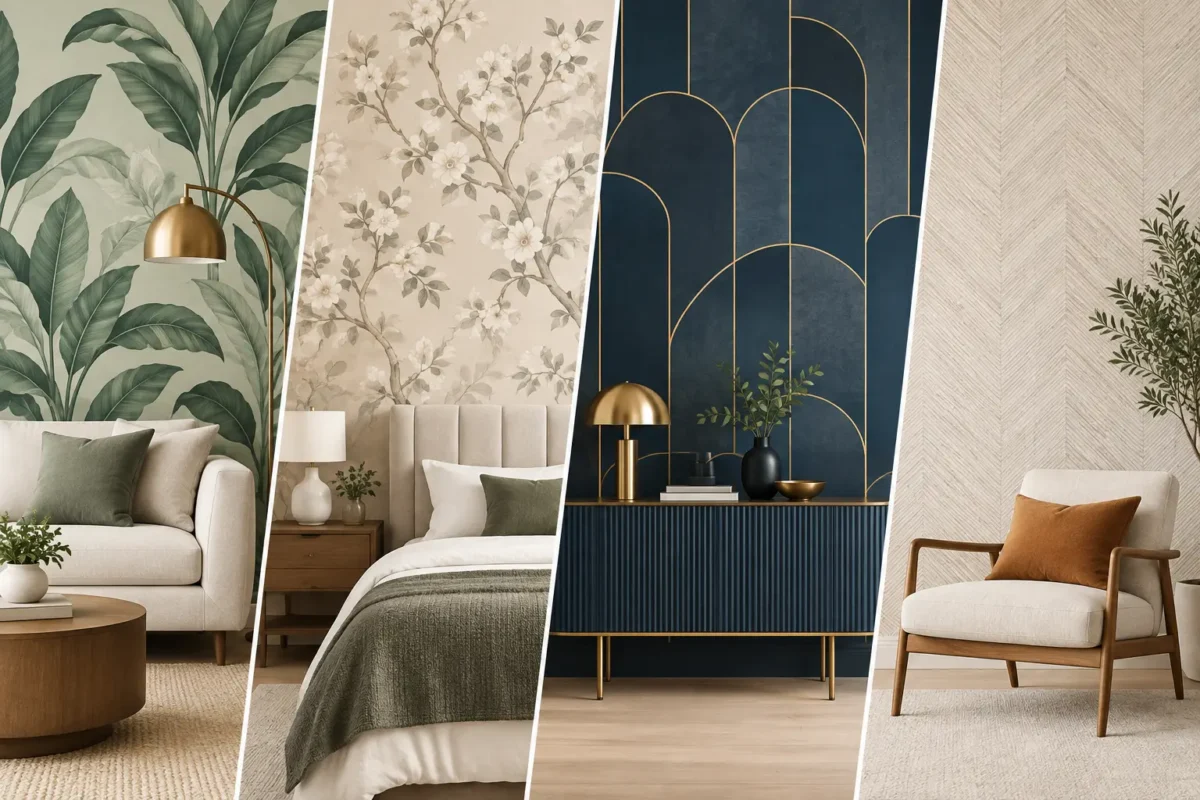
Design flexibility is another advantage. Modern vinyl collections can replicate plaster, concrete, linen, leather, stone, wood grain, and finely woven textiles with impressive realism. For projects that need a consistent finish across multiple rooms or large wall expanses, this repeatable look is valuable. It creates visual continuity without the natural variation that may occur in textile materials.
Vinyl suits rooms that need to look polished without requiring delicate upkeep. It is particularly effective for family homes, rental properties, clinics, corporate settings, hospitality corridors, and retail spaces. If cleaning, durability, and budget control are key parts of the brief, vinyl is usually the stronger specification.
For a premium result, the material alone is not enough. A high-quality design, a properly prepared wall, and precise installation determine whether vinyl looks tailored or merely functional. Seams, pattern alignment, corners, and transitions around fixtures require professional attention.
Fabric wallpaper changes the emotional temperature of a room. Linen can make a bedroom feel calm and architectural. Silk can bring a subtle glow to a private lounge or formal dining area. Grasscloth introduces natural movement and visual depth that makes a feature wall feel collected rather than mass-produced.
These finishes are chosen for their authenticity. Natural fibers have irregularities, tonal shifts, and visible joins that are part of their character. A grasscloth panel may vary slightly from one strip to the next. A linen weave may reveal fine slubs. In the right setting, these are not flaws. They are evidence of a material with a genuine hand-crafted quality.
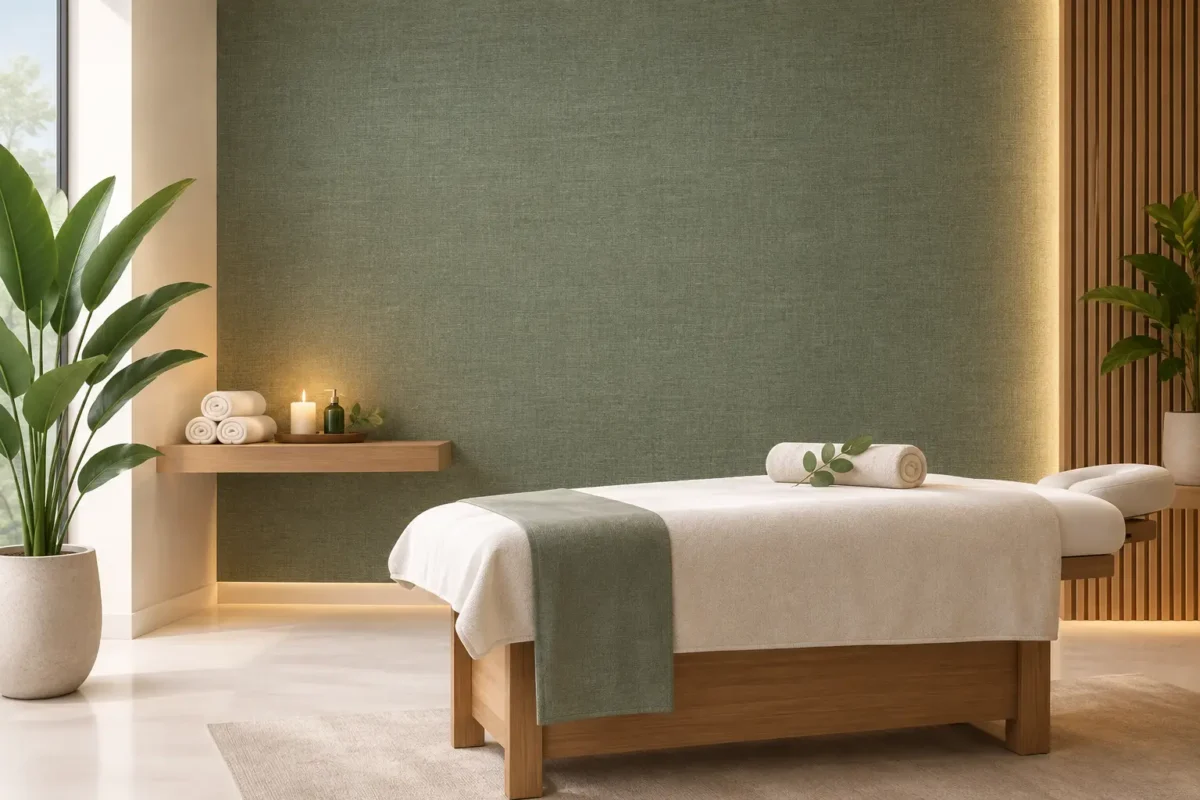
Fabric wallcovering is best suited to lower-contact areas where its surface can remain protected. Bedrooms, lounges, executive offices, boutique retail zones, formal dining rooms, and luxury suites are natural settings. It performs beautifully on a focal wall behind a bed, along a feature corridor with controlled traffic, or in a meeting room that needs warmth and acoustic softness.
The maintenance requirement is higher. Fabric wallpaper is not typically designed for regular wet wiping, and stains may be difficult or impossible to remove without affecting the fibers. Dust should be handled gently, according to the manufacturer’s instructions. Direct exposure to splashes, grease, steam, or frequent handling can shorten its visual life.
Clients sometimes expect fabric wallpaper to look as uniform as a printed vinyl. That expectation can lead to disappointment. Textile wallcoverings should be selected with an appreciation for variation, especially natural grasscloth, silk, and woven fibers.
Before installation, review the material in full-width samples or approved panels whenever possible. Consider how daylight, warm lighting, and shadow will affect the color. On large walls, a skilled installer plans the sequence of panels carefully so the finished composition feels balanced and intentional.
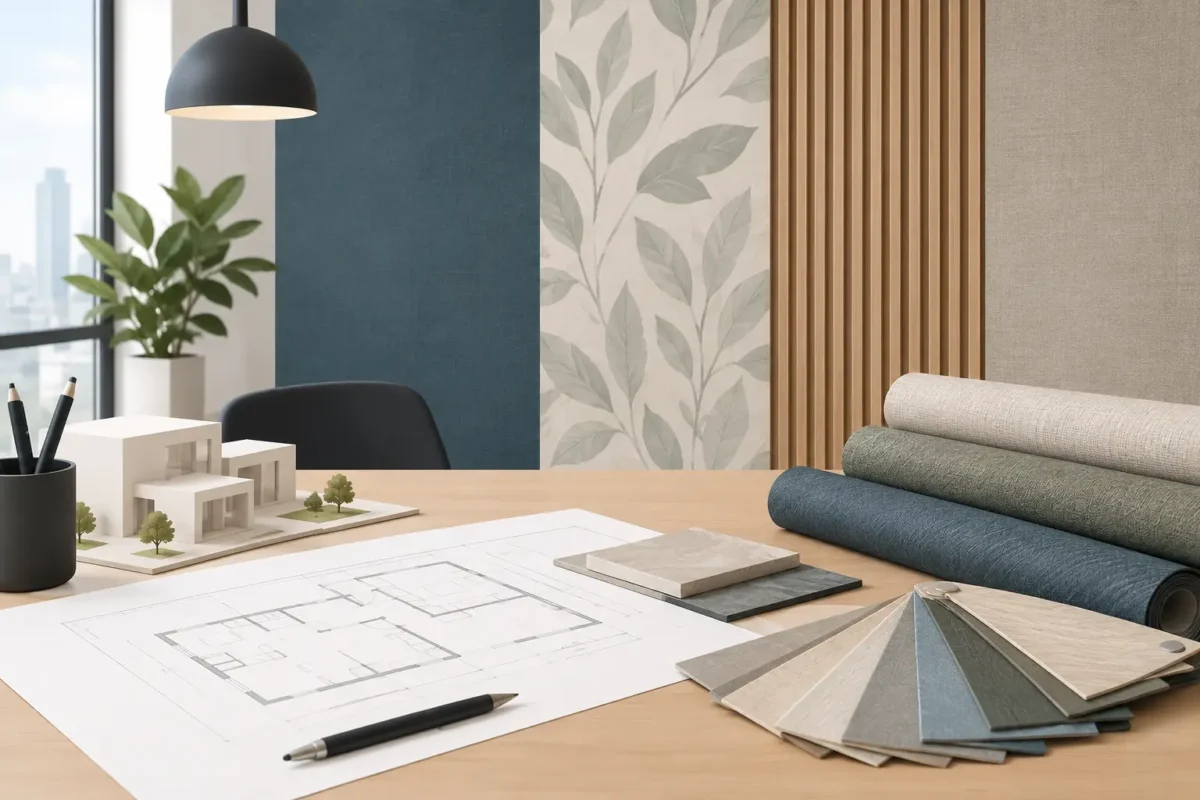
The terminology can be misleading. Fabric wallpaper refers to a wallcovering with a visible textile face. Fabric-backed vinyl, on the other hand, is a commercial-grade vinyl wallcovering supported by a woven fabric backing.
Fabric-backed vinyl combines the performance advantages of vinyl with greater structural strength. It is commonly specified for hotels, healthcare spaces, offices, education facilities, and public-facing interiors. The backing helps the wallcovering handle demanding installation conditions and contributes to its durability over time.
It may feature embossed textures that resemble linen, canvas, or woven fabric, but it is still a vinyl surface. This distinction is important when comparing maintenance needs, fire-rating requirements, lead times, and project budgets.
A vinyl finish can feel sleek, graphic, textured, or architectural depending on the collection. It is ideal when the design vision calls for crisp pattern definition, easy coordination, and dependable repeatability. It also works well when you want a textured look without accepting the maintenance demands of real fibers.
Fabric has a quieter, more sensory appeal. It is often selected not because it is the easiest wall finish, but because it creates an experience that cannot be replicated exactly. The weave softens hard interiors and gives a room a layered, residential quality, even within a commercial setting.
Cost should be assessed beyond the price per roll or yard. Consider wall preparation, material waste, pattern matching, installation complexity, maintenance expectations, and replacement risk. A high-performance vinyl may deliver better long-term value in an active space. A fabric wallcovering may justify its investment in a signature area where visual distinction carries greater value.
Start with the room rather than the pattern. Ask how often people will touch the walls, whether food or moisture is present, how the area is cleaned, and how long the finish is expected to perform. A dramatic textile may be perfect for a private suite but unsuitable for a busy service corridor.
Next, assess the wall condition. Both materials need a clean, dry, smooth, properly primed surface, but fabric wallpaper is less forgiving of unevenness because its natural texture can reveal inconsistencies. Dark-colored or highly textured wallcoverings may also require more careful seam planning and adhesive selection.
For commercial and hospitality projects, verify technical requirements early. Fire performance, cleanability, abrasion resistance, environmental standards, and maintenance procedures should be reviewed before final approval. This is where a design-led selection process should meet project-grade technical knowledge.
At Decorating Depot, material selection can be matched to the full scope of the project, from expressive residential feature walls to durable commercial wallcovering systems and custom-designed surfaces. The strongest results begin with a clear understanding of how the space will be used.
A beautiful wall should never force a compromise between style and suitability. Choose vinyl when the room needs confidence under pressure. Choose fabric when the room deserves texture with a more personal, luxurious presence. When each material is specified for the right setting and installed with care, the wall becomes more than a backdrop – it becomes part of the experience.