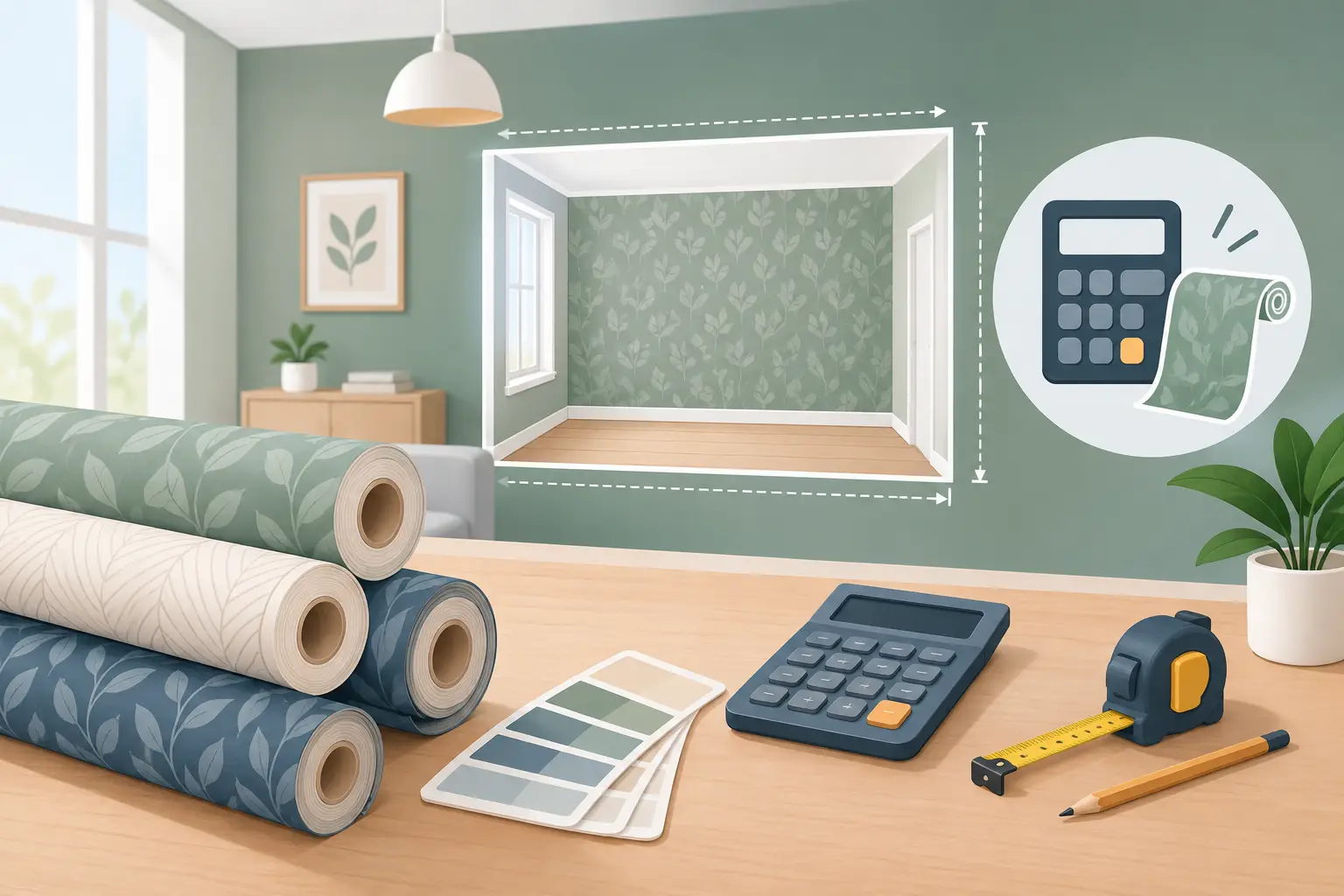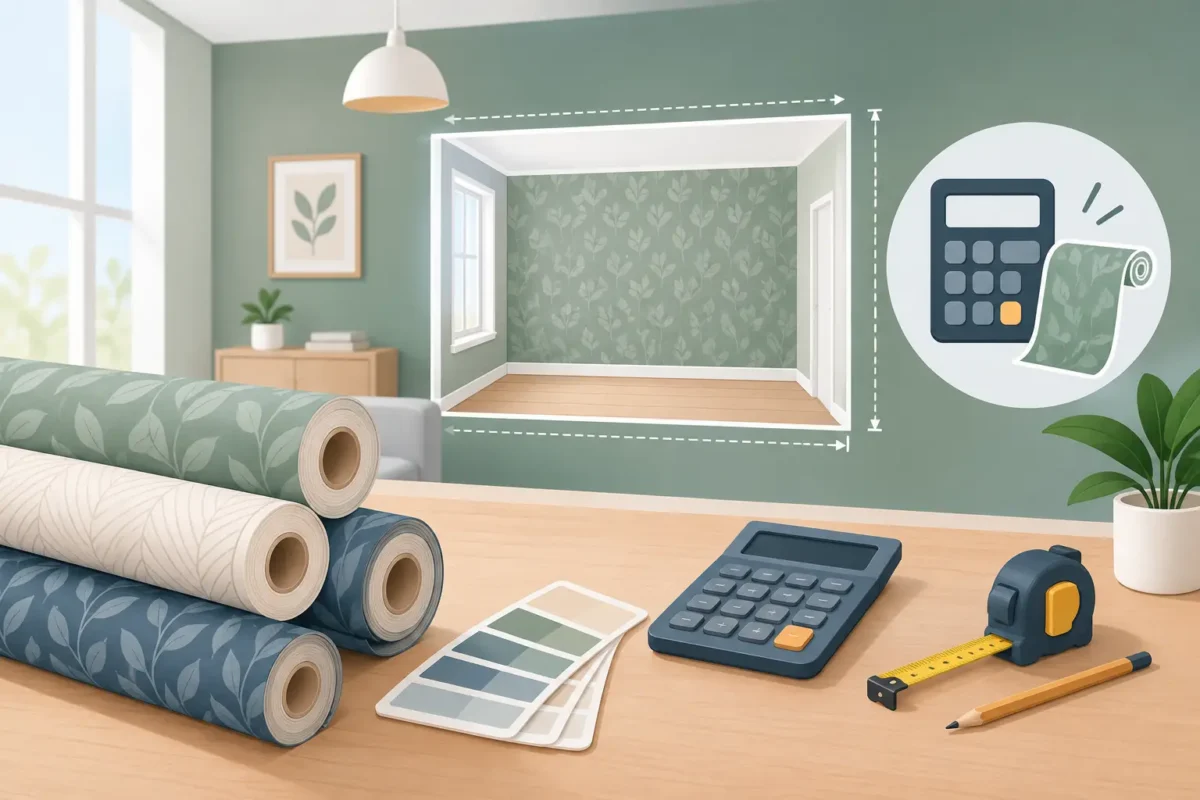
A statement wall can fail before installation begins – not because the design is wrong, but because the quantity is. A wallpaper roll calculator gives you a starting figure, yet accurate ordering depends on more than room size. Roll width, wall height, pattern repeat, openings, and installation direction all affect how much material your project truly requires.
For a refined residential interior, a branded retail environment, or a hospitality feature wall, the goal is not simply to buy enough wallpaper. It is to specify the right quantity for clean pattern alignment, consistent color, and a finish that looks intentional from every angle.
A basic calculator divides total wall area by the coverage stated on a roll label. That can be useful for plain, non-directional wallpaper on uncomplicated walls. However, wallpaper is installed in vertical drops, not as a single sheet spread across a wall. This is why square-foot calculations alone can understate the quantity required.
A reliable wallpaper roll calculator considers the usable length of each roll after allowing for trimming at the ceiling and baseboard. It should also account for the number of drops needed across each wall, then calculate how many full drops a roll will yield. The final figure should include an allowance for pattern matching and a sensible contingency.
For custom murals and digitally printed wallcoverings, the calculation changes. These products are often produced to the exact wall dimensions, with a bleed allowance built into the artwork and panel layout. The priority becomes precise site measurement, including architectural details that may interrupt the design.
Measure each wall at its widest point and from the finished floor level to the finished ceiling level. Record dimensions in consistent units. If a ceiling slopes, bulkheads project, or walls are noticeably out of square, measure several points rather than relying on one height and one width.
Add 2 to 4 inches to the height of each drop for trimming, depending on the condition of the ceiling and floor lines. Older properties, textured ceilings, and sites where flooring has not yet been installed may need a more generous allowance. A wall that appears straight can still vary enough to affect the final cut.
For a room with multiple walls, calculate every wall separately before combining the result. This reduces the chance of overlooking a narrow return, a recessed niche, or a section beside a doorway that still needs a full-width drop.
Wallpaper rolls are not standardized worldwide. Widths and lengths vary across Korean, Italian, European, and commercial-grade wallcovering collections. A roll that looks similar on a product page may deliver very different usable coverage once its dimensions and repeat are considered.
Confirm the roll width, total roll length, and whether the product is sold as a single roll, double roll, or by the linear yard. For fabric-backed commercial wallcovering, material may be specified by linear yard and installed horizontally in some applications. Treat the manufacturer specification as the source of truth, rather than assuming every product follows a residential roll format.
The calculation is straightforward once you work in drops. First, divide the wall width by the wallpaper width and round up to the next whole number. This gives you the number of vertical drops required. Then divide the usable roll length by the adjusted drop length to find how many drops each roll can provide.
For example, imagine a 12-foot-wide wall using a wallpaper that is 20.5 inches wide. The wall needs eight drops when rounded up. If the wall height is 9 feet and each roll provides two usable drops after trimming and matching, you need four rolls before adding any project contingency.
This approach reveals why area-only estimates can be misleading. A small amount of unused material at the end of every roll may be unavoidable, especially with taller walls or large repeats. That waste is not poor planning. It is the material required to preserve the design across the wall.
A pattern repeat is the vertical distance before a design starts again. With a straight match, adjacent strips align at the same height. With a drop match, the next strip begins lower or higher to continue the design. Drop matches generally require more material because each drop must be cut longer to achieve alignment.
To estimate accurately, add the pattern repeat to your measured wall height before determining drop length. If the wall is 108 inches high and the repeat is 25 inches, each strip may need to be cut at 125 inches or more, plus trimming allowance. The exact adjustment depends on where the pattern begins and the match type, which is why large-scale botanicals, geometrics, and scenic designs should never be ordered to a bare minimum.
Plain wallpaper, textures without a visible match, and some subtle grasscloth-style effects may create less waste. Even then, directionality matters. If the material has an obvious grain, sheen, or color movement, all drops must be installed in the same direction unless the manufacturer specifies otherwise.
Usually, do not subtract standard doors and windows from the wallpaper roll calculator result. Wallpaper is cut as full drops, and an opening often sits within the middle of a drop. The offcut above a door or below a window may not be long enough, wide enough, or correctly aligned to use elsewhere.
There are exceptions. A large bank of windows, a full-height glazed wall, or a broad opening that clearly divides the installation into separate sections can reduce the quantity. The decision depends on the layout of the drops, the repeat, and whether offcuts can be used without compromising the pattern.
For premium wallcovering, preserving visual continuity is usually worth more than saving one roll. A carefully planned installation avoids awkward joins above openings and ensures a panoramic or large-scale motif remains balanced around architectural features.
Ordering exact quantity may look efficient on paper, but it leaves no protection against site realities. Keep additional material for trimming errors, future repairs, and the possibility that a later production batch may vary slightly in color or texture.
For a simple wall with a plain design, one additional roll may be sufficient. For patterned wallpaper, multiple walls, high ceilings, or a commercial project, a 10 to 15 percent contingency is often more appropriate. Custom murals should include production bleed and, where possible, a small reserve panel for future touch-ups.
The right allowance also depends on project timing. If installation is scheduled around a store opening, hotel handover, or move-in date, replacement material may introduce delays that cost far more than a modest quantity reserve.
A calculator is a planning tool, not a site survey. Ask for professional measurement when walls include arches, curved surfaces, stairwells, double-height spaces, concealed doors, integrated joinery, or complex mural positioning. These details affect both material requirements and the installation sequence.
It is also wise to seek guidance when selecting fabric-backed commercial wallpaper for corridors, lobbies, restaurants, or high-traffic offices. Performance specifications matter alongside quantity: fire rating, cleanability, impact resistance, substrate preparation, and adhesive selection can all influence the final result.
At Decorating Depot, project guidance can connect design intent with practical measurement, helping homeowners and professionals specify wallcoverings with confidence. This is particularly valuable when a custom print or mural needs to align with millwork, lighting, signage, or a focal furniture arrangement.
Review the selected wallpaper’s batch number, repeat, match type, roll dimensions, and installation instructions. Confirm that all rolls are from the same production batch whenever possible. Lay out the expected drop plan before cutting, particularly for murals and bold patterns, so the strongest part of the design lands where it will be seen.
A wallpaper roll calculator turns an early estimate into a more informed purchasing decision. Careful measurement and a realistic allowance take it the rest of the way, leaving your installer free to focus on the detail that matters most: a wall finish that looks beautifully considered, not merely covered.