A custom wall should do more than fill empty space. It should set the tone of a room, reflect a brand, or create a residential interior that feels considered from the moment you walk in. That is why choosing the best custom wallpaper printing is not simply about picking an image and sending it to print. It is about matching design intent with material performance, print precision, and installation quality.
For homeowners, designers, and commercial specifiers, the difference is visible immediately. A well-produced custom wallpaper feels integrated into the architecture. A poor one can look flat, misaligned, or short-lived. If the goal is a statement wall with lasting value, the details matter.
The best custom wallpaper printing combines visual impact with engineered performance. Print resolution matters, but it is only one part of the result. The substrate, surface finish, color consistency, panel alignment, and wall condition all shape how the final installation looks and how well it holds up over time.
In residential settings, priorities often center on beauty, personalization, and ease of maintenance. In offices, retail, hotels, and large-scale projects, the conversation quickly expands to durability, fire performance, cleanability, installation efficiency, and long-term appearance under heavy use. The right custom print solution needs to satisfy both design and technical demands.
That is where many buyers misjudge the category. They focus on the artwork and overlook the wallcovering itself. A striking graphic printed on the wrong material will not deliver a premium finish. The strongest result comes from pairing the design with a substrate suited to the space.
Material selection is one of the biggest quality factors. Smooth paper-based options can work beautifully in low-traffic residential rooms where the priority is a refined decorative finish. For more demanding environments, vinyl and fabric-backed commercial wallcoverings tend to offer better resistance to wear, easier maintenance, and stronger dimensional stability.
This is especially relevant in hospitality, retail, and office interiors where walls are part of the customer experience but also need to perform under constant use. A lobby feature wall, restaurant backdrop, or branded office corridor may require more than visual appeal. It may need a surface that can be cleaned regularly and retain its finish over time.
Texture also changes the outcome. A lightly textured surface can soften glare and add depth, while a smoother finish can produce sharper graphic detail. Neither is automatically better. It depends on the artwork, lighting, viewing distance, and the atmosphere you want to create.
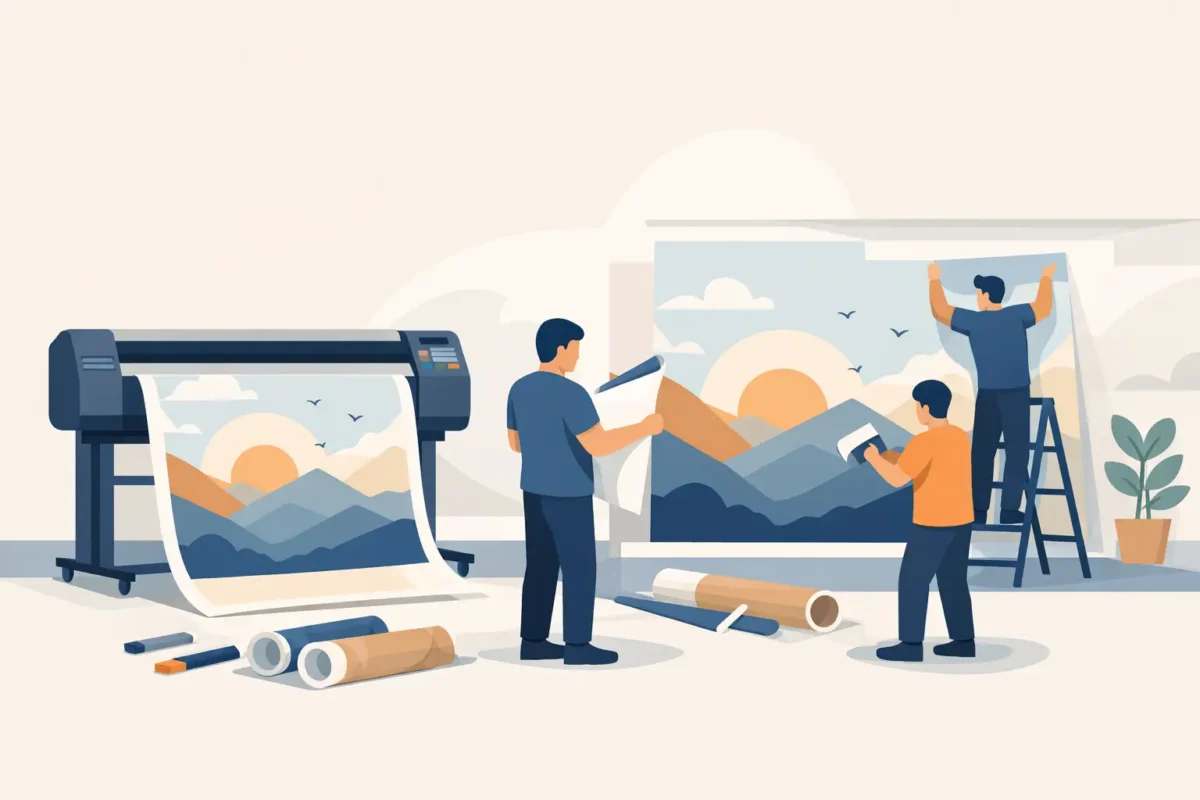
Not all custom wallpaper printing is produced at the same standard. Advanced large-format printing systems are built to deliver more accurate color, finer gradients, and cleaner image reproduction across wide panels. That matters when you are printing detailed photography, brand colors, or mural-scale artwork where inconsistency becomes obvious.
High-end print technology also supports better repeatability. If a project spans multiple walls or requires future reprints, color control becomes critical. Designers and project teams do not want one section appearing warmer, duller, or darker than the next.
Eco-friendly ink systems add another practical advantage. For interior applications, especially in homes, hospitality spaces, and enclosed commercial environments, low-odor and environmentally conscious production methods are often preferred. They support a more comfortable installation process and align with modern project expectations.
Clients often ask for the highest possible resolution, which is sensible, but image suitability goes beyond file size. A custom wallpaper must be scaled correctly for the wall dimensions and intended viewing distance. An image that looks acceptable on a screen may break apart when enlarged across a full-height wall.
The best suppliers review artwork before production, flag quality concerns, and advise on cropping or adjustment. This is one of the strongest indicators of a professional custom wallpaper service. It shows they are protecting the finished result, not just accepting a file and printing it as-is.
Color management matters as much as clarity. Interior lighting changes how colors read. Natural daylight, warm hospitality lighting, and bright office illumination can each shift the appearance of the same print. Sampling, proofing, or at minimum a careful design review helps avoid expensive disappointment.
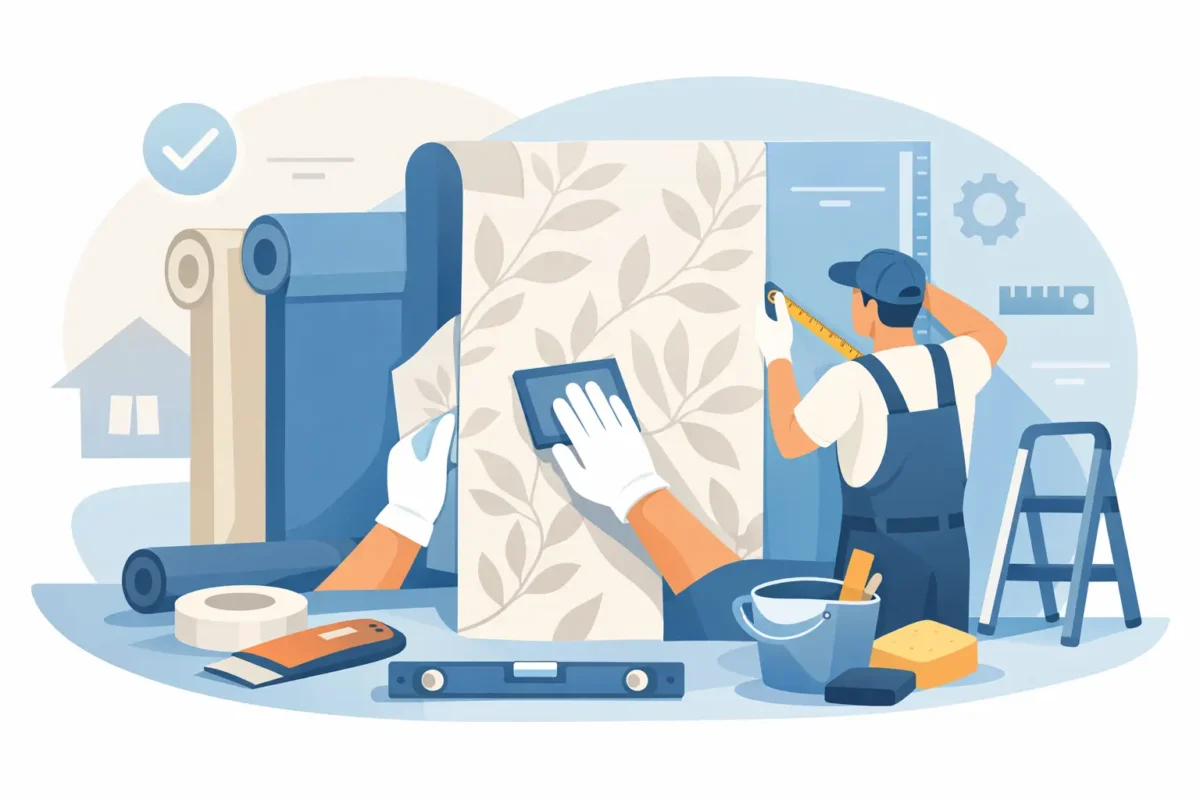
A beautiful print can still fail if the sizing is wrong. Custom wallpaper should be produced to the exact wall dimensions with proper allowance for trimming, pattern positioning, and site conditions. This becomes even more important on large feature walls, walls with doors and windows, or commercial sites where alignment needs to remain precise across multiple drops.
Panel planning is one of the less visible but more important parts of the process. Good panel mapping keeps key elements of a design in the right position and reduces the chance of awkward joins through faces, logos, or focal points. In custom mural work, this planning is essential.
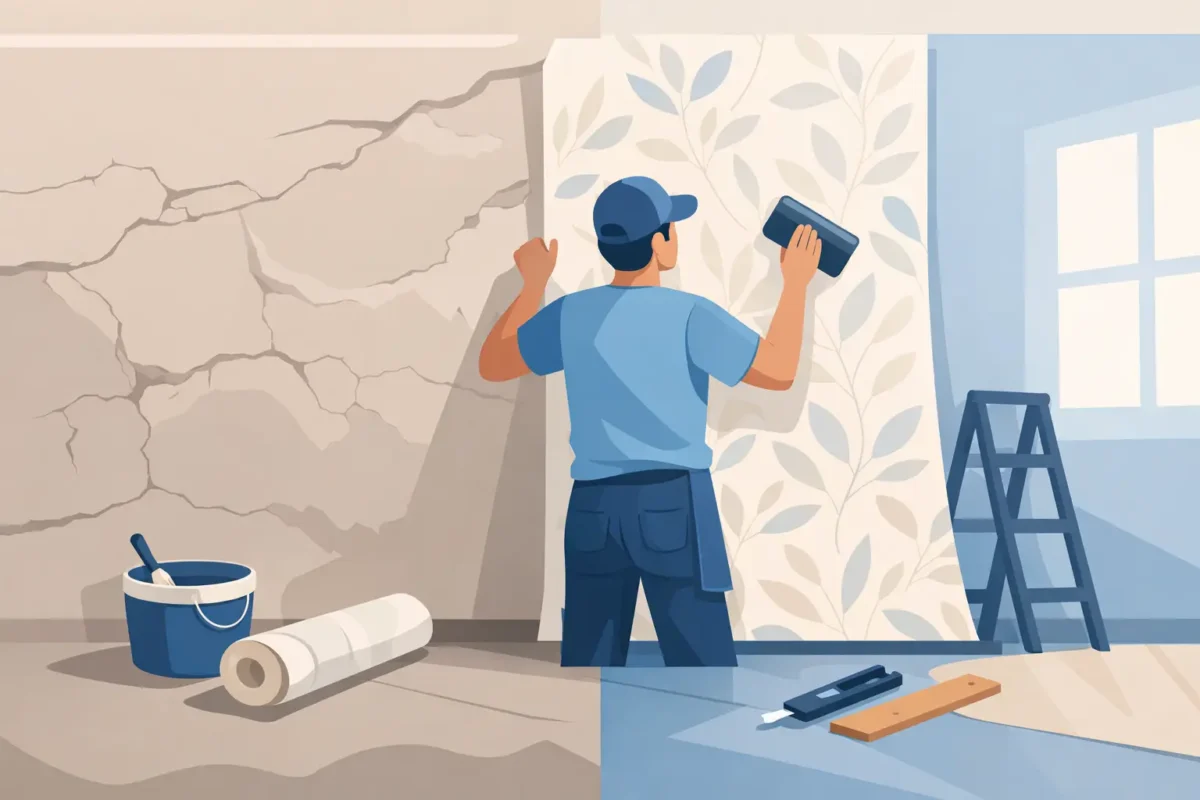
Walls themselves are another variable. Uneven surfaces, moisture issues, fresh paint, or old wall damage can all affect the result. The best custom wallpaper printing is supported by professional site assessment and proper surface preparation. Without that, even a premium print can underperform.
The right solution for a bedroom accent wall is not always the right solution for a hotel corridor or corporate reception. Residential clients may lean toward expressive patterns, personalized murals, or softer decorative finishes. Commercial clients usually need a sharper balance of aesthetics, brand expression, maintenance, and compliance.
For hospitality and office environments, durability is often non-negotiable. Fabric-backed commercial wallpaper and project-grade wallcoverings are commonly specified because they are built for traffic, impact resistance, and easier upkeep. In luxury homes, the emphasis may shift toward texture, mood, and bespoke scale.
This is why a showroom-led consultation remains valuable. Seeing materials in person helps clients compare finish, touch, color depth, and performance level in a way digital previews cannot fully replicate. It also speeds up better decisions for architects, designers, and developers who need confidence before approval.
If you are comparing suppliers, look beyond the image library. The best custom wallpaper printing providers offer a complete production and project framework. That means design guidance, material options, accurate sizing, dependable print technology, and installation expertise under one roof.
Experience matters here. Custom wallpaper is not only a print product. It is a wall finish that must perform once installed. Providers with strong technical knowledge can advise on suitable substrates, high-traffic applications, wall conditions, and the realities of large-format installation.
Breadth of selection also matters. Some projects call for clean modern graphics. Others need textured European looks, soft fabric effects, bold murals, or highly durable commercial surfaces. A wider catalog gives designers and clients room to tailor the finish instead of forcing every concept into the same material.
Professional installation is another critical filter. Even the most refined wallpaper can look average if seams are poorly handled or the wall has not been prepared correctly. Precise alignment, clean trimming, and surface readiness are what turn a printed design into a premium architectural feature.
Custom wallpaper can vary widely in price, and lower quotes can be tempting. But if the print fades quickly, tears during installation, shows inconsistent color, or requires early replacement, the savings disappear fast. In commercial settings, those failures also affect brand perception.
Premium custom wallpaper printing usually carries a higher upfront cost because the materials, technology, and workmanship are better. The value comes from stronger visual impact, longer service life, and fewer problems during installation. For statement interiors, that is usually the more economical path over time.
For clients who want both design freedom and dependable execution, a full-service specialist offers a clear advantage. Decorating Depot, for example, positions custom print wallpaper within a broader professional framework that includes curated material choices, advanced Canon printing technology, project-grade options, and installation support. That combination is what helps a concept translate cleanly from artwork to finished wall.
There is no single wallpaper that is best for every wall. The best custom wallpaper printing is the one that suits the space, the design brief, and the performance demands of the project. A family home, boutique store, luxury suite, and corporate office may all require different materials and production decisions even if they share the same goal of visual impact.
The smartest approach is to treat custom wallpaper as both a design feature and a technical finish. When print quality, substrate selection, sizing accuracy, and installation are handled with equal care, the wall does more than look impressive. It feels intentional, durable, and worthy of the space around it.
If you want a wall that truly transforms a room, start by asking not only what you want it to look like, but how you need it to perform.