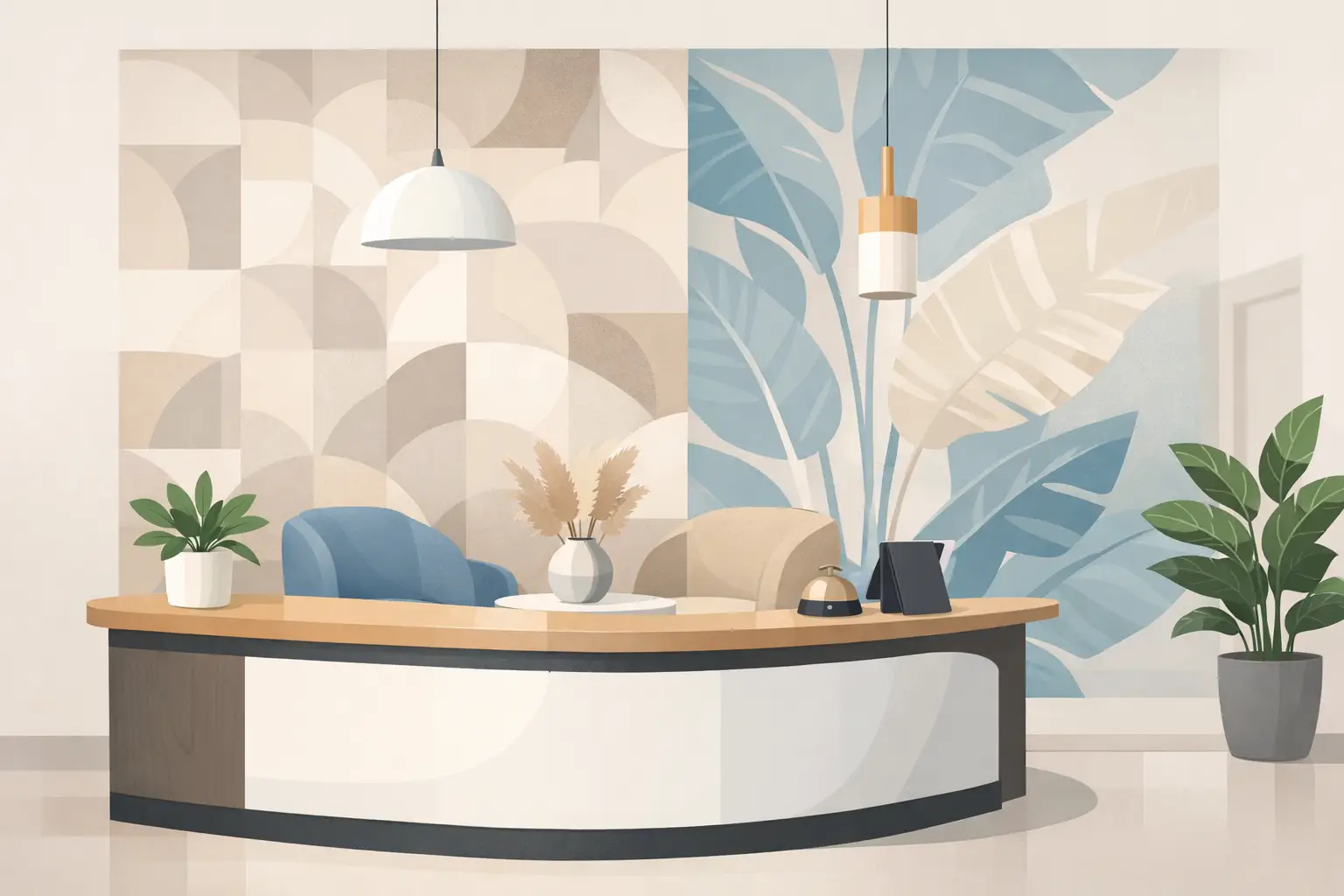
A reception wall has only a few seconds to make its point. It should signal confidence, reflect the character of the business, and continue looking composed after daily contact from visitors, luggage, bags, cleaning teams, and rolling equipment. The best wallpaper for reception areas balances a distinctive visual identity with the material performance required in a high-traffic setting.
For a boutique hotel, that may mean a layered botanical mural with quiet luxury. For a corporate lobby, it may be a textured neutral that supports a refined brand environment without distracting from the reception desk. The right answer depends on traffic, lighting, wall condition, maintenance routines, and the experience guests should have when they walk through the door.
Reception areas are commercial touchpoints, not simply decorative rooms. Unlike a private living space, they must work under repeated use while presenting the business at its best. Material selection should be considered alongside color, pattern scale, and installation details from the start.
A suitable reception wallpaper should be durable, cleanable, dimensionally stable, and appropriate for the project’s safety requirements. In offices, clinics, hotels, retail stores, and residential developments, fabric-backed commercial wallcovering is often the strongest choice for high-contact walls. Its substantial construction offers better resistance to scuffing and wear than many lightweight residential papers, while its texture can bring depth to large, open spaces.
For statement walls set behind a reception counter or beyond normal hand contact, premium vinyl, Italian or European wallpaper, and custom-printed murals can be equally effective. The key is placing each finish where it will perform well. A delicate hand-finished look may be perfect for a protected feature wall, but it is less practical beside a busy entrance where umbrellas, luggage, and deliveries regularly pass.
Look at the space from the visitor’s perspective. What is visible from the entrance? Where do guests pause? Which wall sits behind the receptionist during meetings, check-ins, or photographs? These focal points deserve the most considered finish.
A reception desk backdrop is a natural place for a branded mural, rich texture, or large-scale pattern. Walls along circulation routes need a calmer design and a tougher surface. This approach creates a layered interior rather than applying the same treatment to every wall.
Lighting also changes the decision. A metallic finish can look polished under warm, controlled lighting, yet show glare in a lobby with strong daylight. Deep charcoal, navy, and forest green bring drama, but need adequate illumination to avoid making a compact reception feel enclosed. Always review samples in the actual space, at different times of day, before approving a full installation.
Wallpaper categories can appear similar from a distance, but they serve different project needs. The right specification protects the visual investment and reduces unnecessary replacement costs.
Fabric-backed commercial wallcovering is engineered for demanding interiors. It is an excellent choice for hotel lobbies, offices, corridors, sales galleries, healthcare waiting rooms, and busy retail environments. Its heavier construction supports durability, cleanability, and a more resilient finish over large wall areas.
Textured commercial designs are particularly useful in reception spaces because they create dimension without relying on loud graphics. Linen effects, woven visuals, plaster-inspired surfaces, and subtle geometric embossing can hide minor marks better than flat, pale finishes. Where project regulations apply, specify products with the appropriate fire-retardant performance and documentation.
Washable vinyl wallpaper suits reception zones that need a polished appearance with straightforward maintenance. It offers broad design flexibility, from refined stone and textile effects to contemporary patterns and soft metallics. In lower-impact zones, it can provide an elevated finish at a more accessible project cost than a fully commercial specification.
Not all vinyl products have the same durability. Ask about scrubbability, surface resistance, recommended cleaning methods, and intended use. A wallpaper that performs beautifully in a private lounge may not be the best option for a public-facing check-in area.
Custom murals give a reception area a point of view. They can carry brand colors, architectural imagery, local landscapes, abstract art, hospitality concepts, or an original pattern created for the project. With high-quality printing and carefully matched panels, a mural turns an ordinary wall into a memorable arrival moment.
Custom does not have to mean visually busy. A restrained tonal mural, enlarged line drawing, or softly layered landscape can feel more premium than a logo repeated across an entire wall. For commercial work, select fade-resistant inks and a substrate appropriate for the location. Accurate wall measurement is essential, particularly around counters, bulkheads, doors, screens, and signage.
The most successful reception wallpaper supports the business rather than competing with it. A law firm, wellness clinic, luxury condominium, creative studio, and restaurant should not all communicate in the same visual language.
For corporate and professional environments, consider tailored textures, architectural geometrics, mineral finishes, or muted linear patterns. Shades of warm gray, taupe, sand, ink blue, and soft olive create authority without feeling cold. These designs pair well with timber, stone, brushed metal, and clean signage.
Hospitality reception areas can carry more atmosphere. Botanical silhouettes, Art Deco-inspired geometry, painterly landscapes, and textile-look wallcoverings help create a sense of destination. Rich tones such as burgundy, tobacco, emerald, and midnight blue can be highly effective when balanced with warm lighting and lighter surrounding surfaces.
For wellness, beauty, and healthcare settings, choose finishes that feel calm, clean, and reassuring. Soft organic patterns, pale earth tones, subtle botanicals, and nature-based murals reduce the institutional feel of a waiting room. Avoid overly intricate patterns near service counters, where visual noise can make the area feel less organized.
Retail and showroom spaces often benefit from bolder wallcoverings that reinforce product positioning. A high-contrast mural, sculptural abstract, or sophisticated large-scale floral can create a useful backdrop for display zones and social content. Keep the design aligned with merchandise colors, however. A wall that fights with the product makes the space harder to shop.
A common mistake is choosing a small sample based only on its individual beauty. Reception walls are usually viewed from several yards away, so scale changes dramatically once the wallpaper is installed. A tiny repeated motif can become visually restless across a long lobby wall, while a large pattern may feel elegant and balanced in a generous space.
Use color strategically. Darker wallpapers can ground a large reception desk and conceal everyday marks, but they absorb light. Pale wallpapers make smaller spaces feel more open, though plain white and light cream can show scuffs quickly. Mid-tone neutrals are often the most forgiving choice for active public areas.
Branding should feel integrated, not forced. Rather than covering a wall with logos, use a custom mural based on the company palette, a signature texture, or imagery that reflects its values. Place a logo or dimensional signage over the wallcovering where appropriate. The result feels designed as a complete environment, not applied as an afterthought.
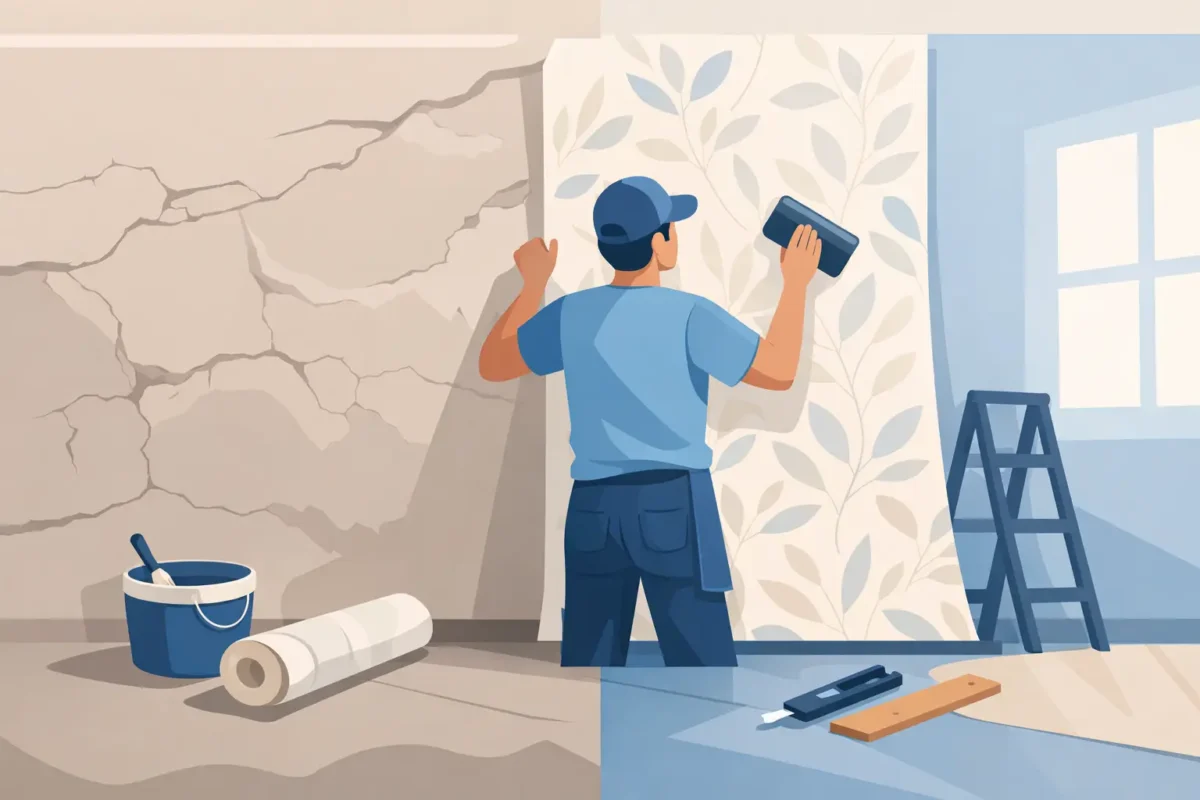
Even premium wallpaper can look disappointing if the substrate is poorly prepared or the panels are misaligned. Reception walls frequently include uneven surfaces, old paint layers, electrical points, corners, glass partitions, and built-in joinery. Professional site assessment avoids surprises once installation begins.
Walls should be dry, smooth, clean, and properly primed. Existing cracks, moisture issues, and surface irregularities need correction before wallcovering is applied. For murals and directional patterns, panel planning is especially important. The focal point should land in the right place behind the desk, not be interrupted by a corner or outlet.
Professional installation also protects material warranties and preserves the intended pattern match. In a high-visibility lobby, details matter: straight seams, clean trims, accurate cuts around signage, and consistent alignment at ceiling lines all contribute to a flawless finish.
The best wallpaper is one your team can maintain confidently. Ask for cleaning guidance before handover and ensure staff understand which products are approved. Most commercial vinyl and fabric-backed options can be gently wiped using suitable methods, but abrasive tools and harsh chemicals can damage a surface or alter its sheen.
Keep spare material from the original production batch for future repairs. This is particularly valuable for custom murals, specialty textures, and projects exposed to strong sunlight. If a wall receives direct UV exposure, discuss fade resistance and window treatments during specification rather than after colors begin to shift.
A reception area should feel intentional from the first glance and dependable long after opening day. Choose a wallcovering that gives the space its signature look, specify the performance level the environment demands, and let professional preparation and installation carry the design through every detail.