A meeting room can carry the company’s most important conversations, then still look like an afterthought. Wall murals for meeting rooms change that dynamic. More than a decorative finish, a well-planned mural creates a focused backdrop for presentations, reinforces brand character, and gives employees and visitors a stronger sense of place from the moment they enter.
The right design is not always the loudest one. In a boardroom, a mural must support concentration and confidence. In a creative studio, it may encourage fresh thinking. In a client-facing conference room, it should express the quality and personality of the business without competing with the people in the room. That balance is where design expertise, material selection, and precise installation matter.
Meeting rooms are highly visible, even when they are not large. They appear in video calls, host client reviews, welcome new team members, and often become the backdrop for major decisions. Plain painted walls can feel unfinished, while generic artwork rarely reflects the business using the space.
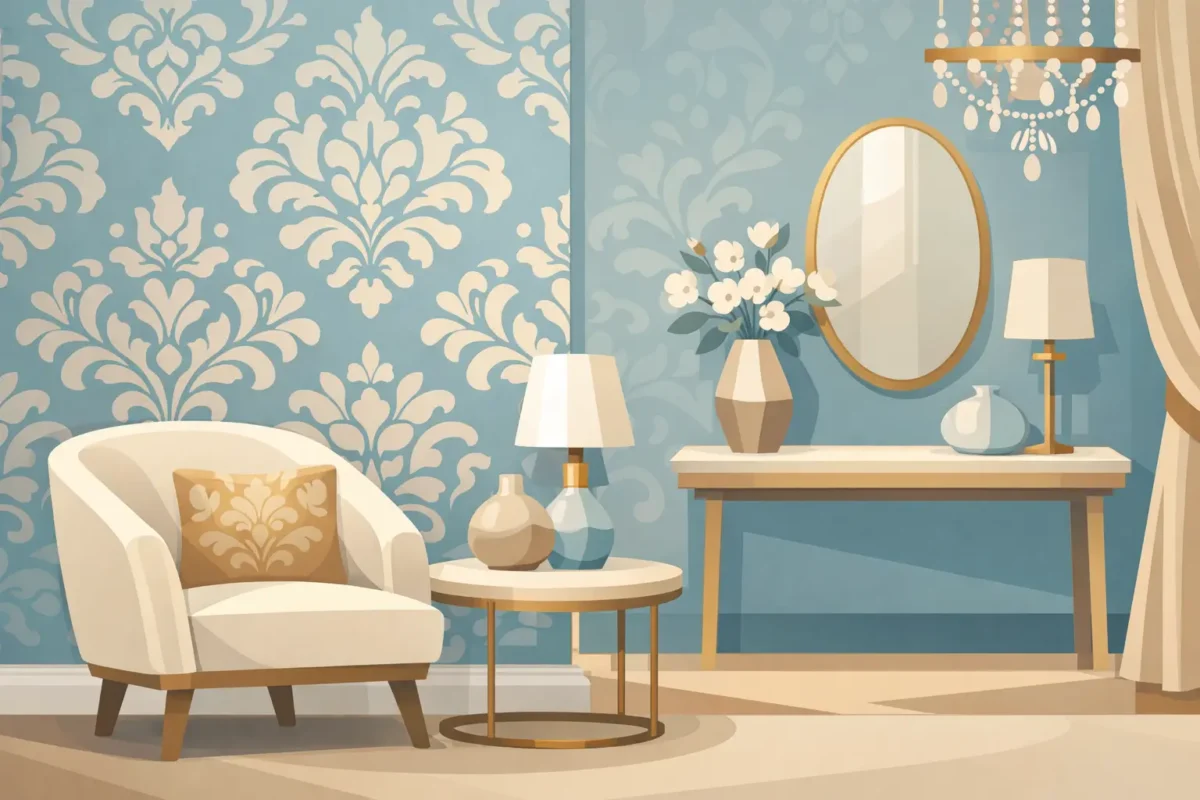
A custom mural gives the room a clear visual purpose. It can echo architectural details, pull colors from the wider office palette, or bring a brand story into the interior in a more refined way than oversized logos. A soft aerial landscape can create calm in a high-pressure executive room. An abstract composition can add energy to an innovation hub. A cityscape, material-inspired texture, or industry-relevant image can build immediate context for clients.
The commercial value is practical as well as visual. Wallcoverings can help protect high-touch walls from scuffs and light impact, particularly in rooms where chairs, bags, and equipment are regularly moved. With the correct commercial-grade specification, the finish becomes part of a durable interior strategy rather than a short-term styling decision.
The best mural concept starts with a simple question: what needs to happen in this room? A space used for confidential leadership meetings requires a different atmosphere from a training room or sales presentation suite.
For executive boardrooms, consider understated imagery with depth: misty mountain ranges, fine architectural lines, restrained botanical forms, or tonal stone textures. These designs bring dimension without creating visual noise. A high-contrast graphic mural may look impressive at first glance but can become distracting during long discussions or on camera.
Creative teams often have more freedom. Bold color fields, expressive art, typographic elements, or layered city imagery can give the room a sharper identity. The goal is still control. When every wall makes a statement, the room can feel crowded. In most cases, one feature wall delivers more impact than wrapping the entire room in a busy scene.
Client meeting rooms benefit from a mural that communicates confidence and relevance. A property developer might select refined urban imagery or a custom rendering-inspired composition. A hospitality brand may lean toward organic textures and destination-led visuals. A technology company may prefer abstract patterns that suggest movement, connection, or precision. The concept should feel intentional, not like stock décor placed behind a conference table.
Hybrid work has changed how meeting rooms are experienced. A mural may be viewed more often through a webcam than in person, so placement deserves careful consideration.
The wall behind the primary speaker is usually the most visible. It needs to look polished at a distance and remain readable in a cropped video frame. Fine details can disappear on screen, while strong contrast directly behind a person’s head can create an awkward, distracting effect. A design with controlled scale, open negative space, and a clear focal area generally performs better.
Avoid placing critical text, a logo, or a face within the likely camera crop unless the room layout has been tested. The conference table, display screen, seating position, and camera angle all influence the final result. A professional site assessment helps establish what portion of the mural will actually be seen during video calls.
Lighting also changes the design. Glossy surfaces can reflect overhead fixtures, especially in glass-heavy boardrooms. Matte or low-sheen wallcoverings are often a stronger choice for presentation spaces because they reduce glare while maintaining rich color and image definition.
A mural is only as successful as the material behind the image. In a meeting room, the wall finish needs to look elevated while standing up to daily use, cleaning, and changing light conditions.
Fabric-backed commercial wallcoverings are a strong option for high-traffic corporate interiors. They offer a substantial finish, help conceal minor wall irregularities, and are designed for demanding project environments. For spaces where a smooth, vivid graphic is the priority, custom printed wallpaper can reproduce artwork, photography, gradients, and brand-specific color with exceptional clarity.
The right specification depends on the site. Consider these four requirements before approving a mural:
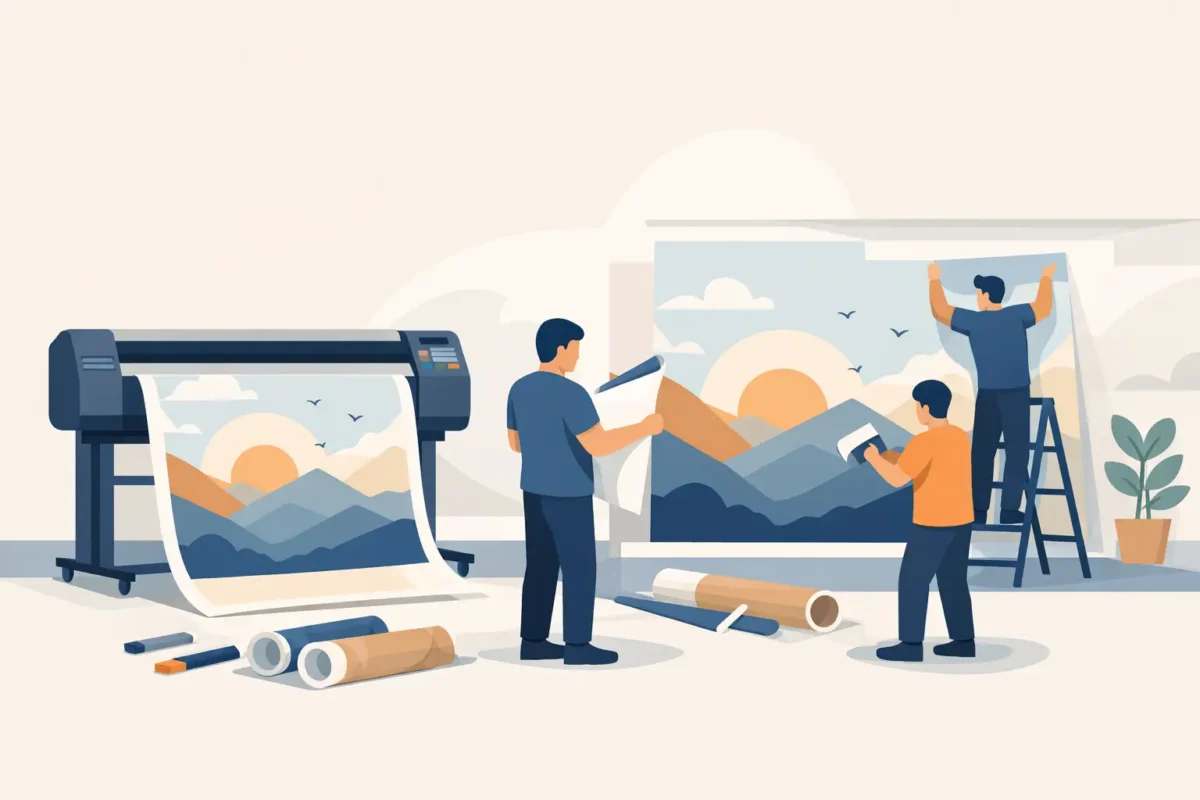
Printing quality is equally important. Advanced Canon printing technology can produce crisp detail, consistent color, and impressive tonal depth, whether the artwork is a subtle watercolor effect or a large-scale photographic landscape. This matters when a mural spans a wide wall: weak resolution, banding, or inaccurate color can make an otherwise strong concept look inexpensive.
A mural designed for a phone screen is not automatically ready for a 14-foot wall. Images must be assessed for resolution, crop, visual weight, and viewing distance. What looks beautifully detailed up close may become overly busy when expanded across an entire conference room.
Custom sizing makes a meaningful difference. It allows the artwork to work around doors, wall-mounted screens, control panels, acoustic features, and built-in cabinetry rather than treating these elements as obstacles. It also lets the design be positioned precisely, so a horizon line, pattern repeat, or central motif lands where it should.
There is a trade-off between dramatic scale and visual comfort. Large botanical leaves, oversized brushstrokes, and monumental landscapes can create a memorable room, but they need breathing space. In smaller meeting rooms, a lighter palette and an illusion of depth can make the walls feel less enclosing. In larger rooms, richer tones and stronger composition can help prevent the space from feeling cold or anonymous.
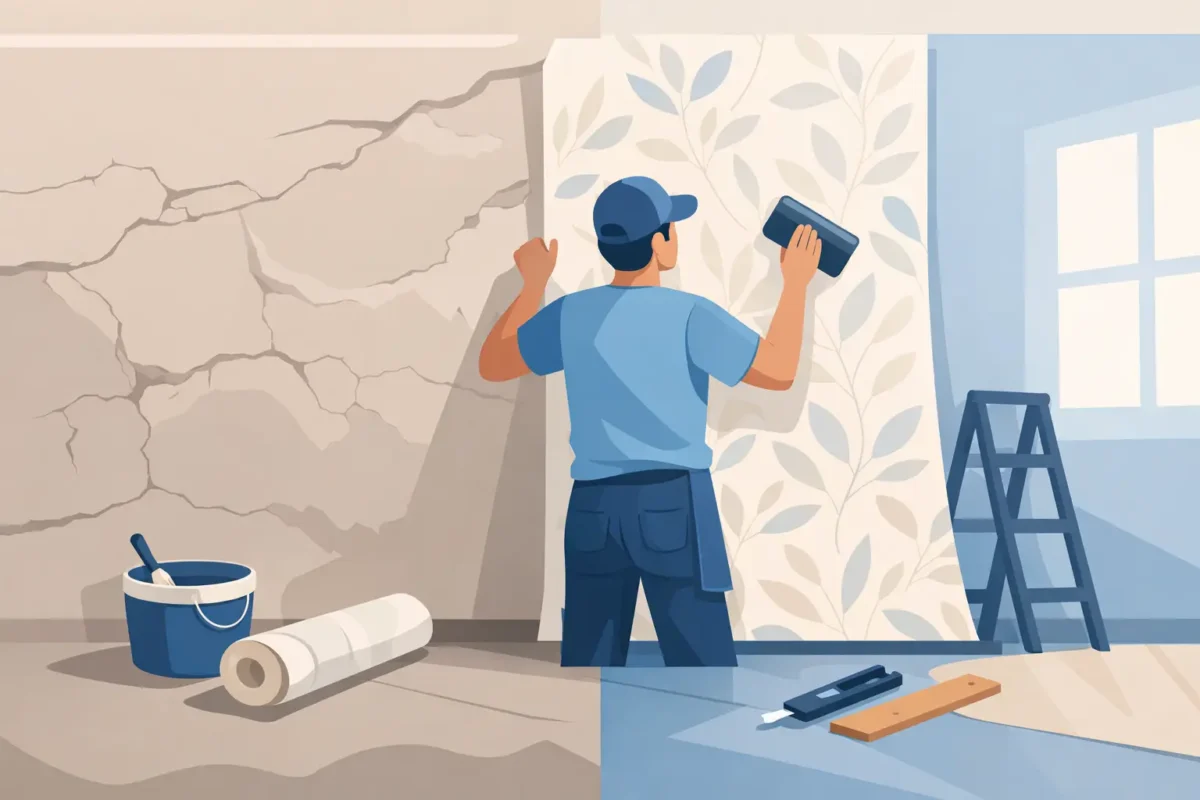
Even the most striking mural can be undermined by misaligned panels, visible seams, trapped air bubbles, or poorly finished edges. Professional installation protects the investment and preserves the design’s intended continuity across the wall.
Preparation is the foundation. Walls should be clean, dry, smooth, and properly primed according to the material selected. Existing wallpaper, flaking paint, or dampness should be addressed before the mural is installed. This stage is easy to overlook when project timelines are tight, yet it has a direct effect on adhesion, appearance, and long-term performance.
For custom murals, installers also need to plan panel layout before applying the first section. This ensures that key visual elements line up properly and that joins fall in the least noticeable places. A full-service partner can coordinate design review, material selection, custom production, site measurement, and installation as one controlled process.
A successful meeting room does not need to feel theatrical. It needs to feel considered. The mural should carry the brand’s visual language, support the room’s purpose, and remain impressive after hundreds of conversations, presentations, and video calls.
Decorating Depot combines custom mural capability, commercial-grade wallcovering options, high-definition printing, and experienced installation support to help turn a blank conference wall into a lasting design asset. Choose a design that gives people a reason to look up before the meeting begins – then lets the conversation take center stage.