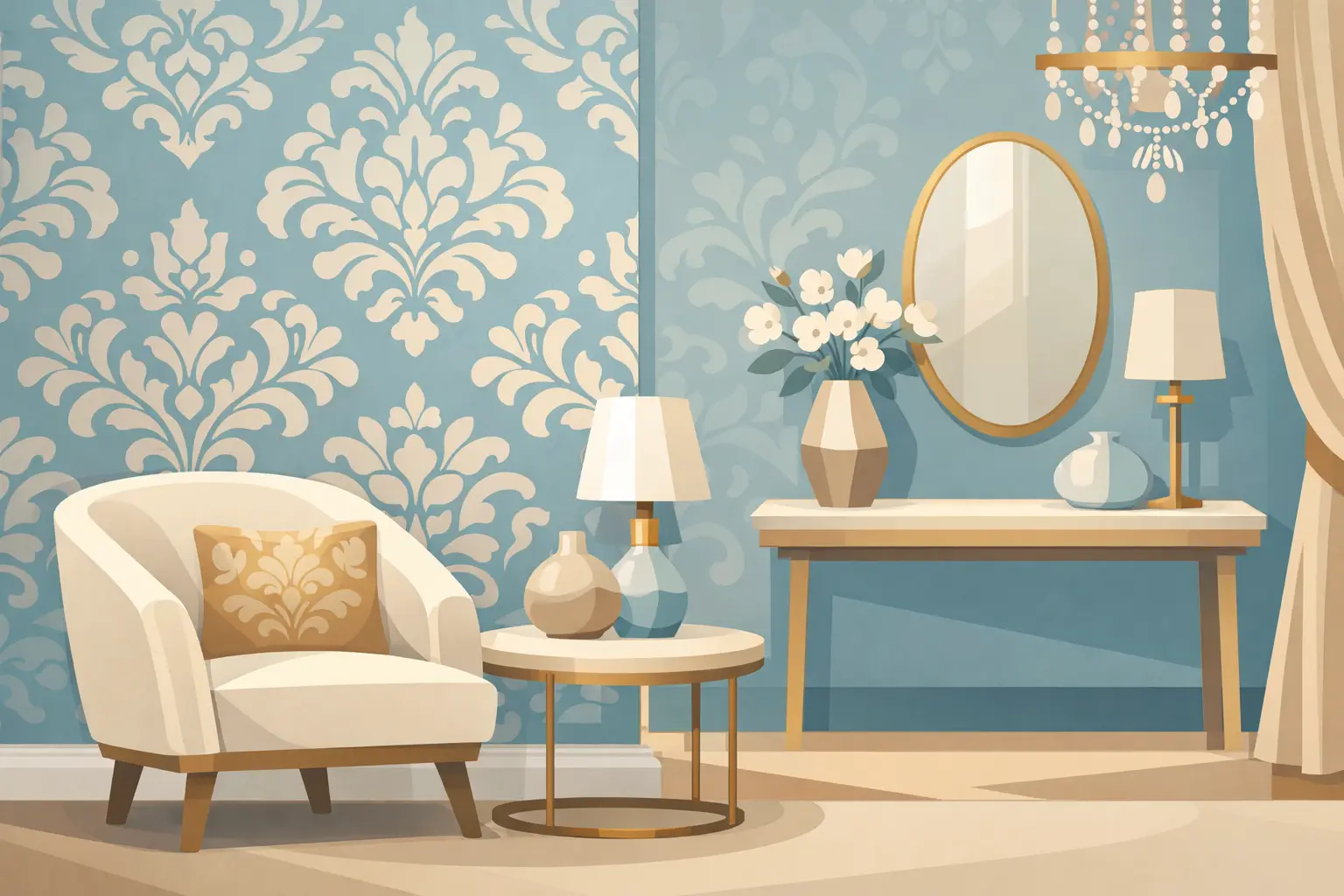
A well-chosen wallcovering can make a room feel composed before a single piece of furniture is placed. Damask wallpaper does this with remarkable ease. Its repeating ornamental motifs bring heritage, symmetry, and visual depth to interiors that need more than a flat coat of paint.
For a formal dining room, an elegant primary suite, a boutique reception area, or a hospitality corridor, damask creates a sense of intention. The key is choosing a design with the right scale, color, material, and performance level for the space. When those details are specified correctly, this classic pattern can feel refined, current, and built to last.
Damask is defined by its elaborate, repeating motif, often arranged around stylized florals, leaves, medallions, scrolls, or botanical forms. The design originated in woven textiles, where contrast between matte and lustrous threads gave the pattern its signature depth. Modern wallcoverings recreate that richness through print, embossing, metallic accents, textile textures, and layered finishes.
Unlike a simple geometric or stripe, damask has movement and ornament. It can frame a room with understated elegance or become the strongest visual element in it. A tonal cream-on-ivory pattern may read as quiet texture from a distance, while a charcoal design with gold detailing delivers instant drama.
This versatility is why damask remains relevant across residential and commercial interiors. It has a traditional foundation, but the right colorway and finish can make it equally convincing in contemporary luxury spaces.
The best damask wallpaper is not necessarily the most detailed design. It is the design that works with the room’s proportions, lighting, traffic level, and intended atmosphere.
Public rooms can carry a more expressive pattern, particularly when they have generous ceiling height, natural light, or architectural features such as wainscoting and crown molding. Large-scale damask motifs add presence to a formal dining room, while a mid-scale pattern can soften a living room without making it feel overly decorated.
For a cohesive finish, repeat one or two colors from the wallpaper in upholstery, drapery, artwork, or accent cushions. Avoid trying to match every tone exactly. A layered interior feels more polished when the colors relate rather than compete.
A damask feature wall behind the bed gives a bedroom a natural focal point. Soft taupe, misty blue, warm gray, blush, and ivory patterns create a restful effect, especially in matte or lightly textured finishes. Darker colors such as deep green, navy, plum, or black work beautifully in larger bedrooms where a cocooning mood is desired.
In compact rooms, use a smaller-scale motif or a low-contrast colorway. Highly contrasting large patterns can visually bring the walls forward, which may make a tight space feel more enclosed. That is not always a disadvantage, but it should be a deliberate design choice.
Commercial spaces require more than visual impact. Lobby walls, guest corridors, meeting rooms, show suites, and retail environments need surfaces that maintain their appearance under frequent use. Fabric-backed commercial wallcovering is often the stronger specification for these settings because it offers enhanced durability and dimensional stability.
For hospitality projects, damask can establish a memorable brand mood without relying on excessive decoration. A muted metallic pattern can reflect ambient lighting in a lobby, while a custom-colored motif can align with the property’s palette. In offices, restrained damask designs bring warmth and professionalism to reception areas, executive suites, and client-facing meeting rooms.
Pattern scale is one of the most overlooked decisions in wallpaper selection. A motif that looks balanced on a sample may feel very different when repeated across an entire wall.
Large-scale damask works best where there is enough uninterrupted wall area to show the full repeat. It can be especially effective behind a headboard, across a hotel feature wall, or in an expansive dining space. Small-scale damask is more forgiving in hallways, powder rooms, and rooms with many windows, doors, or built-in elements.
Consider viewing distance as well. In a long corridor or open lobby, a larger motif is easier to appreciate from across the room. In a powder room, guests are standing close to the wall, so finer details become more visible. The right scale gives the pattern presence without creating visual noise.
Color determines whether damask reads as classic, glamorous, modern, or understated. Neutral palettes remain a strong choice for projects that require longevity. Ivory, greige, stone, and soft gray wallcoverings create an elegant backdrop for changing furniture and accessories over time.
High-contrast combinations are more dramatic. Black and gold, navy and silver, or deep green and bronze can deliver a luxurious statement, particularly in hospitality, retail, and formal residential spaces. Use them where lighting is well planned. Metallic accents can appear flat in poor light but gain exceptional depth under layered lighting with wall sconces, pendants, or adjustable spotlights.
Finish matters just as much. Matte wallcoverings feel contemporary and relaxed. Embossed surfaces add tactile depth. Silk-like effects bring a more formal, decorative quality, while subtle metallics introduce light without turning the wall into a mirror. In high-use locations, select finishes that can be maintained appropriately and are suited to the cleaning requirements of the project.
A beautiful pattern is only one part of the specification. Homeowners may prioritize texture, color, and ease of care, while architects and developers must also consider durability, wall condition, fire performance, cleaning protocols, and installation schedules.
Vinyl and vinyl-coated wallcoverings are practical choices for many active interiors because they are durable and generally easier to maintain than delicate paper finishes. Fabric-backed options are designed for demanding commercial environments, providing added strength for corridors, offices, hotels, and public-facing spaces. For feature walls with a highly specific visual brief, custom print wallpaper allows designers to adjust scale, color, and artwork to fit the architecture.
No single material is right for every application. A richly textured residential wallcovering may be ideal for a private bedroom but unsuitable for a busy restaurant entry. Conversely, a commercial-grade surface may offer the performance a project needs, yet require thoughtful pattern and color selection to retain a residential sense of warmth.
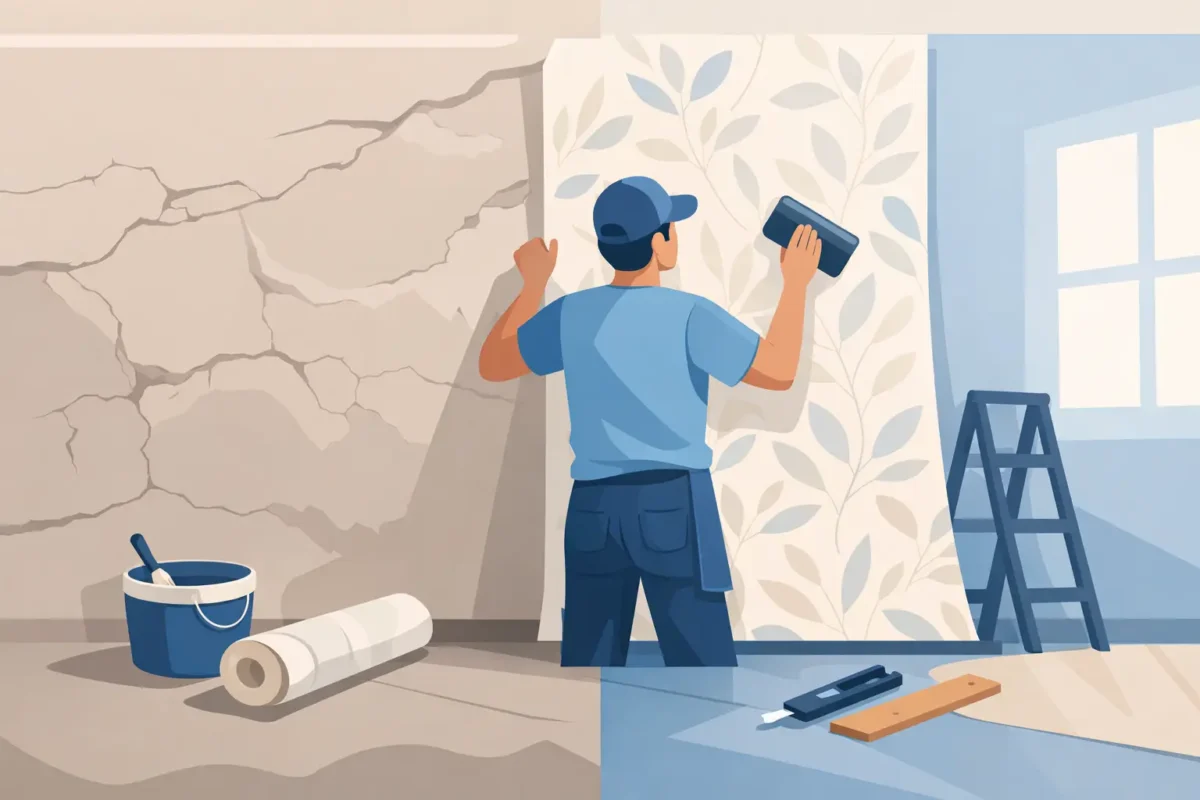
Damask patterns demand precision. Their repeating motifs make misalignment immediately visible, especially with high-contrast designs or metallic details. Proper wall preparation, accurate pattern matching, clean trimming, and careful handling around corners and openings are essential to a finished result that looks intentional.
Before installation, walls should be dry, smooth, clean, and properly prepared for the selected material. Surface cracks, uneven patches, moisture issues, and poorly repaired areas can affect adhesion and create visible imperfections. This is particularly important with reflective or embossed finishes, which can reveal flaws more easily than flat paint.
Professional installation also helps manage waste and pattern repeat. Some damask designs require additional material to align the motif from panel to panel. This should be accounted for during measurement and ordering, rather than treated as an afterthought. Decorating Depot supports wallcovering selection, custom production, and professional installation so design intent and technical execution remain aligned from showroom sample to finished wall.
Maintenance should follow the manufacturer’s guidance for the specific wallcovering. In general, dust can be removed gently with a soft, dry cloth or a vacuum brush attachment. Washable surfaces may tolerate light cleaning with a damp cloth, but abrasive pads, harsh chemicals, and excessive moisture can damage the finish or affect the adhesive at seams.
Place damask thoughtfully in rooms exposed to direct sunlight. Quality materials and appropriate window treatments help preserve color over time, especially with deep hues and metallic accents. In busy commercial settings, choosing a durable, cleanable grade from the start is more cost-effective than selecting a delicate finish that cannot withstand daily use.
Damask wallpaper succeeds when it feels integrated, not merely applied. Select a pattern that respects the architecture, specify a material that meets the demands of the space, and let professional installation reveal the full precision of the design. The result is a wall surface with lasting character – one that gives the entire room a more considered place to begin.