A lobby has only a few seconds to establish confidence. Before a guest reaches reception, a resident collects a key, or a client enters a meeting, the wall behind the arrival zone has already communicated something about the space. The best mural styles for lobbies do more than fill a large blank surface. They shape atmosphere, reinforce identity, and give an interior a finished sense of place.
The right choice depends on who is arriving, how long they will stay, and what the wall must withstand. A boutique hotel can use a richly layered botanical scene to create escape. A corporate headquarters may need an abstract composition that feels refined without competing with its brand. For retail, a mural often needs stronger visual energy and a clear connection to the product or customer experience.
A mural should support the function of the lobby rather than simply follow a trend. In a high-traffic commercial entrance, it may need to make a strong impression from a distance while remaining calm enough for daily use. In a hospitality setting, it may be part of the guest journey, creating a memorable photo moment or signaling a specific local character.
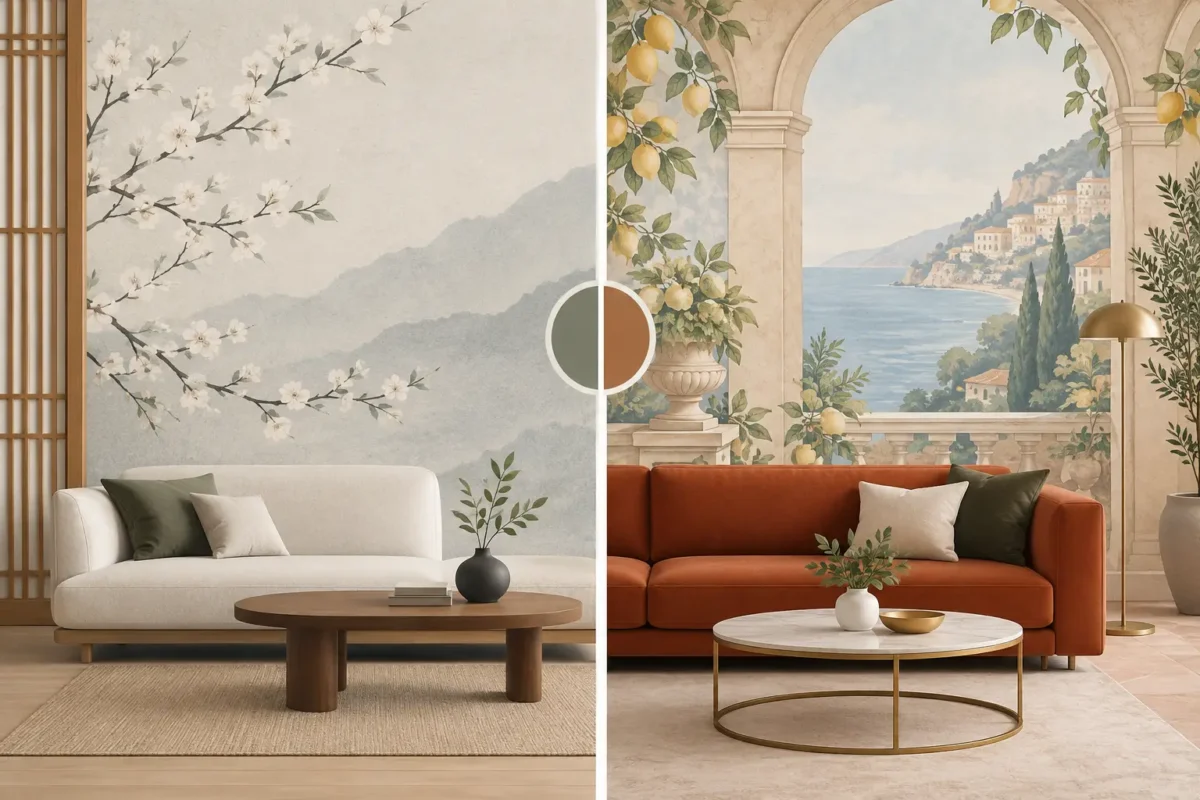
Consider sightlines before selecting imagery. The wall seen directly from the entrance deserves a more commanding composition than a side corridor. A mural behind a reception desk should keep its busiest detail away from the staff member’s head and shoulders. In narrow lobbies, imagery with depth, such as a misty forest path, architectural arches, or a soft horizon, can make the room feel less enclosed.
Lighting is equally influential. A dark, dramatic mural can feel luxurious under focused warm lighting, yet appear heavy in a lobby with limited daylight. Conversely, pale stone textures and gentle watercolor palettes can lift a dim space, but may need contrast or layered detail to avoid looking washed out under bright overhead fixtures.
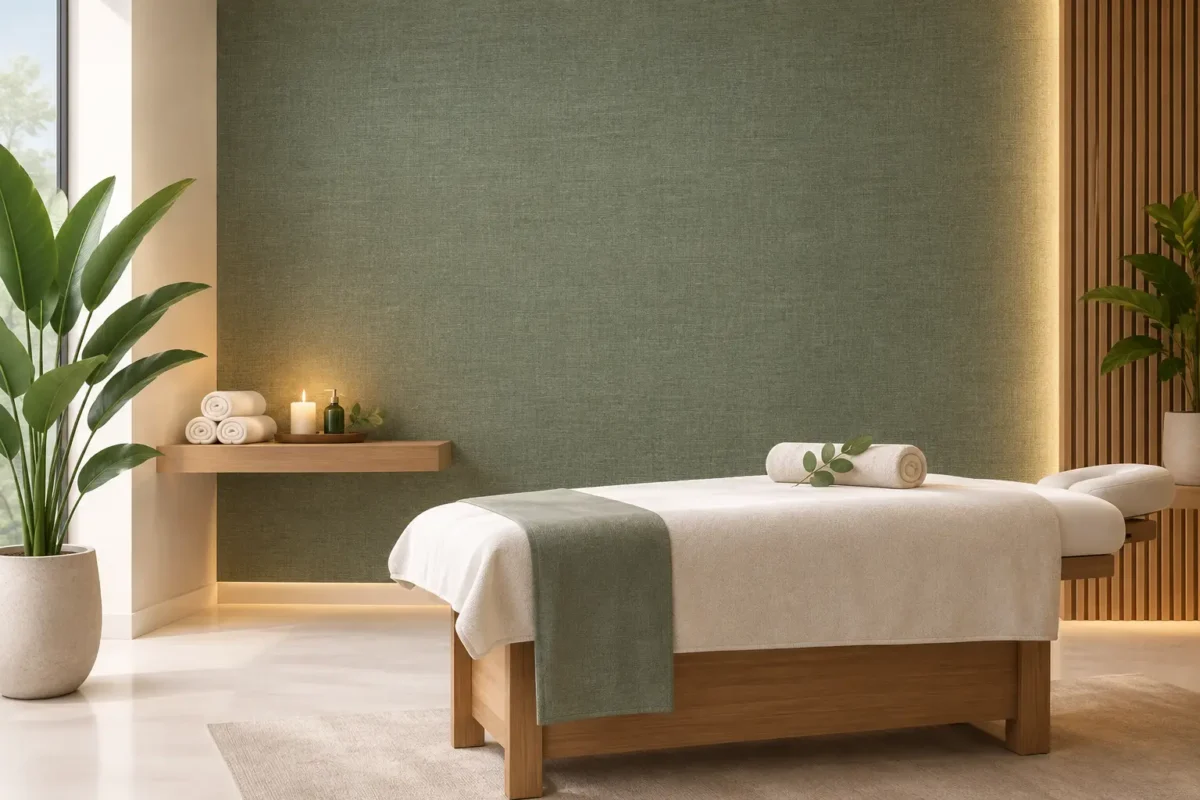
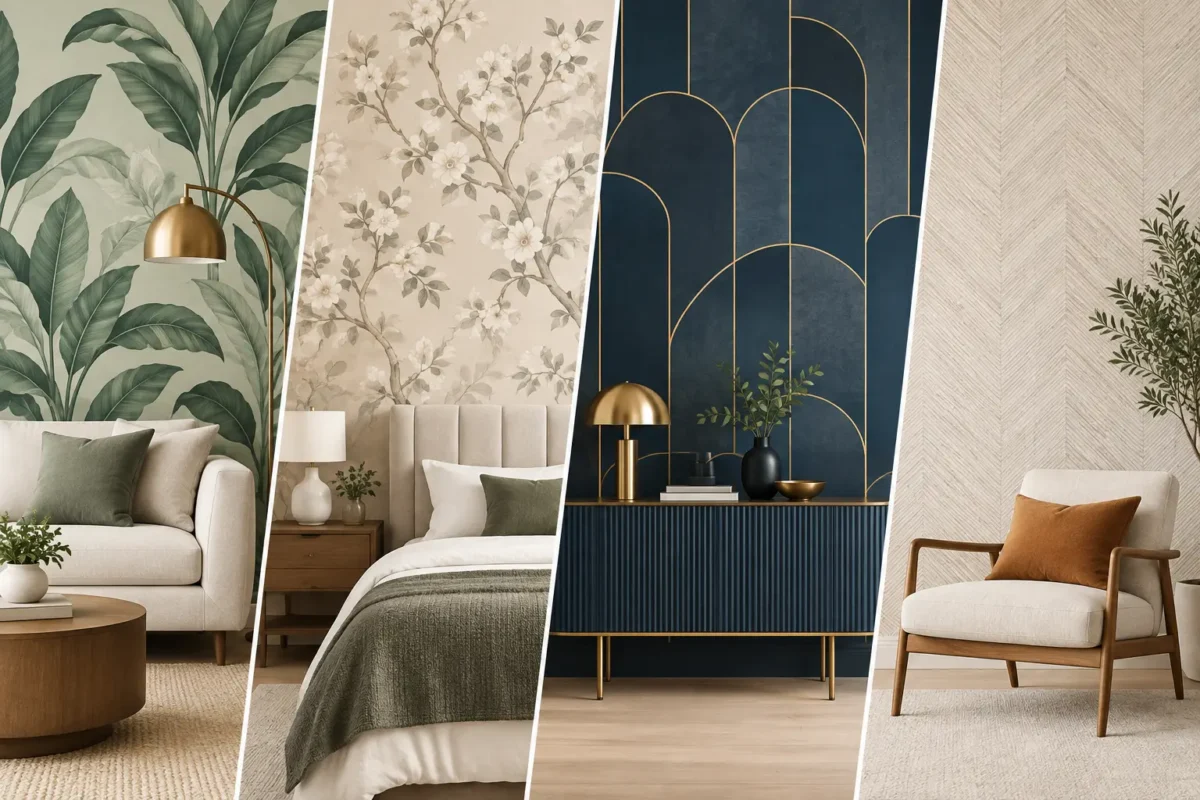
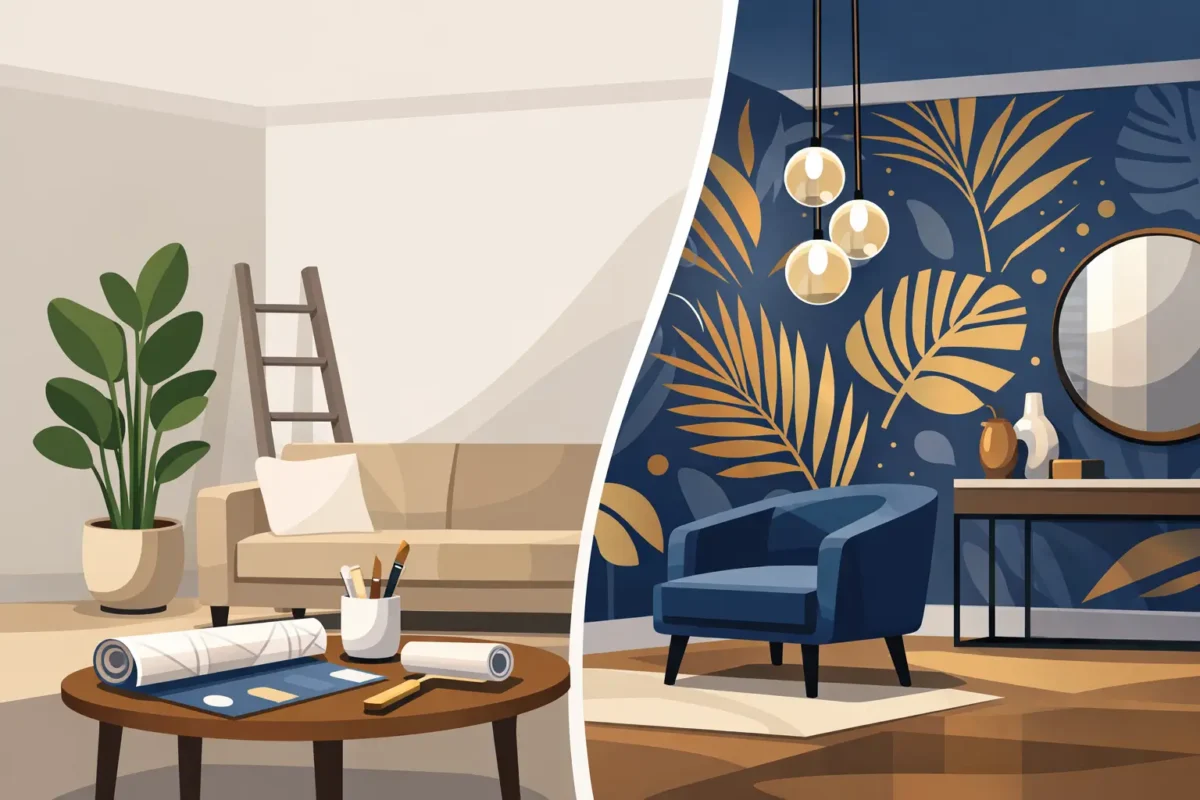
Biophilic murals bring nature into spaces where fresh greenery alone cannot create enough visual impact. Think oversized tropical leaves, layered forest canopies, tranquil coastal views, or softly illustrated native flora. These designs are particularly effective in wellness centers, hotels, residential developments, and offices that want to make arrival feel more restorative.
The strongest botanical murals avoid looking like a generic print. Scale matters. Large leaves, subtle shadowing, and a restrained palette feel architectural and intentional. Small, repetitive florals can become visually busy on an expansive lobby wall. For a premium result, choose imagery with depth and tonal variation, then customize the crop to work around doors, desks, signage, and wall lights.
There is a practical benefit as well: natural imagery tends to age well. It is expressive without being overly tied to a short-lived fashion cycle. For a formal property, a monochrome palm illustration, sepia landscape, or deep green foliage can provide the same connection to nature with a more tailored finish.
Abstract murals are a versatile option for offices, luxury residences, showrooms, and modern hospitality interiors. Their value lies in flexibility. They can echo the palette of the furniture, flooring, or brand identity without becoming an obvious logo wall.
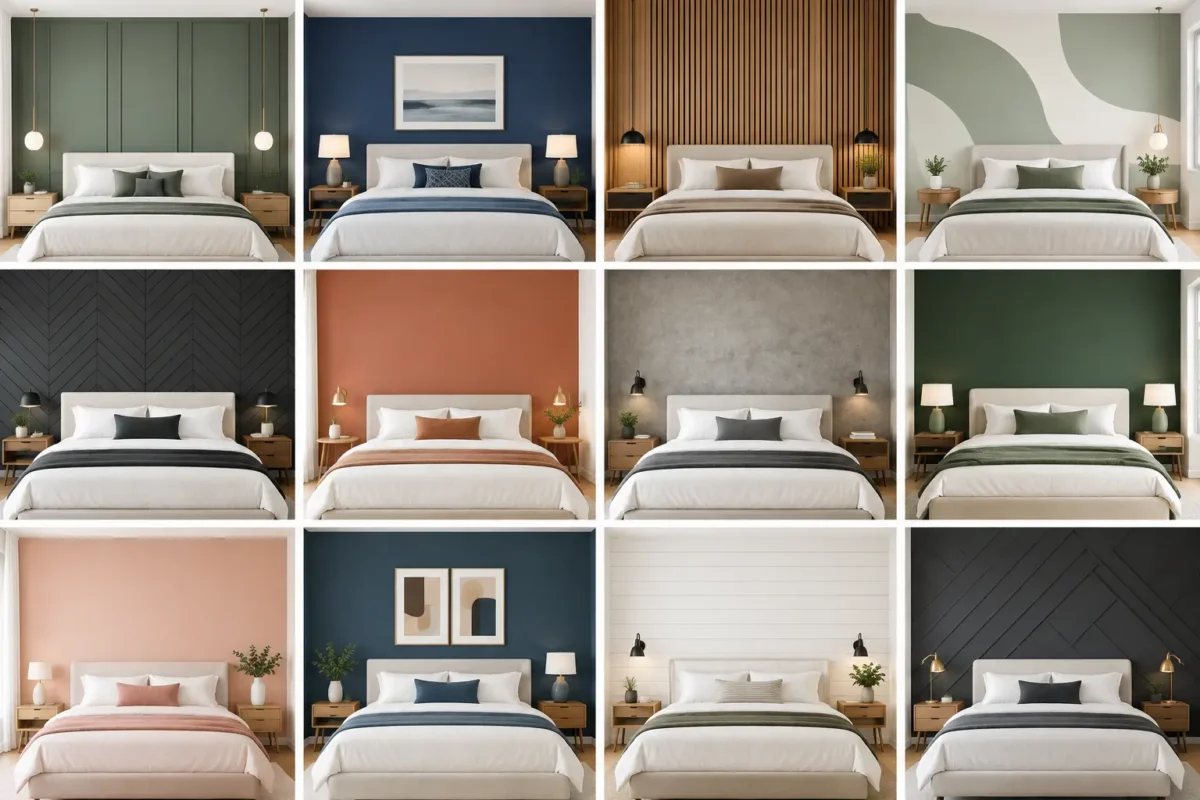
Look for fluid forms, mineral-inspired layers, painterly brushwork, soft gradients, or geometric color fields with generous negative space. These styles make a strong design statement while allowing reception furniture, lighting, and signage to remain legible. They also work well on unusually shaped walls because the artwork can be scaled and repositioned without losing its visual integrity.
A restrained abstract mural is often the safer choice for a building designed to attract a broad mix of tenants or guests. It feels considered, elevated, and contemporary, but does not impose a highly specific theme. The trade-off is that abstraction may create less immediate storytelling than a landscape or destination-inspired scene. If brand recall is the priority, consider incorporating a distinctive color system or custom graphic motif.
For hotels, restaurants, mixed-use developments, and public-facing businesses, a mural rooted in place can make a lobby feel unmistakably connected to its surroundings. This might be an illustrated cityscape, a reinterpretation of local craft patterns, an archival-inspired map, regional architecture, or a photographic landscape treated with an artistic finish.
The key is interpretation rather than imitation. A literal landmark photograph can date quickly and may feel more decorative than designed. A custom mural that extracts the colors, linework, textures, or geometry of a location has greater longevity. It invites guests to feel the character of a destination without turning the lobby into a souvenir shop.
This approach requires care. Cultural references should be well researched, accurately represented, and appropriate to the audience. For an international hotel or corporate lobby, subtle visual cues often work better than a dense collage of symbols. The mural should feel authentic, not themed.
A branded mural can turn a reception wall into an active part of a company’s identity. This is especially effective for creative studios, technology companies, health and fitness brands, retail flagships, and customer-facing offices. The design may use a logo-adjacent pattern, a bold brand color, an illustrated mission, product-inspired graphics, or a set of custom icons.
The most successful branded murals do not simply enlarge a logo across the wall. They give the brand room to breathe. A subtle pattern at full-wall scale, paired with a smaller dimensional sign or reception logo, often feels more sophisticated than oversized corporate messaging. Keep copy limited. Visitors should understand the personality of the brand at a glance, not have to read a wall of statements.
Because branding evolves, this style should be planned with future updates in mind. A custom printed wallcovering can be replaced more easily than a hand-painted feature wall, while still delivering a polished, site-specific result. This makes it a sensible choice for businesses that refresh campaigns, product ranges, or visual identities on a regular basis.
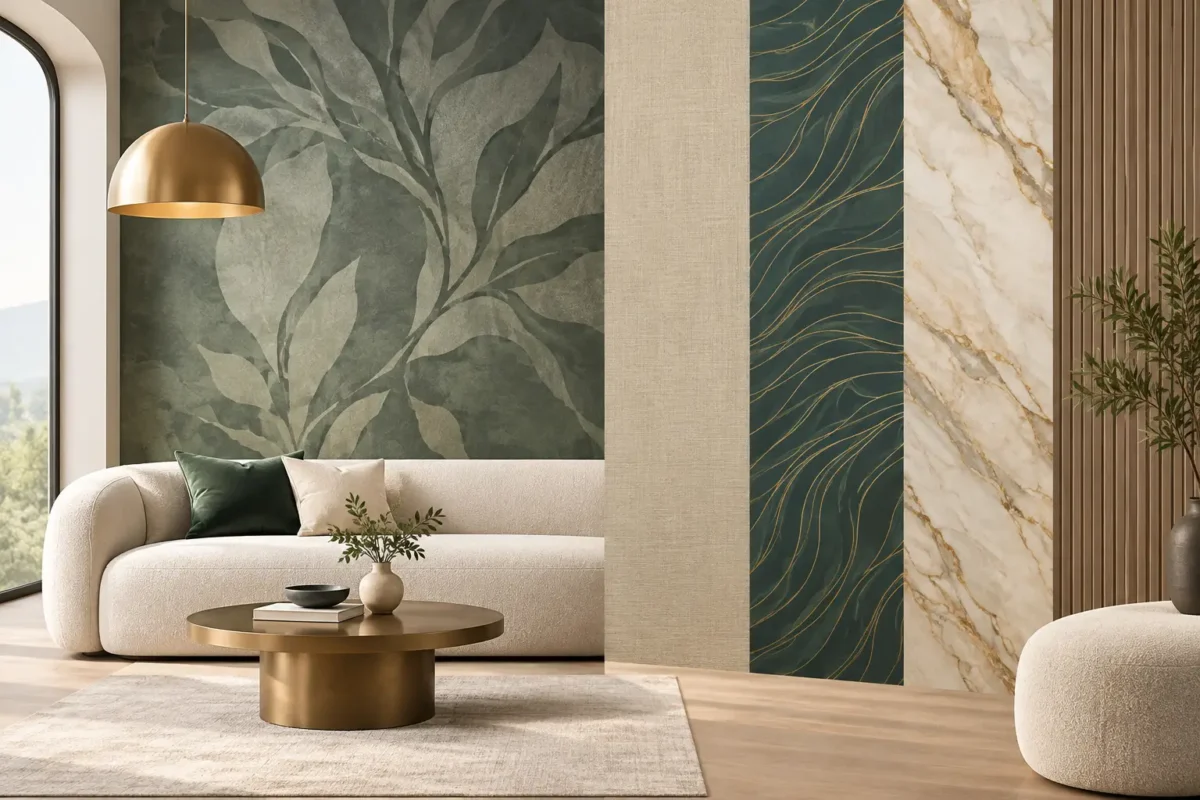
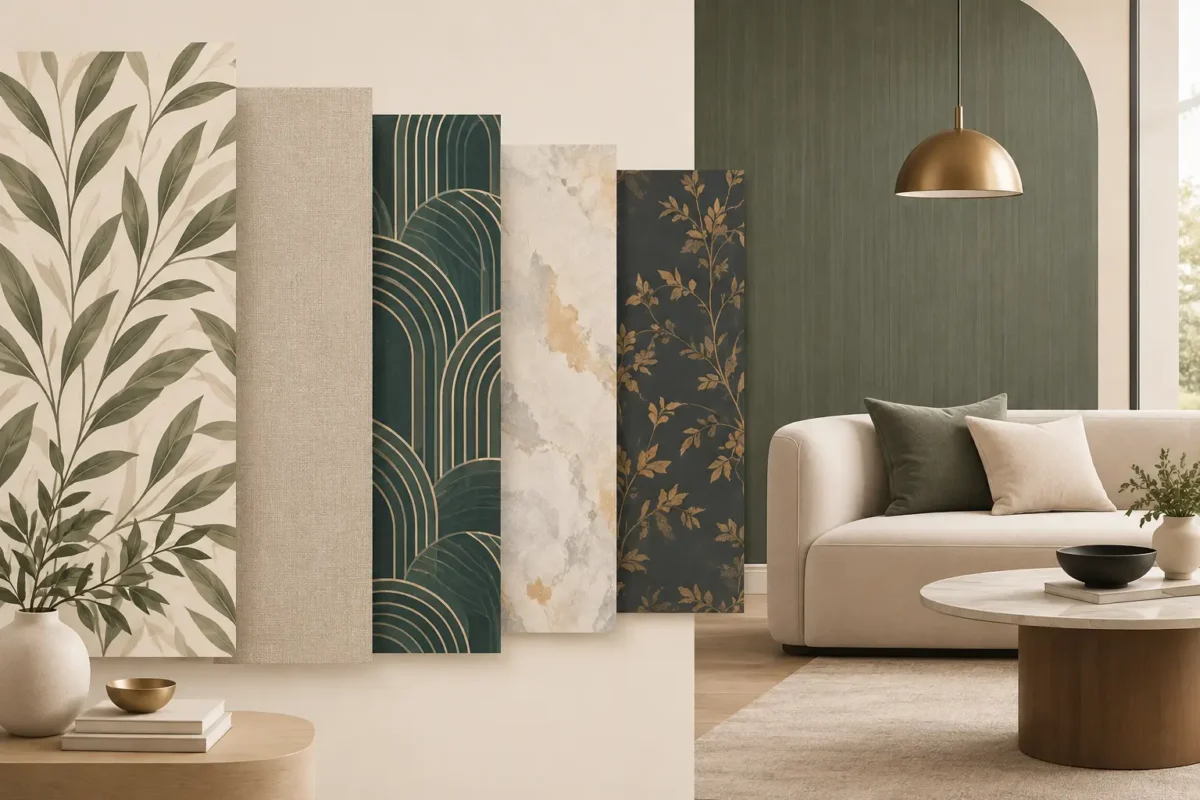
Some lobbies need visual depth more than color. Architectural murals can suggest stone colonnades, arched corridors, paneled plaster, library shelving, carved timber, or a distant terrace. Textural designs can recreate linen, concrete, marble, rattan, metal patina, or aged fresco finishes at a scale that conventional wallpaper may not achieve.
These styles suit spaces with limited floor area or low architectural detail. A carefully designed perspective mural can make a compact lobby appear wider or taller. A stone or plaster-inspired mural adds character to a plain wall without the cost, weight, or installation complexity of real cladding.
Realism is the deciding factor. A low-resolution image or poorly aligned pattern can undermine the effect immediately. High-quality source artwork, accurate wall measurement, and professional installation are essential, particularly when the design includes straight lines, shelves, panels, or architectural perspective.
The visual concept is only half of the specification. Lobby walls are exposed to hand contact, luggage, cleaning equipment, humidity, and frequent cleaning. A beautiful mural that scuffs easily is not a premium finish.
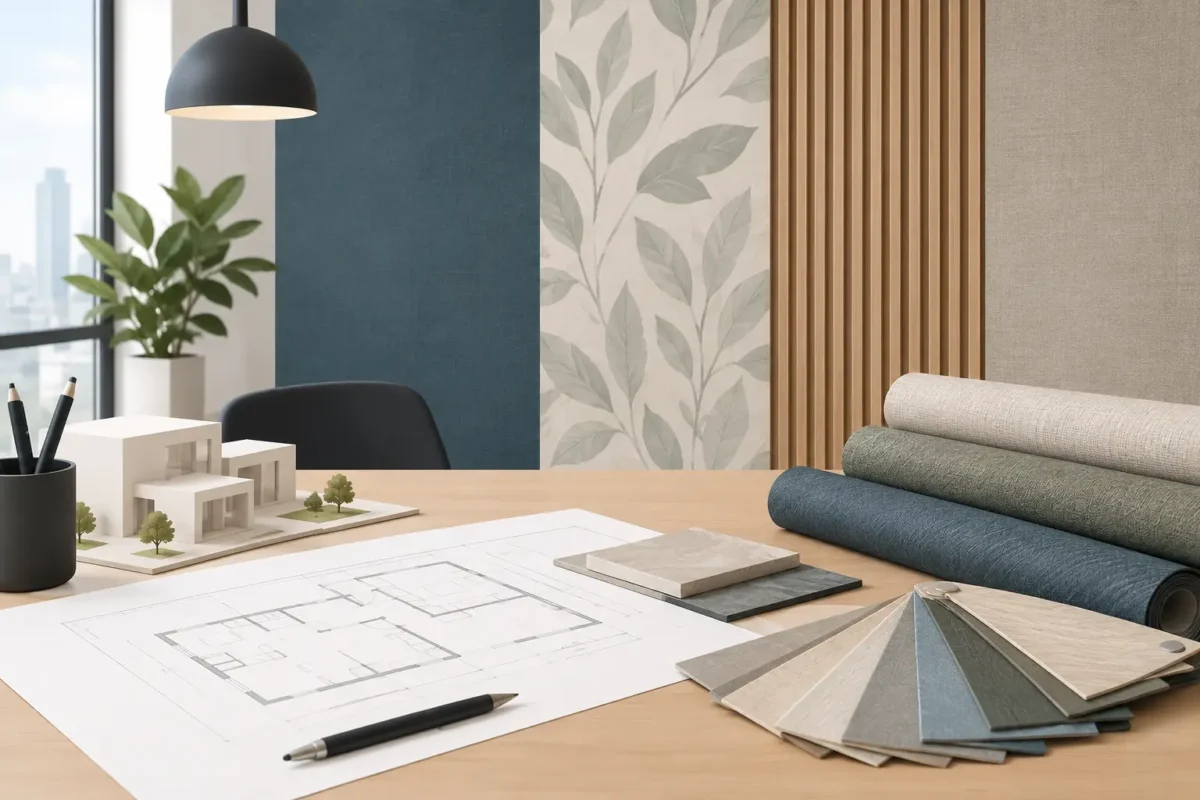
For commercial and hospitality projects, specify a project-grade wallcovering that is appropriate for the wall condition and expected traffic. Fabric-backed commercial materials offer dimensional stability and durability for demanding installations. Where fire performance is required, confirm that the selected material meets the relevant project specifications. For custom printed murals, durable substrates and eco-friendly ink systems help preserve color while supporting a cleaner indoor environment.
Finish should reflect the design. Matte surfaces are excellent for reducing glare across broad mural panels, especially opposite glass doors or strong downlights. Light texture can add depth to abstract and natural imagery. In areas that require routine wipe-downs, ask about cleanability and recommended maintenance methods before finalizing the design.
Custom sizing separates a convincing lobby mural from one that feels applied as an afterthought. Measure every interruption: electrical outlets, air-conditioning grilles, security panels, switches, wall lights, doors, and millwork. The mural composition should be adjusted so that its focal point remains visible and its important details are not cut through by fixtures.
Scale also affects perception. On a large wall, small artwork can look timid. On a compact wall, a highly detailed panoramic scene can feel crowded. A good rule is to view the design at the distance most guests will experience it. If the wall is seen from 20 feet away, the central forms must read clearly from 20 feet away.
Samples are worth reviewing under the lobby’s actual lighting. Colors that appear warm and balanced in a showroom can shift under cool LED lighting or strong daylight. A professional consultation can resolve these issues early, before printing and installation begin.
A lobby mural should leave visitors with a clear feeling: calm, curiosity, confidence, energy, or welcome. Choose the style that creates that feeling while meeting the real demands of the site. With custom design, commercial-grade material, and precise installation, the wall becomes more than a backdrop. It becomes part of the experience people remember.