A wall can look expensive and still fail the room. The pattern may be beautiful, but if the scale is wrong, the finish is too delicate, or the material does not suit the space, the result feels off. That is why a strong designer wallpaper selection guide starts with more than appearance. The right choice needs to deliver visual impact, surface performance, and a clean fit with how the room actually functions.
For homeowners, designers, and project teams, wallpaper selection is rarely about picking a print in isolation. It is about matching design intent with technical reality. A powder room needs different performance from a hotel corridor. A statement wall in a private residence can prioritize mood and detail, while a retail environment may need durability, maintenance ease, and brand consistency across multiple surfaces.
A good wallpaper decision answers three questions at once. First, what should the space feel like? Second, what does the surface need to withstand? Third, how precise does the finish need to be across scale, lighting, and installation conditions?
This is where many projects go wrong. A client falls for a dramatic motif, only to find it overwhelms a compact room. Or a subtle texture is specified for a high-traffic commercial area where a more durable, fabric-backed finish would have been the smarter move. Premium wallpaper is not just decorative. It is a finish system, and the best results come from treating it that way.
Before reviewing collections, define the role of the wall. Is it the focal point, a quiet backdrop, or part of a larger branded interior scheme? The answer affects everything from color depth to texture selection.
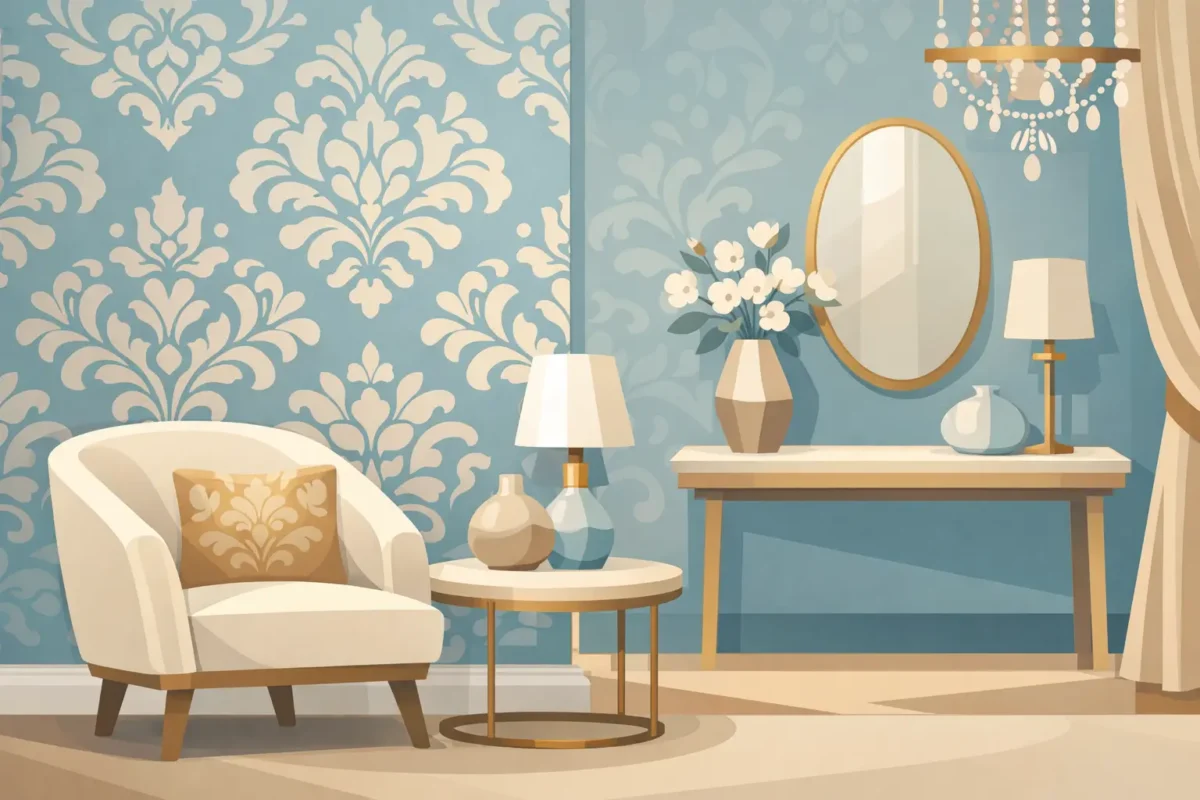
In residential settings, bedrooms often benefit from softer movement, layered neutrals, or tactile surfaces that add warmth without visual noise. Living rooms can carry more confidence, whether through European damask, contemporary geometrics, or large-scale mural compositions. Dining areas often suit richer tones and more pronounced detail because the room is used for shorter periods and can support a stronger visual statement.
Commercial spaces need a sharper filter. Offices may call for refined textures and controlled patterns that elevate the environment without distracting from work. Retail interiors can be more expressive, especially when the wall finish supports merchandising and customer experience. Hospitality projects often need the broadest balancing act of all – style, durability, maintenance, safety, and consistency across many rooms or zones.
One of the most common mistakes in wallpaper specification is choosing a design that looks good on a sample but behaves differently on a full wall. Scale changes perception.
Large patterns create drama, but they need space to breathe. In a small room, they can feel striking when used on one feature wall, yet become heavy when wrapped across every surface. Smaller repeats are more forgiving and often easier to integrate into transitional spaces, corridors, and compact rooms. Textured plains and subtle embossing are especially effective when the goal is depth without strong pattern movement.
Color should be reviewed under the room’s actual lighting conditions. Natural daylight reveals undertones differently than warm artificial light. A soft beige can read pink in one setting and taupe in another. Metallic finishes may look elegant in controlled lighting but become overly reflective if exposed to harsh directional light. A sophisticated scheme depends on testing for these shifts early.
This is the part of any designer wallpaper selection guide that deserves more attention. The surface category you choose has a direct effect on longevity, maintenance, and installation quality.
Vinyl wallcoverings are often preferred for busy residential zones and many commercial applications because they are more durable and easier to maintain. Fabric-backed commercial wallpaper is especially suited to high-traffic environments where impact resistance, dimensional stability, and long-term performance matter. These products are commonly selected for offices, hotels, healthcare interiors, and public-facing business spaces because they combine design value with engineered performance.
Paper-based and specialty decorative wallpapers can offer beautiful surface detail, but they may be better reserved for lower-wear settings. Custom print wallpaper and bespoke murals open far greater design freedom, especially when a project calls for brand expression, site-specific artwork, or exact sizing. That flexibility is a major advantage, but custom work also requires sharper control over resolution, panel planning, wall measurements, and installer coordination.
If the room has moisture exposure, frequent cleaning needs, or heavy contact, material suitability is not optional. It should lead the conversation.
Not every premium interior needs a loud print. Some of the most polished spaces rely on texture rather than obvious pattern.
Linen effects, plaster-inspired finishes, soft metallics, grasscloth looks, and embossed neutrals can elevate a room while keeping the architecture and furnishings in focus. This is especially useful in executive offices, reception areas, luxury residences, and hospitality settings where a calm but highly finished look is the goal.
Texture also helps solve design challenges. In rooms where there are many hard surfaces, it adds softness. In spaces with limited natural light, it can create dimension without making the walls feel darker or busier. For developers and designers working across multiple units or rooms, textured designs also tend to have broader appeal while still feeling more refined than paint.
A wallpaper that looks exceptional on day one but ages poorly is a weak specification. Performance should be part of the design brief from the beginning.
For commercial and hospitality projects, ask practical questions early. Does the wallcovering need to be fire retardant? How often will it be cleaned? Will luggage, chairs, or carts make contact with the wall? Is the finish required across long corridors or multiple rooms where color consistency matters? These are not secondary details. They shape product suitability.
For residential spaces, the same thinking applies in a different way. Children’s rooms, staircases, entry walls, and dining areas may need more wipeability than formal sitting rooms or master bedrooms. A custom mural in a family space can be a strong design move, but only if the substrate and print finish are appropriate for real daily use.
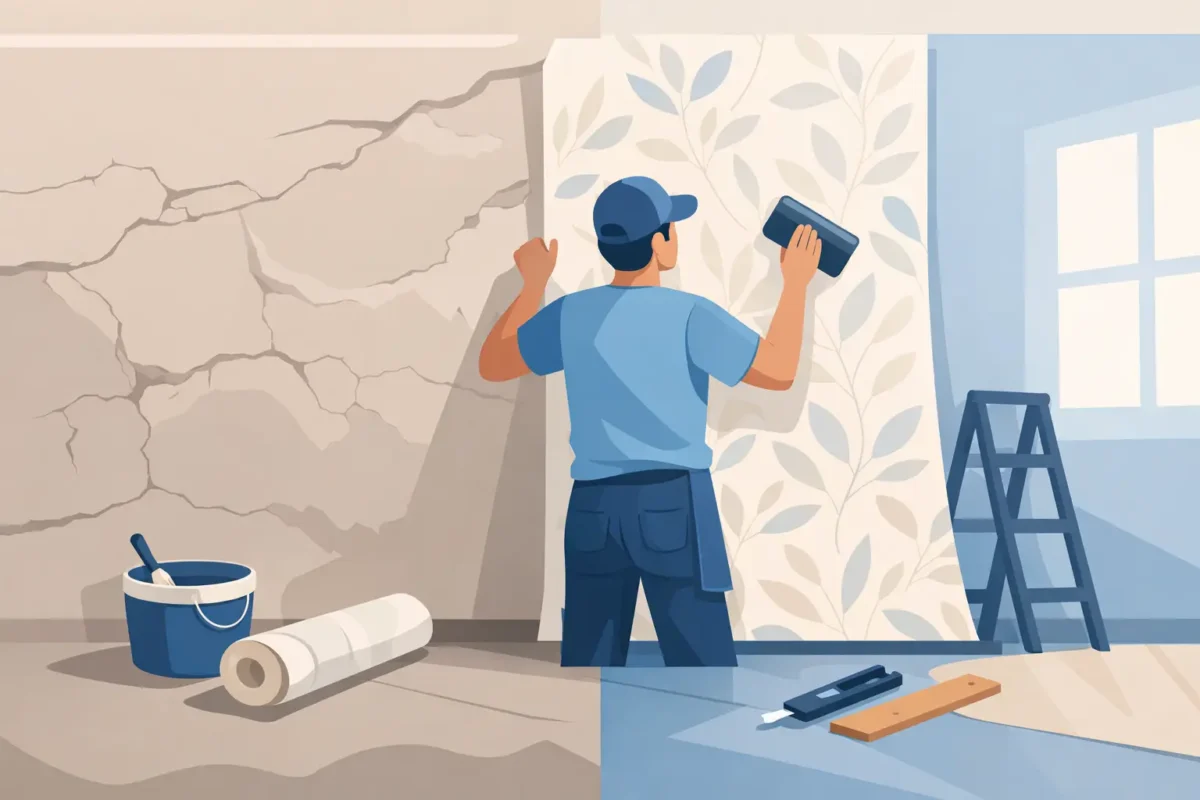
Even the best wallpaper can lose its effect if installation is poorly executed. Misaligned patterns, visible seams, bubbling, edge lifting, and inaccurate trimming can undermine a premium interior immediately.
This is especially true with murals, large repeats, metallic finishes, and high-precision commercial applications. Clean wall preparation, correct adhesive systems, accurate panel sequencing, and experienced handling all matter. When walls are uneven or site conditions are rushed, wallpaper shows it.
That is why specification and installation should not be treated as separate decisions. A full-service approach is often the safer route, particularly for high-value homes, show units, branded spaces, and hospitality projects. At that level, the finish is not just decoration. It is part of the project’s standard of delivery.
In homes, focus first on mood and maintenance. Bedrooms, lounges, and formal areas can support more delicate or expressive finishes, while hallways, family areas, and kid-friendly rooms often benefit from stronger washable surfaces.
In offices, choose wallpapers that communicate polish without overpowering the environment. Fine textures, architectural patterns, and controlled neutrals tend to perform well because they support a professional atmosphere and wear gracefully.
In retail, walls should strengthen brand identity and customer experience. This may mean bold feature walls, custom graphics, or large-scale patterns, but the material still needs to stand up to cleaning and repeated contact.
In hospitality, consistency is critical. Guest rooms, lift lobbies, corridors, and public areas all have different technical requirements, yet they must still feel like part of one design language. This is where broad product access and custom capability become a serious advantage.
Standard collections are efficient, but some spaces need more precision. Custom wallpaper becomes the better option when scale, branding, architectural constraints, or storytelling matter more than off-the-shelf convenience.
A mural can transform a feature wall in a residence. A custom print can carry a retail identity across multiple branches. A developer may need artwork resized to fit exact wall dimensions without awkward cropping. In these cases, customization is not an upgrade for its own sake. It solves a design problem cleanly.
With advanced print technology, custom wallcoverings can now deliver strong image quality, eco-conscious ink options, and project-specific sizing without sacrificing finish. The key is proper file preparation and expert production oversight.
Decorating Depot approaches this category with the advantage of large-format product access, custom production capability, and installation experience under one roof, which is often what complex projects need most.
The best wallpaper choices do not shout for attention on a sample board. They hold the room together once furniture is placed, lighting is installed, and the space begins to live like it should. Choose with both design ambition and performance in mind, and the wall stops being a surface. It becomes part of the architecture.