A mural is no longer just a large image on a wall. For homeowners, designers, hoteliers, and commercial project teams, the future of custom wall murals is becoming a much more precise design tool – one that shapes atmosphere, strengthens brand identity, and meets real performance demands.
That shift matters because expectations have changed. Clients no longer want a statement wall that looks impressive on day one but fades into a maintenance issue later. They want surfaces that are visually distinctive, technically reliable, and tailored to the way a space is actually used. The next generation of murals is answering that brief.
The market is moving away from generic feature walls and toward murals designed with purpose. In residential settings, that means artwork scaled perfectly to a room, a view, or an architectural detail rather than forced into standard dimensions. In commercial spaces, it means murals that do more than decorate – they support branding, guide mood, and help create memorable customer experiences.
The most significant change is the fusion of aesthetics and engineered performance. A mural now has to satisfy both the creative vision and the technical checklist. Print clarity, material selection, fire safety, maintenance, environmental considerations, and installation quality are all becoming part of the buying decision. For premium interiors, visual impact alone is not enough.
This is especially true in hospitality, retail, offices, and multi-unit residential developments, where wall finishes must hold up under traffic, cleaning, and long-term use. A beautiful mural that cannot perform under pressure is no longer seen as a premium solution. It is seen as a risk.
One clear direction is that murals are being specified earlier in the design process. Instead of acting as a decorative afterthought, they are increasingly integrated into the architecture of a room. Designers are using them to define zones, extend sightlines, soften hard interiors, and introduce a controlled emotional tone.
This changes how murals are created. Scale becomes more exact. Repeat patterns, edge alignment, panel planning, and substrate compatibility matter more. In a double-height lobby, for example, a mural must read well both from a distance and at close range. In a bedroom, it may need to add drama without overwhelming the furniture and lighting scheme.
As a result, the future belongs to mural production partners who can work beyond image selection. Consultation, sizing, material guidance, and installation planning are becoming part of the product itself. That is a meaningful shift for clients who want confidence, not guesswork.
Custom has often meant choosing from a library and adjusting the dimensions. Going forward, customization will be far more personal and much more strategic.
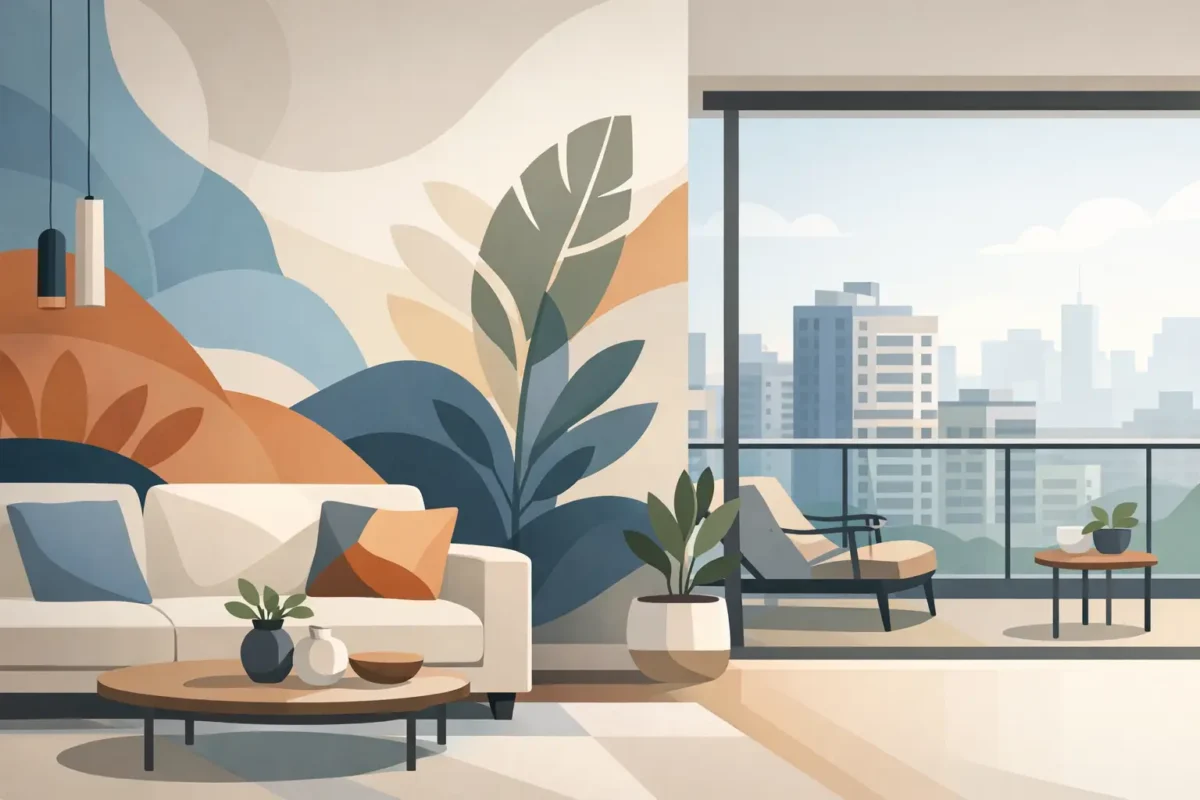
For homeowners, this may mean turning travel photography, commissioned artwork, family concepts, or abstract compositions into made-to-measure wall features. For brands and developers, it may mean creating murals that reflect location, identity, and audience with greater specificity. A boutique hotel may want a design tied to local culture. A corporate office may want artwork that supports company values without feeling literal or dated.
The key difference is that personalization is becoming more refined. Clients do not simply want something different. They want something appropriate – right for the room, right for the brand, and right for the level of finish expected in the space.
That also introduces a trade-off. The more personalized the mural, the more important the proofing process becomes. Originality is valuable, but so is restraint. A highly customized mural should still have enough design discipline to age well over time.
Advances in digital printing are a major driver behind the future of custom wall murals. Higher resolution output, better color consistency, improved substrate compatibility, and cleaner ink technology are making murals more sophisticated and more dependable.
This is where production quality becomes visible. Fine gradients, shadow depth, texture reproduction, and sharp detail can transform a mural from decorative background into a true interior surface feature. In premium spaces, poor print quality is obvious. Banding, dull color, or uneven panel matching quickly undermine the entire room.
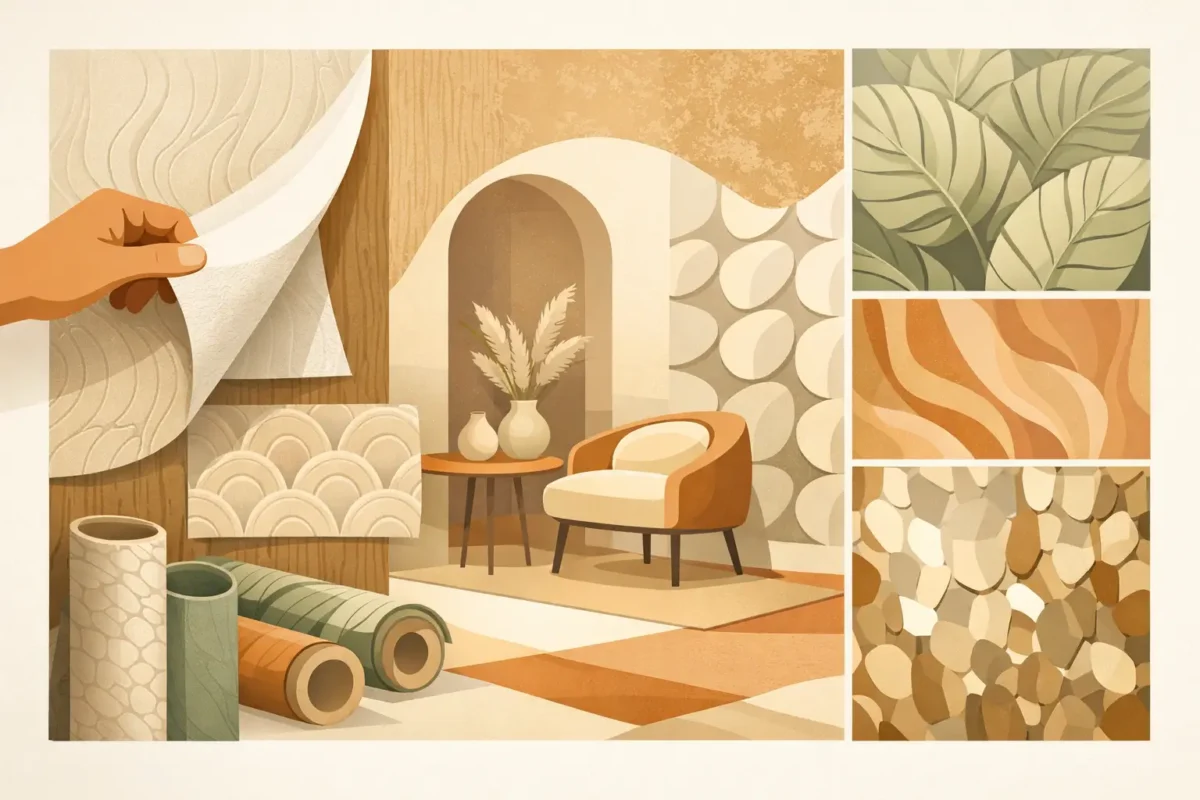
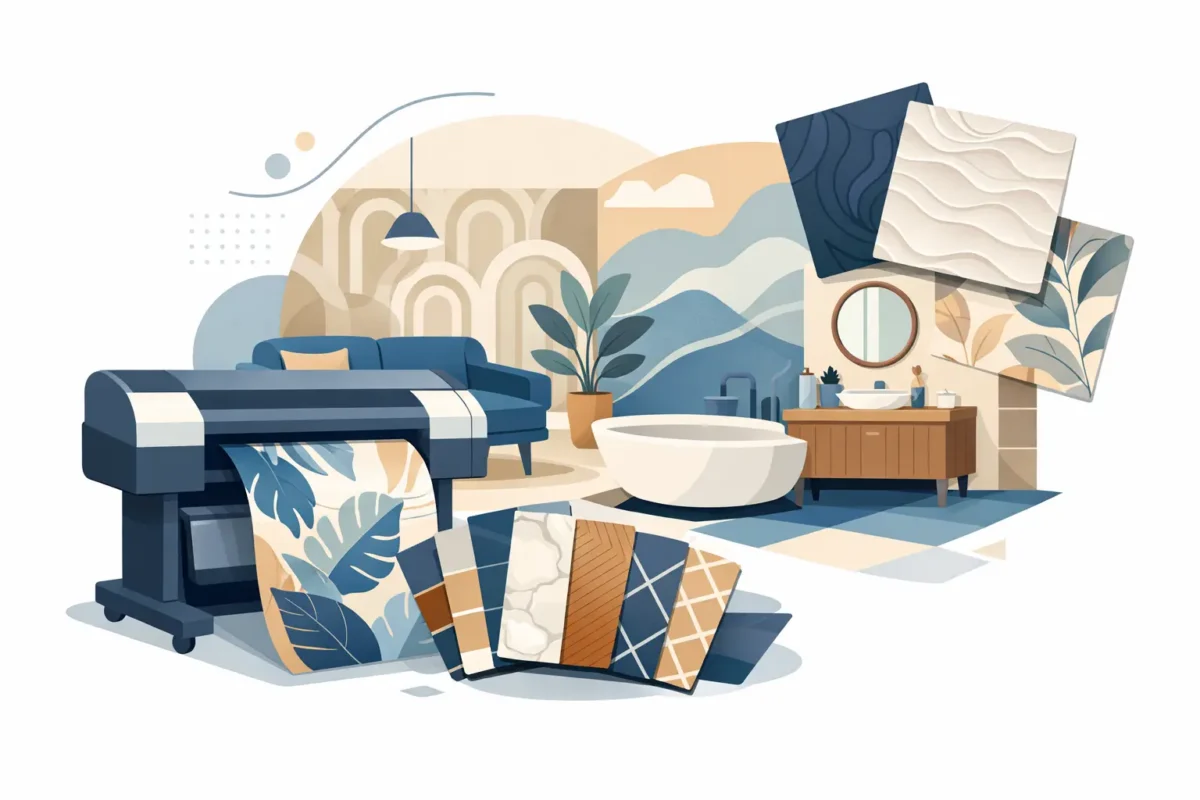
Better printing also expands design freedom. Large-scale botanical scenes, painterly textures, stone-inspired visuals, photographic landscapes, and branded graphics can all be reproduced with stronger accuracy and richer presence. With advanced Canon printing technology and eco-friendly inks, companies like Decorating Depot are positioned for exactly this shift – where design ambition and technical output need to match.
The future is not simply about printing bigger images. It is about printing with the consistency required for luxury residential and project-grade commercial use.
A mural is only as good as the surface it is printed on. This will become even more important as clients grow more informed and projects become more performance-driven.
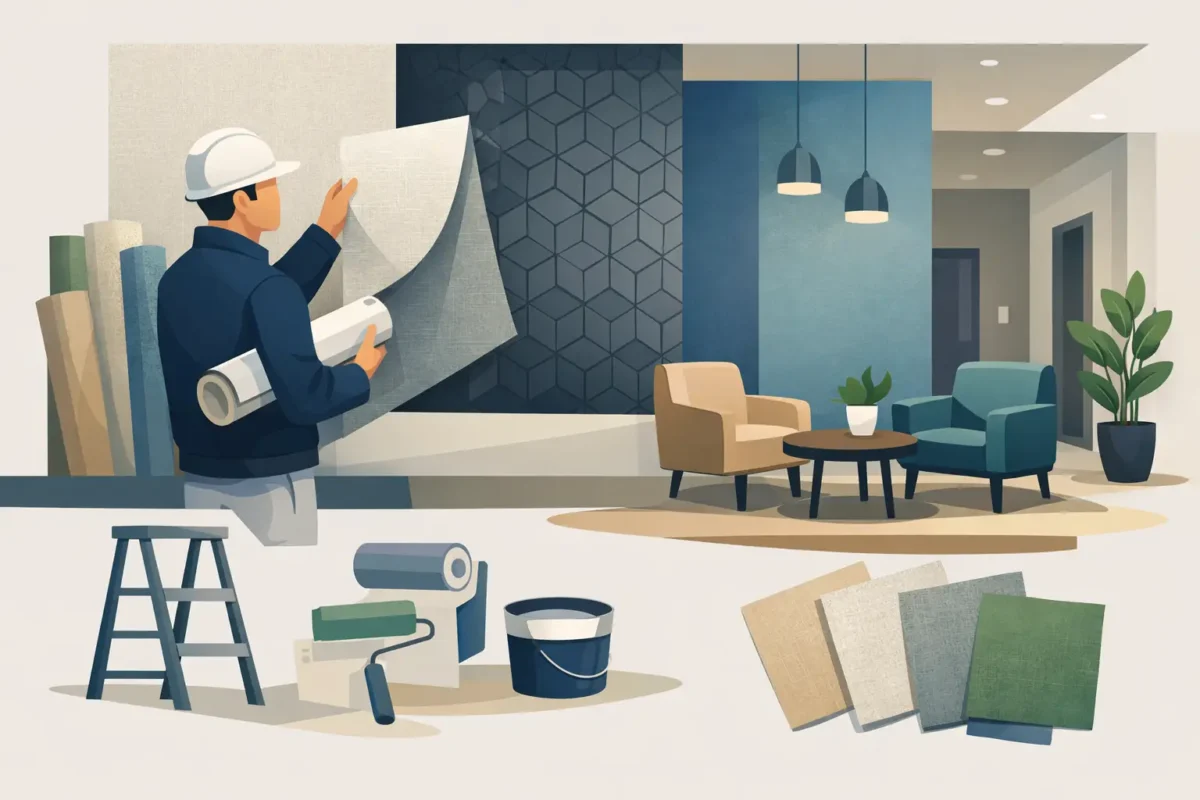
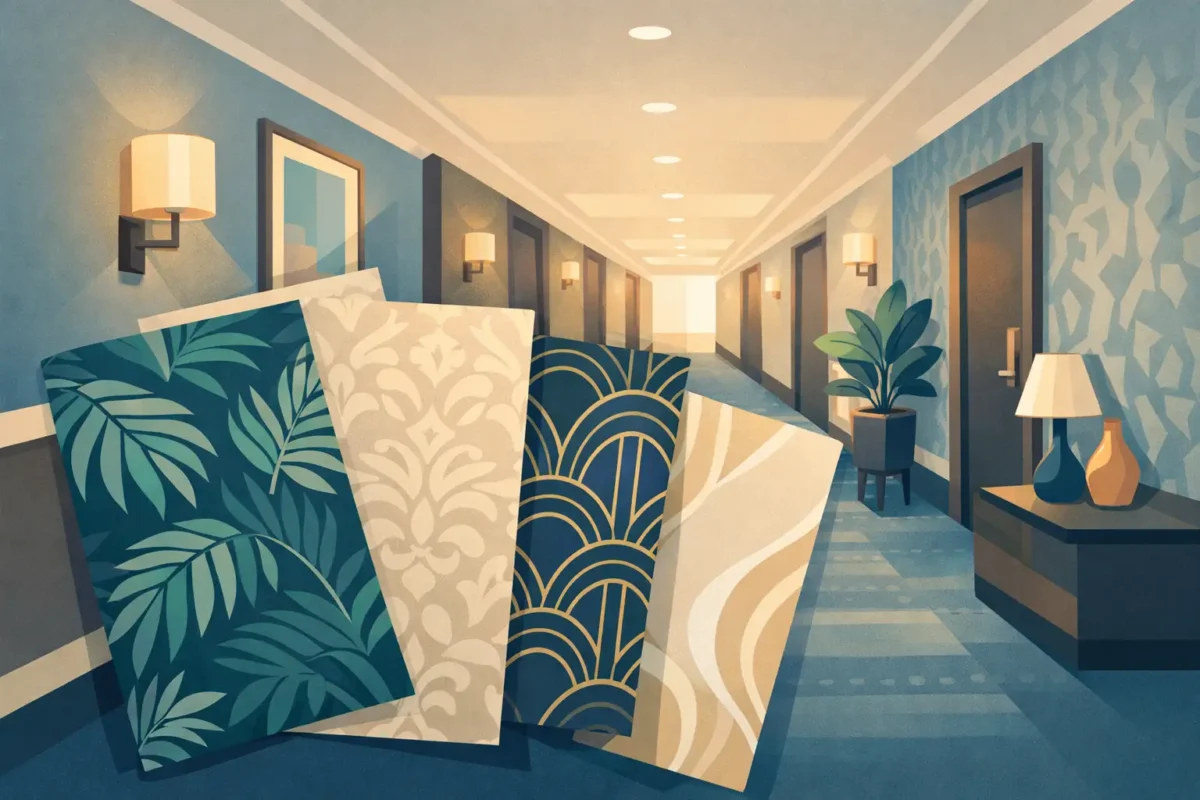
In a home, material choice may be guided by finish, touch, and longevity. In a hotel corridor, clinic, office, or retail setting, the priorities may include abrasion resistance, cleanability, dimensional stability, and fire retardancy. These are not secondary details. They are part of whether the mural remains an asset or becomes a replacement cost.
This is why the future of custom wall murals will favor suppliers who understand wallcoverings as a technical category, not just a visual product. Fabric-backed commercial wallpaper, specialty wallcovering bases, and durable print-ready substrates offer different advantages depending on the project. There is no single best material for every application.
That point is worth emphasizing. A soft, matte finish may look exceptional in a private residence but be less suitable in a high-contact commercial environment. A tougher commercial-grade substrate may be ideal for performance, though it can change the visual character slightly compared with a more delicate decorative finish. Good specification is about balance.
Sustainability is shifting from a nice extra to a core selection factor, especially for developers, hospitality groups, architects, and design firms working under ESG or wellness standards.
In the mural category, this often shows up in practical ways: eco-friendly inks, low-emission materials, durable products that reduce replacement cycles, and installation methods that support healthier interiors. Clients are asking more detailed questions, and rightly so. They want to know not only how a mural looks, but how it was produced and how it will perform over time.
There is also a broader design argument for sustainability. A well-made mural that remains relevant, stable, and easy to maintain has a lower long-term cost than a cheaper decorative solution that needs to be replaced quickly. Premium value increasingly means beauty with endurance.
While residential demand remains strong, commercial and hospitality projects are likely to shape the next phase of innovation. These sectors ask more from wall finishes, which tends to accelerate improvements in materials, compliance, and installation standards.
Hotels want immersive guest experiences. Offices want branded environments without sacrificing professionalism. Retailers want memorable settings that photograph well and wear well. Developers want specification-ready solutions that can be repeated across units or tailored for signature areas. Murals sit at the intersection of all of these needs.
This is where full-service capability matters. Design support, custom production, site measurement, substrate recommendations, and expert installation are often the difference between a mural that looks impressive in a concept presentation and one that performs beautifully after handover.
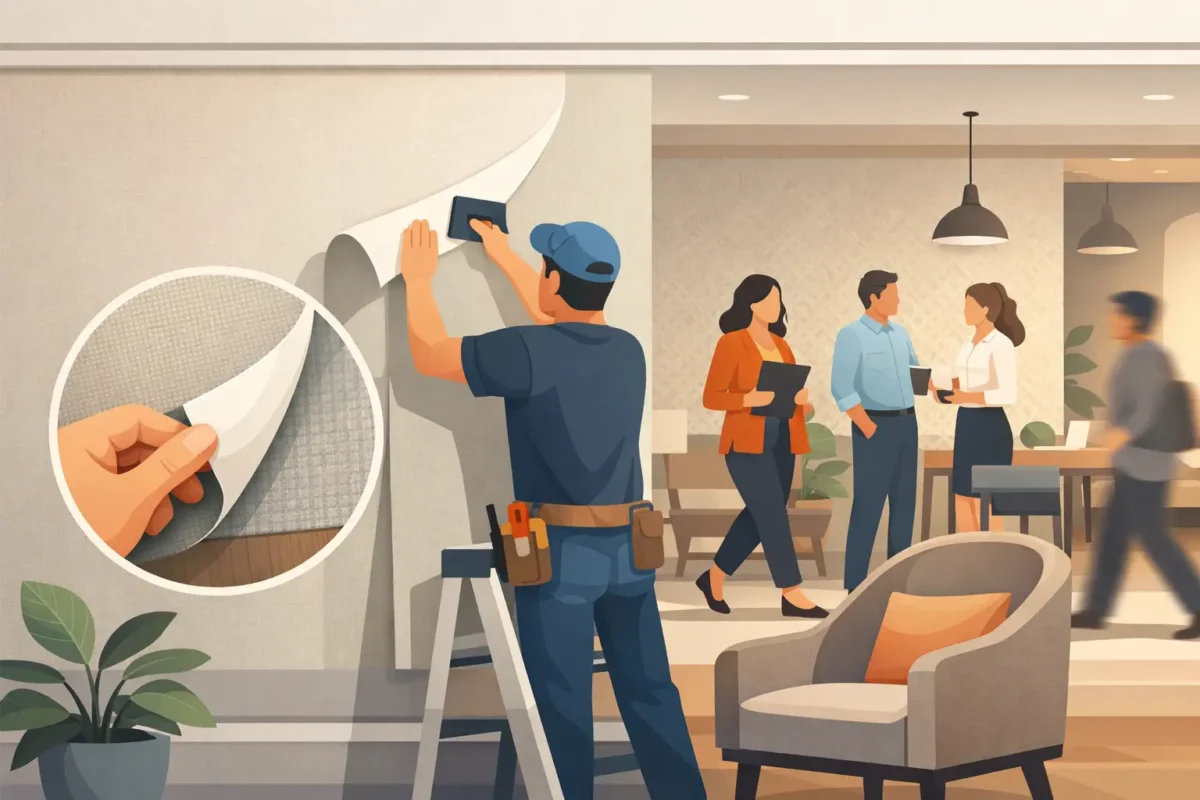
As murals become more sophisticated, installation becomes less forgiving. Large panels, detailed graphics, textured substrates, and site-specific sizing all require accuracy. Even a strong design and excellent print can be compromised by poor alignment, visible seams, bubbling, or inadequate wall preparation.
For clients, this means the future of custom wall murals is not only about what gets printed. It is about who manages the process. Professional installation is part of the finish quality, part of the durability, and part of the overall investment value.
That is particularly relevant for luxury homes and high-visibility commercial spaces, where the wall is expected to feel polished from every angle. Precision is not a premium add-on. It is the standard.
The next few years will make custom wall murals more intelligent, more tailored, and more performance-led. The most successful spaces will use them with intention – not just to fill a wall, but to give the room a stronger identity, a clearer mood, and a finish worthy of the architecture around it.