A wall mural should do more than fill an empty surface. It should establish a mood, reinforce an identity, or give a room the sense that it was designed around the people using it. Knowing how to personalize wall murals starts with a simple shift in thinking: do not choose an image first. Choose the experience you want the space to create.
A misty forest may make a bedroom feel quieter. A hand-drawn city map can give a hotel lobby local character. An abstract composition in a company’s palette can make a reception area feel unmistakably on-brand without turning the wall into an advertisement. The strongest personalized murals bring together visual ambition, correct proportion, suitable materials, and professional installation.
Before selecting colors, patterns, or photographs, define what the wall needs to achieve. A mural behind a dining table is viewed up close and should invite conversation. A feature wall in a double-height lobby is often seen from a distance, so it needs a composition with enough scale and clarity to hold the room.
For residential interiors, personalization may be intimate: a favorite landscape, a custom botanical colorway, a child’s illustrated world, or artwork developed around existing furniture. In commercial interiors, the mural often has a broader role. It can guide visitors through a space, reinforce a brand story, soften a high-traffic environment, or make a hospitality setting more memorable.
Ask three practical questions before developing the design: Who sees this wall? From where will they see it? What should they feel when they do? Those answers determine whether the right direction is expressive, subtle, graphic, calming, or richly layered.
Personalization does not require placing a family photo or a logo across an entire wall. Those choices can work in the right setting, but custom murals are most refined when the personal reference is translated into a considered design.
A homeowner might begin with a travel photograph and have it reworked into a watercolor-style landscape. A restaurant may use regional flora, heritage architecture, or a local street scene as the starting point for a mural that feels rooted in place. For offices, a company’s values can become a visual system through tonal patterns, abstract forms, or carefully integrated brand colors.
There are several reliable starting points for custom mural artwork:
The key is restraint. When every personal detail competes for attention, the wall can feel crowded. One clear idea, developed with confidence, has greater impact than a collection of unrelated references.
A mural is part of the interior, not a separate picture frame. Consider how its imagery interacts with furniture placement, doorways, lighting, and movement through the room. A large flower placed directly behind a headboard may be visually powerful, but it can lose its effect if the focal point is hidden. Likewise, a mural with fine detail may not suit a wall largely covered by shelving or display units.
For smaller rooms, murals with depth, pale horizons, soft gradients, or oversized simplified forms can create a more expansive feeling. For large public spaces, bolder contrasts and clearer graphic elements tend to read better. It depends on the viewing distance, ceiling height, and the amount of natural and artificial light in the space.
The difference between a premium mural and a disappointing one is often not the artwork. It is the scale.
A design should be composed to the exact finished wall dimensions, including any returns, alcoves, columns, windows, or wall-mounted fixtures. Do not assume an image that looks balanced on a screen will look balanced across a 16-foot wall. A custom crop may be needed to keep the subject visible, protect important details, and ensure panel joins fall in less noticeable areas.
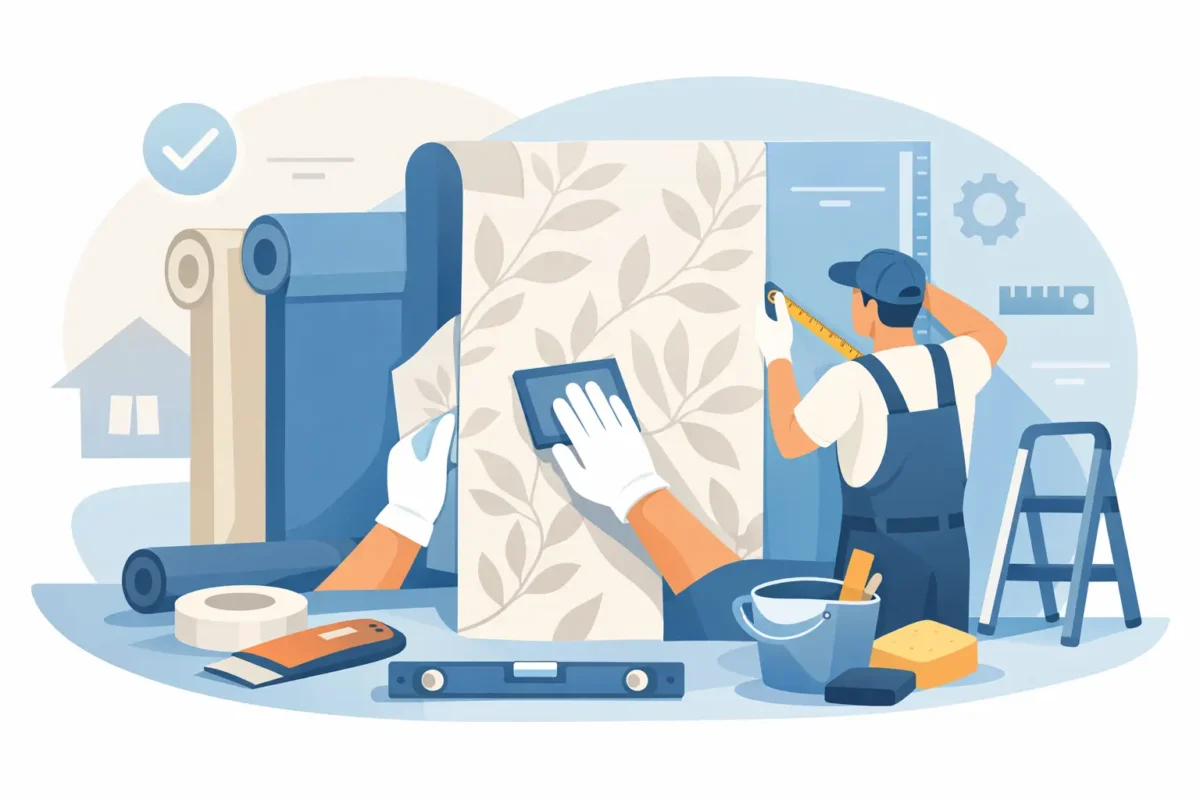
Measure the full wall width and height at several points, especially in older buildings where surfaces are not perfectly square. Include baseboards, cornices, and any areas that will be covered or interrupted. For commercial projects, verify whether the mural must continue around corners, align with adjacent wall finishes, or accommodate signage and electrical points.
Scale also affects mood. Enlarging a delicate leaf sketch can make it feel architectural and contemporary. Reducing a complex cityscape may turn it into visual noise. Review a digital proof at the intended dimensions before printing, ideally with a marked-up elevation that shows furniture and key architectural elements.
A striking wall mural depends on artwork that can hold up at full size. Low-resolution files may appear acceptable on a phone or laptop but become soft, pixelated, or uneven when enlarged for a wall.
The artwork should be evaluated at final print dimensions, not only at its original file size. High-resolution photography, professionally prepared vector artwork, and properly scanned original art offer the best results. If the source image is not large enough, a design team may be able to crop, retouch, rebuild, or reinterpret it, but there are limits. Artificially enlarging a poor image cannot create true detail.
Color management matters just as much. Screens display color with light, while wallpaper is printed with ink on a physical substrate. Request a proof or color reference for projects where brand colors, skin tones, architectural finishes, or precise shades are critical. This is particularly valuable for retail, hospitality, and corporate environments, where consistency supports a polished brand experience.
A personalized mural should be beautiful on day one and appropriate for the conditions it will face over time. Material selection is where design decisions meet performance requirements.
For a private bedroom or low-traffic living area, a refined decorative wallpaper may be the right choice. For corridors, offices, restaurants, healthcare environments, retail settings, and hospitality projects, a more durable commercial-grade wallcovering is often the better investment. Fabric-backed materials offer strength and dimensional stability for demanding interiors, while washable finishes can make routine maintenance easier.
Consider moisture, sunlight, cleaning requirements, traffic levels, and safety specifications before finalizing the substrate. A mural near a pantry, busy reception counter, or children’s activity area has different needs from one in a formal lounge. Where project requirements call for it, fire-retardant properties and low-emission, eco-friendly inks should be part of the specification rather than an afterthought.
Texture can also transform the final effect. A smooth finish gives photography and crisp graphics a clean, contemporary appearance. Subtle textures can add depth to painterly artwork, natural scenes, and layered abstract designs. The best choice depends on the artwork and the desired atmosphere, not simply on what is most familiar.
A mural is never seen in isolation. Daylight can reveal subtle tones, while warm evening lighting can deepen colors and change the mood entirely. If possible, assess samples in the actual room at different times of day.
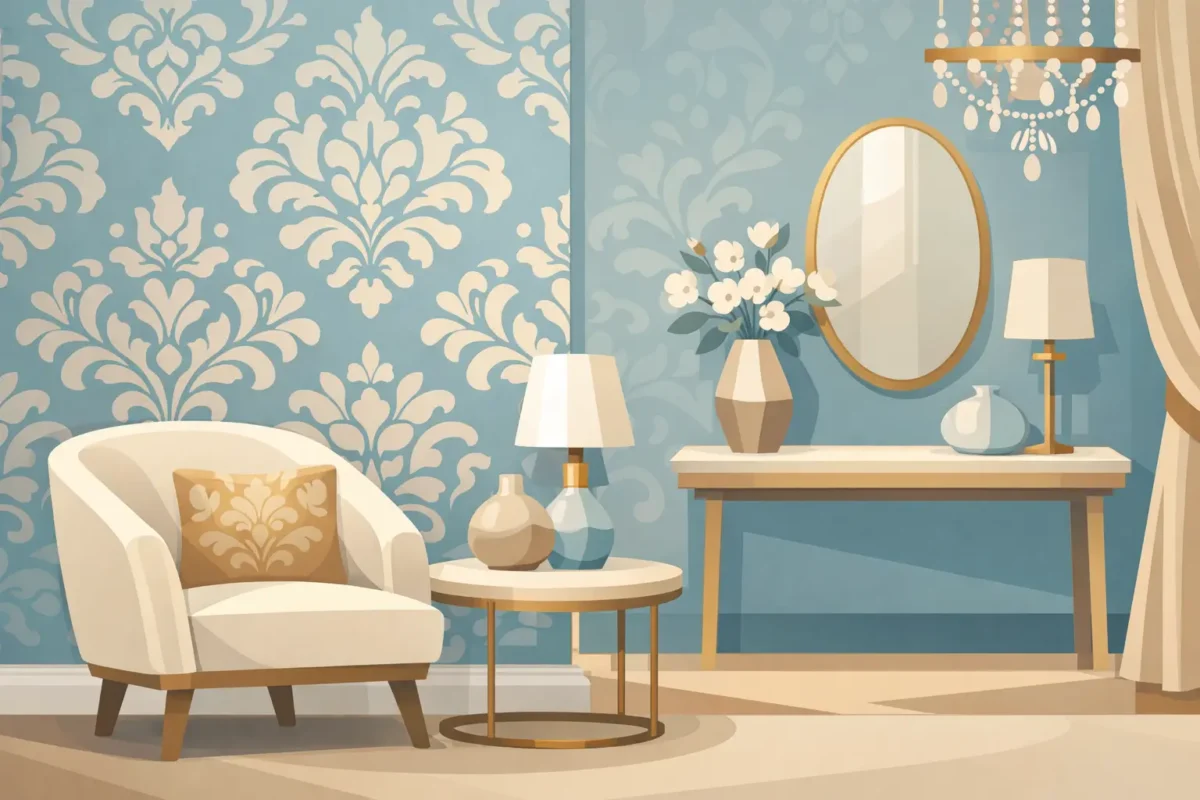
Furniture should feel connected to the mural rather than placed in front of it by accident. Pull one or two colors from the artwork into cushions, upholstery, rugs, or accessories. This creates cohesion without forcing a perfect color match. In commercial settings, coordinate the mural with joinery, wayfinding, display systems, and brand touchpoints so the interior feels intentional from every angle.
Architectural interruptions deserve careful planning. Light switches, air-conditioning grilles, fire equipment, and doors may be unavoidable, but they should not cut through the face in a portrait mural or the central feature of a composition. A professional site review identifies these issues before production, when they are simple to solve.
Even exceptional artwork can lose its impact through poor installation. Panel alignment, pattern matching, surface preparation, adhesive selection, and edge finishing all affect the final result.
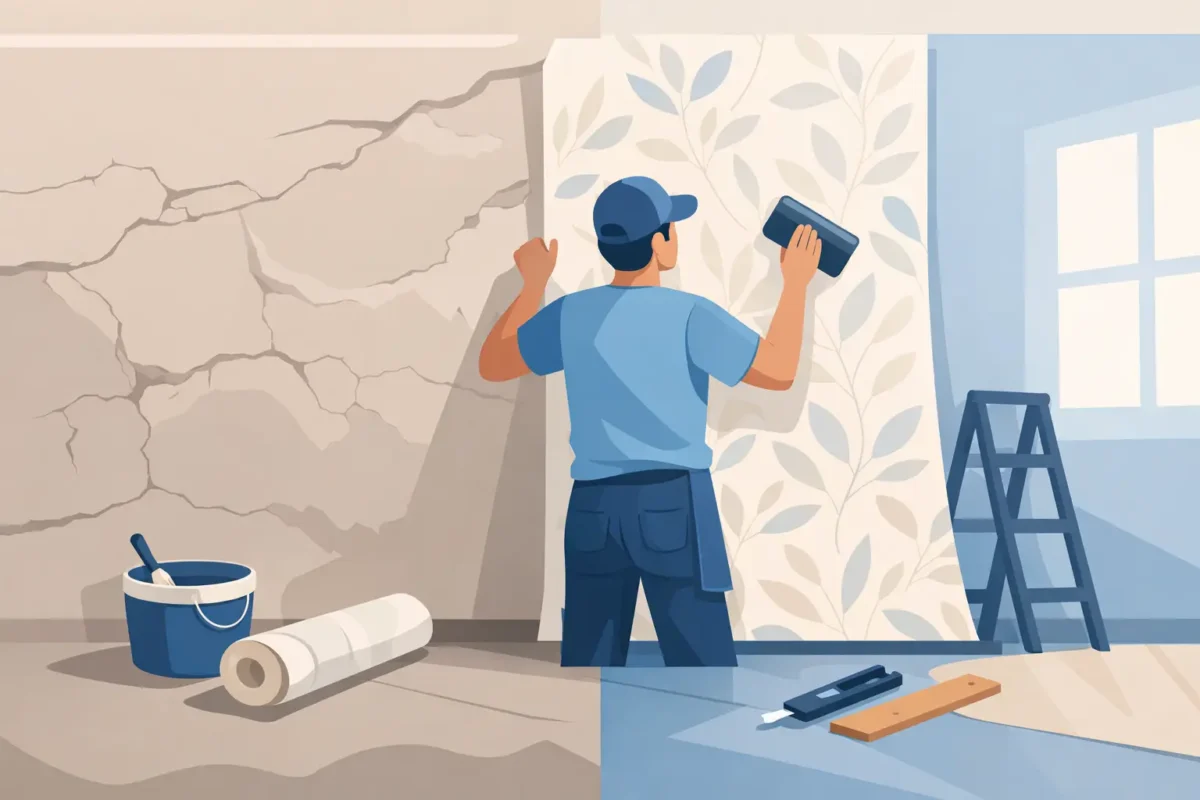
Walls should be dry, smooth, clean, and properly primed before installation. Existing cracks, uneven patches, and moisture concerns should be addressed first. For large murals and project-grade wallcoverings, experienced installers are essential. They understand how to manage panel sequencing, natural material movement, complex corners, and the fine adjustments needed for a flawless finish.
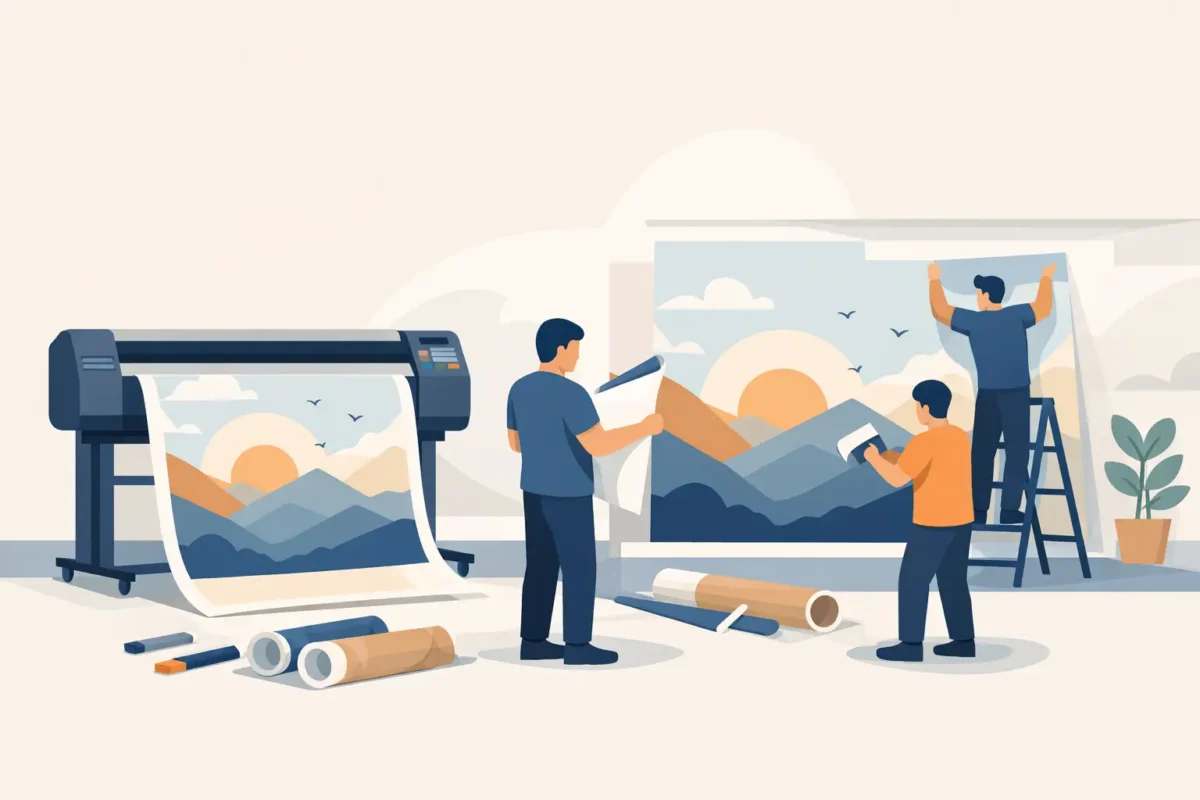
At Decorating Depot, custom mural production is supported by advanced Canon printing technology, material expertise, and professional installation capability. That combination matters when a wall needs to perform as well as it looks, whether it is part of a private residence, a retail rollout, or a hospitality project.
The final styling decision is often the most overlooked: leave the mural enough visual space. A personalized wall does not need to carry every decorative element in the room. Avoid overloading it with competing artwork, busy shelving, or too many small accessories.
Let the mural lead. A thoughtfully personalized design, printed at the correct scale on the right material and installed with precision, can make an ordinary wall feel permanent, distinctive, and entirely connected to the people and purpose behind the space.