A reception wall has only a few seconds to answer a visitor’s unspoken question: who are you, and why should I trust you? Printed wall graphics for brands turn that blank surface into a considered brand experience, carrying your visual identity beyond a logo on the door. With the right material, scale, and installation, they create spaces that look distinctive while standing up to real commercial use.
For offices, retail stores, hotels, restaurants, sales galleries, and customer-facing service spaces, wall graphics do more than decorate. They define arrival points, direct attention, support atmosphere, and make a brand feel established. The strongest results come from treating the wall as part of the interior design system, not as an afterthought added once the fit-out is complete.
Brand recognition is built through repetition, but repetition does not have to mean placing the same logo everywhere. A wall graphic can express a company’s color palette, materials, typography, campaign photography, products, heritage, or point of view at a scale conventional signage cannot match.
In a corporate office, this may mean a feature wall that communicates purpose to employees and visitors. In retail, it may mean a seasonal backdrop that frames merchandise and encourages customers to pause. In hospitality, custom graphics can establish a sense of place from the lobby to guestrooms, corridors, and event spaces. The wall becomes a visual asset that works throughout the day, without demanding more floor area.
This matters especially in spaces with otherwise generic finishes. Painted walls are useful, but they rarely carry enough personality on their own. Printed surfaces introduce depth, texture, artwork, and storytelling while remaining integrated with the larger interior scheme. A considered graphic can make a compact boutique feel more immersive, a reception desk more premium, or a long corridor more intentional.
A beautiful image is not automatically an effective wall graphic. Before selecting colors or patterns, define what the surface needs to do. Is it meant to build trust at reception, create a shareable moment, bring energy to a staff area, explain a service, or give a hospitality space a more memorable identity?
A reception wall generally benefits from restraint. Large-scale artwork, a refined tonal pattern, or an oversized brand motif can create authority without competing with the front desk. Retail walls can be more expressive, particularly where the graphic supports a collection, launch, or photo opportunity. Meeting rooms, meanwhile, often call for visual interest that remains calm enough for focused work and video calls.
The graphic should also match the brand’s level of formality. A luxury property may favor subtle stone textures, abstract linework, botanical silhouettes, or art-led photography. A creative studio may choose bolder typography, illustration, or graphic color blocking. A health and wellness brand might lean toward soft natural imagery and muted palettes. There is no single best direction. The right choice depends on the audience, the room’s purpose, and the surrounding finishes.
Designs are often approved on a laptop screen, then printed across an entire wall. That shift in scale can expose problems quickly. Fine details may become visual noise, small type can be unreadable, and low-resolution images can appear soft or pixelated.
For large murals, use artwork created or supplied at an appropriate resolution for the final print size. Keep key visual elements away from panel joins, door frames, switches, and fixed furniture. If a logo is part of the composition, allow enough clear space around it to preserve impact. Professional artwork review before production is not a luxury step. It prevents expensive corrections after installation.
The design creates the first impression. The wallcovering specification determines how well that impression lasts. Printed wall graphics are available across different substrates, and the best choice depends on traffic, wall condition, cleaning requirements, project standards, and expected lifespan.
For premium commercial interiors, fabric-backed wallcovering is often a strong option. It offers dimensional stability, a refined finish, and better resilience in high-use environments such as offices, hotels, healthcare-adjacent spaces, and retail locations. It is particularly suitable where durability, maintainability, and a polished appearance are central to the brief.
For lower-traffic areas or shorter-term applications, other printed wallpaper materials may offer a more flexible budget. This can be a sensible choice for campaign spaces, model units, pop-ups, or frequently refreshed displays. The trade-off is that a lower-cost material may not deliver the same resistance to wear, scuffing, or repeated cleaning as a project-grade specification.
When reviewing material options, ask about these practical requirements:
These details should be resolved before artwork is finalized. A dark, matte graphic may look exceptional in a controlled showroom setting but show marks more readily near a busy service counter. A heavily textured wall may require preparation before a smooth mural can sit correctly. Good design and correct specification work together.
Brand colors are often tightly controlled, yet color can shift between a digital screen, a proof, and a printed wallcovering. Lighting changes perception as well. Warm decorative lighting can soften a cool gray; daylight can make saturated colors appear brighter; spotlights can reveal texture and panel transitions.
For color-critical projects, request a test print or proof before approving full production. Compare it in the actual environment where possible, not only under showroom lighting. This is particularly valuable when matching corporate identity colors, product finishes, textiles, or established interior standards across multiple sites.
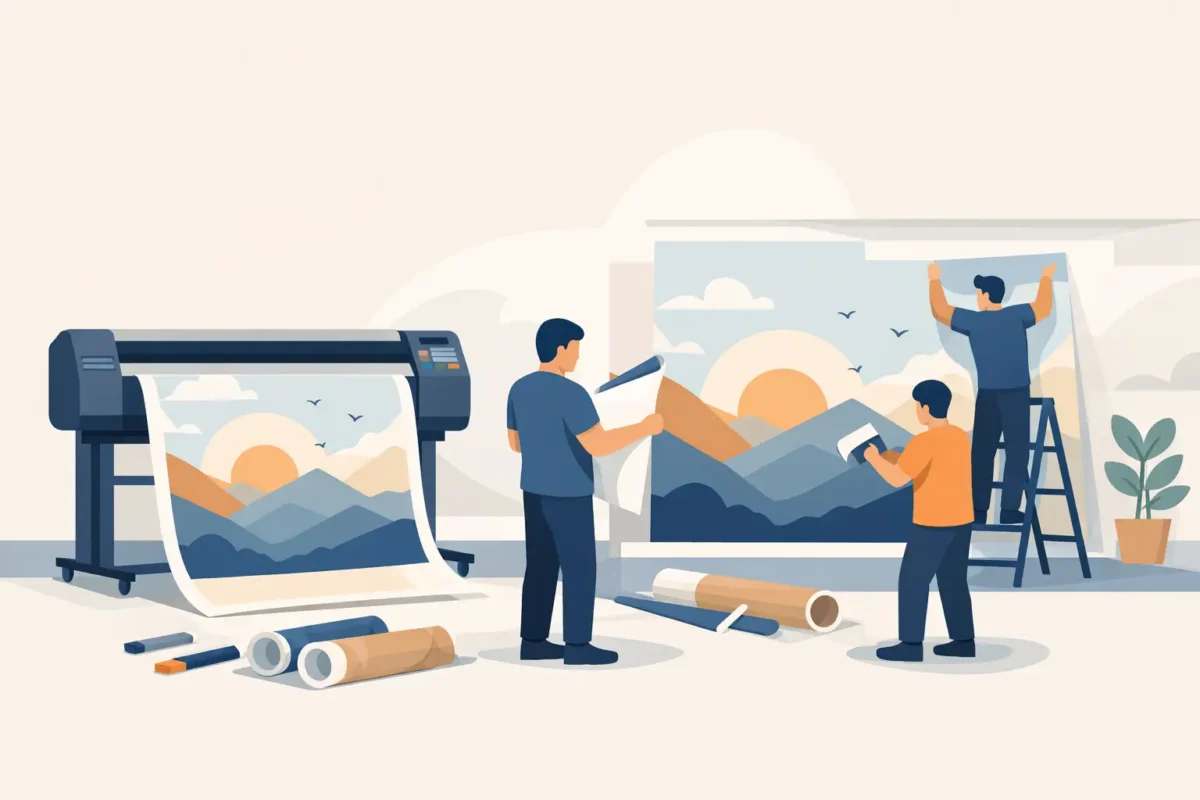
Advanced digital printing allows custom murals to achieve striking detail, from large-format photography to intricate illustrations and layered patterns. Canon printing technology can produce crisp imagery and rich color, but the input artwork and approval process still matter. The best production equipment cannot compensate for an image file that is too small, poorly edited, or unsuitable for wall scale.
A feature wall should not fight with every other surface in the room. Consider it alongside flooring, lighting, upholstery, joinery, signage, and furniture. If the room already contains strong materials such as veined stone, patterned carpet, or decorative timber, the wall graphic may need a quieter visual rhythm. If the space is minimal, the wall can carry more of the personality.
Placement is equally important. Walls behind reception desks, waiting areas, retail cash wraps, elevator lobbies, and dining banquettes offer high visibility. Back-of-house zones can also benefit from branding, especially staff lounges, training rooms, or internal corridors where graphics reinforce culture and connection.
For multi-location brands, a shared visual framework can maintain recognition while allowing each site to respond to its setting. A central color language, type treatment, or signature pattern creates consistency. Local imagery, neighborhood references, or site-specific messages prevent every location from feeling copied and impersonal.
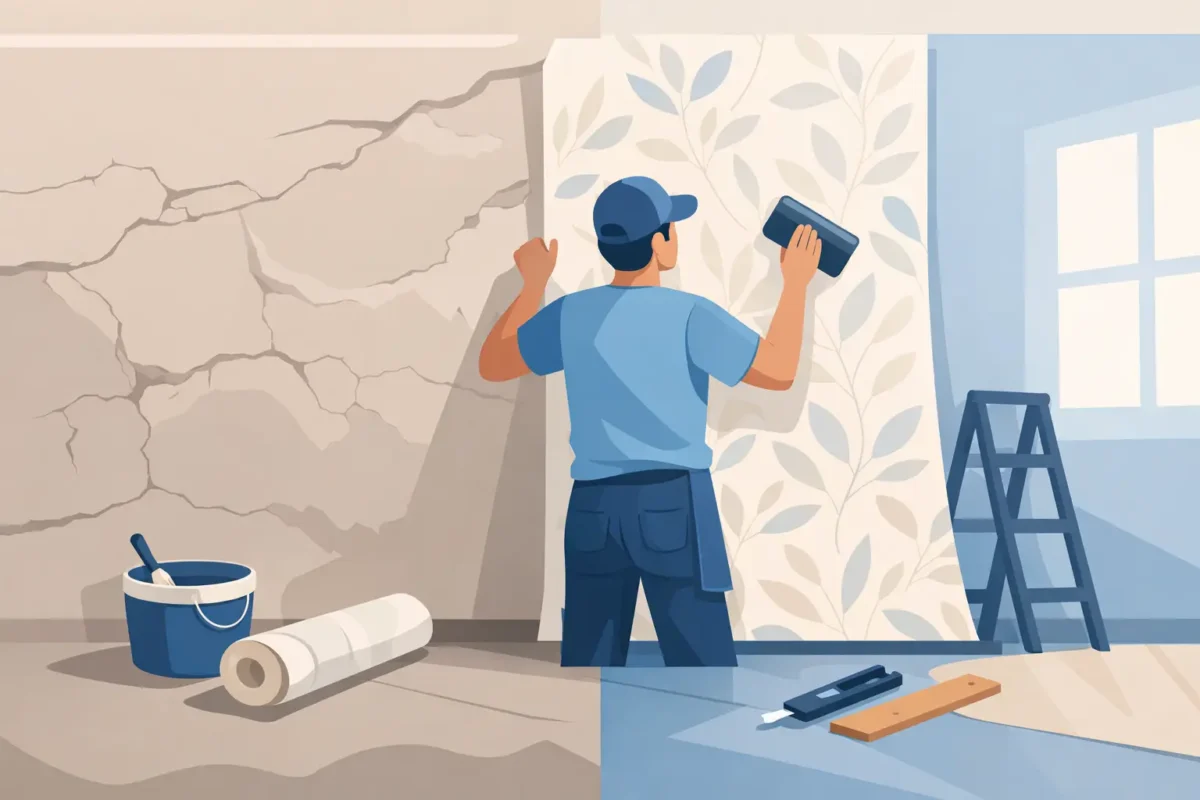
Even excellent artwork can lose impact through poor installation. Misaligned panels, visible seams, trapped air, lifted edges, and poorly prepared walls distract from the design and compromise longevity. Walls should be assessed for moisture, cracks, unevenness, fresh paint curing, and previous finishes before installation begins.
Professional installers understand how to align a large-format composition, manage pattern repeats, trim accurately around architectural details, and work with the selected material. They also recognize when site conditions need attention before wallcovering is applied. This is especially important for hospitality and commercial projects, where opening dates and quality expectations leave little room for rework.
Decorating Depot combines custom print capability, project-grade wallcovering options, design consultation, and professional installation support, helping teams move from an initial concept to a finished wall with greater confidence. For designers and business owners, that coordinated approach reduces the risk of artwork, material, and site decisions being handled in isolation.
Maintenance begins with selecting the right finish, then continues with practical care. Follow the material-specific cleaning guidance rather than using harsh chemicals or abrasive tools. Address spills and marks promptly, especially around food service, retail counters, and high-touch areas. If the space is likely to change frequently, plan the graphics as part of an update cycle instead of expecting one design to serve every campaign indefinitely.
The most successful branded walls do not simply fill an empty area. They give customers a reason to remember the room, give employees a stronger sense of place, and make every square foot work harder for the business. Start with the message your visitors should feel the moment they arrive, then build the graphic, material, and installation plan around that feeling.