A mural can carry a room in a way paint and standard wallpaper rarely can. It can widen a narrow corridor, give a boutique hotel lobby a signature identity, or turn a quiet bedroom wall into the focal point that sets the whole scheme. If you are deciding how to design bespoke murals, the real task is not simply choosing an attractive image. It is translating a space, a purpose, and a surface into one tailored visual statement that performs as well as it looks.
The strongest bespoke murals begin with function. In a residence, the wall may need warmth, softness, and a sense of scale that feels personal rather than dramatic. In a retail or hospitality setting, the wall may need to support branding, direct movement, or create a memorable first impression without overwhelming the space.
That is where many mural concepts go off track. A beautiful design can still feel wrong if it ignores viewing distance, lighting, furniture placement, or traffic flow. A mural behind a bed reads differently from one in a reception area. A restaurant feature wall has different demands than a boardroom backdrop. Good design starts by asking what the wall is supposed to do, then building the artwork around that answer.
A mural should feel integrated, not applied as an afterthought. Before selecting imagery, study the room as a complete composition. Ceiling height, wall width, natural light, floor finish, upholstery, and even the direction people enter the space all affect how the mural will read.
Large walls usually benefit from a design with rhythm and breathing room. Small walls can take more detail, but only if the scale is controlled. If every inch is visually active, the room can feel compressed. If the artwork is too sparse, the wall can look unfinished. The right balance depends on proportion.
Color also needs discipline. Pulling tones from existing finishes creates continuity, while one accent tone can sharpen the focal point. In premium interiors, restraint often has more impact than excess. A bespoke mural does not need to shout to be memorable.
The mural should speak the same design language as the rest of the space. A minimalist interior may suit tonal landscapes, abstract gradients, architectural linework, or oversized organic forms. A classic scheme may call for botanical studies, scenic compositions, or textured effects with softer contrast. Commercial environments often benefit from clearer graphic intent, especially when the mural supports brand identity.
This is also where customization matters. Stock imagery can be visually appealing, but it often lacks the proportion, palette, and specificity a high-end project requires. Bespoke design allows the mural to align with the room instead of forcing the room to adapt to a fixed print.
Every mural needs a visual anchor. That might be a horizon line, a central motif, a repeating form, or a controlled area of contrast. Without it, the wall can feel decorative but unfocused.
The focal point should sit where the eye naturally lands. In a living room, that may be behind the sofa. In a hotel suite, it is often behind the headboard. In an office, it may sit within the camera frame for meetings or reinforce the main arrival view. Furniture placement matters here. If cabinetry, shelves, or signage will cover key parts of the wall, the composition should be designed around those interruptions from the beginning.
One of the least glamorous parts of mural design is also one of the most important: file quality. Bespoke murals are printed large, and large-format printing exposes weaknesses quickly. An image that looks sharp on a laptop can fail across a full wall if the resolution is not suitable.
Scale should also be tested before production. A leaf pattern that feels refined on screen may become oversized and heavy once printed floor to ceiling. A cityscape with fine details may look impressive up close but turn visually muddy from a distance. Mockups are essential because they show how the design behaves at actual size, not just how it looks in isolation.
For project-grade interiors, print technology matters as much as design intent. Clean color reproduction, stable detail, and material compatibility all affect the finish. That is why bespoke mural work benefits from a supplier who can manage design, production, sizing, and installation as one coordinated process rather than as separate decisions.
When clients think about murals, they often focus first on the graphic. Professionals know the substrate is just as critical. The same artwork will behave differently depending on the wallcovering material, texture, and intended environment.
In homes, the priority may be surface elegance, clean print detail, and easy maintenance. In offices, retail stores, hotels, and public areas, durability becomes non-negotiable. Scrub resistance, dimensional stability, fire-rated performance, and long-term appearance under heavy use all influence the right specification.
A smooth finish tends to deliver crisp imagery and contemporary clarity. A textured surface can add depth and soften glare, but it may slightly alter the sharpness of fine details. Fabric-backed commercial wallcoverings are often the better choice for demanding settings because they combine visual impact with engineered performance. Eco-friendly ink systems also matter, especially in occupied interiors where environmental and health considerations are part of the brief.
The best murals respect the architecture instead of fighting it. Doors, niches, columns, switch plates, glazing, and bulkheads all affect layout. If these elements are ignored, even a strong design can feel awkward once installed.
This is why site measurement and panel planning are so important. The artwork may need to shift slightly so that a key motif does not land on a seam or disappear behind a fixed element. In some projects, symmetry is the priority. In others, a more natural flow matters more than exact centering. It depends on the design and the room.
For large-scale projects, especially in hospitality and commercial spaces, repeatability also becomes part of the design conversation. A bespoke mural may need to maintain a consistent identity across multiple rooms while adapting dimensions from one wall to another. That takes technical control, not just design taste.
Residential murals usually work best when they add atmosphere and identity without making the room feel temporary. Bedrooms benefit from calming depth, soft landscape forms, or abstract compositions with controlled contrast. Living spaces can carry bolder statement walls, though they still need enough flexibility to live with changing furnishings over time.
In commercial settings, clarity tends to outperform complexity. A reception wall should feel immediate. A retail mural should support product presentation, not compete with it. In hospitality, the mural often helps define guest experience, so material quality, maintenance, and installation precision are part of the design standard from the start.
There is also a difference between trend-led and project-led design. Trend-driven murals can deliver quick visual appeal, but they may date faster. Project-led murals are built around the brand, architecture, and user experience of a specific space. They usually have longer design life and stronger value over time.
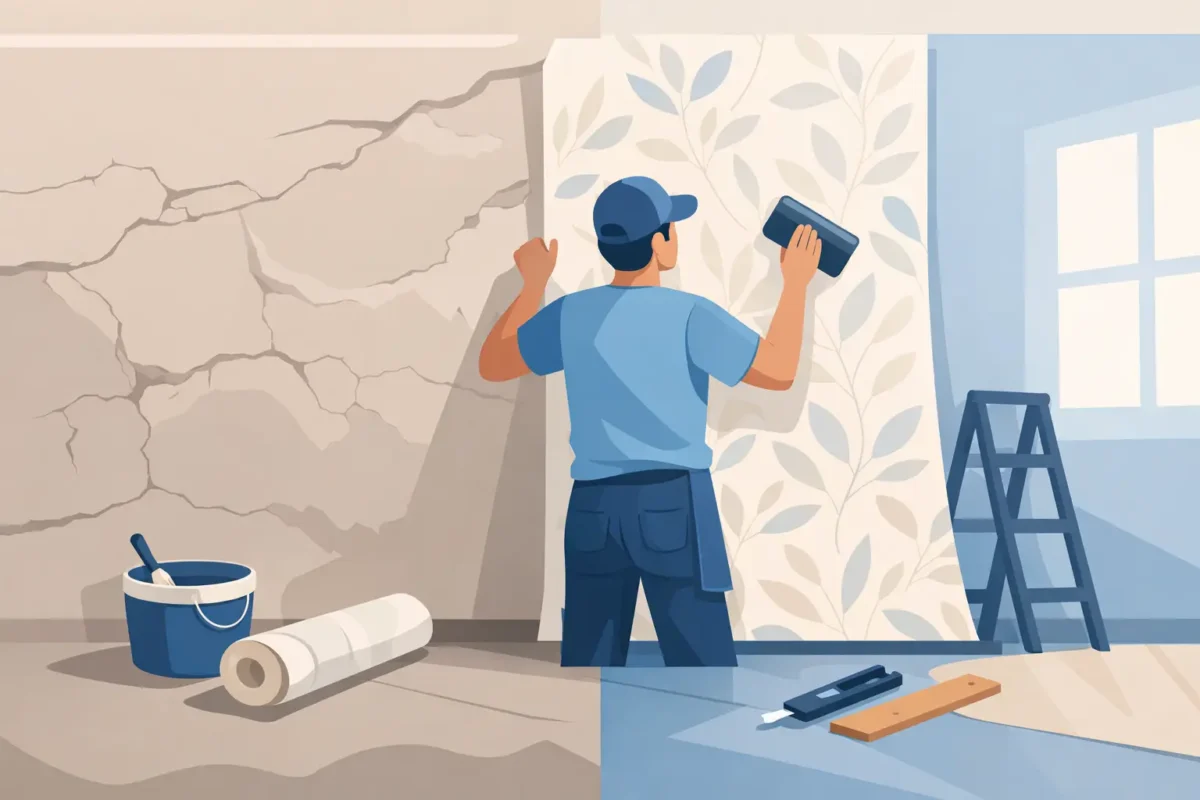
Even the best mural design can be undermined by poor installation. Misaligned panels, bubbling, visible seams, and badly prepared walls reduce the impact immediately. Bespoke murals are precision products, so the installation standard needs to match.
Wall condition is a major factor. Uneven surfaces, moisture issues, and unstable paint layers can all compromise the result. Professional preparation ensures the print adheres properly and the finish reads as intended. This matters even more with dark grounds, detailed imagery, or luxury interiors where flaws are harder to hide.
At Decorating Depot, this full-picture approach matters because mural design is not treated as a print order alone. It is considered as part of a complete wall finish solution, from concept and material selection to production accuracy and flawless installation.
One of the smartest design decisions is knowing when to edit. Bespoke does not mean adding more layers, more motifs, or more color. Often the most premium result comes from a clear concept executed with discipline.
If the room already has strong finishes, patterned upholstery, feature lighting, or architectural detailing, the mural may need to play a quieter role. If the interior is intentionally restrained, the mural can carry more visual weight. The answer is rarely absolute. It depends on what else is competing for attention.
A bespoke mural should feel intentional at first glance and more rewarding the longer you live with it. That comes from proportion, material intelligence, and a design brief rooted in the real demands of the space. When those pieces align, the wall stops being background and starts becoming part of the architecture itself.
The best place to begin is simple: stand in front of the wall, look at how the room actually works, and design for that reality rather than for the sample image alone.