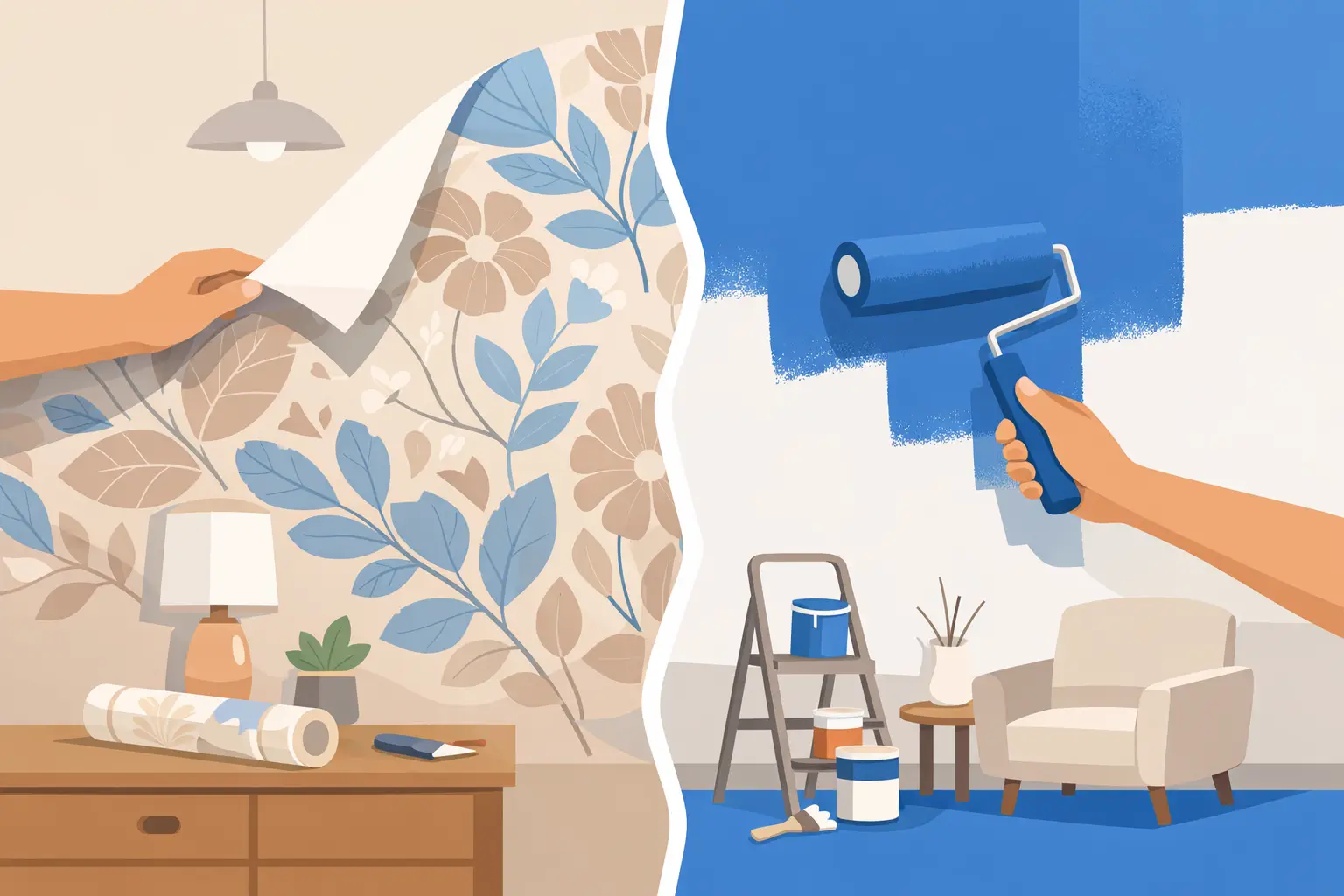
A flat white wall can make a room feel safe. It rarely makes it memorable. That is where the wallpaper versus wall paint decision becomes more than a finish choice – it becomes a design strategy.
For homeowners, designers, and commercial project teams, the right wall surface has to do more than look attractive on day one. It needs to support the mood of the space, hold up under real use, and align with the level of finish the project demands. Paint and wallpaper can both deliver strong results, but they solve different problems and create very different experiences.
Paint is the simpler finish on the surface. It gives walls color, can be refreshed fairly quickly, and works well when the design brief calls for a clean, understated backdrop. In residential settings, that might mean a calm bedroom or a bright living area. In commercial interiors, paint is often chosen for utility, speed, or budget control.
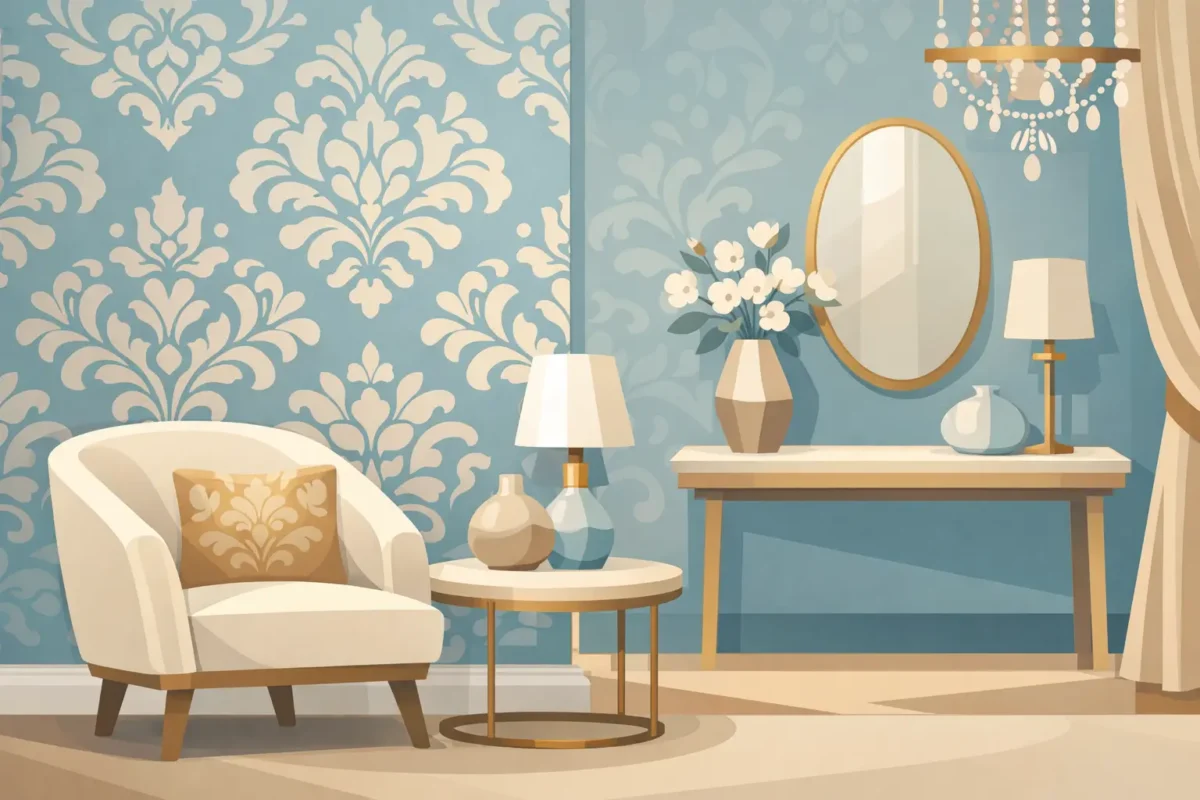
Wallpaper adds another layer entirely. It introduces pattern, texture, scale, depth, and material character in a way paint cannot easily match. Even when the design is subtle, wallpaper tends to create a more intentional and elevated visual result. In hospitality, retail, feature residential spaces, and branded environments, that distinction matters.
The question is not which option is universally better. It is which one fits the space, the usage, and the visual ambition of the project.
Paint remains a practical solution for many interiors. If you want a quick refresh, a straightforward application process, or easy color changes over time, paint offers flexibility. It suits spaces where frequent updates are expected, such as rental units, children’s rooms, or properties staged for sale.
It also performs well in minimalist schemes where the wall is meant to recede rather than stand out. A carefully selected paint color can still feel refined, especially when paired with strong lighting, quality millwork, or layered furnishings.
That said, paint has limits. Surface imperfections often show through unless the wall preparation is excellent. Scuffs, chips, and uneven touch-ups can become visible quickly in high-traffic areas. Dark colors and matte finishes, while visually rich, can be more demanding to maintain.
For large commercial spaces, paint may seem cost-effective at the start, but repeated maintenance cycles can add up. Corridors, lobbies, offices, and customer-facing environments often need a finish that stays polished with less frequent intervention.
Wallpaper is at its best when walls are expected to contribute to the identity of the space. A textured neutral can make a room feel more layered and complete. A mural can establish a focal point with architectural presence. A commercial-grade wallcovering can deliver a refined appearance while standing up to daily wear.
This is why wallpaper is often chosen for statement walls, boutique retail, hospitality interiors, executive spaces, show units, and luxury residences. It allows designers to move beyond color and work with scale, tactility, pattern rhythm, and custom imagery.
Performance is another reason wallpaper often wins. High-quality wallcoverings, especially fabric-backed and project-grade options, are engineered for durability. Many are designed for easier cleaning, improved resistance to scratches and impact, and better long-term appearance in busy interiors. Depending on the specification, they may also support fire safety requirements and commercial compliance standards.
For clients who want a distinctive finish without compromising practicality, wallpaper offers a broader design and technical range than many people expect.
This is where the comparison becomes less theoretical. In a hallway, reception area, hotel corridor, café, clinic, or office, walls take abuse. Bags brush against them. Furniture bumps them. Hands leave marks. Cleaning happens often.
Paint can handle some of this, but repeated touch-ups tend to create inconsistency. One section may look slightly fresher than the next. Over time, the wall starts to show its history.
A durable commercial wallcovering is often better suited to these environments. It helps maintain a consistent finish across large areas and can be easier to wipe clean without compromising the surface. In projects where appearance standards matter every day, not just after handover, that reliability has real value.
The same logic applies in family homes with active common areas. Entryways, stairwells, dining rooms, and media rooms benefit from finishes that do not immediately show wear.
If the goal is a quiet canvas, paint does the job well. It can frame furniture, artwork, and architectural details without competing for attention. That restraint can be exactly right in contemporary interiors where simplicity is part of the appeal.
Wallpaper, however, gives designers more to work with. Linen textures, metallic accents, embossed surfaces, botanical prints, geometric repeats, stone effects, and bespoke murals can all shift the atmosphere of a room. The wall stops being background and starts becoming part of the design language.
This matters in spaces that need personality or brand presence. A hospitality lounge should not feel interchangeable. A feature wall in a luxury home should not look generic. A retail store should reflect the character of the brand before a customer touches a product. Wallpaper creates that level of visual distinction faster and more convincingly than paint alone.
Custom capability expands the opportunity further. For projects that require specific dimensions, branding, artwork integration, or one-of-a-kind concept development, custom print wallpaper offers a level of control paint simply does not provide.
Paint often appears less expensive upfront, and in many cases it is. Material and labor costs are generally lower for a standard paint application than for premium wallpaper installation.
But first cost is only one part of the equation. A better question is how the wall finish performs over time. If painted walls need frequent patching, repainting, or ongoing correction to stay presentable, the savings can narrow. In commercial and hospitality settings, maintenance disruption also has a cost.
Wallpaper usually requires a higher initial investment, especially when the project calls for premium materials, custom production, or professional installation. In return, it can deliver longer visual life, stronger impact, and reduced repaint cycles. For many high-value interiors, that trade-off makes commercial sense.
The most accurate budgeting conversation considers lifecycle value, not just installation day pricing.
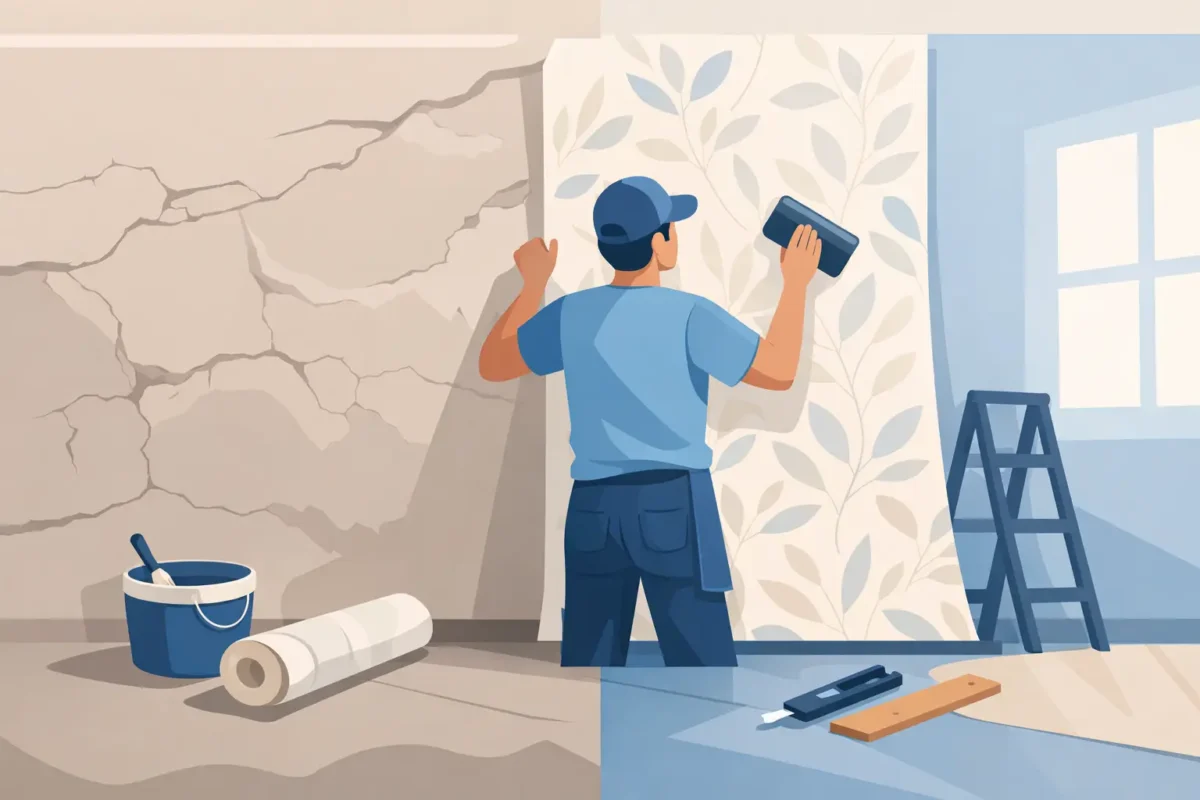
Both paint and wallpaper depend on preparation, but wallpaper is less forgiving of poor workmanship. Surface condition, wall alignment, adhesive selection, pattern matching, and finishing details all affect the final result.
That is why product quality and installation quality need to be treated as a package. A premium wallcovering installed poorly will never perform the way it should. By contrast, a professionally specified and installed system creates the polished result clients expect from an upscale interior.
For large-scale or design-sensitive work, expert consultation matters early. It helps determine whether the project needs washable finishes, fire-retardant performance, custom sizing, textured effects, or specific durability standards. This is where a specialist showroom approach has an advantage, because product selection is guided by both aesthetics and application demands.
If the space needs a quick color refresh, a modest budget solution, or a finish that can be changed often, paint is a sensible choice. It is practical, familiar, and effective when simplicity is the priority.
If the space needs character, texture, durability, branding, or a stronger sense of completion, wallpaper is often the better investment. It transforms plain walls into finished surfaces with intention. That is especially true in premium homes, hospitality venues, retail concepts, offices, and developer projects where presentation and performance carry equal weight.
In many well-designed interiors, the smartest answer is not strictly one or the other. Paint can handle broad background areas, while wallpaper defines focal zones, reception walls, dining spaces, bedrooms, or signature commercial moments. Used strategically, the two finishes complement each other.
At Decorating Depot, that balance is often where the best projects begin – with a clear understanding that walls are not just there to be covered. They are there to shape how a space feels, performs, and is remembered.
Choose the finish that matches the level of experience you want the room to deliver, not just the one that fills the wall the fastest.