A wall finish should do more than fill an empty surface. It should establish atmosphere, support the architecture, and continue to perform long after the project handover. This European designer wallpaper review looks at what distinguishes these collections from standard decorative wallpaper, where their premium value is most visible, and what to assess before selecting a design for a home, hotel, retail space, or workplace.
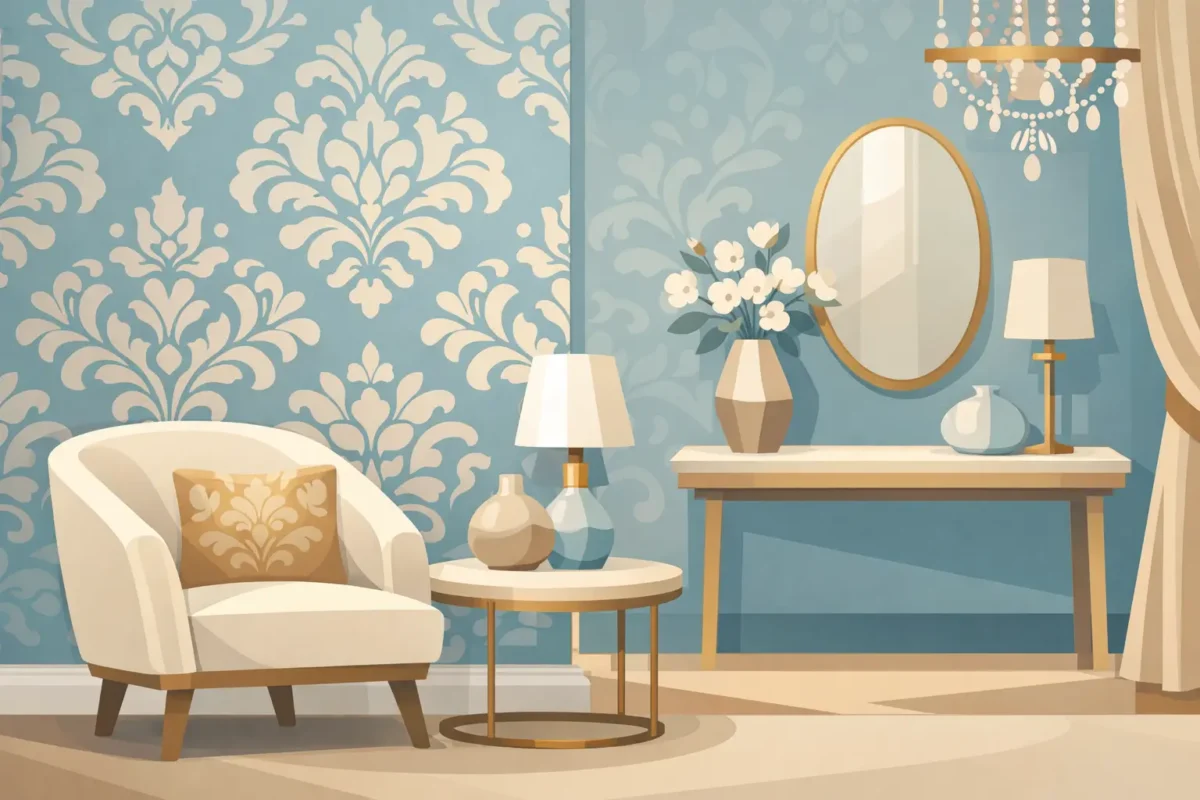
European wallpaper is not one single look. Its strength is range with discipline: richly layered botanicals, tailored geometrics, textured plains, heritage-inspired damasks, contemporary murals, and understated patterns designed to read beautifully from both near and far. The best collections bring visual depth without sacrificing the technical considerations that matter in real interiors.
The term is often used broadly, but a true designer collection is usually recognizable through its design development, material finish, and print precision. Rather than relying on a simple repeat or a flat surface, it may use layered inks, embossing, metallic details, woven effects, matte-and-shine contrast, or carefully controlled color variation. These qualities create a wall with presence, not just pattern.
European design houses are particularly respected for proportion. A large-scale floral can feel expressive without becoming overwhelming. A geometric can introduce rhythm while still allowing furniture, art, and lighting to breathe. This is a major advantage for projects where the wallcovering must feel distinctive yet remain relevant for years.
Color is another defining factor. Many collections move beyond basic neutrals or saturated statement shades into more nuanced palettes: softened mineral tones, smoked blues, warm clay, muted olive, deep ink, and layered off-whites. These tones work especially well in interiors that use natural stone, timber, metal, upholstery, and custom millwork.
The most persuasive feature of European designer wallpaper is its ability to create dimension. A well-made textured vinyl can suggest linen, plaster, silk, grasscloth, or fine weaving while offering more practical maintenance than many natural materials. Embossed surfaces can bring shadow and tactile interest to a lobby wall, powder room, bedroom, or executive office without requiring additional decorative layers.
Print quality also matters more than it may seem in a sample book. Crisp linework keeps detailed motifs refined. Controlled registration prevents a pattern from appearing blurred or poorly aligned. Rich ink density gives dark colors depth, while subtle tonal shifts help organic designs avoid looking repetitive across a larger wall.
That said, luxury is not always about the most elaborate pattern. A high-quality plain or semi-plain wallcovering can be the smarter choice when a space already includes feature flooring, sculptural lighting, or bold upholstery. In these settings, texture may provide the finish and warmth needed without creating visual competition.
Material selection should match the setting. Paper-based finishes can offer a beautiful, artisanal appearance in low-traffic residential rooms. Vinyl and fabric-backed commercial wallcoverings are often better suited to corridors, hospitality spaces, offices, clinics, retail environments, and family areas where cleanability and impact resistance matter. The pattern may be the first consideration, but the substrate determines how confidently the wallcovering performs.
Premium collections generally show their value in four areas: surface character, color consistency, scale, and specification support. The surface feels intentional rather than generic. Colors are developed to work as a complete collection, allowing coordinating walls and adjacent finishes. Pattern scale is carefully considered for architectural spaces. And, for project applications, technical documentation can guide decisions around maintenance, fire performance, and installation requirements.
For designers and developers, this reduces risk. A wallcovering that looks compelling in a small sample but fails under hotel lighting, in a high-traffic corridor, or across a long uninterrupted wall is not a successful specification. The right collection balances visual impact with dependable project performance.
European wallpaper works particularly well where a room needs an immediate sense of identity. In a residence, that may be a dramatic entry, a refined dining room, a restful primary suite, or a powder room with a more expressive point of view. In commercial settings, it may be a reception wall, private meeting room, boutique fitting area, restaurant banquette, or hotel guest-room headboard wall.
A feature wall is often the natural starting point, but it is not the only option. Small-scale geometrics and textured solids can cover all four walls elegantly, particularly in rooms with balanced daylight and carefully selected furnishings. Larger motifs usually need more space and should be reviewed against the room’s sightlines, ceiling height, window placement, and joinery.
For hospitality and branded environments, wallpaper can also act as a storytelling device. A mural-inspired botanical, a tailored Art Deco motif, or a modern abstract can reinforce the intended guest experience more effectively than paint alone. When the design must include a logo, a custom color, or an exact wall dimension, bespoke digital printing may offer greater control than a ready-made pattern.
No wallpaper category is perfect for every project. European designer wallpaper is a premium finish, so budget must account for more than the roll price. Wall preparation, waste allowance, pattern matching, adhesive selection, and professional installation all influence the final cost. A complex repeat may require additional material, while a mural panel demands accurate measurement and careful sequencing.
Lead time can also vary by collection and availability. For projects operating on a tight construction schedule, confirm the required quantity, batch consistency, and delivery window before finalizing the design. Ordering extra material from the same production batch is sensible for future repairs, especially in commercial spaces.
Maintenance needs deserve equal attention. Some delicate surfaces are best reserved for low-contact areas. Washable vinyl is more forgiving in dining areas, children’s rooms, public corridors, and spaces where frequent cleaning is expected. If fire-retardant performance, low-VOC considerations, or other project standards apply, those requirements should be confirmed at the beginning, not after the design has been selected.
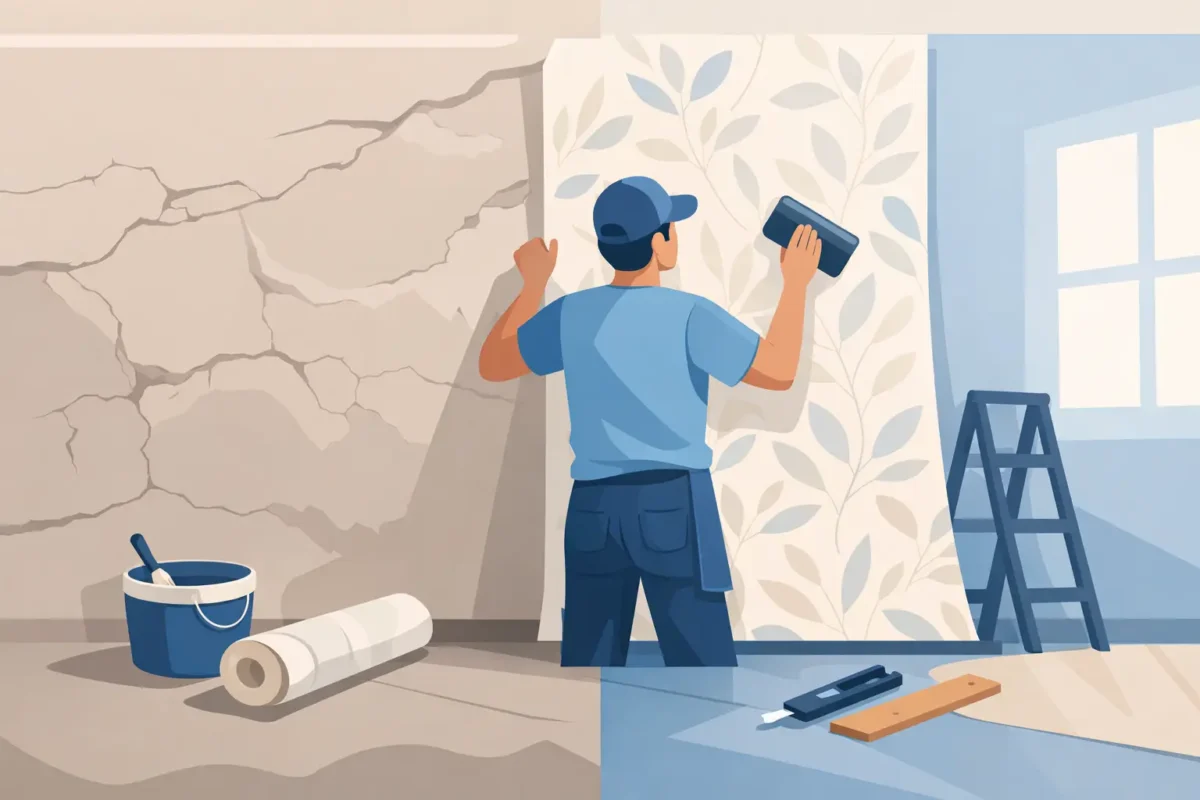
Even exceptional wallpaper can look disappointing when the wall is poorly prepared or the installer lacks experience with patterned materials. Surface irregularities, moisture issues, incorrect adhesive, uneven seams, and misaligned repeats are visible immediately in a premium finish.
Professional installation is especially valuable for large patterns, textured materials, dark grounds, metallic details, and fabric-backed wallcoverings. An experienced installer will assess the substrate, plan the layout around focal points, manage pattern matching, and determine where seams should fall. This work is not an accessory to the product. It is part of the finished design.
Start with the feeling the room should create, then narrow the material and pattern. A soft woven texture may suit a calm, residential lounge. A strong geometric may sharpen a contemporary office. A layered botanical can give a restaurant or hotel suite a more immersive character. The goal is not simply to choose a pattern that photographs well, but one that supports how the space will be used.
Always review a larger sample in the actual room where possible. Natural light, warm lighting, shadow, and neighboring finishes can change how a color reads. Consider the wallpaper beside flooring, cabinetry, fabric, stone, and paint rather than viewing it in isolation. A design that appears quiet in a showroom may become more pronounced in a compact room, while a bold motif may feel perfectly balanced in a large space.
For complex projects, specialist guidance can save considerable time. Decorating Depot combines extensive wallcovering selection with custom mural capability, commercial-grade options, and professional installation support. This is useful when the project requires a single source for design direction, technical performance, accurate sizing, and execution.
The best wallcovering decision is rarely the loudest one. Choose the European designer wallpaper that gives the room its intended character, suits the demands of the surface, and is installed with the precision its design deserves.