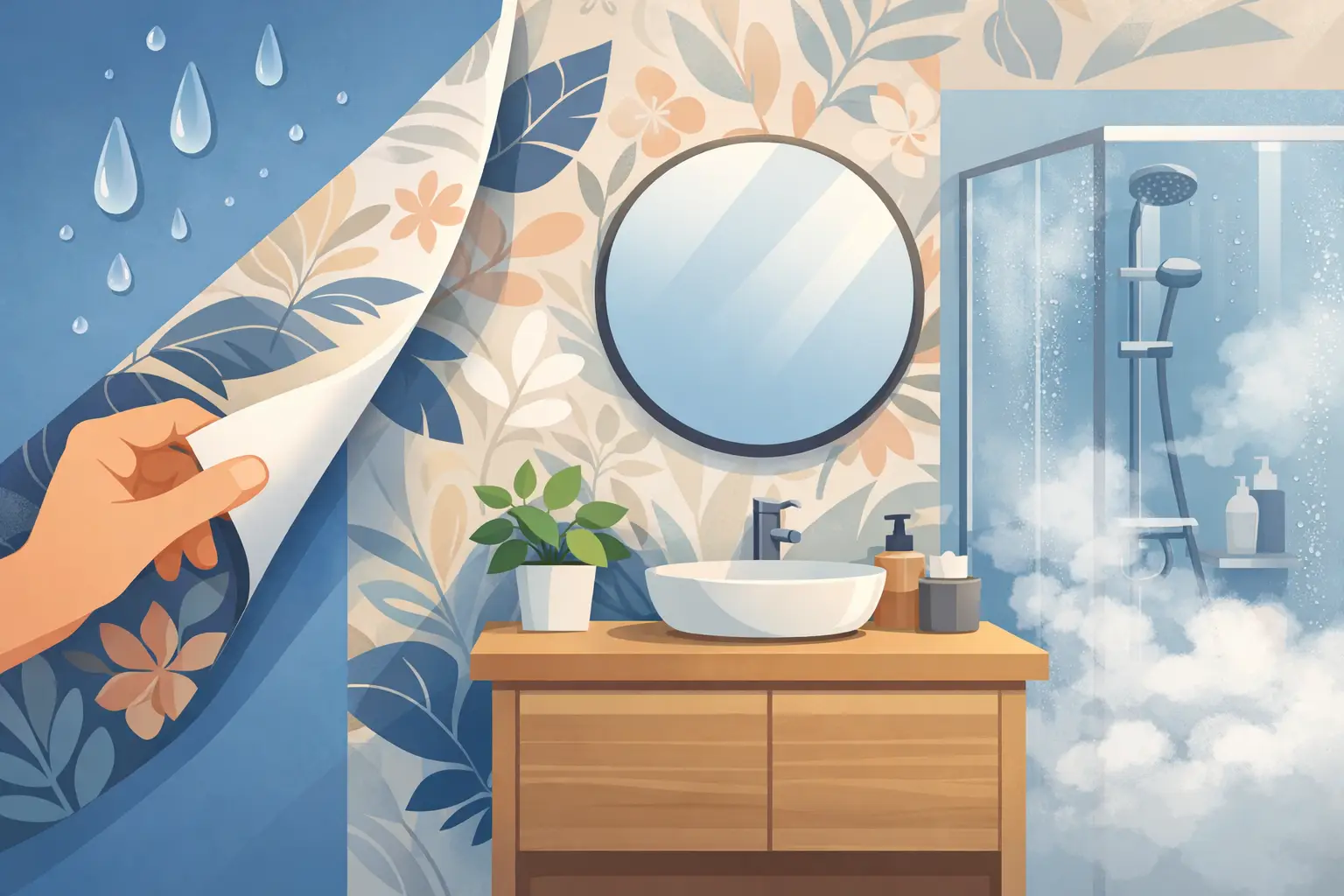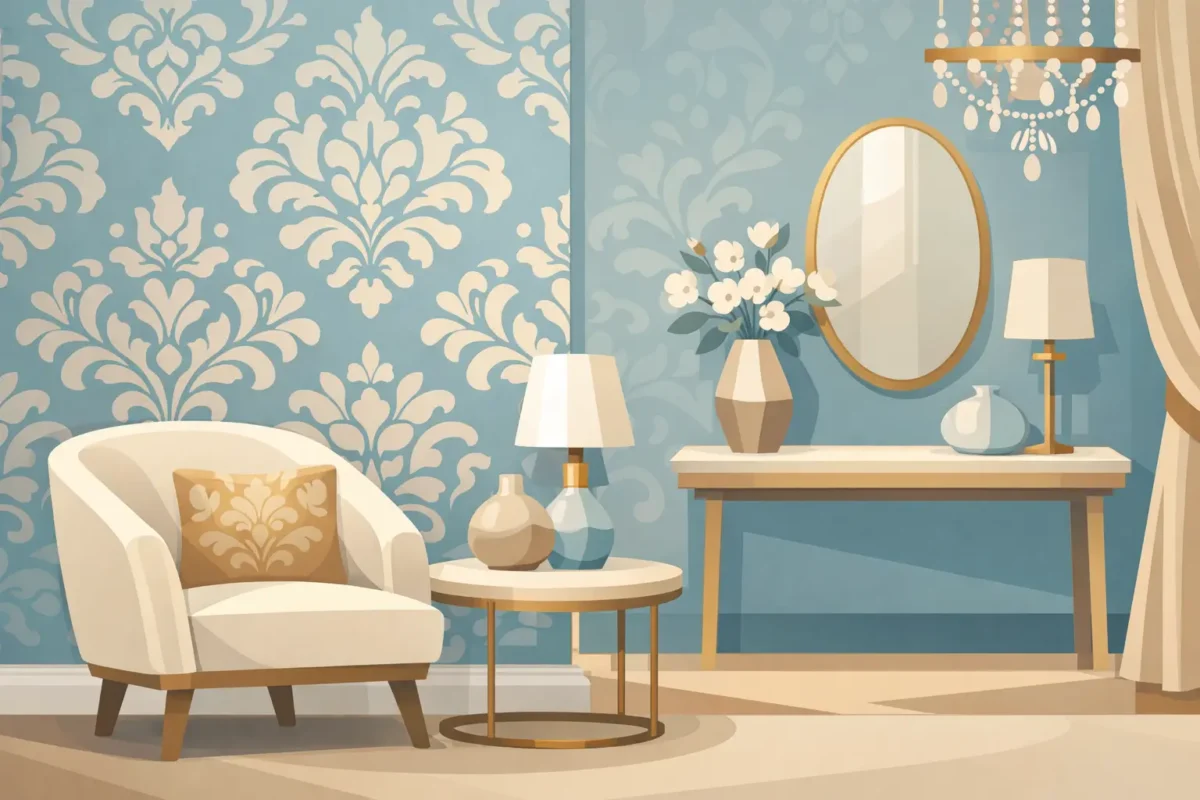
A powder room with a dramatic botanical print, a softly textured kitchen breakfast nook, or a boutique hotel bathroom with a custom mural can feel far more considered than a room finished only in paint. But can wallpaper work in humid rooms without peeling, staining, or losing its refined finish? Yes – when the room’s moisture level, material selection, wall condition, and installation method are treated as one complete specification.
Humidity is not automatically a reason to avoid wallpaper. It is a reason to choose better. The right wallcovering can bring depth, color, pattern, and a tailored sense of identity to spaces that are often treated as purely functional.
Not all humid rooms behave the same way. A well-ventilated powder room may have occasional moisture in the air but no direct water exposure. A family bathroom used several times each morning will experience regular steam and condensation. A shower enclosure, meanwhile, is a wet zone, not simply a humid room.
This distinction matters. Wallpaper is an excellent finish for many bathrooms, kitchens, laundry rooms, spas, and hospitality washrooms, especially on walls away from direct splashing. It is not a substitute for shower tile, waterproof wall panels, or another fully water-resistant surface inside a shower or immediately surrounding a bathtub without a proper splash barrier.
The most successful projects start by assessing how moisture moves through the room. Does steam linger on the mirror after a shower? Is there an operable window or an appropriately sized exhaust fan? Does the wall feel cool, damp, or show signs of previous staining? These details determine whether wallpaper will perform beautifully over time.
For humid interiors, performance should guide the material choice as strongly as design. A surface that can be gently wiped clean and that resists moisture is usually the most practical direction.
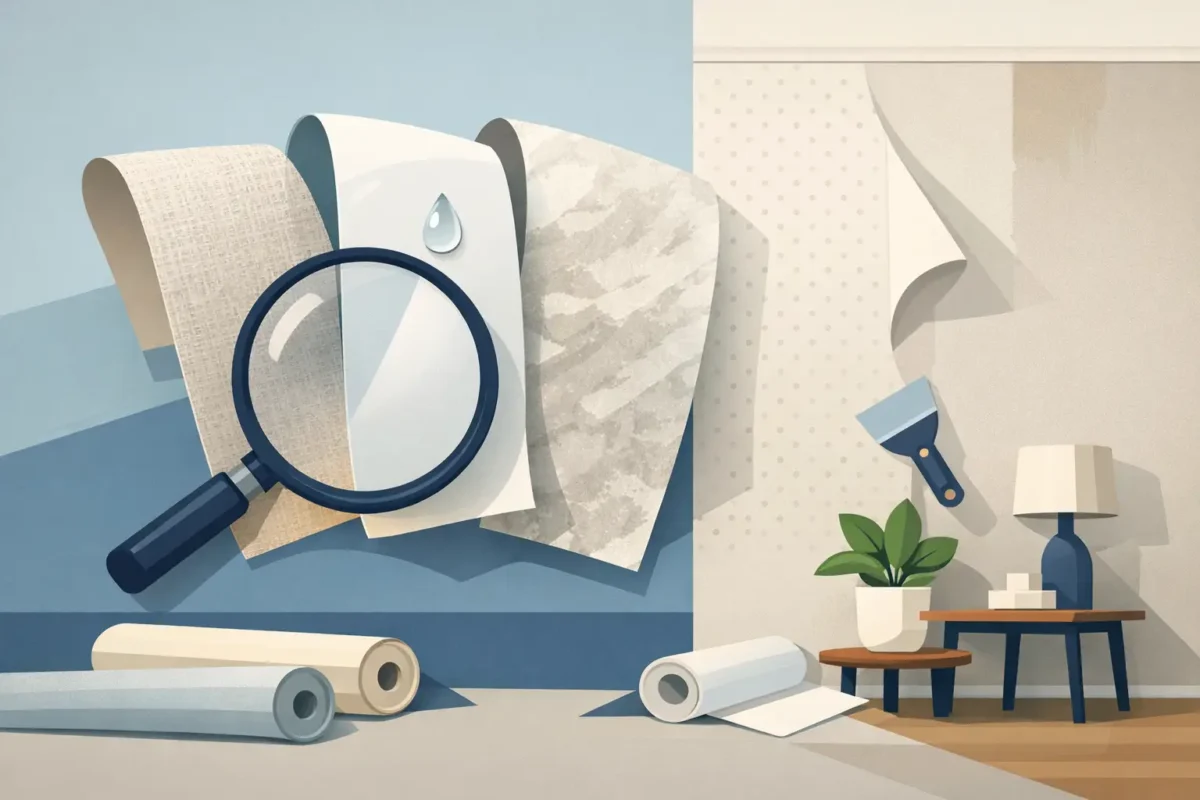
Vinyl wallcoverings are among the strongest choices for humid spaces. Their protective face layer offers a durable, cleanable finish that stands up well to everyday moisture, fingerprints, and the regular upkeep expected in bathrooms, kitchens, and commercial interiors.
For higher-traffic settings, such as hotel restrooms, restaurant washrooms, reception areas, and multi-unit developments, commercial-grade vinyl can deliver elevated design with serious durability. Many project-grade options also offer benefits such as fire performance, scrubbability, and resistance to wear. These specifications should be reviewed alongside the visual finish, particularly where code compliance and maintenance standards matter.
Quality non-woven wallpaper can be suitable for a lightly humid room with reliable ventilation. It is often stable, easier to install and remove than traditional paper, and available in an exceptional range of patterns and finishes. However, suitability depends on the product’s specific construction and the conditions in the room.
A non-woven design may be a strong choice for a powder room or a guest bathroom with a good exhaust fan. It is less suitable for a room where steam consistently condenses on walls. Product performance should always take priority over a generic material label.
Natural fibers, grasscloth, silk, untreated paper, and highly absorbent textured finishes can create remarkable visual warmth, but they are generally not the first choice for high-humidity environments. They can absorb moisture, show water marks, expand at seams, or develop uneven coloration.
That does not mean these materials are off limits everywhere near water. They may work beautifully in a well-ventilated dressing room, a spacious powder room, or a dry wall within a larger bathroom. The key is to keep them away from splash zones and select them with realistic expectations about care and natural variation.
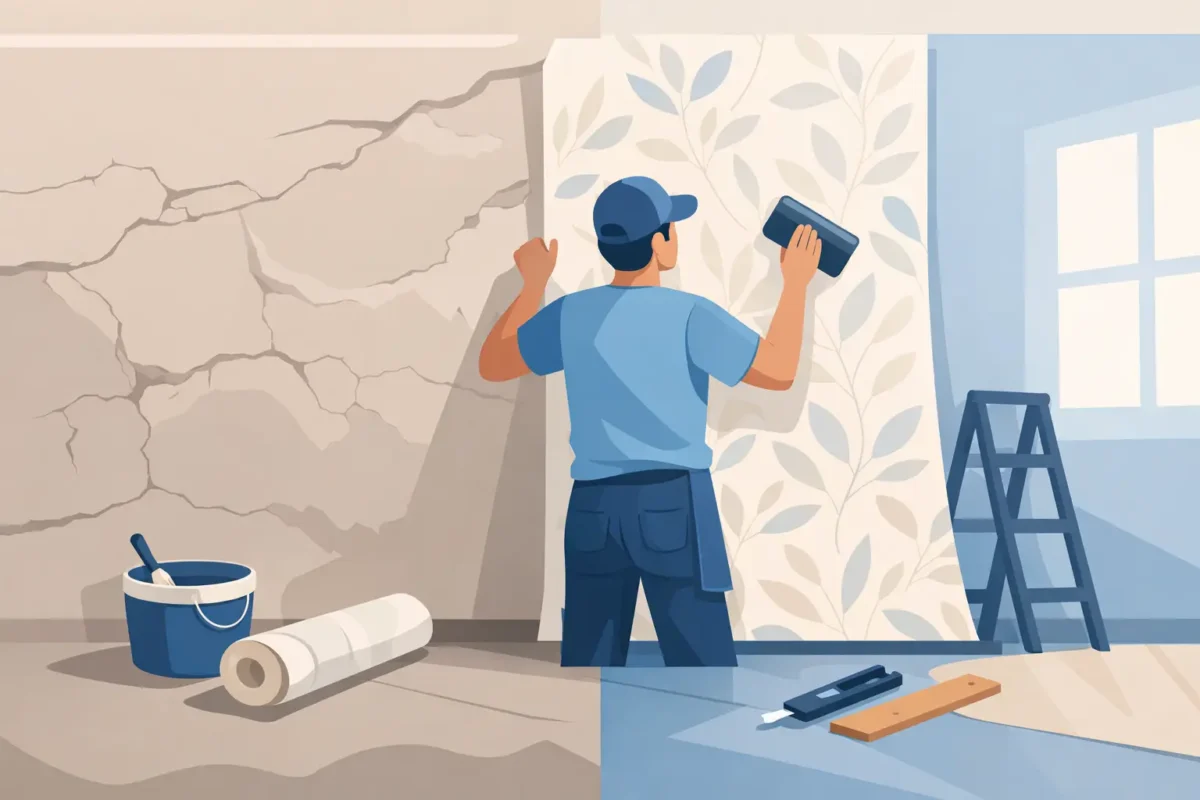
Even the most durable wallcovering cannot compensate for a damp, damaged, or poorly prepared substrate. Wallpaper should only be installed on a wall that is clean, dry, smooth, stable, and fully cured.
Before installation, existing mold, mildew, flaking paint, and water damage must be corrected at the source. Covering a moisture issue with wallpaper traps the problem rather than solving it. If a wall has been recently plastered, repaired, or painted, it needs adequate time to dry and cure according to the product requirements.
A professional installer will also look for surface irregularities that may telegraph through the finished design. In humid rooms, proper priming is especially valuable. The correct wallpaper primer helps create a consistent surface for adhesion, improves removability later, and can reduce the risk of seams lifting as temperature and humidity fluctuate.
For premium interiors, this preparation is not an invisible extra. It is part of the finished quality. A flawless mural or richly detailed wallpaper needs a disciplined foundation to look as polished in year three as it does on installation day.
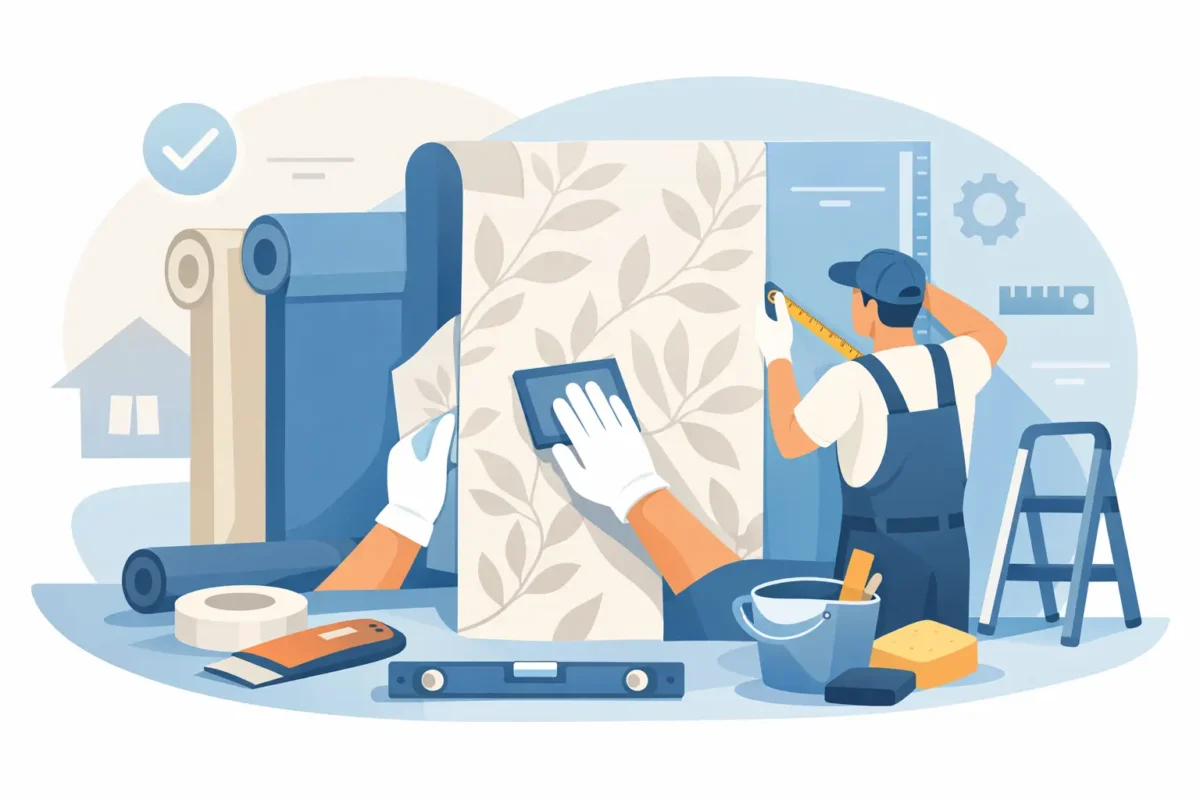
Humidity challenges the adhesive as much as it challenges the wallpaper itself. The paste must be compatible with the wallcovering type, the wall substrate, and the room conditions. Using an all-purpose adhesive where a heavier-duty or moisture-resistant product is required can lead to curling edges, opened seams, and premature failure.
Seams require particular attention. They should be accurately aligned, firmly rolled without crushing the surface texture, and cleaned carefully to prevent paste residue from drying on the face of the wallpaper. The installer must also account for corners, vanity backsplashes, outlet openings, and transitions to tile or stone, where moisture can find a path behind the wallcovering.
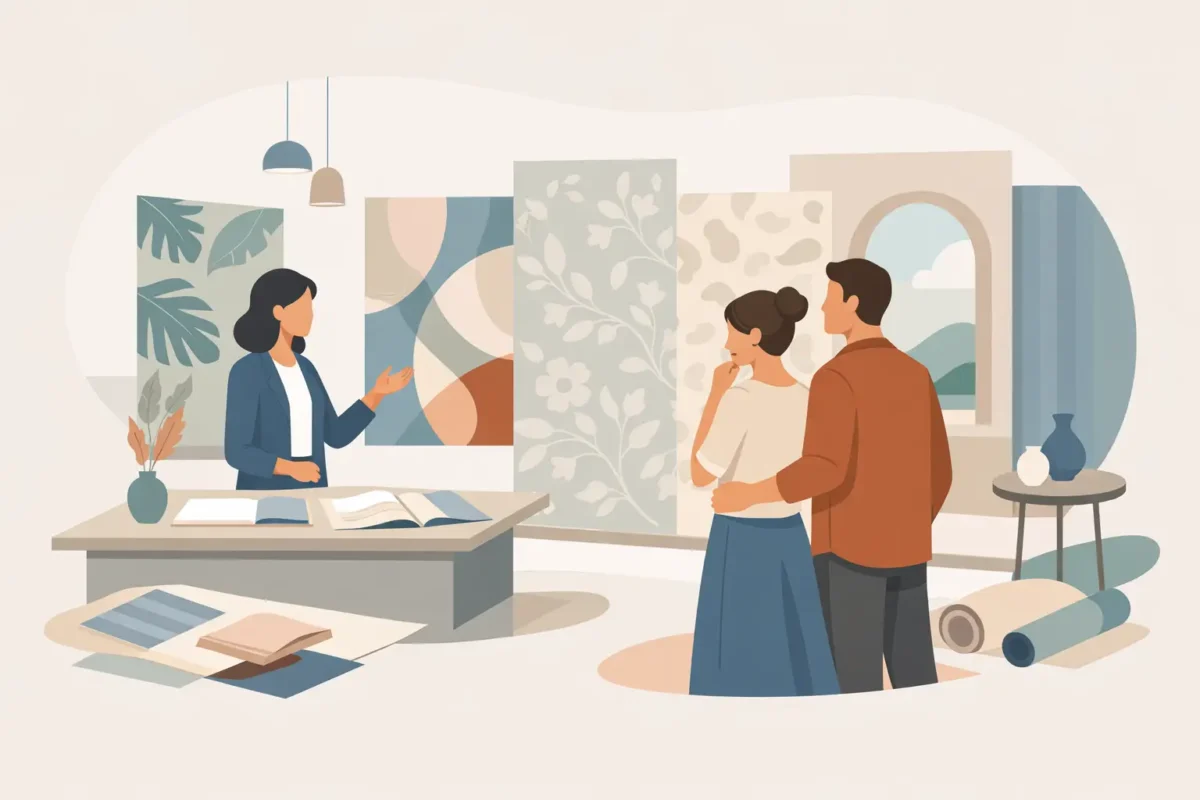
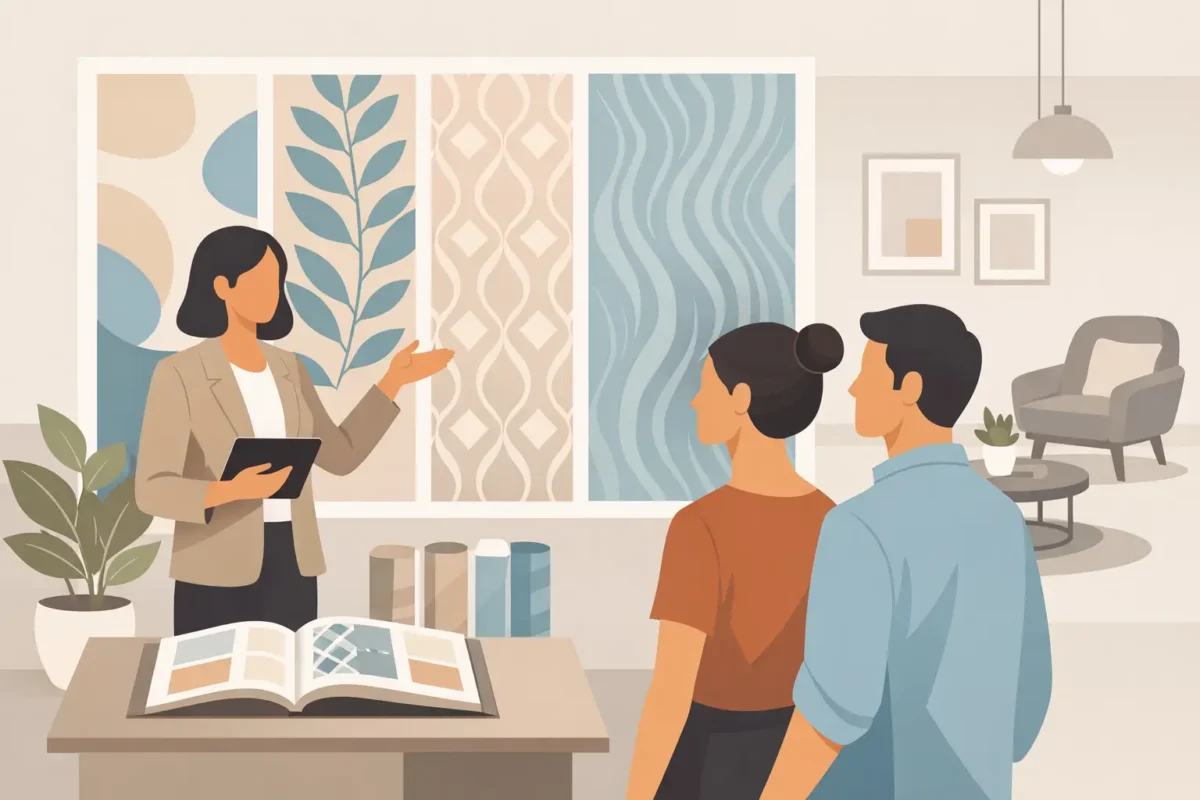
Professional installation brings a meaningful advantage in these rooms. It combines material knowledge with the practical judgment needed to decide where wallpaper should stop, where a protective finish may be appropriate, and where another wall surface is the better technical choice. Decorating Depot approaches wallcovering as a complete design and performance system, from material selection through precise installation.
The simplest safeguard is often the most neglected: move humid air out of the room. A properly functioning exhaust fan should run during bathing and continue afterward until the steam has cleared. In kitchens, use a range hood that vents effectively, especially when boiling or simmering regularly. Natural ventilation from a window can help, but it is not always enough on its own.
A room that remains visibly steamy for long periods is asking too much of almost any decorative wall finish. Persistent humidity can also affect cabinetry, paint, mirrors, and ceilings, so improving ventilation benefits the entire interior.
Keep wallpapered walls dry after direct splashes, and wipe off condensation where it forms. This is particularly helpful near sinks, tubs, and laundry appliances. Clean vinyl surfaces with a soft cloth and a mild cleaner approved for the product. Avoid abrasive pads, harsh solvents, and oversaturating the seams with water.
Humidity-safe wallpaper does not need to look utilitarian. In fact, these rooms often offer the best opportunity for a bolder design choice. Since bathrooms and powder rooms are compact, a large-scale floral, moody marble effect, geometric pattern, or custom mural can create immediate impact without overwhelming a larger living space.
In kitchens, consider wallpaper on a dining wall, pantry wall, or the upper section above a durable backsplash. This allows the design to contribute warmth and personality while keeping the most exposed preparation areas protected by tile, stone, glass, or another washable surface.
For hospitality and commercial settings, a decorative vinyl wallcovering can carry a brand palette, create a memorable guest experience, and meet the practical demands of frequent cleaning. Custom print wallpaper extends those possibilities further, allowing a feature wall to reflect a property’s identity, artwork, or local story while maintaining a project-appropriate finish.
There are moments when the most design-conscious decision is not to install wallpaper. Skip it on walls with unresolved leaks, active mold, chronic condensation, or direct and repeated water spray. Do the same if the room lacks effective ventilation and there is no practical way to improve it.
In those situations, solve the moisture issue first or select a fully waterproof surface for the exposed area. Wallpaper can still play a role elsewhere in the room, perhaps above tile wainscoting, behind a freestanding vanity, or on a dry feature wall beyond the wet zone.
A humid room should never force a compromise between expressive design and dependable performance. Select a wallcovering made for the conditions, prepare the surface with care, and let professional specification guide the final placement. The result can be a room that feels richly finished every time the door opens.