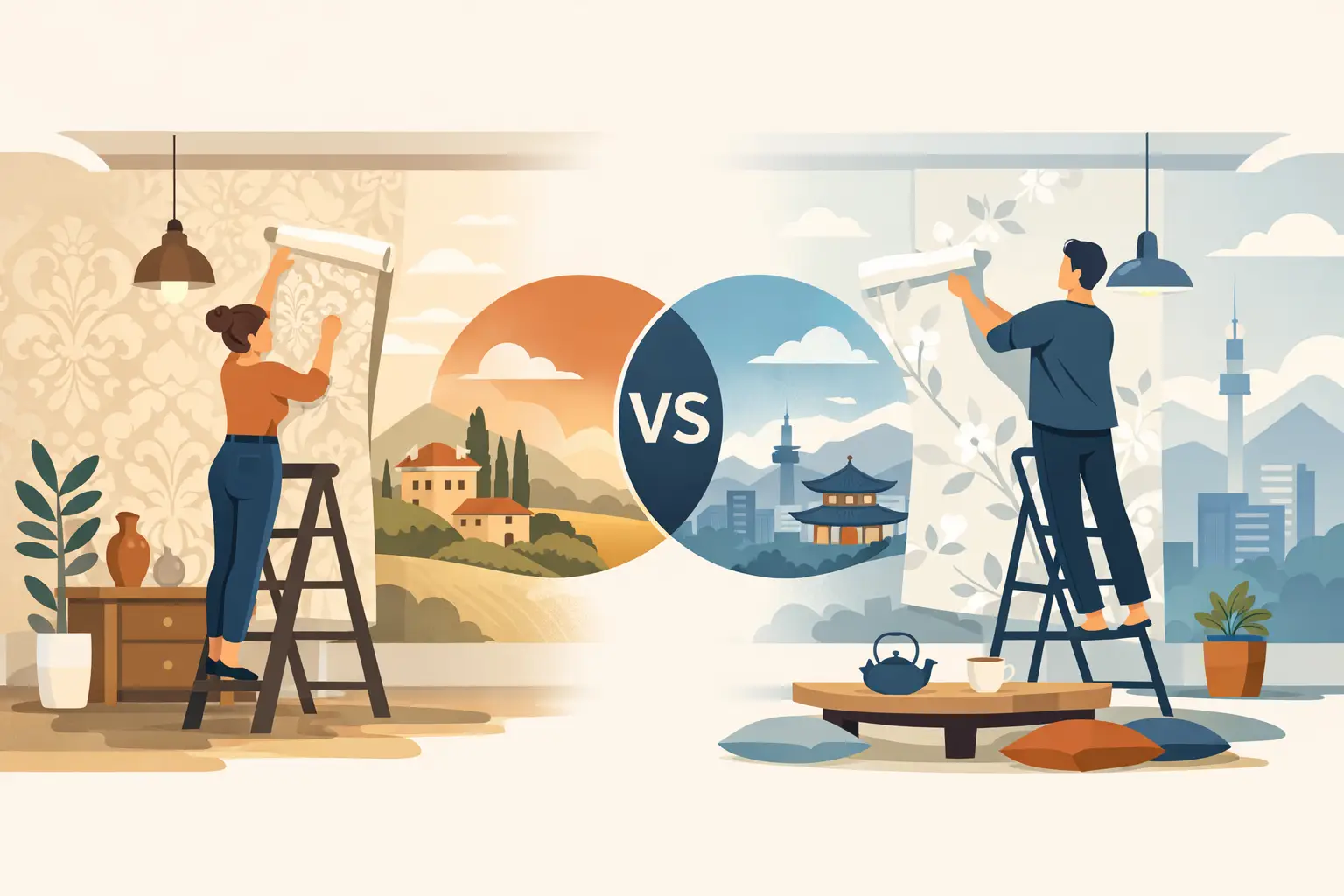
A wallcovering can look extraordinary on a sample book and entirely different across a 20-foot feature wall. That is why the choice between Italian wallpaper vs Korean wallpaper is not simply about country of origin. It is about the visual language you want, the surface performance your project requires, and the precision needed to bring the finished wall to life.
Italian and Korean collections both offer exceptional design possibilities, but they often serve different interior briefs. One may be the stronger fit for a layered, tactile luxury residence; the other may suit a clean-lined apartment, fast-moving retail space, or coordinated multi-room project. The right decision begins with looking beyond the label.
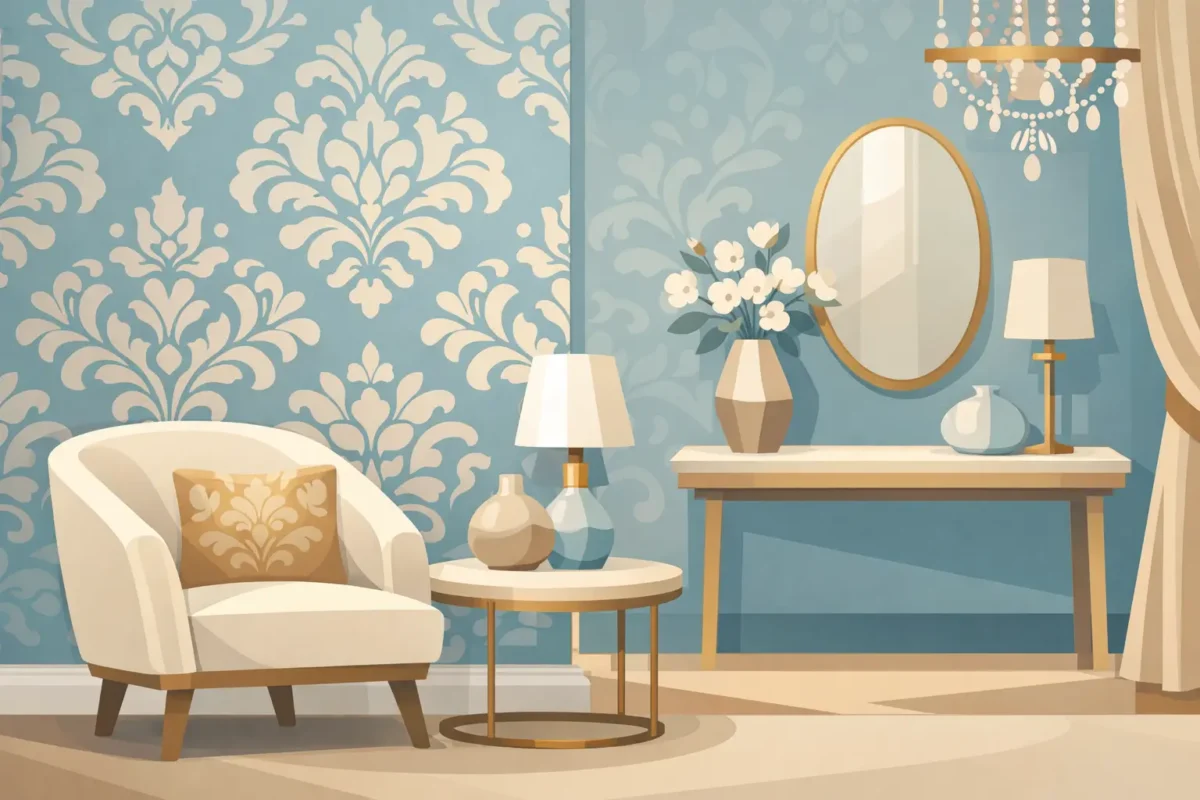
Italian wallpaper is widely associated with expressive design, material depth, and a distinctly decorative point of view. Many Italian collections draw from fashion, architecture, art, natural stone, plaster, linen, botanical forms, and heritage motifs. The result can feel richly composed even when the palette is restrained. Think metallic veining that catches ambient light, embossed textures that resemble textiles, or large-scale florals with painterly movement.
Korean wallpaper is often prized for its clean visual finish, versatile pattern range, and polished contemporary appeal. Collections frequently include soft neutrals, subtle geometrics, modern florals, marble effects, understated textures, and designs created to work easily across connected living spaces. It can deliver a refined result without making every wall compete for attention.
Neither style is limited to one aesthetic. Italian brands also produce minimal, modern designs, while Korean collections can be highly decorative. Still, the general distinction is useful during early selection: Italian wallpaper often leads with atmosphere and material expression, while Korean wallpaper often leads with flexibility, visual clarity, and coordinated everyday sophistication.
Italian wallpaper is especially compelling where the wall itself is intended to be a focal architectural element. In a formal dining room, boutique hotel lobby, luxury bedroom, executive suite, or high-end retail setting, its depth can create a more immersive backdrop than painted finishes alone.
Texture is a major advantage. Embossing, layered printing, mica effects, textile-inspired surfaces, and detailed pattern construction can give a wall dimension that changes throughout the day. This makes Italian collections a natural choice for projects with considered lighting, premium furnishings, and a clear design narrative.
The trade-off is that bold surfaces need confident specification. A highly detailed pattern may require more careful repeat matching, a larger sample review, and thoughtful coordination with drapery, flooring, stone, and upholstery. In a compact room with limited daylight, an oversized dark motif can feel dramatic or overwhelming depending on the rest of the scheme.
Korean wallpaper often works beautifully where a project needs a finished, elevated look across multiple rooms without visual excess. Its broad range of calming textures and coordinated colors makes it well suited to bedrooms, living rooms, condominiums, family spaces, offices, clinics, and show units.
Many homeowners appreciate the way subtle Korean designs create warmth while remaining easy to live with. A fine linen effect, low-contrast botanical print, or quiet plaster texture can add depth to a room without limiting future furniture changes. This is valuable for clients who want a polished interior that stays relevant as décor evolves.
For designers and developers, Korean collections can also simplify scheme building. A single range may include companion solids, gentle patterns, and complementary colors that carry from reception areas to private rooms. The final effect is cohesive, not repetitive.
Country of origin alone does not determine wallpaper quality. The backing, surface construction, manufacturing standard, and intended application matter far more. Both Italian and Korean wallpaper are available in products suited to residential and commercial use, but specifications vary by collection.
For homes, a washable or wipeable surface may be enough for bedrooms and low-traffic walls. Kitchens, corridors, children’s rooms, and entry areas may benefit from more durable vinyl-based options that handle everyday contact more confidently. For offices, retail environments, hospitality interiors, and public-facing projects, fabric-backed commercial wallcovering may be the more appropriate solution because it is engineered for higher traffic and demanding maintenance routines.
Fire performance should be verified when a project requires it. Hospitality, healthcare, corporate, retail, and multi-unit developments may have specific code, insurance, or consultant requirements. Ask for the relevant test documentation for the exact product selected rather than assuming every imported wallpaper carries the same rating.
The same principle applies to sustainability. Low-VOC materials, responsibly sourced substrates, and eco-friendly printing are important considerations, but claims should be assessed at the product level. A beautiful finish should also support the performance standards of the building and the people using it.
The pattern repeat can have as much influence on the final result as the design itself. Italian wallpaper often includes larger, more artistic repeats that create impact on broad uninterrupted walls. These designs are ideal for a feature wall behind a bed, a dramatic reception backdrop, or a dining area with generous wall height.
Korean wallpaper frequently offers smaller repeats and more uniform textures that can be easier to extend throughout a room. This does not make it less luxurious. It simply creates a different kind of luxury: quiet, balanced, and adaptable. In rooms with many doors, windows, built-ins, or structural columns, a smaller-scale design may reduce visual interruption and material waste.
Always assess a full sample rather than choosing from a small swatch alone. Look at it vertically, under daytime and evening light, beside the actual flooring and fabric finishes. Metallic effects may appear subtle in a showroom but become more pronounced under warm decorative lighting. Likewise, a pale gray can read cool against white marble and warm against timber.
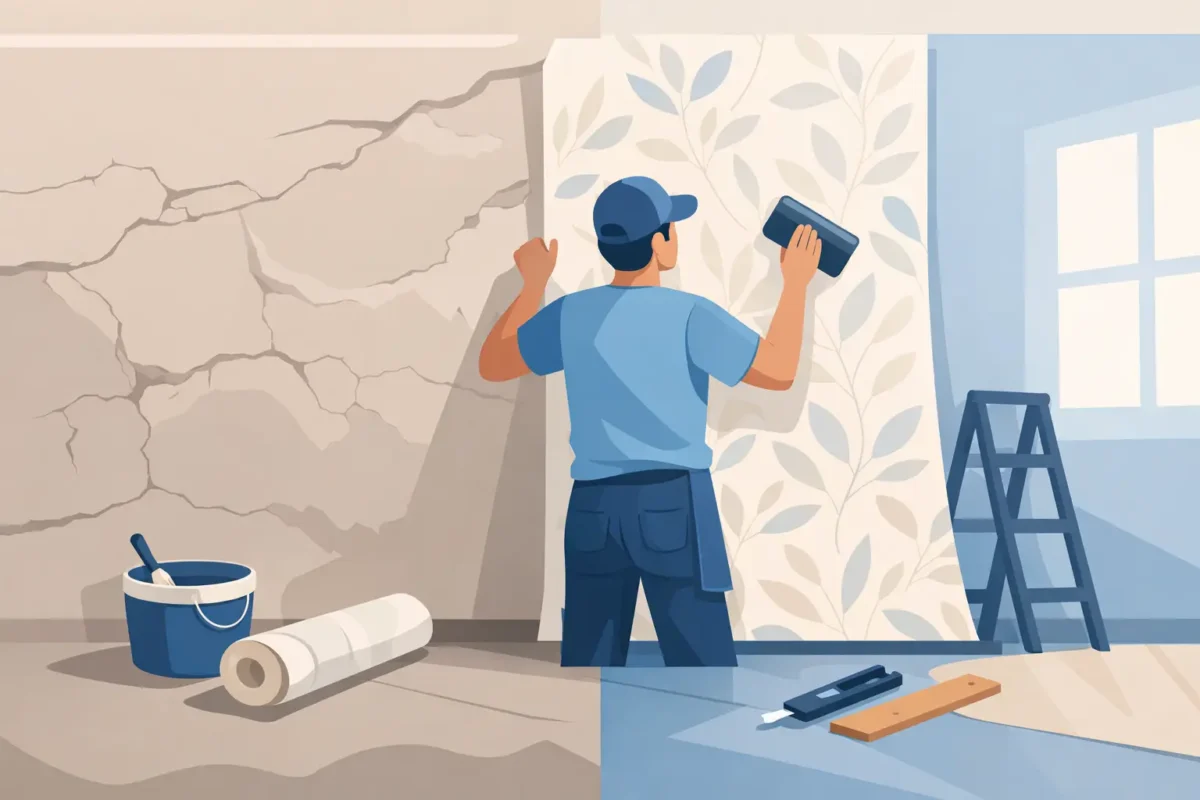
Even the finest wallcovering can lose its impact through poor preparation or careless installation. Walls should be smooth, dry, clean, and properly primed before hanging. Existing paint condition, moisture exposure, cracks, and surface unevenness all affect adhesion and the clarity of the finished pattern.
Designs with directional motifs, high-contrast lines, or large repeats demand particular accuracy. The installer must plan panel placement, check alignment from the room’s most visible viewpoint, and manage seams with care. This is especially important for feature walls, double-height spaces, and custom murals, where a minor alignment issue can become immediately noticeable.
Professional installation also helps protect the investment in material. It reduces the risk of visible seams, paste marks, lifting edges, mismatched repeats, and unnecessary wastage. For commercial projects, installation planning should include site conditions, sequencing with other trades, access requirements, and realistic drying time.
For a private residence, the choice often comes down to personality. Select Italian wallpaper when the room calls for theater, tactile richness, or an art-led statement. Choose Korean wallpaper when you want elegant continuity, relaxed comfort, and a design that supports the furniture rather than dominates it.
For hospitality, it depends on the guest experience and maintenance plan. An Italian-inspired textured or decorative surface can establish a memorable sense of arrival in lobbies, restaurants, lounges, and premium suites. Korean wallpaper can be highly effective in guest rooms, corridors, and private areas where consistency, warmth, and visual calm are priorities.
For corporate, retail, and development projects, specification should lead the conversation. Visual appeal matters, but so do durability, cleaning requirements, fire ratings, lead times, quantity availability, and installation logistics. A showroom consultation can help narrow thousands of options into a finish that meets both the design concept and the project brief.
Italian wallpaper and Korean wallpaper are not competing grades of luxury. They are different design tools. Italian collections often bring artistic depth and decorative confidence; Korean collections frequently offer refined versatility and a clean contemporary finish. Both can transform a wall when selected with the room, lighting, performance needs, and installation method in mind.
Before approving a final design, view the sample in the actual space and ask what the wall must do: become the statement, support the overall palette, withstand daily use, or reinforce a brand experience. That single question usually makes the right wallcovering direction much clearer.