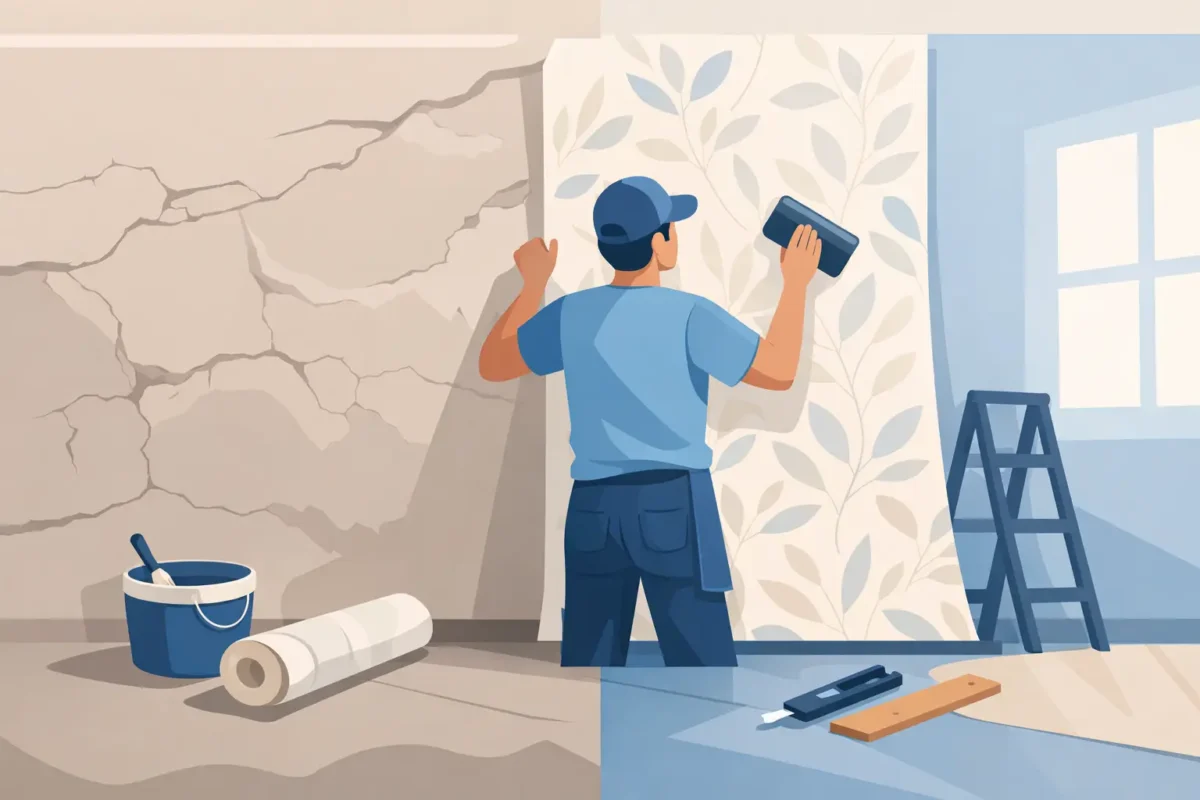
A wall finish can set the tone of a lobby, guest room, boardroom, or retail floor in seconds. But in commercial interiors, appearance alone is never enough. Fire retardant commercial wallpaper brings together visual impact, code-conscious performance, and everyday durability – making it one of the most practical upgrades for spaces that need to look refined and work hard.
For architects, designers, developers, and business owners, that balance matters. You want a surface that supports the design concept, holds up in high-traffic conditions, and aligns with the technical demands of the project. That is exactly where commercial-grade wallcoverings stand apart from decorative residential options.
The term is often used broadly, so clarity matters. Fire retardant commercial wallpaper refers to wallcoverings manufactured or treated to resist flame spread and support safer performance in commercial environments. It does not mean the material is fireproof, and it does not remove the need to meet project-specific codes, test standards, or installation requirements.
In practical terms, this category is designed for spaces where safety compliance and specification integrity are part of the brief. Hotels, offices, healthcare settings, retail stores, education facilities, and mixed-use developments often require materials that meet recognized fire performance standards while still delivering a polished finish.
That distinction is important because not all wallpaper is suitable for commercial use, and not all visually similar products perform the same way once installed. A wallcovering may look premium on a sample board yet fall short in durability, cleanability, or flame performance when used across a full project.
Paint is familiar, but it has limits. In high-use interiors, painted walls can show scuffs, patch marks, and uneven wear quickly. Standard wallpaper may offer stronger aesthetics, but if it is not built for commercial application, it can become a weak link in the specification.
Fire retardant commercial wallpaper offers a more complete solution. It gives designers broader freedom with texture, pattern, scale, and branding while also supporting the functional expectations of public and professional spaces. In hospitality, that may mean creating a guest experience that feels elevated and memorable without compromising back-of-house practicality. In corporate settings, it may mean projecting a sharper brand identity while maintaining surfaces that are easier to maintain over time.
There is also a lifecycle advantage. When the right product is chosen, commercial wallpaper can reduce the frequency of cosmetic refreshes, especially in corridors, feature walls, reception areas, and rooms with repeated contact. That longer performance window often makes the finish more cost-effective than it first appears.
Different spaces ask different things from a wallcovering. A boutique hotel may prioritize warmth, texture, and guest impression. A retail environment may need bold graphics, brand consistency, and resistance to wear. An office may require understated sophistication with easy maintenance and dependable installation across large wall areas.
This is why specification should never begin and end with color or pattern. The best results come from matching the material to the use case. Fabric-backed vinyl wallcoverings, for example, are a common choice for demanding commercial interiors because they combine visual depth with strength and serviceability. Custom printed commercial solutions can also be highly effective when the print technology, substrate, and fire performance are properly aligned.
For projects with a strong design agenda, custom murals and bespoke prints can transform ordinary walls into branded or immersive experiences. The technical side still matters. Ink systems, substrate quality, and installation precision all affect whether the final wall looks premium for years or only for the handover photos.
The first consideration is compliance. Fire performance claims should be supported by relevant test documentation suitable for the market and project type. This is especially important for hospitality, public-facing, and large-scale developments where approvals and consultant review are part of the process.
The second is substrate quality. Commercial wallcoverings are not one-size-fits-all. Some are better for high-impact zones, while others are selected for visual refinement in lower-contact areas. Texture, thickness, backing, and surface finish all influence performance.
The third is maintenance. A beautiful finish loses value quickly if it cannot be cleaned practically in everyday use. Restaurants, clinics, offices, and hotels all benefit from surfaces that can handle routine upkeep without losing their appearance.
The fourth is installation. Even premium material can fail if the wall preparation is poor or the installer lacks commercial experience. Pattern alignment, seam control, adhesive selection, and substrate readiness all affect the final result. In commercial interiors, flawless installation is not an extra. It is part of the product performance.
There is a reason designers continue to favor wallpaper in commercial interiors. It delivers dimension that paint rarely can. Fine textures, woven effects, metallic accents, stone-inspired surfaces, linen looks, and large-format custom graphics can all shape how a space is perceived.
That design value becomes even more powerful when paired with engineered performance. Fire retardant commercial wallpaper allows a project to feel expressive without becoming impractical. A reception wall can make a strong first impression while still meeting commercial expectations. A hotel corridor can feel layered and upscale while standing up to repeated use. A branded office interior can look distinctive without relying on fragile finishes.
This combination is especially useful in projects where every surface must carry its weight. Developers and operators are increasingly looking for materials that support both visual identity and operational efficiency. Wallpaper that is attractive but delicate creates future problems. Wallpaper that performs but feels generic weakens the design intent. The right specification does both.
As with any finish, the best choice depends on the environment. A heavily textured wallcovering may look exceptional in a lounge or executive suite, but a smoother, more washable surface may be the better fit for healthcare or high-contact circulation areas. A custom mural can create strong brand presence, though lead times, substrate selection, and print consistency need closer coordination than off-the-shelf options.
Budget also shapes the decision. Entry-level products may reduce upfront cost, but lower durability can lead to earlier replacement or more visible wear. At the premium end, richer textures and custom finishes can elevate the space significantly, though they should be used where that visual investment will be noticed and appreciated.
This is why expert guidance matters. The strongest commercial outcomes usually come from balancing four things at once: the design concept, technical requirements, expected traffic, and long-term maintenance. When one of those is ignored, the finish may still look good at first, but it may not perform as the project demands.
Sampling online can help narrow down a style direction, but commercial specification benefits from seeing materials in person. Texture, scale, reflectivity, and surface character are much easier to assess physically, especially under lighting conditions similar to the actual project.
A well-curated showroom also makes comparison easier. Designers and decision-makers can evaluate multiple grades, finishes, and custom options side by side rather than choosing from isolated swatches. For clients managing deadlines, budgets, and stakeholder approvals, that speeds up decision-making without lowering standards.
Professional support matters just as much after selection. Large wall areas, custom sizing, brand-matched graphics, and installation sequencing all require coordination. A full-service partner such as Decorating Depot can add value here by combining design variety, commercial-grade materials, custom print capability, and experienced installation into one workflow.
Commercial interiors are judged quickly and used constantly. Every finish has to contribute to the experience of the space while standing up to real conditions. Fire retardant commercial wallpaper answers that need with a rare combination of statement-making design, code-aware performance, and long-term practicality.
If the goal is to create walls that feel distinctive, polished, and project-ready, this is not a finishing detail to treat lightly. The right wallcovering does more than decorate – it supports the standard your space is meant to represent.