A plain wall rarely stays invisible. In a well-designed home, office, hotel, or retail setting, it either supports the room beautifully or drags the whole scheme down. That is why designer wall murals have become a serious specification choice, not just a decorative extra. They offer visual scale, custom identity, and a level of finish that standard paint or off-the-shelf wallpaper often cannot match.
For homeowners, murals create a stronger focal point with less clutter. For designers and commercial clients, they solve a more complex brief – how to deliver atmosphere, branding, durability, and originality on one surface. When chosen well, a mural does more than fill a wall. It sets the tone of the entire space.
The difference between a mural and a generic printed wallcovering is usually visible within seconds. Designer wall murals are developed with composition, scale, and room proportion in mind. The artwork is not treated as a repeating pattern. It is treated as a full visual experience, whether that means a panoramic landscape, an abstract texture, an architectural scene, or a bespoke branded graphic.
That distinction matters. A living room feature wall should feel intentional, not like an enlarged poster. A hotel corridor needs visual impact, but also consistency from panel to panel. A corporate reception area may need a mural that reflects brand character without becoming visually noisy. Good mural design balances statement and restraint.
This is also where customization becomes valuable. A beautiful image can still fail if the scale is wrong for the wall height, furniture placement, lighting conditions, or viewing distance. Professional mural production allows the design to be resized, cropped, or adjusted to the project rather than forcing the project to adapt to a fixed print.
Not every wall needs a mural. In fact, they are often most effective when used selectively. A single feature wall in a bedroom can create depth and softness without overwhelming the room. In dining areas and lounges, murals can add richness and atmosphere that make the space feel more curated.
In commercial settings, the role becomes even more strategic. Offices often use murals to define reception zones, meeting areas, or collaborative spaces. Retail interiors benefit from murals that strengthen brand identity and create a memorable backdrop. In hospitality, they help shape guest experience quickly – from the first impression at check-in to the mood of a suite, restaurant, or corridor.
The best application depends on traffic, maintenance needs, and the purpose of the room. A delicate artistic scene may be perfect for a private residence, while a busy public environment may call for a mural with more texture, stronger contrast, and a material finish built for frequent cleaning.
A mural should support the architecture, not compete with it. That sounds obvious, but it is where many selections go wrong. The strongest designs are usually aligned with the room’s scale, palette, and intended mood.
These work especially well in bedrooms, lounges, boutique hospitality spaces, and elegant residential settings. Think misty landscapes, painterly botanicals, tonal marble effects, or abstract washes. They add mood and dimension while keeping the room calm.
For commercial interiors, retail spaces, and statement-driven homes, stronger geometry, high-contrast artwork, or expressive contemporary graphics can create a sharper identity. They are effective, but they require discipline. If the furniture, flooring, and lighting are already visually busy, a highly graphic mural can push the room too far.
These remain popular because they introduce scale and escapism. Forest scenes, tropical botanicals, coastal references, and city-inspired panoramas can make enclosed spaces feel larger and more immersive. They are especially useful in hospitality and wellness-led environments.
For developers, offices, hotels, and F&B spaces, custom murals can carry brand cues, local storytelling, or project-specific artwork. This is often the smartest option when a space needs to feel distinctive rather than sourced from a catalog alone.
A mural may look impressive in a sample image, but performance is what determines whether it remains impressive after installation. This is particularly important in commercial and high-use settings, where surfaces are expected to hold their finish under real-world conditions.
The right substrate can affect everything from print clarity to durability. Fabric-backed commercial wallcoverings, for example, offer strength and dimensional stability that are well suited to project environments. Higher-grade mural materials also help reduce visible seams and support a more refined overall finish.
Print technology matters too. Sharp detail, accurate color, and smooth tonal transitions are essential, especially on large-scale artwork where imperfections become more obvious. Eco-friendly inks are increasingly important as well, particularly for interior projects where clients want design impact without compromising indoor environmental standards.
Then there is maintenance. In family homes, easy-clean surfaces make daily life simpler. In hospitality and corporate spaces, cleanability is often non-negotiable. A mural should not just look good on day one. It should be engineered for the life of the space.
This is one of the biggest advantages of working with a mural specialist instead of choosing a fixed-size decorative print. Walls are rarely standard. Ceiling heights vary. Joinery interrupts surfaces. Furniture placement changes sightlines. Even a few inches can alter how the artwork reads.
Custom sizing allows the mural to be designed around those realities. Key visual elements can be positioned away from headboards, reception desks, shelving, or lighting fixtures. Proportions can be adjusted so the design feels balanced when viewed from the room’s main angle. In larger projects, panel layout can also be planned with installation logic in mind.
That level of control is what gives premium murals their composed, architectural feel. The wall does not simply carry an image. It becomes part of the interior design scheme.
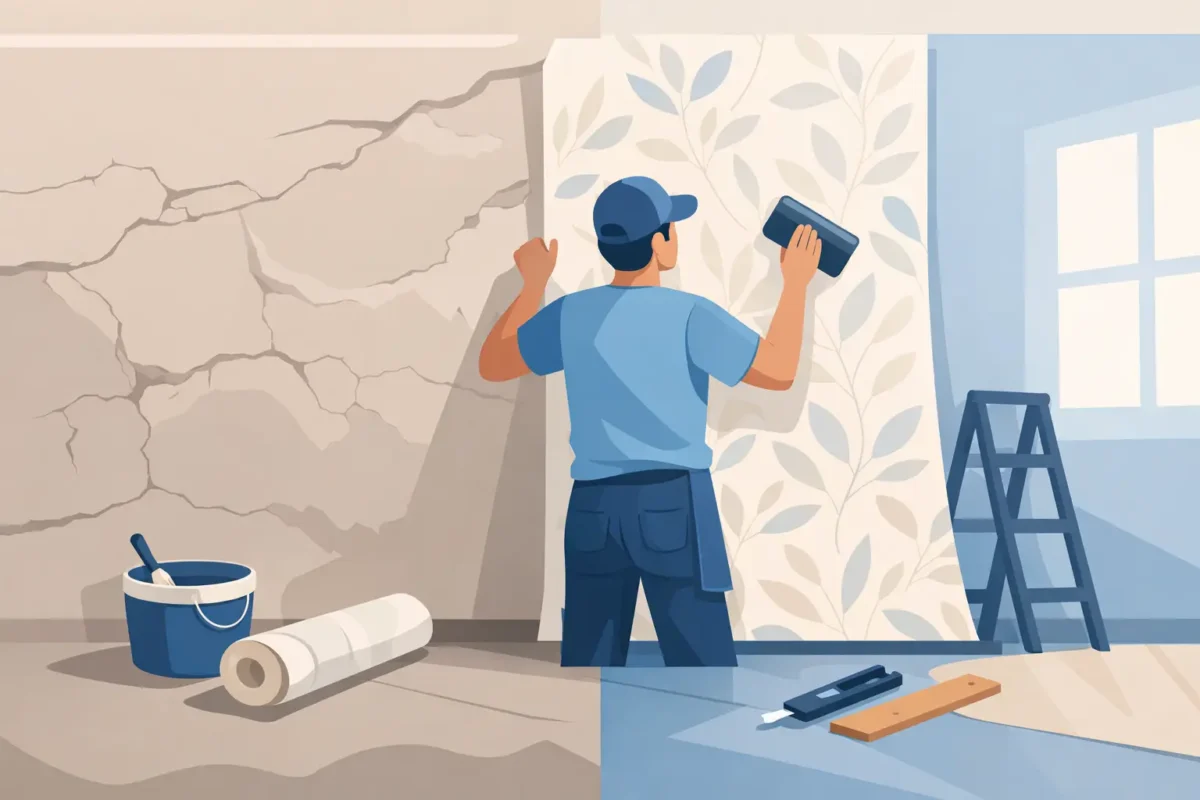
Even the best mural can be undermined by poor installation. Misaligned panels, bubbling, lifting edges, and visible seams immediately reduce the effect. In commercial spaces, flaws like these are especially damaging because they read as a quality issue, not just a decorative one.
Professional installation protects both the design and the investment. Surface preparation, correct adhesive selection, accurate panel matching, and careful finishing all contribute to the final result. This is one reason many clients prefer a full-service approach. Design consultation, custom production, material selection, and installation work better when managed as one coordinated process.
For large or technically demanding walls, experience matters even more. Double-height areas, curved surfaces, hospitality fit-outs, and branded commercial environments require precision, scheduling discipline, and product knowledge. That is where a specialist with project-grade capability adds real value.
Residential clients usually begin with mood. They want warmth, personality, and a finish that makes the home feel more elevated. Commercial clients often begin with function. They need durability, compliance, consistency, and a visual concept that supports the brand or guest experience.
The best designer wall murals satisfy both. A luxury condominium may need a serene mural in the master bedroom and a more dramatic one in the dining area. A corporate office may require a refined reception statement that feels polished rather than loud. A hotel may need different mural styles across public areas and guest rooms while maintaining one coherent design language.
This is why product range matters. A supplier that can offer bespoke murals alongside commercial wallpaper, European finishes, and project-suitable materials gives specifiers more freedom to build a complete scheme. Decorating Depot, for example, is positioned around that broader capability – combining custom print technology, large-format design options, and installation support for both private and commercial interiors.
The right choice depends on a few practical questions. How much natural light does the room get? Is the wall seen up close or from a distance? Does the mural need to hide wear, create calm, support branding, or expand the perceived scale of the room? A dramatic design may look impressive online but feel overpowering in a compact interior.
It also helps to think about longevity. Trend-led graphics can be effective for short-cycle spaces, but timeless textures, scenic compositions, and tailored abstract designs often age more gracefully. For commercial projects, replacement cycles, maintenance demands, and operational downtime should also influence material and design decisions.
The strongest mural choices usually come from balancing creativity with technical judgment. Beautiful imagery gets attention. Correct specification keeps that beauty working in the real world.
A well-executed mural changes how a room is experienced the moment someone walks in. If the design is right, the material is project-ready, and the installation is flawless, the wall stops being background and starts doing real design work.