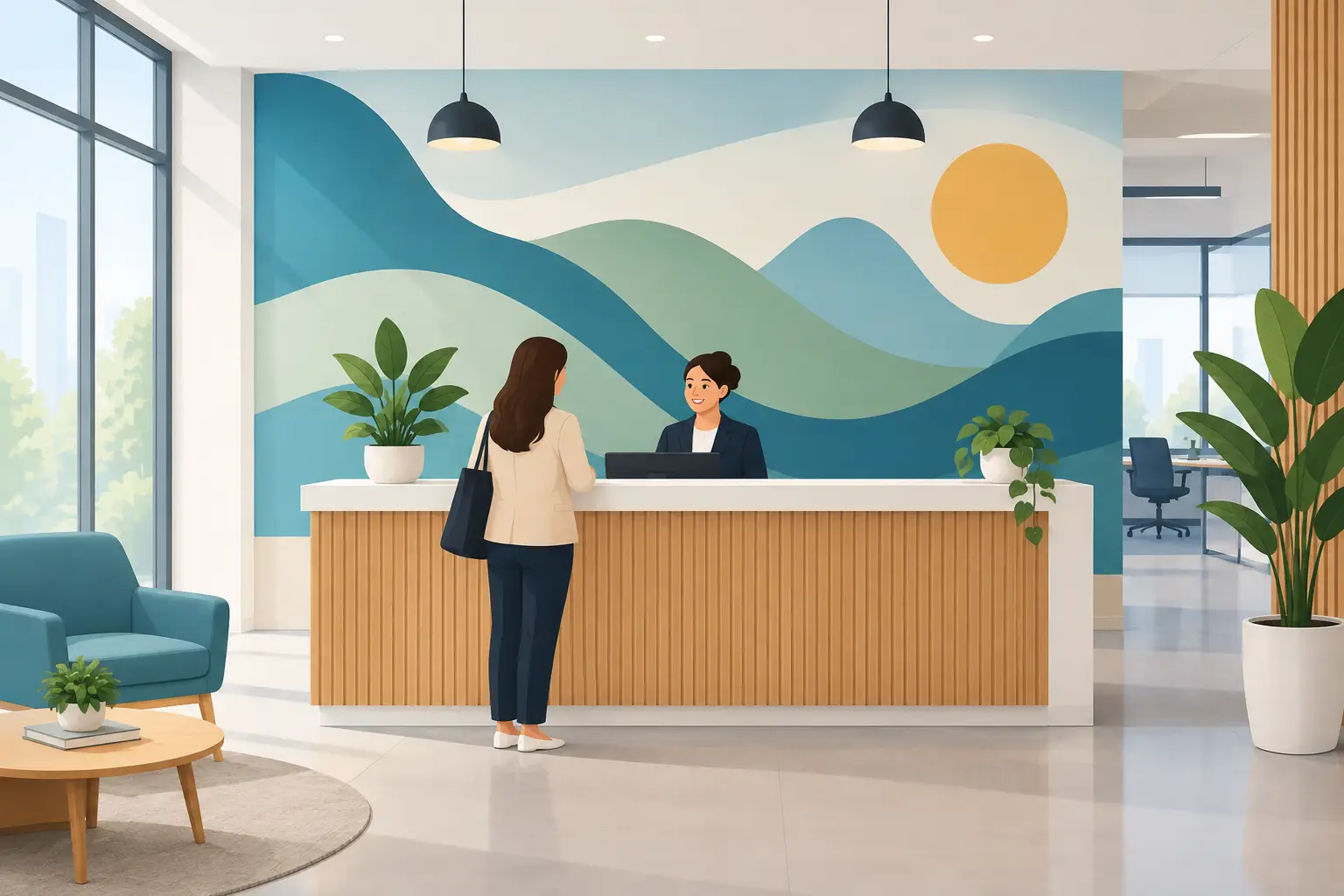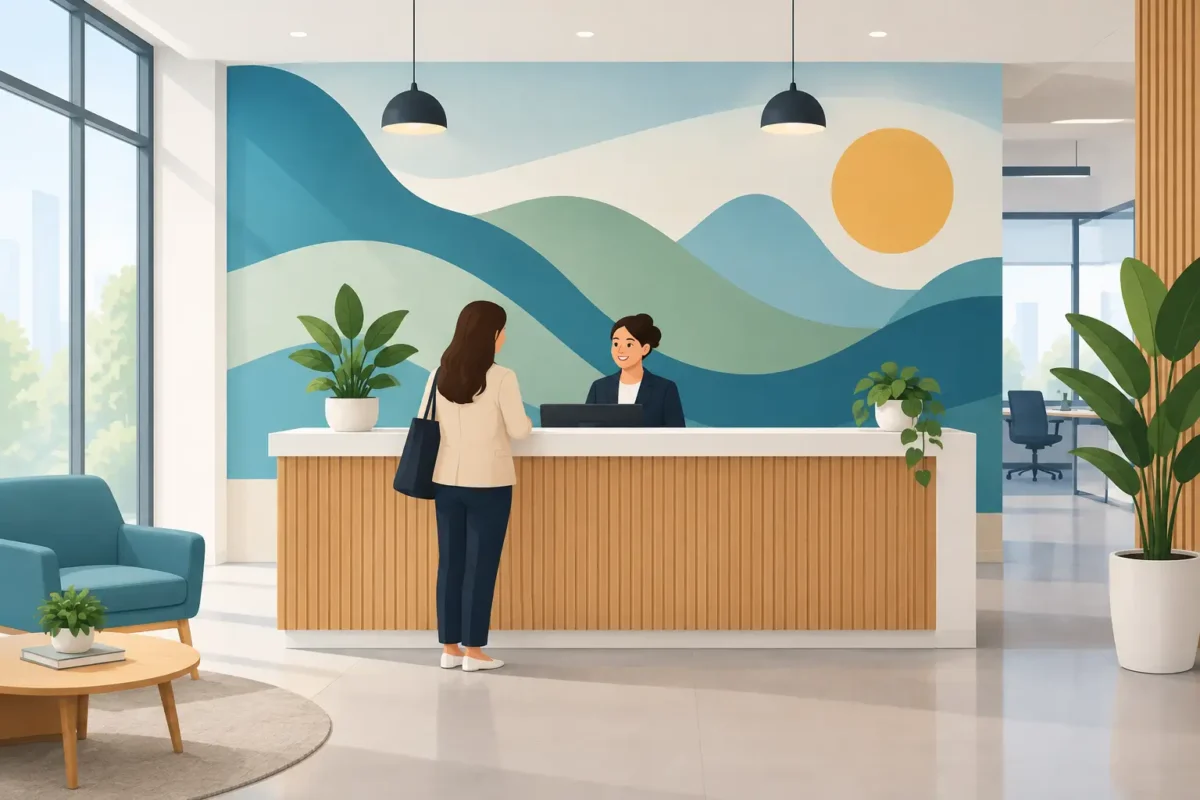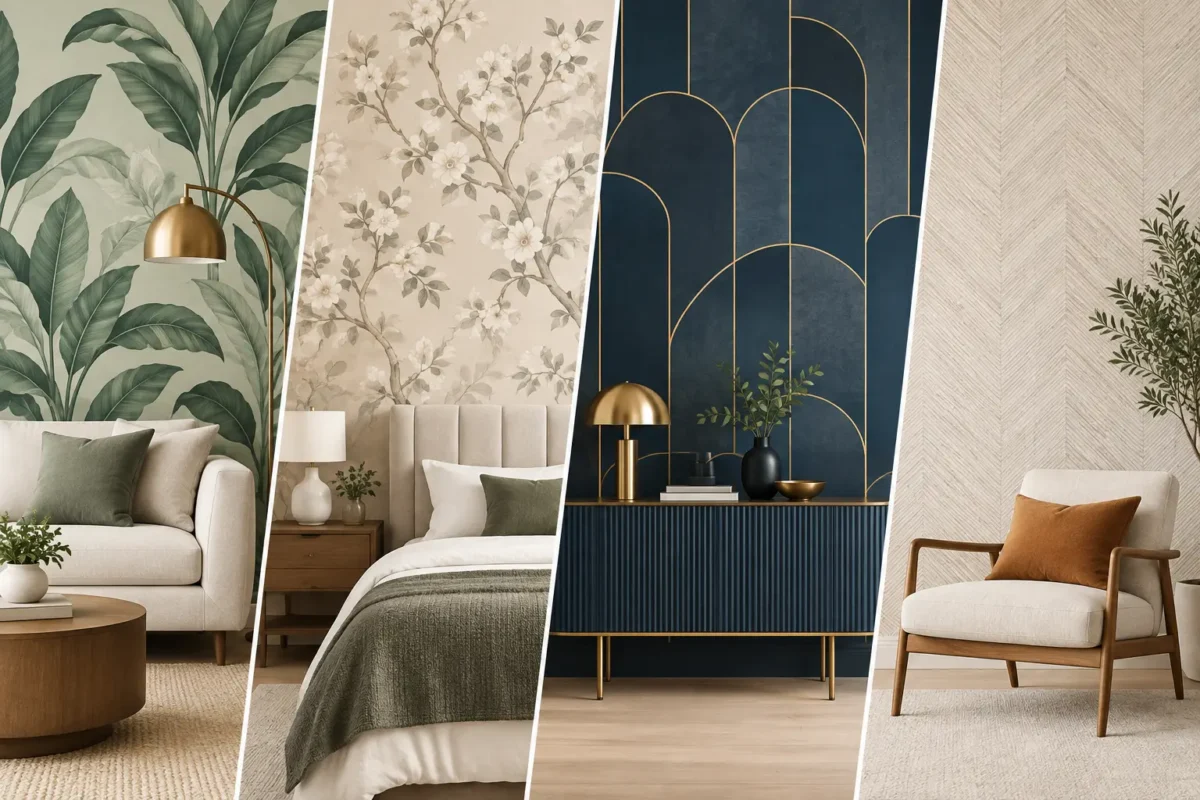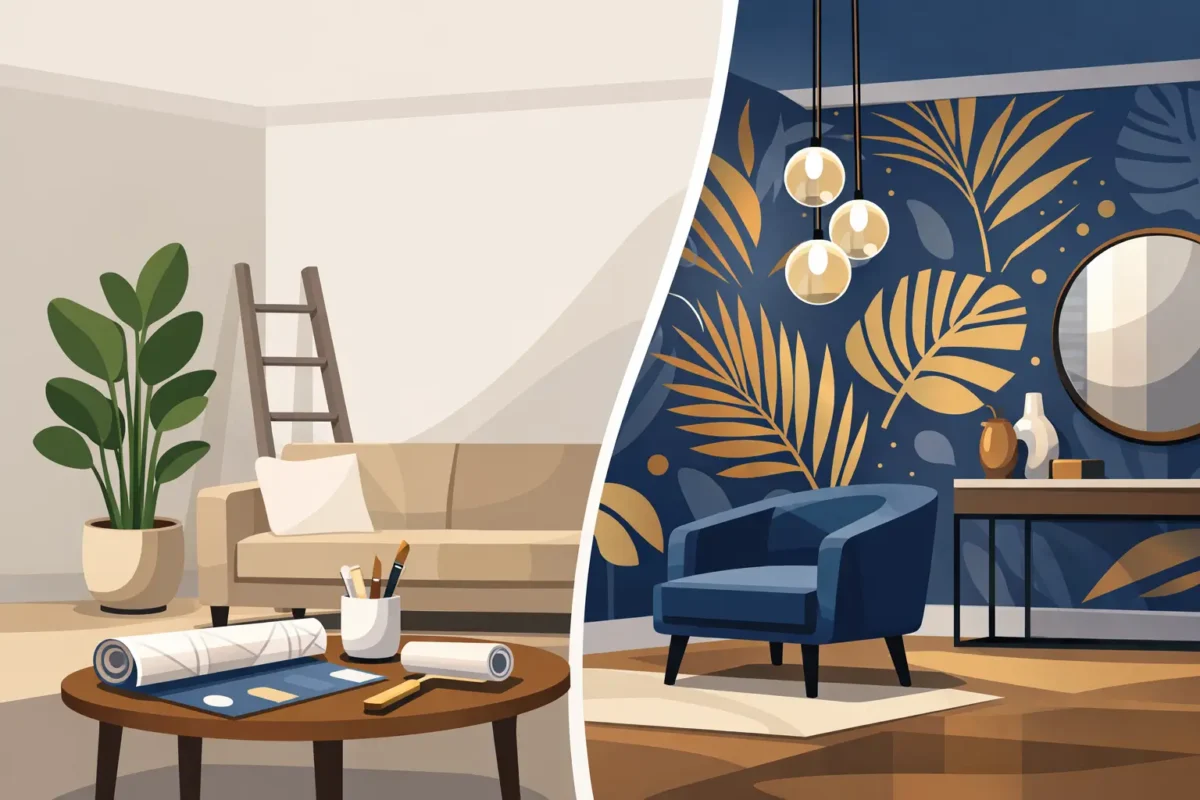
A visitor has formed an opinion before the receptionist finishes a greeting. The view from the entry, the quality of the finishes, and the confidence of the space all signal what it may be like to work with your business. An office reception mural gives that first moment a clear point of view. It can express your brand, create a sense of arrival, and make a standard lobby feel considered rather than merely furnished.
For offices, clinics, showrooms, hotels, and developer suites, the strongest mural is not simply a large image. It is a wall finish designed around the room, the audience, and the daily realities of a commercial environment.
A reception mural has a bigger job than filling an empty wall. It should establish the right emotional tone while supporting the practical function of the space. A financial advisory firm may need quiet authority and clarity. A creative studio can carry more color, movement, and visual surprise. A hospitality reception area may benefit from an immersive scene that immediately makes guests feel welcomed.
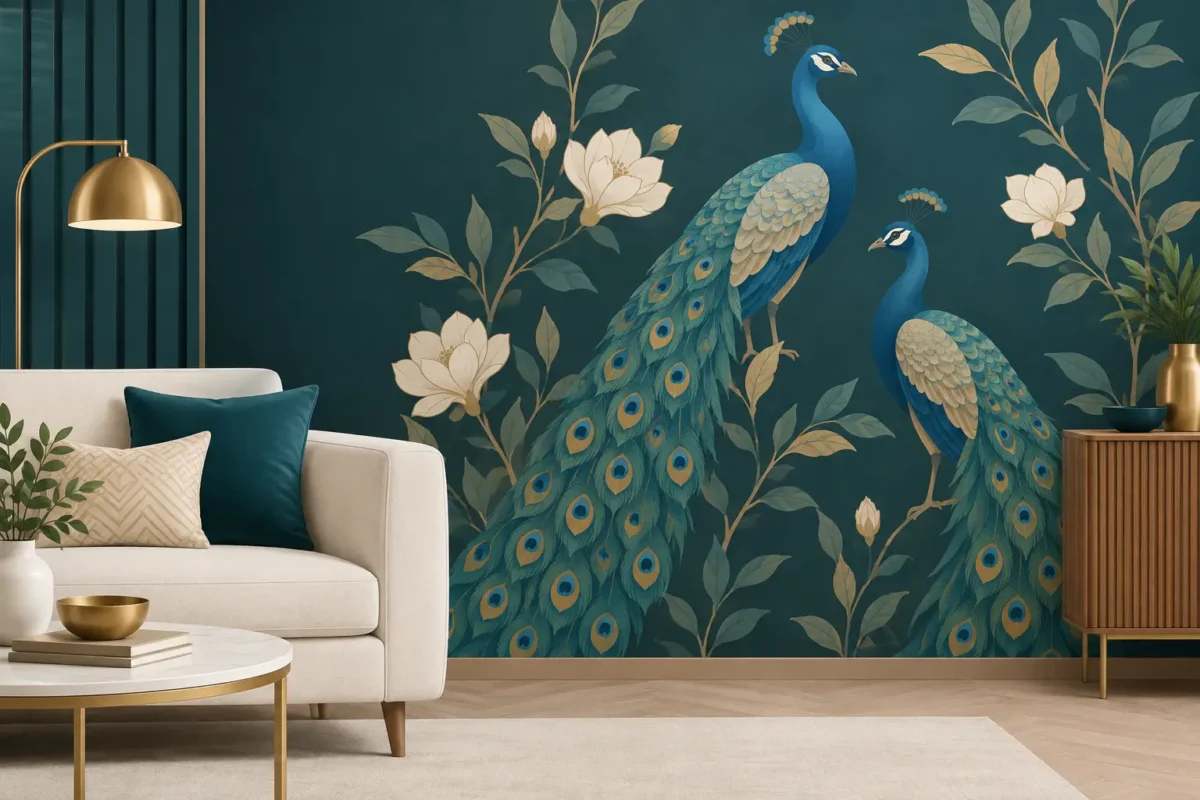
The best concepts connect brand character with the physical setting. That could mean an abstract interpretation of a logo palette, a custom cityscape relevant to the company’s location, layered botanical artwork for a wellness-led business, or a refined textured finish that brings depth without competing with signage.
Scale matters. A mural that is too small can appear like an afterthought, particularly behind a wide reception desk. One that is too detailed can feel busy at close range. Consider the sightline from the front door, waiting seats, elevator lobby, and any glazed meeting rooms. The artwork should read confidently from a distance, then reward a closer look.
Choosing a beautiful photograph first is tempting, but it often leads to a mural that could belong in any office. Begin instead with a short design brief. Define what visitors should feel within the first ten seconds: reassured, energized, inspired, cared for, or impressed.
Then identify the visual elements that genuinely belong to the organization. These might include established brand colors, key materials, a regional connection, product imagery, a company story, or values such as precision, innovation, and sustainability. The objective is not to cover the wall with logos. It is to create a branded environment with enough restraint to remain elegant over time.
For a corporate headquarters, an abstract composition built from brand tones may be more enduring than a campaign-led graphic. For a retail showroom or customer experience center, a bold product-focused mural may be exactly the right choice. It depends on how often your brand message changes and whether the reception space serves employees, clients, guests, or all three.
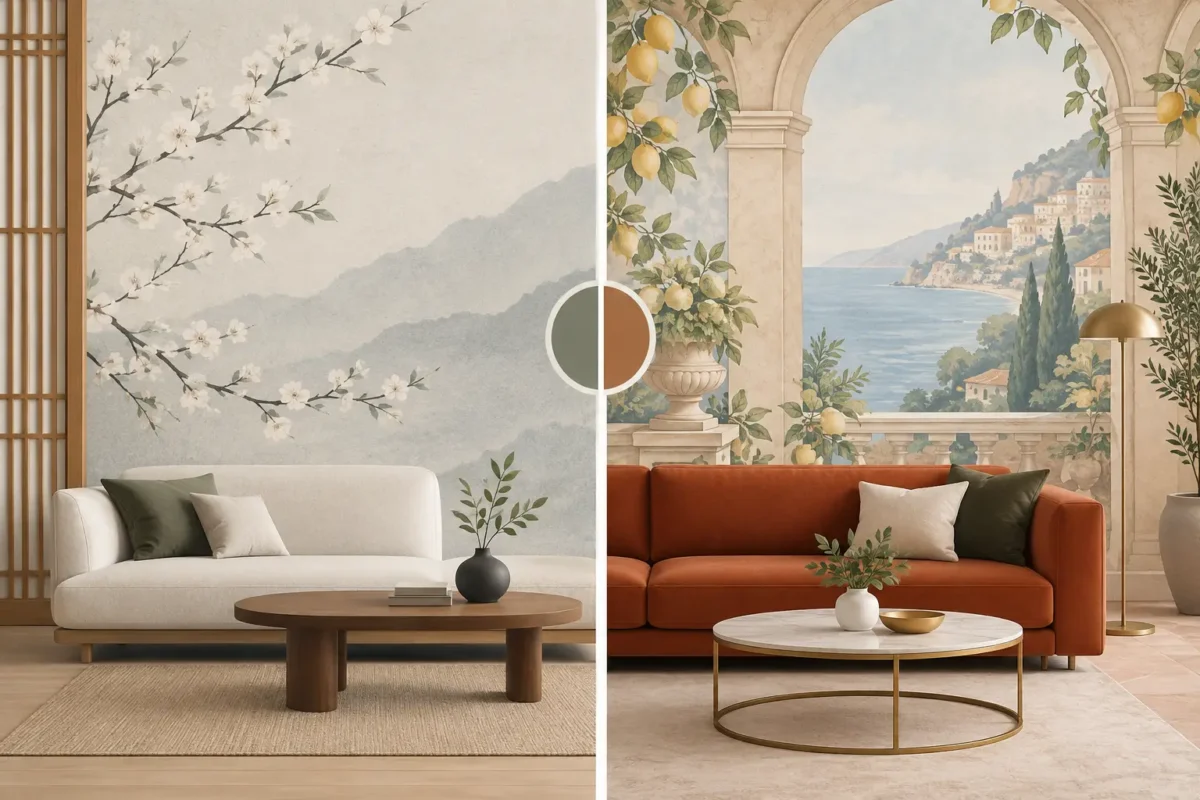
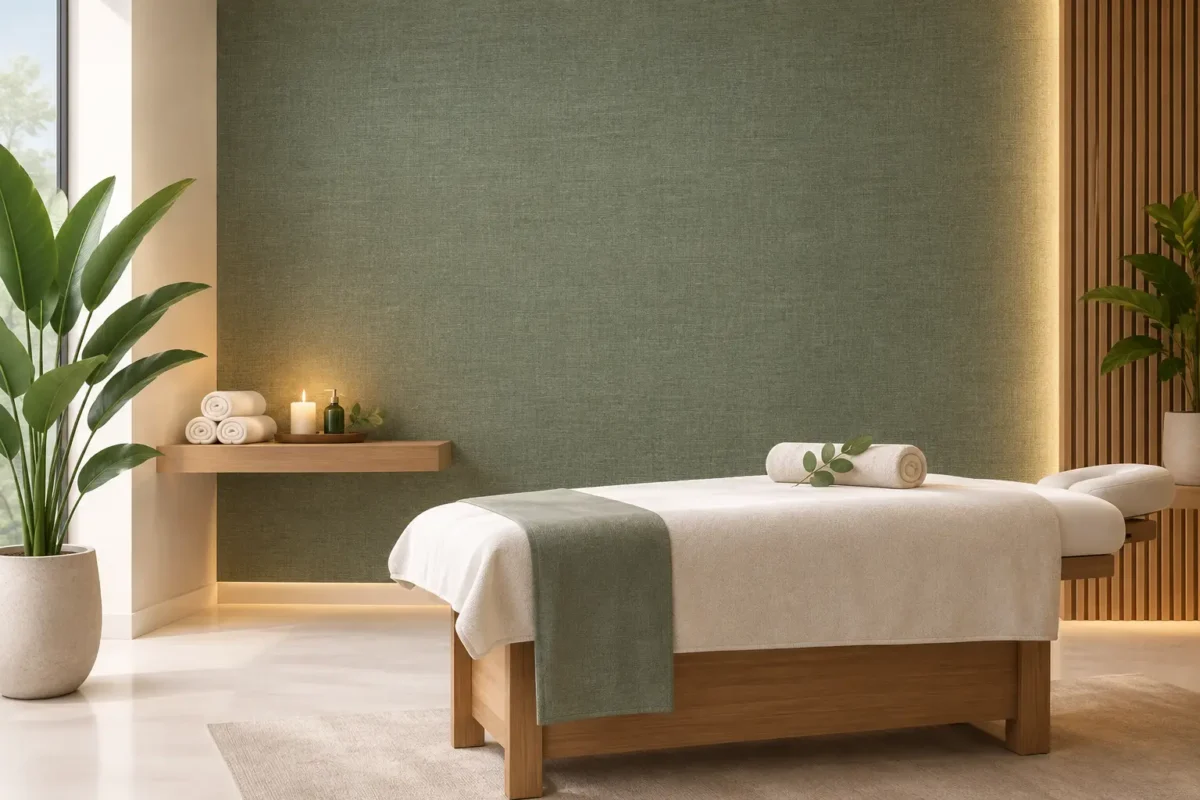
Nature-inspired murals remain a strong option because they soften hard commercial surfaces and bring calm to busy reception areas. Misty forests, sculptural leaves, stone textures, and wide coastal horizons work especially well for wellness, hospitality, property, and professional services settings.
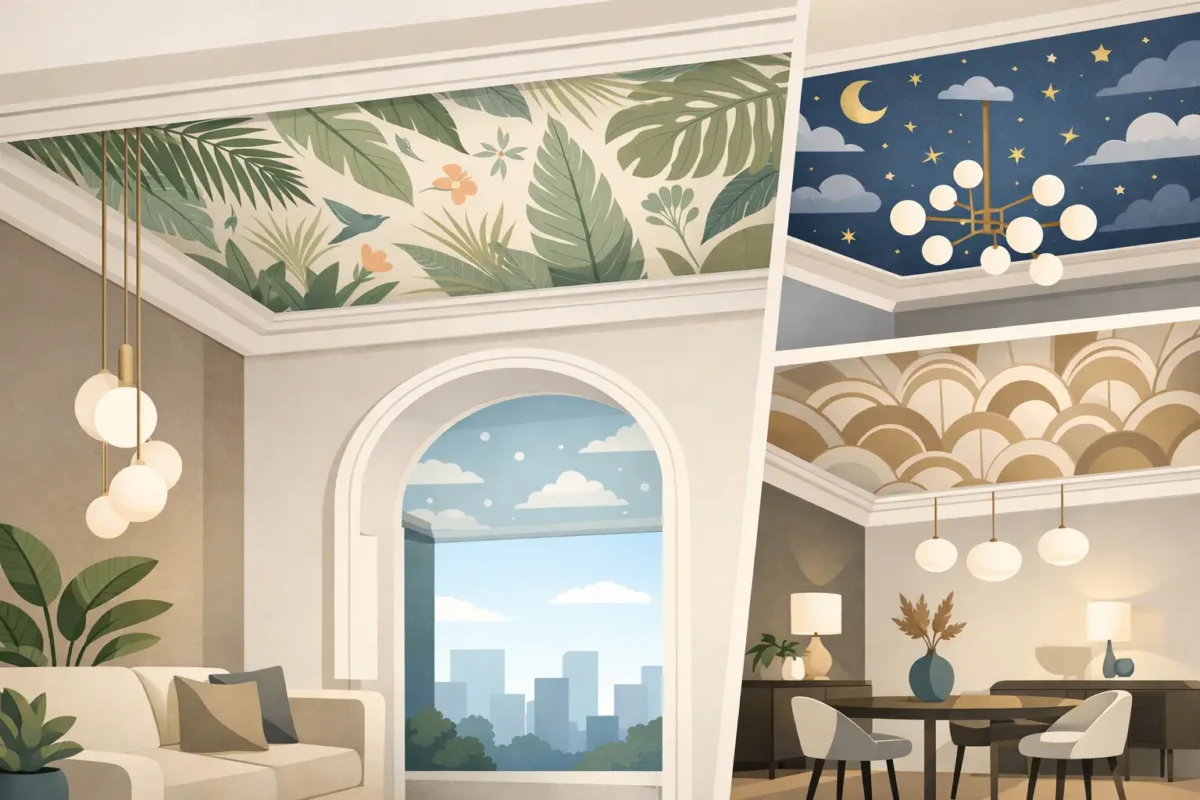
Architectural and city-inspired designs create a more structured, metropolitan mood. They can reference a local landmark or use geometric perspectives to add depth to a narrow entry. Abstract art offers the greatest flexibility for organizations that want color and personality without a literal visual message.
Custom graphics suit businesses with a distinct story to tell. A technology company might use data-inspired linework. A developer may feature an artistic rendering of its portfolio. A heritage brand could reinterpret archival imagery at a larger scale. When custom artwork is professionally prepared, it becomes a signature feature rather than generic wall decor.
A reception wall is a high-visibility surface, and often a high-contact one. Material selection affects not only the appearance of the mural but also how well it performs through daily use, cleaning, and seasonal changes in indoor conditions.
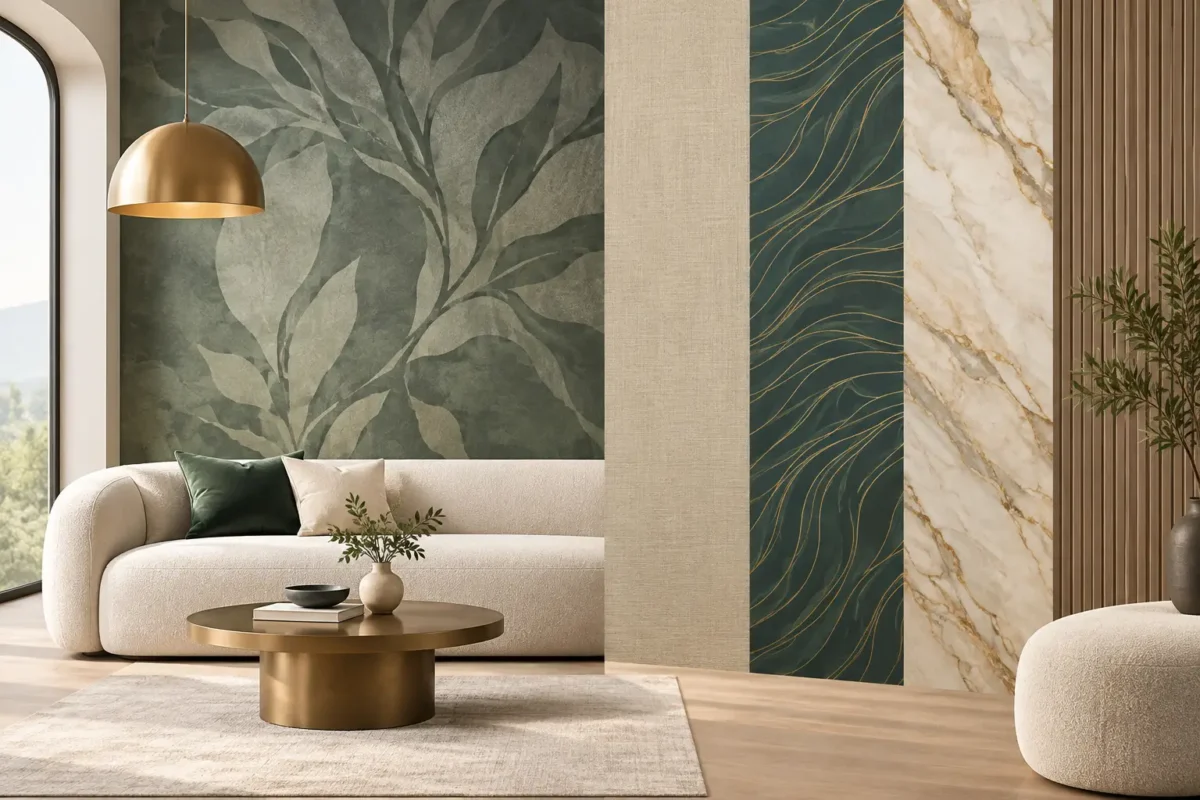
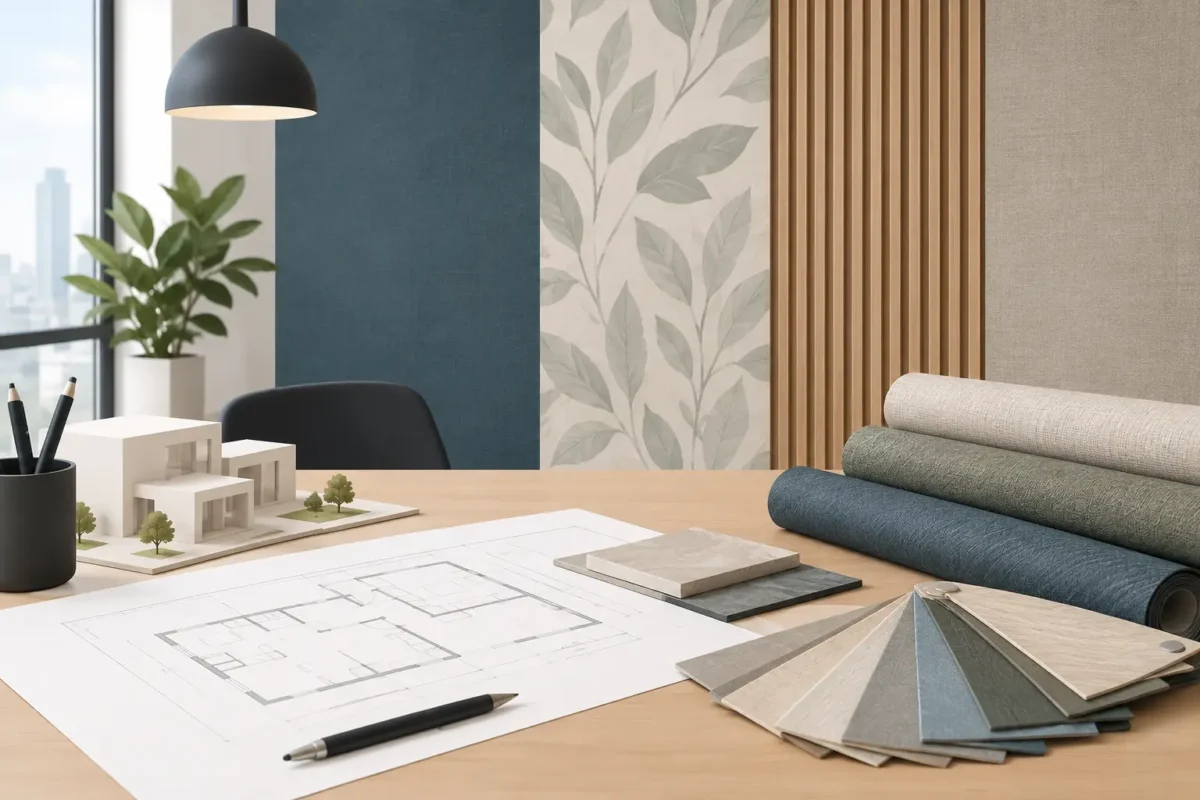
For busy commercial spaces, fabric-backed commercial wallcovering is often the preferred specification. It offers a substantial finish, reliable dimensional stability, and enhanced durability for offices, hotels, public-facing businesses, and large projects. Depending on the product selected, commercial wallcoverings can also support fire-retardant requirements and easier maintenance.
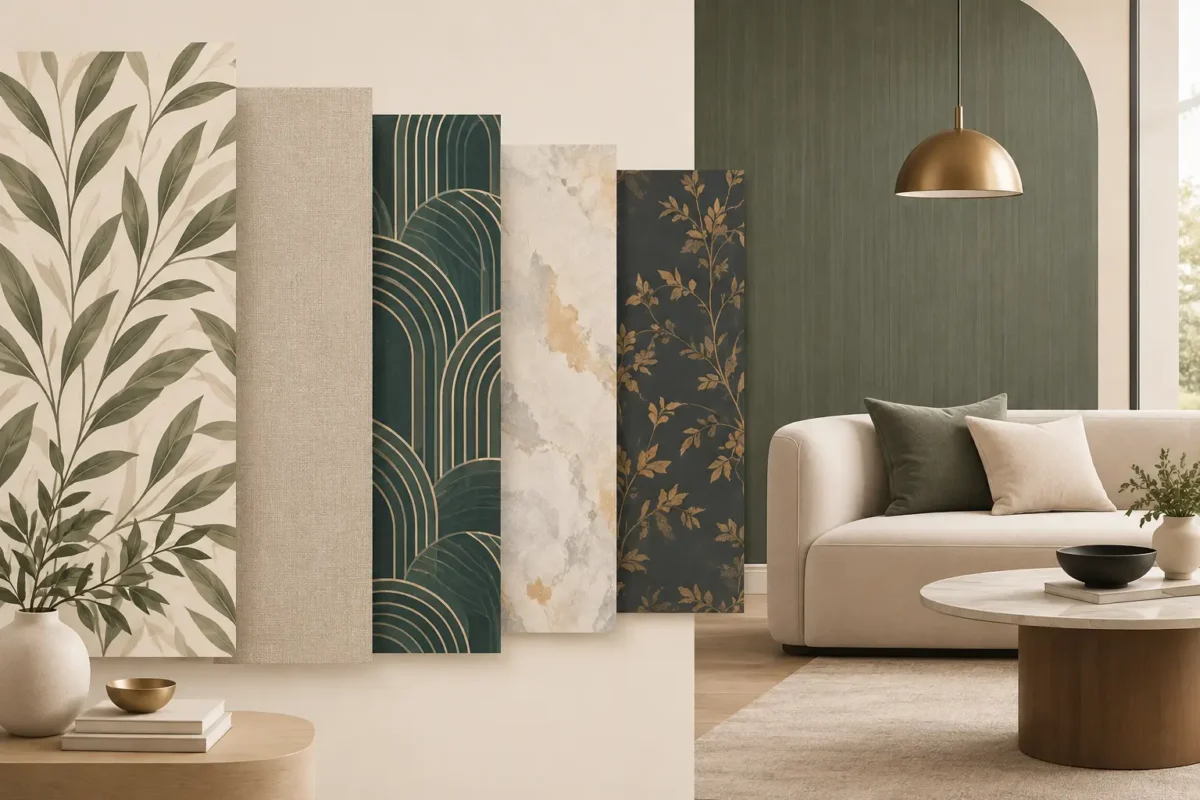
Custom print wallpaper provides outstanding creative freedom. It allows artwork to be sized precisely for the wall, adjusted to accommodate doors, outlets, signage, and furniture, and produced in colors that support the wider interior scheme. Premium printing using eco-friendly ink helps deliver sharp detail and rich color while meeting the expectations of contemporary interior projects.
The right material depends on the wall condition and the operating environment. A low-traffic executive reception may prioritize a finely textured luxury finish. A clinic, education center, or customer service lobby may require a more washable, hard-wearing surface. Your wallcovering partner should help assess both the aesthetic ambition and the performance specification before production begins.
A mural can look perfect on a screen and still underperform in the actual space if lighting, furnishings, and wall geometry are ignored. Reception areas often have downlights that create glare, glass surfaces that introduce reflections, and counters that conceal a large portion of the lower wall.
Place key visual elements above the reception desk line, typically where they remain visible to both seated and standing visitors. Keep faces, logos, and fine text away from panel joints, corners, air-conditioning grilles, and access panels. If the design includes typography, it should be secondary to the artwork and large enough to read from the intended viewing distance.
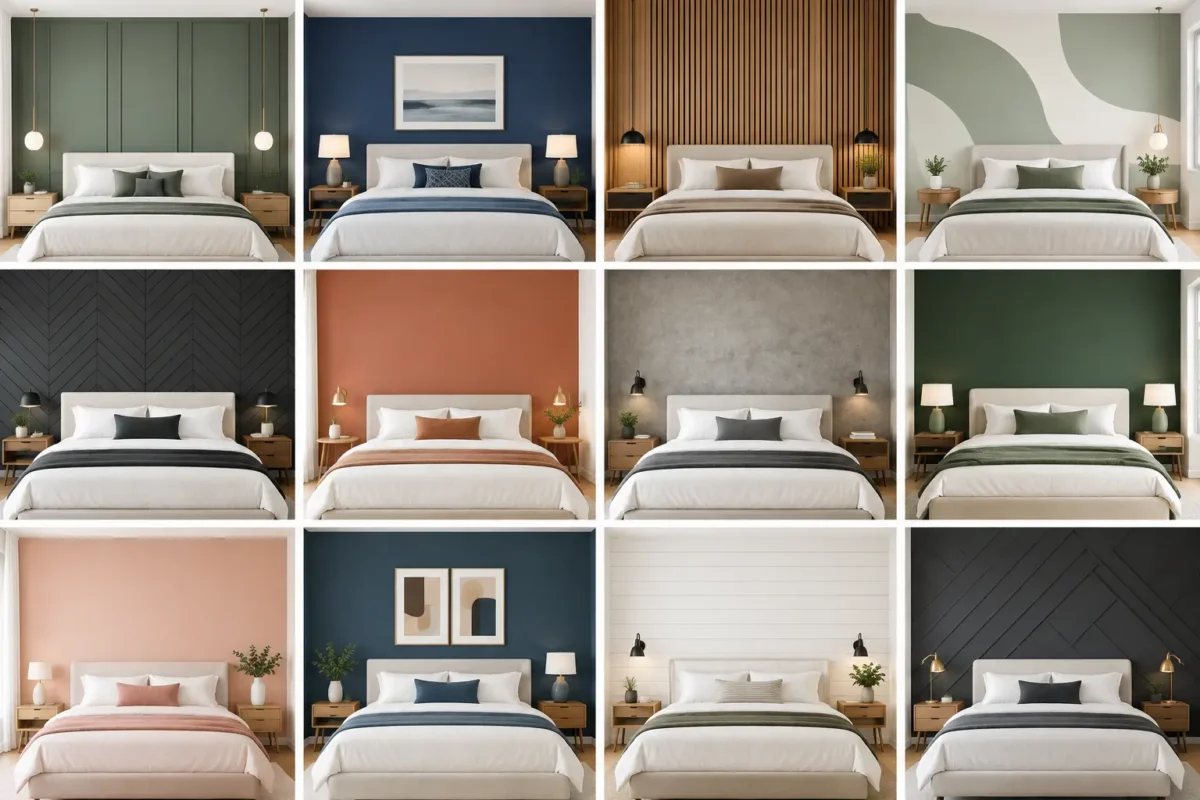
Color deserves equal attention. Dark murals can feel luxurious and dramatic, but they may make a compact, low-light reception feel smaller. Pale designs can open up a space, though they need enough contrast to avoid appearing washed out under bright LED lighting. Requesting a sample or reviewing a color proof under the site’s actual lighting can prevent costly surprises.
Acoustic comfort also influences how a lobby feels. While a mural is not an acoustic treatment on its own, its visual warmth can work alongside fabric finishes, rugs, acoustic panels, and upholstered seating to create a more composed welcome area. The goal is a space that looks premium and feels calm during a busy day.
Off-the-shelf wallpaper can be attractive, but it is rarely created for the exact proportions of a reception wall. Repeating patterns may not align with a centered desk. A scenic design may place its focal point behind a sign or in a corner. Stock mural dimensions can also leave awkward cropped edges.
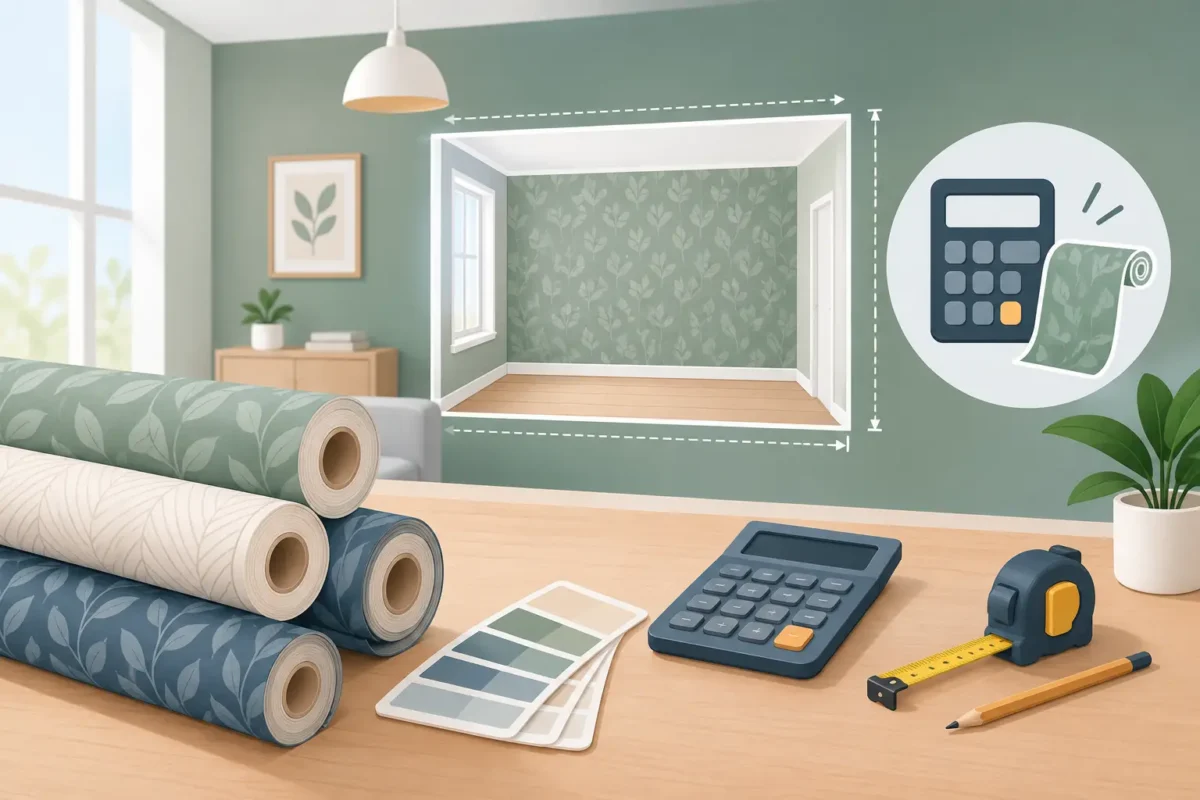
A custom office reception mural is built around the site measurement. The artwork can be extended, cropped, recolored, or repositioned so the composition works with the architecture rather than fighting it. This is particularly valuable for walls with unusual heights, double-volume spaces, curved sections, or integrated display features.
Custom production also makes it easier to coordinate the mural with other elements of the interior. A feature wall may echo upholstery tones, stone finishes, timber joinery, or the color of the reception counter. The result feels intentional from the first step inside.
Even exceptional artwork and commercial-grade material will not compensate for poor installation. Visible seams, uneven pattern matching, trapped air, or poorly prepared wall surfaces can quickly reduce the effect of a statement wall.
Professional installation begins with site readiness. The wall should be dry, smooth, stable, and properly primed for the selected wallcovering. Existing imperfections may need repair, especially when a mural includes broad areas of solid color or precise geometric lines. Installers should also verify measurements before printing and plan panel placement around architectural details.
For live offices, scheduling matters. Installation may be best completed after hours or in phases to reduce disruption at the front desk. Clear coordination between the designer, facilities team, contractor, and installer protects the finish and keeps the project on schedule.
With more than 40 years of wallcovering experience, Decorating Depot approaches murals as complete interior surfaces, from design consultation and material selection to custom production and professional installation. That integrated approach is especially valuable when a reception wall needs to meet both creative expectations and project-grade requirements.
The reception wall is often the one surface every visitor sees, photographs, and remembers. Treat it as an opportunity to make your brand tangible, not as a final decorative add-on. A well-specified mural brings visual distinction to the room while giving clients, guests, and employees a more confident welcome every day.