A feature wall can look expensive for the wrong reasons when the print is soft, the scale is off, or the seams refuse to disappear. If you are planning how to print custom wallpaper, the real work starts long before the printer runs. The best results come from matching artwork, material, wall conditions, and installation requirements as one complete system.
Custom wallpaper is not just about putting an image on a roll. It is about translating a concept into a wall finish that feels intentional at full scale and performs well over time. For a residence, that may mean richer detail and a more personal design language. For a retail, office, hotel, or developer project, it also means thinking about durability, maintenance, fire performance, and visual consistency across large surfaces.
The first decision is not the printer. It is the wall. A bedroom accent wall, a restaurant corridor, a reception area, and a hotel guestroom all demand different levels of performance. In lower-traffic residential spaces, a smoother decorative finish may be enough. In commercial interiors, fabric-backed vinyl or other project-grade materials are often the better choice because they are more durable, easier to maintain, and better suited to high-use environments.
Artwork selection matters just as much. Not every image that looks sharp on a phone or laptop will hold up when enlarged across an eight-foot or ten-foot wall. Resolution, color depth, cropping, and composition all need to be checked at final print size. A beautiful file can still fail if the focal point lands behind furniture, a door frame cuts through the design, or the pattern repeat becomes visually awkward once installed.
This is why premium custom wallpaper production is part design exercise and part technical planning. The strongest projects respect both.
If you are using photography, the file needs enough resolution for the final wall dimensions. As a rule, larger walls require cleaner source files, not aggressive upscaling. Artificially enlarging a small image often introduces blur, noise, and weak detail, especially in faces, typography, and architectural lines.
Vector artwork gives you more flexibility for logos, linework, branded graphics, and certain repeat patterns because it can scale cleanly. That makes it a strong option for office branding, retail concepts, and hospitality feature walls where precision matters. Raster artwork can still work beautifully, but it needs to be prepared properly.
Color is another common issue. Screens are backlit and print is not, so colors usually appear different once produced on wallpaper. Deep navy may print softer, warm beige can shift pink, and highly saturated greens may need adjustment depending on the substrate. Professional color management helps, but expectations should still be grounded in material reality. The print surface influences the final result.
Accurate measurement is where many custom wallpaper projects are won or lost. You need the full wall height and width, but you also need to account for site conditions such as uneven ceilings, skirting, bulkheads, niches, windows, doors, and switch plates. A wall that appears rectangular from a distance may vary enough to affect panel alignment on site.
For custom murals, it is usually wise to add extra allowance around the perimeter for trimming during installation. That margin gives installers room to work cleanly, especially in older buildings or commercial spaces where walls are not perfectly straight. Printing to exact edge dimensions can look efficient on paper but creates risk during fitting.
Scale planning also deserves more attention than it usually gets. A pattern that looks refined on a sample may feel oversized in a powder room or too busy in a boardroom. For branded environments, the visual hierarchy should be deliberate. Logos, text, and signature motifs must read clearly from the intended viewing distance.
Learning how to print custom wallpaper properly means choosing the substrate before approving the artwork. Material affects print clarity, durability, washability, texture, and installation behavior.
Smooth wallpaper gives a crisp, contemporary look and often shows fine detail well. Textured surfaces add depth and can soften the feel of large graphics, which works especially well for hospitality interiors and statement residential spaces. Vinyl and fabric-backed commercial wallcoverings provide stronger performance in high-traffic settings where easy maintenance and surface resilience matter.
There is always a trade-off. A highly textured finish may reduce the sharpness of delicate lines or small typography. A very smooth finish may highlight wall imperfections if the substrate preparation is poor. Eco-friendly ink systems are also worth considering, especially for enclosed interiors, family homes, and projects where environmental standards matter.
For many professional environments, the decision should not be based on appearance alone. Fire retardancy, cleanability, abrasion resistance, and long-term stability may be just as important as color and design.
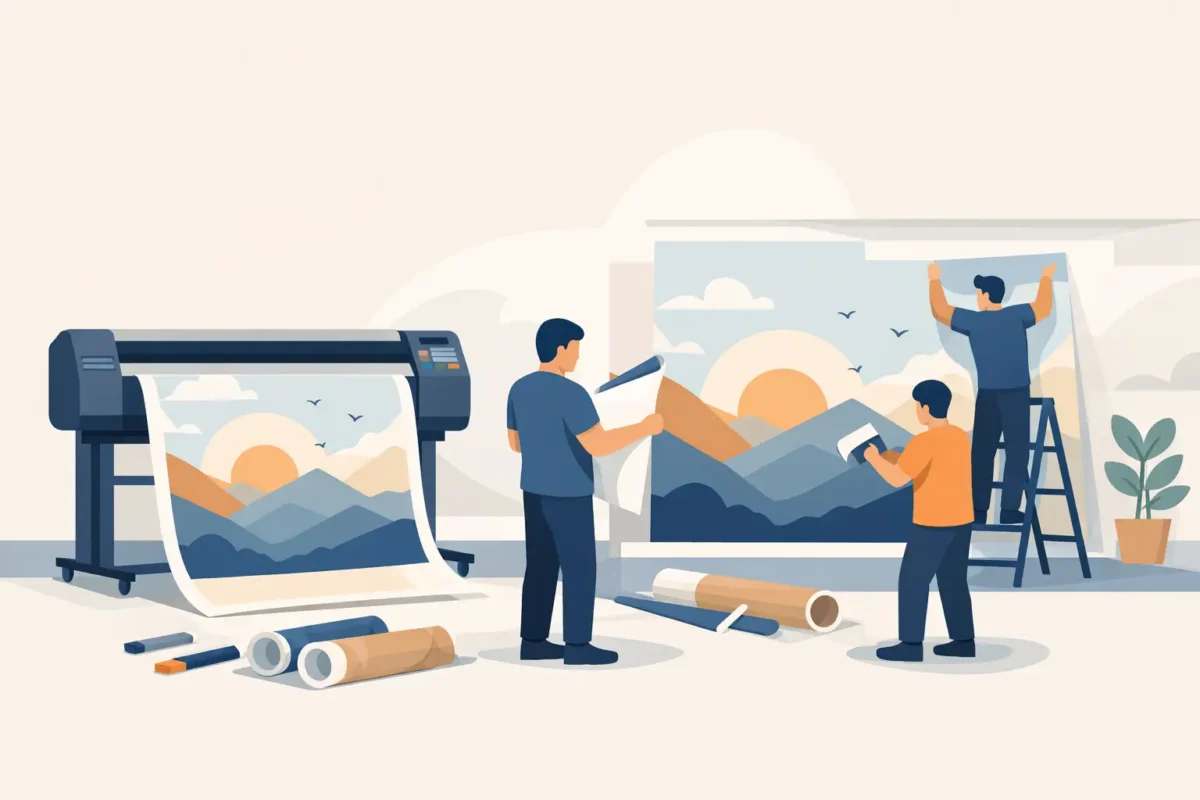
Once the wall dimensions and material are confirmed, the artwork should be set up for production. This usually includes sizing the file to final scale, allowing for bleed, defining panel breaks, and checking where seams will fall. A striking mural can lose impact if a subject’s face, a key architectural element, or a brand mark is split awkwardly across joins.
Panel planning is especially important for large walls. Wallpaper is typically printed in vertical drops, and each panel must align correctly during installation. Repeats, overlaps, and trim tolerances should be considered in the prepress stage, not after the rolls arrive on site.
Proofing is the step that protects quality. A sample section allows you to assess color, detail, contrast, and material texture before full production. This is particularly valuable for hospitality, retail, and developer projects where one approved concept may later be scaled across multiple rooms or locations. A small proof is much less expensive than reprinting an entire wall package.
Advanced large-format printing technology makes a visible difference, especially on custom work with gradients, fine detail, and demanding brand colors. Consistency matters as much as sharpness. If one panel prints slightly darker than the next, the wall will show it.
High-end production should deliver stable color, clean detail, and reliable repeatability from panel to panel. That is essential for full-height murals, long corridors, and multiwall applications. Premium print systems paired with quality media and eco-conscious inks create a finish that looks elevated while supporting indoor use standards.
This is where working with a specialist pays off. A full-service wallcovering partner can evaluate artwork suitability, recommend the right substrate, test output, and produce to installation-ready dimensions. For clients managing larger interior programs, that coordination reduces costly revisions and site delays.
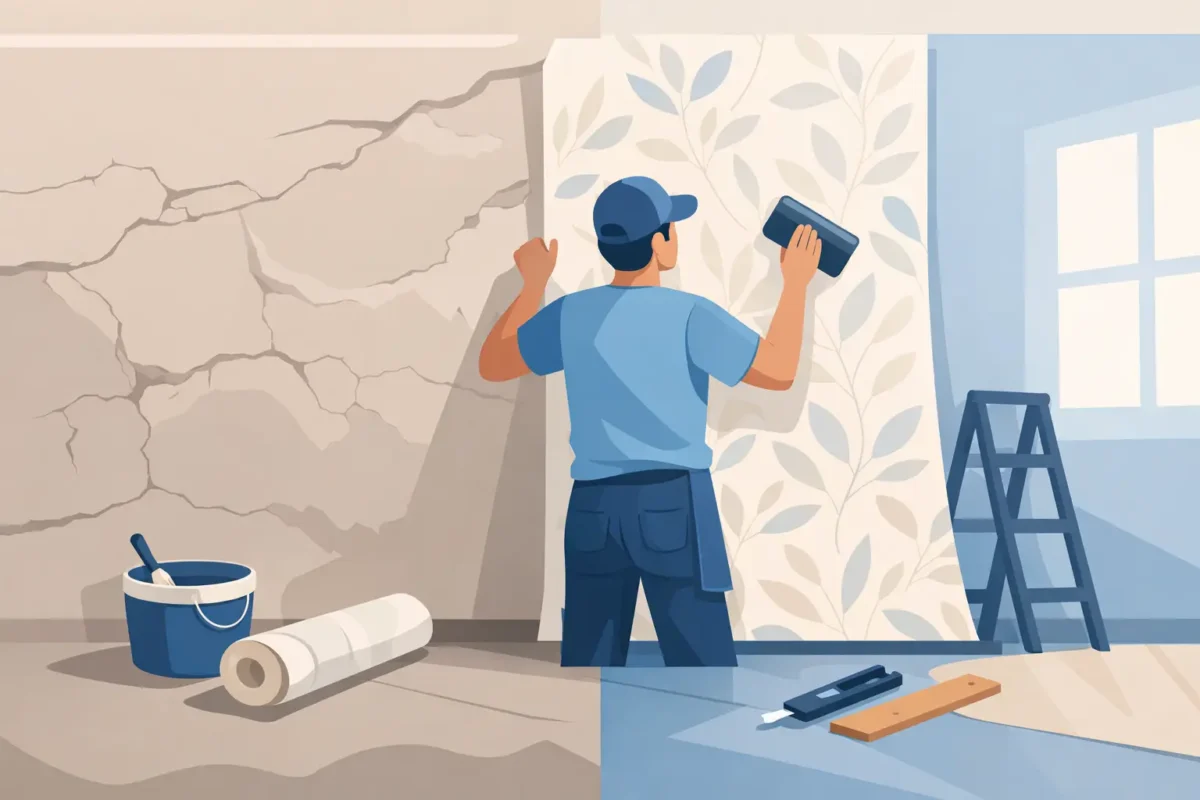
Wallpaper is printed in the factory, but it succeeds or fails on the wall. That is why installation should influence the entire production process. Surface preparation, adhesive compatibility, wall condition, and site sequencing all matter.
Fresh paint may need curing time. Damp walls can compromise adhesion. Uneven surfaces can telegraph through thinner materials. In commercial spaces, scheduling is another factor. Installation may need to happen after cabinetry, lighting, or signage, but before final styling and handover.
Professional installation is particularly important for custom murals because there is little room for improvisation. Patterns must align, bubbles must be eliminated, seams should be minimized visually, and the finished surface needs to feel tailored to the architecture. Inexperienced installation can undermine premium printing in a single afternoon.
Commercial custom wallpaper has a different standard from decorative residential work. The design still needs to be beautiful, but it also needs to work under operational pressure. Hotels need surfaces that hold up under turnover. Offices may need branded feature walls that remain polished in client-facing areas. Retail spaces often require visual impact paired with quick maintenance.
That changes the specification. Material performance, installation speed, replacement planning, and print consistency across phases become central. If a project spans multiple floors or future expansion stages, the supplier should be able to reproduce the same design accurately later. That kind of continuity matters to architects, developers, and brand-led businesses.
This is one reason clients often choose an experienced specialist such as Decorating Depot. The value is not only in printing a design. It is in coordinating design, substrate, production quality, and installation standards so the final wall finish performs as well as it looks.
Custom wallpaper is not always the right choice. If the wall is small, the timeline is compressed, or a ready-made pattern already suits the space, a stocked wallcovering can be more efficient. But when the goal is a signature interior, a branded environment, or a mural sized precisely to architecture, bespoke printing offers a level of control standard rolls cannot match.
It allows you to tailor scale, palette, finish, and dimensions to the project instead of forcing the room to adapt to an off-the-shelf design. That is what turns wallpaper from decoration into an integrated surface solution.
The smartest custom wallpaper projects begin with a simple question: what does this wall need to do besides look good? Once you answer that clearly, the right print, material, and installation path usually follow.