A blank wall can make even a well-furnished room feel unfinished. Custom mural wallpaper changes that instantly by turning surface area into a design asset – whether the goal is a calm bedroom backdrop, a branded office feature, or a dramatic hospitality focal point.
Unlike off-the-shelf patterns, a mural is built around the space itself. The artwork, scale, panel layout, and material can all be tailored to the wall dimensions and the demands of the project. That matters because the most successful interiors are not just visually striking. They are also precise, durable, and appropriate for the way the space is used.
The appeal starts with control. A mural allows you to move beyond repeat patterns and choose a wall finish with a clear point of view. That could mean oversized botanicals in a living room, a soft abstract landscape in a hotel suite, a city skyline in a reception area, or brand-led graphics in a retail environment.
The difference is not only aesthetic. Scale is one of the biggest design advantages. In a standard wallpaper pattern, the room adapts to the design. With a mural, the design adapts to the room. You can position focal elements where they belong, avoid awkward cropping, and create a more architectural result.
This is especially valuable in larger spaces. Feature walls in double-volume homes, hotel lobbies, meeting rooms, and sales galleries often need more than decoration. They need visual structure. A properly designed mural can anchor furniture layouts, direct attention, and give the room a finished identity.
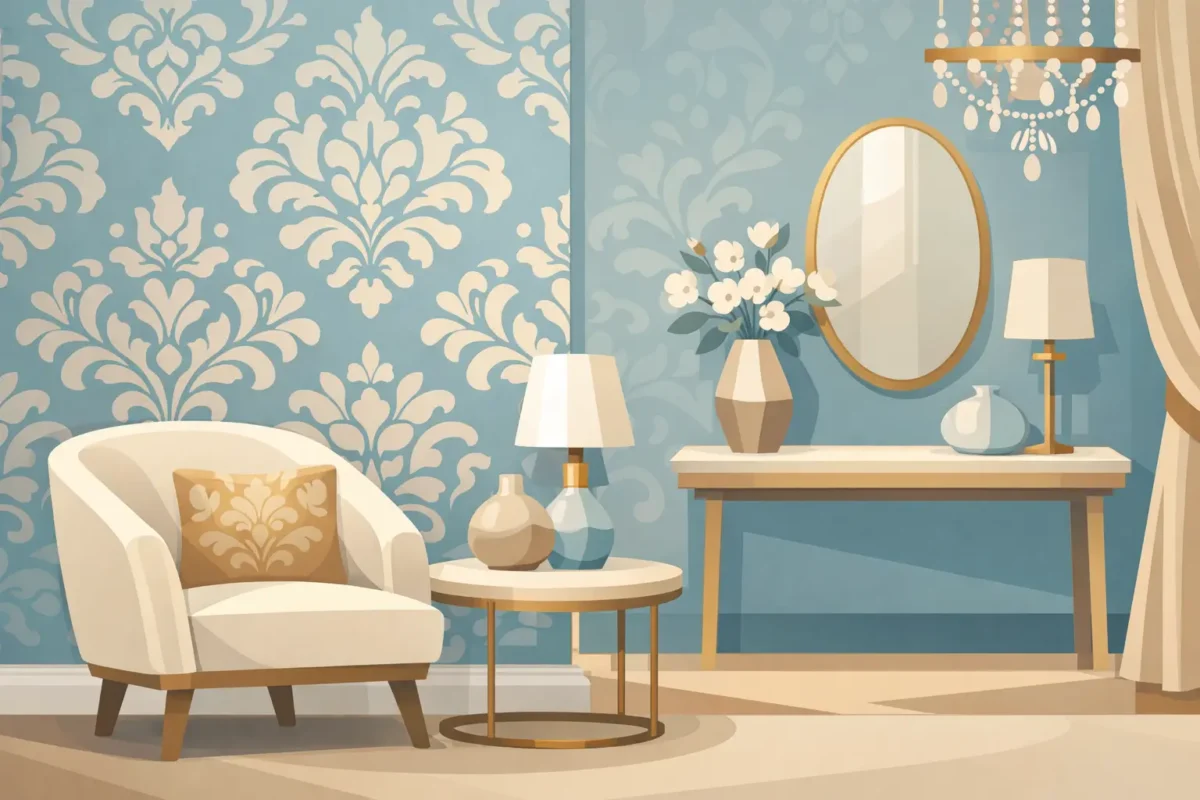
Residential spaces often benefit from murals because they add individuality without requiring structural renovation. In bedrooms, a mural behind the headboard can replace the need for layered wall art. In dining rooms and living areas, it can create depth and atmosphere. For children’s rooms, personalized themes can feel elevated when the artwork is scaled and printed with restraint rather than treated as novelty decor.
In commercial settings, the requirements shift slightly. Offices need finishes that feel polished and brand-aware, but also practical enough for everyday use. Retail stores want walls that support product presentation rather than compete with it. Hospitality projects need visual impact, durability, and consistency across multiple rooms or zones. In these cases, mural wallpaper performs best when the design concept is paired with project-grade materials and professional installation.
There is also a strong case for murals in transitional spaces. Corridors, waiting areas, lift lobbies, and reception walls can feel purely functional if left untreated. A custom wallcovering gives these areas purpose and can strengthen the overall design language of the property.
A mural succeeds when the visual idea fits the scale and tone of the interior. That sounds obvious, yet many walls fail because the artwork is too busy, too small, or disconnected from the finishes around it.
Large-format imagery usually reads best when there is space for it to breathe. A misty landscape, textured stone effect, hand-drawn botanical, or painterly abstract often feels more expensive than a composition overloaded with detail. Simpler artwork can also age better, particularly in homes and commercial environments designed for long-term use.
Color selection deserves the same discipline. Strong color can be effective, but the best statement walls usually connect to the room’s wider palette. Flooring, upholstery, curtains, lighting finishes, and joinery should all be considered. A mural should feel integrated, not applied as an afterthought.
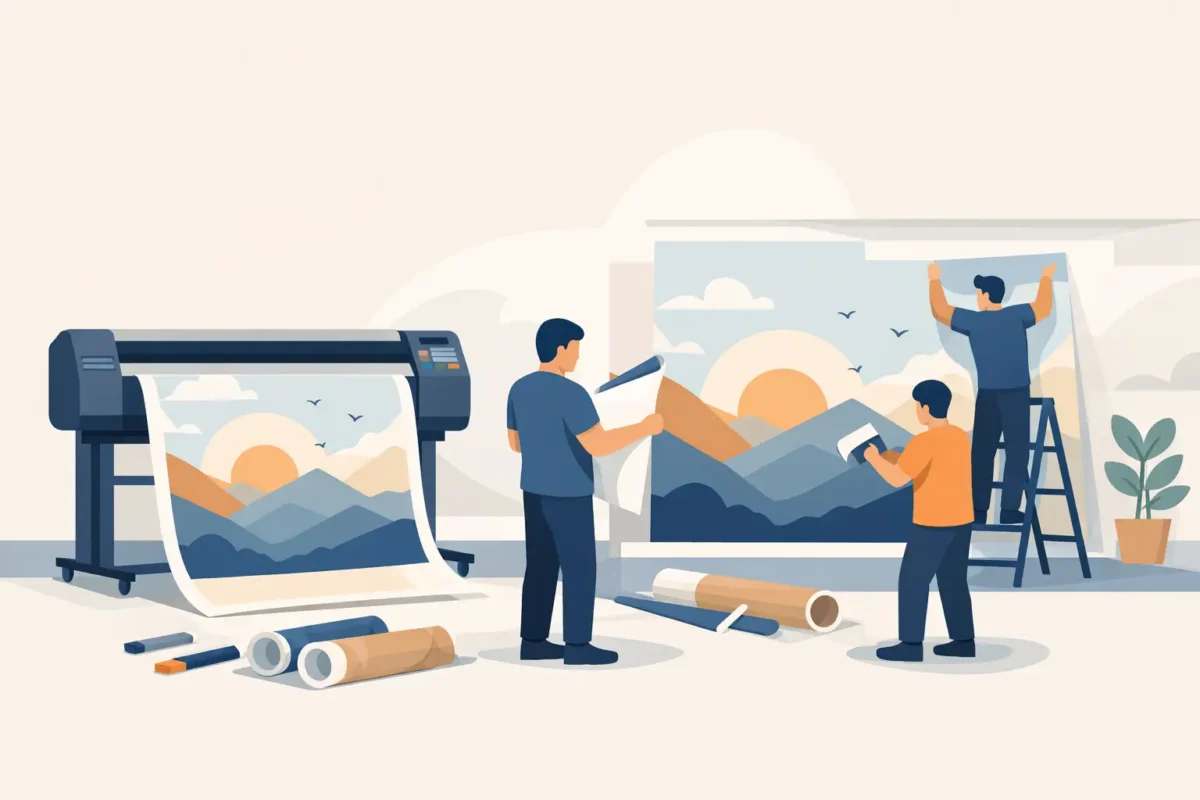
Image quality is another non-negotiable. Custom production only looks premium when the file resolution, print clarity, and material finish are properly handled. This is where advanced printing technology makes a visible difference. Fine gradients, subtle textures, and tonal depth need precision to avoid banding, pixelation, or flat-looking color.
A beautiful image printed on the wrong substrate will not perform well. This is one of the main differences between decorative experimentation and professional wallcovering specification.
For residential projects, the right material often depends on wall condition, expected wear, and the look you want. Smooth finishes can feel crisp and contemporary, while textured surfaces add softness and visual depth. If the wall has minor imperfections, some substrates will hide them better than others.
For offices, hotels, retail, and other high-traffic environments, durability becomes a central factor. Commercial-grade wallcoverings are designed for better dimensional stability, easier maintenance, and stronger resistance to wear. In some projects, fire retardancy and low-odor, eco-conscious printing are not just preferences. They are part of the specification.
Maintenance should be considered early, not after installation. In family homes, wipeable surfaces are often the smart choice. In hospitality and commercial spaces, easy-clean finishes help preserve the look of the wall over time. A mural should deliver impact on day one and still look composed after regular use.
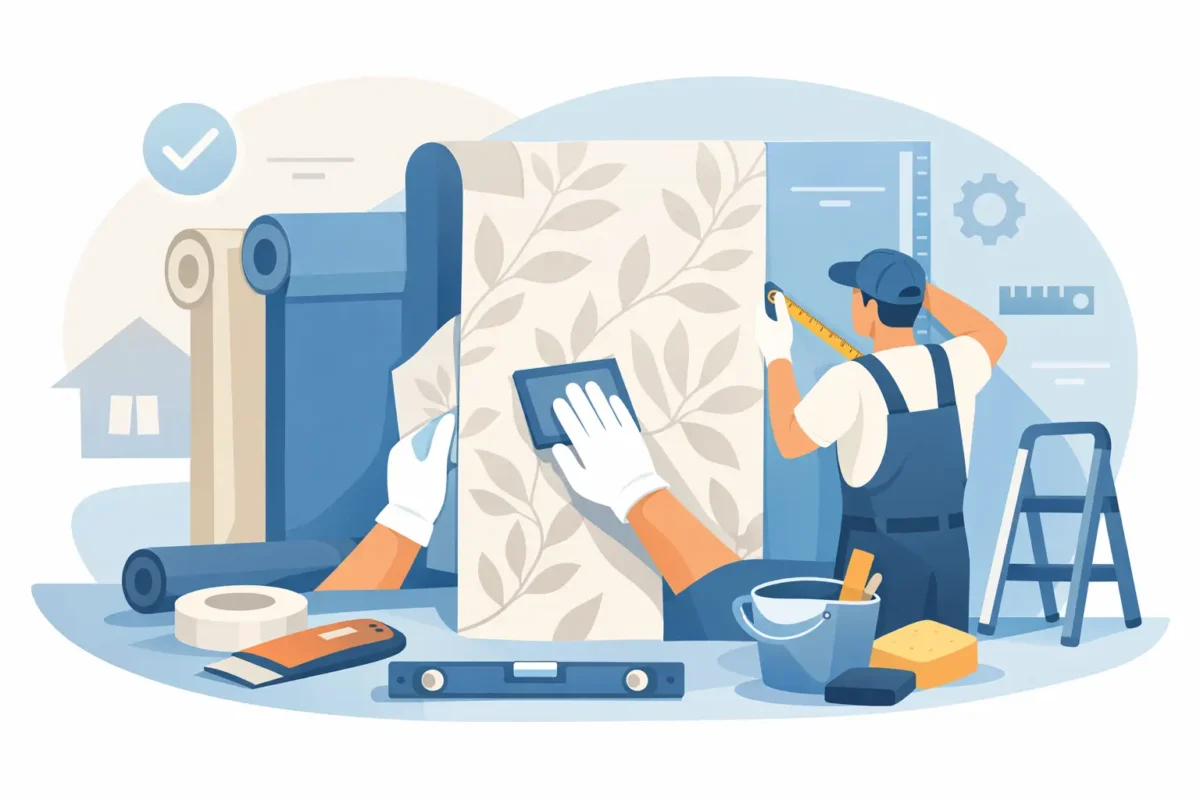
One reason custom mural wallpaper feels more refined than ready-made alternatives is accuracy. Exact wall measurement allows the design to be proportioned correctly, aligned with architectural features, and produced panel by panel for a clean installation.
That accuracy matters around doors, windows, headboards, reception counters, and built-in cabinetry. It also matters for symmetry. If the center of the mural is meant to align with a bed, a sofa, or a boardroom table, the layout has to be planned from the beginning.
There are trade-offs, of course. A highly tailored mural demands better site information and more coordination. Last-minute construction changes can affect panel placement. Walls that are uneven, damp, or poorly prepared can also compromise the final finish. This is why professional site assessment and installation are part of the value, not an extra.
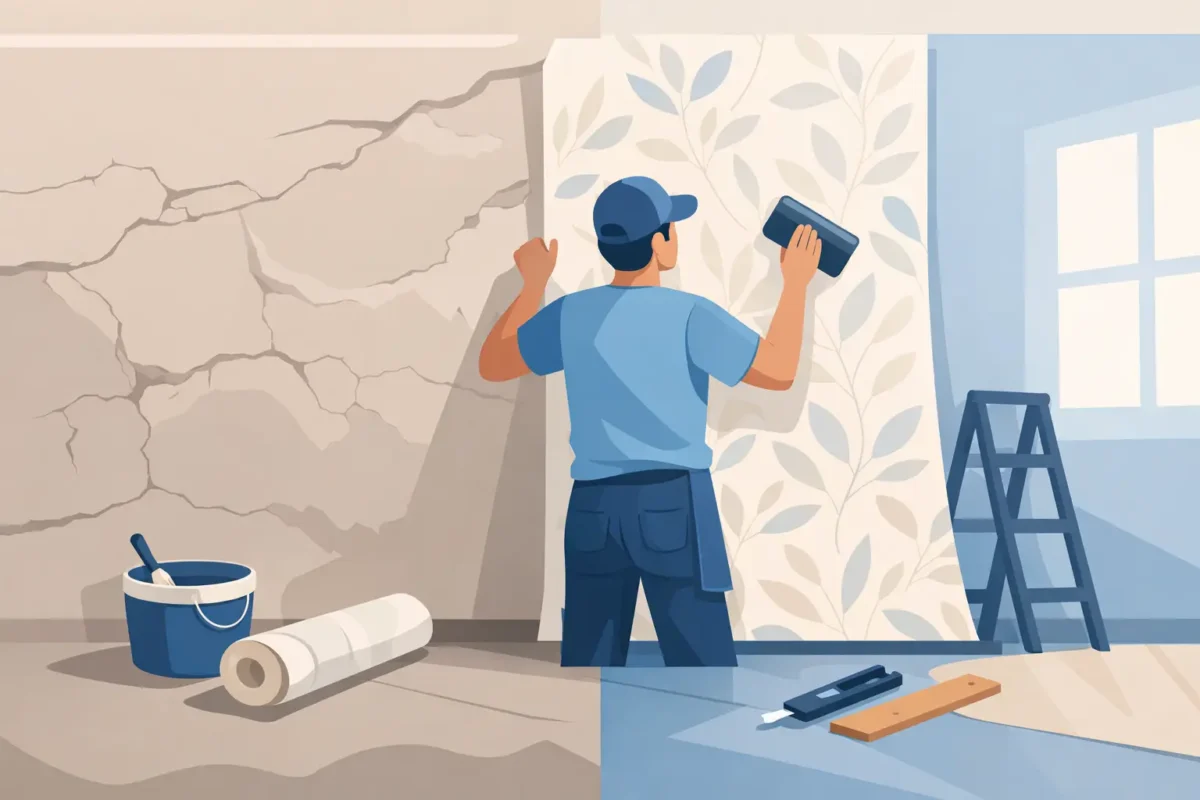
A custom mural is only as good as its installation. Even excellent artwork can lose impact if seams are misaligned, corners are handled poorly, or the wall surface has not been prepared correctly.
Professional installation protects both the visual effect and the material itself. It reduces the risk of bubbling, lifting edges, visible joins, and pattern mismatch. In commercial projects, it also helps keep timelines under control and ensures that high-visibility areas are finished to a consistent standard.
This is where a full-service partner has an advantage. When design consultation, material selection, printing, and installation are coordinated under one roof, the process is more efficient and the outcome is more predictable. For clients managing homes, offices, show units, retail spaces, or hospitality projects, that reliability is often as important as the design.
Start with the function of the room. Ask what the wall needs to do. Should it create calm, add brand presence, introduce texture, or become the room’s focal point? Once that is clear, the visual direction becomes easier to define.
Then assess scale honestly. A mural that looks impressive on screen may feel overwhelming in a compact room, while a subtle design can disappear on a large wall. Material selection should follow usage, not just appearance. Homes, offices, and hospitality spaces each have different performance demands.
It also helps to think beyond the wall itself. Lighting conditions, natural daylight, furniture placement, and viewing distance all shape how the mural will read in real life. In many cases, the best result comes from balancing expression with restraint.
For clients who want both design impact and technical confidence, showroom consultation can be especially useful. Seeing materials in person, reviewing print quality up close, and discussing sizing with experienced specialists removes much of the guesswork. That is one reason Decorating Depot continues to serve both residential and large-scale commercial projects with equal precision.
Custom mural wallpaper works best when it is treated as part of the architecture, not just decoration. Get the artwork, substrate, scale, and installation right, and the wall stops being background. It becomes the element that gives the entire space its identity.