A hotel corridor with 200 doors, a sales gallery on a tight launch date, a corporate office spanning multiple floors – these spaces do not have room for guesswork. Wallcoverings for large scale projects need to do more than look impressive on a sample book. They need to perform across square footage, installation schedules, maintenance cycles, and brand expectations.
That is where project-grade specification matters. In large developments, wall finishes are not a decorative afterthought. They shape first impressions, influence how a space is experienced, and carry a measurable operational burden over time. The right wallcovering can elevate a lobby, soften guest room corridors, reinforce a retail identity, or bring warmth to a high-traffic workplace. The wrong one can lead to visible seams, premature wear, difficult maintenance, and costly replacement.
Residential wallpaper and commercial wallcoverings may share visual appeal, but they do not answer the same brief. In large scale environments, consistency is one of the first challenges. A finish may need to be repeated across dozens of rooms, long corridors, lift lobbies, meeting suites, or public-facing spaces while still looking controlled and intentional.
That immediately raises practical questions. Can the material maintain color consistency across batches? Is it suitable for heavy traffic? Will it stand up to cleaning protocols? Can it be installed efficiently without compromising detail? For architects, designers, developers, and hospitality operators, these questions sit alongside aesthetics from the start.
The most successful specifications balance image and engineering. Fabric-backed commercial wallpaper, project-suitable textured surfaces, and custom-printed wallcoverings each serve a purpose, but not every material is right for every zone. A dramatic mural may transform a reception wall, while a more durable and forgiving commercial finish may be the better choice for circulation areas. It depends on use, exposure, cleaning frequency, and the level of visual precision required.
Large projects work better when the wallcovering strategy is broken down by function rather than treated as one blanket selection. Public arrival spaces usually need immediate visual impact. This is where bespoke murals, premium textures, metallic effects, or statement patterns can justify their value. These are the areas that define perception quickly and often carry the strongest branding or design narrative.
Corridors, transitional spaces, and back-of-house areas demand a different lens. Durability becomes more important than novelty. Scuff resistance, repairability, and ease of cleaning often outweigh intricate surface effects. In hospitality and healthcare-adjacent environments, that balance becomes even more critical because walls face constant contact from luggage, carts, housekeeping, and day-to-day traffic.
Guest rooms, private offices, and residential towers sit somewhere in between. Here, comfort and atmosphere matter, but so does speed of execution. Materials that install cleanly, maintain a refined finish, and support a quieter visual language tend to perform well. European wallpaper collections, Korean wallpaper options, and custom print solutions can all fit, but the specification should always reflect both the design intent and the operating reality.
One of the biggest risks in large scale specification is falling in love with a look before confirming delivery and technical suitability. A surface may appear perfect in a concept presentation yet become difficult when applied across hundreds or thousands of square feet. Repeat scale can feel overwhelming. Texture may create shadow lines under certain lighting. Pattern matching may increase installation time and waste.
This is why broad product choice is valuable only when paired with expert filtering. Designers and project teams usually do not need more options for the sake of it. They need the right options narrowed by use case, budget band, maintenance needs, and installation complexity.
For that reason, showroom-based selection still carries real value. Seeing material scale, touch, reflectivity, and pattern behavior in person reduces costly surprises. In large projects, a sample is never just a sample. It is a preview of logistics, finish quality, and long-term experience.
A premium finish still has to earn its place technically. For commercial and hospitality settings, fire retardancy is often part of the discussion from the beginning. Easy maintenance matters just as much, especially in spaces where walls are cleaned regularly or exposed to heavy use. Washability, surface strength, and dimensional stability all affect lifecycle cost.
Eco-conscious production is also becoming more relevant in project conversations. Low-odor materials and eco-friendly ink systems are increasingly preferred in workplaces, residences, education settings, and hospitality interiors where indoor experience matters. This is not only about compliance. It is about delivering a finished space that feels polished, safe, and ready for occupation without unnecessary disruption.
Durability, though, should be interpreted carefully. The strongest-looking wallcovering is not always the best long-term option if it limits design expression or becomes difficult to replace in phases. Some projects need highly resilient fabric-backed commercial wallpaper throughout. Others benefit from a layered approach, using statement custom surfaces in focal zones and more serviceable finishes elsewhere.
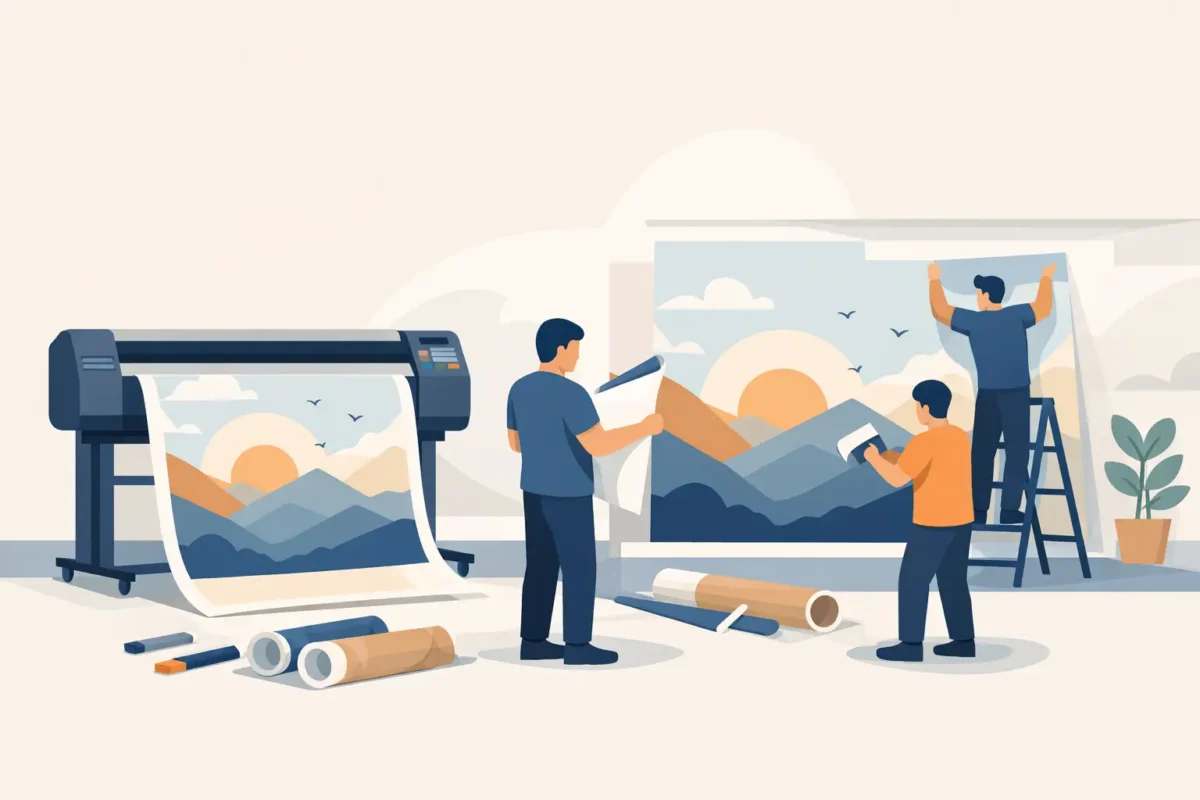
Large projects rarely fit standard dimensions and generic artwork. Brand environments, hospitality properties, luxury residences, and sales galleries often need custom sizing, custom graphics, or wall features designed around architectural details. Off-the-shelf selections can still play a strong role, but the ability to customize gives project teams far more control.
Custom print wallpaper and bespoke murals are especially effective when a space needs to communicate identity. In retail, that may mean brand storytelling. In hospitality, it may mean creating a memorable local narrative. In a corporate environment, it may mean building visual cohesion across client-facing zones.
The advantage is not only aesthetic. Custom production helps avoid awkward scaling, poor cropping, or design compromises that happen when standard products are forced into non-standard conditions. With advanced print technology and proper file preparation, customized wallcoverings can achieve both visual precision and commercial-grade consistency.
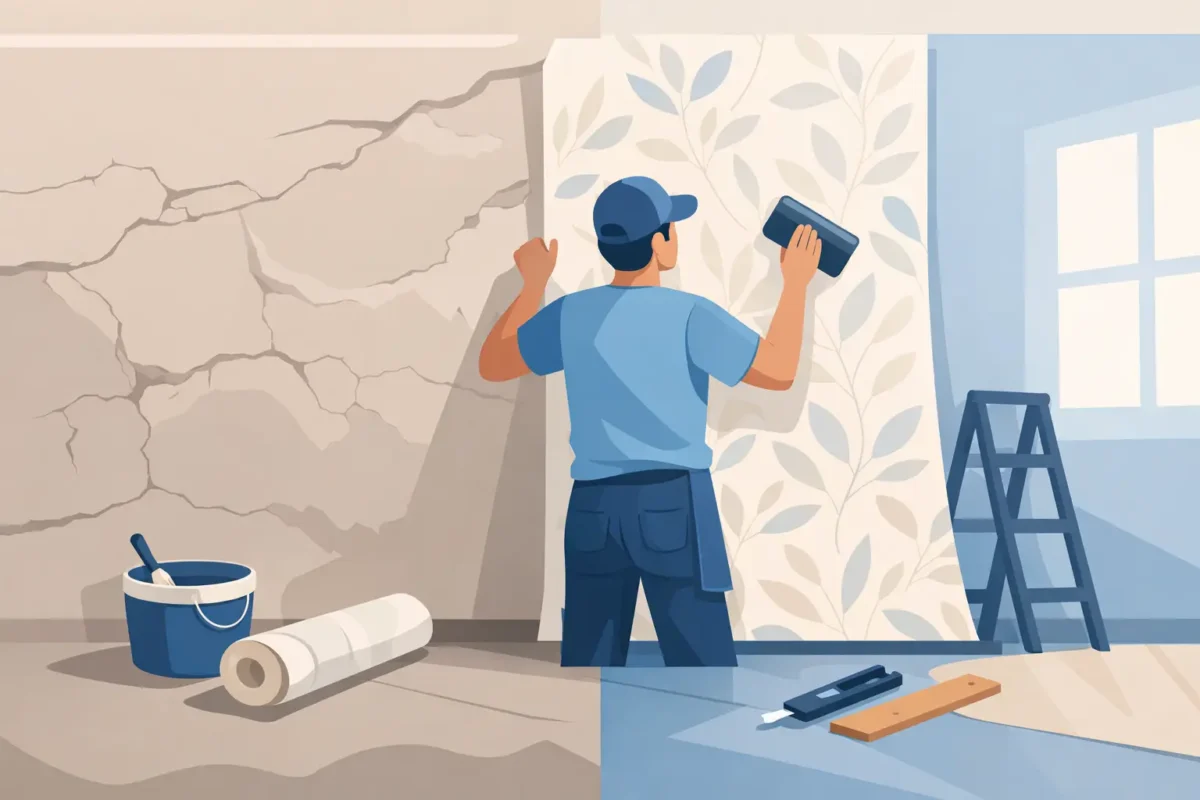
A beautiful product can still fail on the wall if installation is rushed or handled without project discipline. On large sites, sequencing matters. So do wall conditions, moisture levels, site coordination, access, and protection after installation. This is one reason end-to-end execution is so valuable for developers, business owners, and design teams managing multiple moving parts.
Professional installation reduces more than aesthetic risk. It supports material performance, minimizes waste, improves timeline predictability, and helps preserve warranty confidence. Pattern alignment, substrate preparation, edge finishing, and treatment around corners or joinery all affect the final result.
This is especially true with premium textured finishes, large-format murals, and fabric-backed materials. These products can create exceptional visual depth, but they demand experience. Large scale projects do not reward improvisation.
Project teams are often managing procurement pressure, design approvals, technical review, and handover deadlines at the same time. Working with one specialist partner that can supply broad collections, custom production, technical guidance, and installation support simplifies that process considerably.
It also improves consistency. When selection, customization, and execution are aligned, there is less room for mismatch between concept and completion. This is particularly useful for hospitality groups, developers, and business owners who need multiple zones delivered to one visual standard.
For clients who want both scale and design freedom, that blend of variety and control is where real value sits. A company such as Decorating Depot stands out in this space because it combines extensive product choice with project-grade expertise, custom capability, and installation confidence built over decades.
The best wallcoverings for large scale projects are not chosen as isolated finishes. They are specified as part of the building experience, the operating model, and the brand story. They need to look right on day one, still perform months later, and remain relevant long after the opening photos are taken.
That means asking sharper questions at the start. Not just whether a design looks premium, but whether it installs efficiently, maintains well, meets project requirements, and supports the pace and complexity of the site. When those answers are clear, wallcoverings stop being surface decoration and start becoming one of the most effective tools in the interior palette.
If a project is meant to leave a lasting impression, the walls should do more than fill space. They should carry the standard the rest of the interior is aiming for.